Resources
Click Here for Book Review Abstract: Collaborative teaching and learning has been a focus of research recently, yet it can sometimes be a challenge for multicultural students in an educational setting. This second volume of a two-volume edition helps lecturers, educators, and teachers create collaborative teaching and learning experiences with multicultural adult learners in higher education. The authors of this volume provide: - outlines of some of the positive relationships that can be developed among students and educators when the process of gaining knowledge is seen as a co-constructed process, - approaches to relational intelligence and collaborative learning, - research from neuropsychology and practical applications to teaching, and - characterizations of emotional intelligence and sociocognitive skills needed in collaborative learning environments. Though focused on Asian students and their experiences, this volume includes information for all students and educators who are engaged in the collaborative search for knowledge. This is the 143rd volume of this Jossey-Bass higher education series. It offers a comprehensive range of ideas and techniques for improving college teaching based on the experience of seasoned instructors and the latest findings of educational and psychological researchers. (From the Publisher)

Click Here for Book Review Abstract: Theological education, like theology itself, is becoming a truly a global enterprise. As such, theological education has to form, teach, and train leaders of faith communities prepared to lead in a transnational world. The teaching of theology with a global awareness has to wrestle with the nature and scope of the theological curriculum, teaching methods, and the context of learning. Teaching Global Theologies directly addresses both method and content by identifying local resources, successful pedagogies of inclusion, and best practices for teaching theology in a global context. The contributors to Teaching Global Theologies are Catholic, mainline Protestant, and evangelical scholars from different racial and ethnic backgrounds, each with sustained connections with other parts of the world. Teaching Global Theologies capitalizes on this diversity to uncover neglected sources for a global theology even as it does so in constructive conversation with the long tradition of Christian thought. Bringing missing voices and neglected theological sources into conversation with the historical tradition enriches that tradition even as it uncovers questions of power, race, ethnicity, class, gender, and sexuality. Teachers are offered successful pedagogies for bringing these questions into the classroom and best practices to promote students’ global consciousness, shape them as ecclesial leaders, and form them as global citizens. (From the Publisher)
Short, accessible, review of several recent studies showing that lectures are a pedagogical technique that “favor some people while discriminating against others, including women, minorities and low-income and first-generation college students.” All the more reason for adopting active learning strategies that have proved to be more effective for ALL learners.

Click Here for Book Review Abstract: Missoula, Montana, is a typical college town, with a highly regarded state university, bucolic surroundings, a lively social scene, and an excellent football team - the Grizzlies - with a rabid fan base.   The Department of Justice investigated 350 sexual assaults reported to the Missoula police between January 2008 and May 2012. Few of these assaults were properly handled by either the university or local authorities. In this, Missoula is also typical.   A DOJ report released in December of 2014 estimates 110,000 women between the ages of eighteen and twenty-four are raped each year. Krakauer’s devastating narrative of what happened in Missoula makes clear why rape is so prevalent on American campuses, and why rape victims are so reluctant to report assault.   Acquaintance rape is a crime like no other. Unlike burglary or embezzlement or any other felony, the victim often comes under more suspicion than the alleged perpetrator. This is especially true if the victim is sexually active; if she had been drinking prior to the assault — and if the man she accuses plays on a popular sports team. The vanishingly small but highly publicized incidents of false accusations are often used to dismiss her claims in the press. If the case goes to trial, the woman’s entire personal life becomes fair game for defense attorneys.   This brutal reality goes a long way towards explaining why acquaintance rape is the most underreported crime in America. In addition to physical trauma, its victims often suffer devastating psychological damage that leads to feelings of shame, emotional paralysis and stigmatization. PTSD rates for rape victims are estimated to be 50%, higher than soldiers returning from war.   In Missoula, Krakauer chronicles the searing experiences of several women in Missoula — the nights when they were raped; their fear and self-doubt in the aftermath; the way they were treated by the police, prosecutors, defense attorneys; the public vilification and private anguish; their bravery in pushing forward and what it cost them.   Some of them went to the police. Some declined to go to the police, or to press charges, but sought redress from the university, which has its own, non-criminal judicial process when a student is accused of rape. In two cases the police agreed to press charges and the district attorney agreed to prosecute. One case led to a conviction; one to an acquittal. Those women courageous enough to press charges or to speak publicly about their experiences were attacked in the media, on Grizzly football fan sites, and/or to their faces. The university expelled three of the accused rapists, but one was reinstated by state officials in a secret proceeding. One district attorney testified for an alleged rapist at his university hearing. She later left the prosecutor’s office and successfully defended the Grizzlies’ star quarterback in his rape trial. The horror of being raped, in each woman’s case, was magnified by the mechanics of the justice system and the reaction of the community.   Krakauer’s dispassionate, carefully documented account of what these women endured cuts through the abstract ideological debate about campus rape. College-age women are not raped because they are promiscuous, or drunk, or send mixed signals, or feel guilty about casual sex, or seek attention. They are the victims of a terrible crime and deserving of compassion from society and fairness from a justice system that is clearly broken. (From the Publisher)
Click Here for Book Review
Click Here for Book Review Abstract: Culture plays an overarching role that impacts investment, planning, design, development, delivery, and the learning outcomes of online education. This groundbreaking book remedies a dearth of empirical research on how digital cultures and teaching and learning cultures intersect, and offers grounded theory and practical guidance on how to integrate cultural needs and sensibilities with the innovative opportunities offered by online learning. This book provides a unique analysis of culture in online education from a global perspective, and offers: * An overview of the influences that culture has on teaching, online learning, and technology * Culture-sensitive instructional design strategies and teaching guidelines for online instructors and trainers * Facilitation and support strategies for online learners from different cultures * An overview on issues of design, development, communication, and support from a cross-cultural perspective * An overview of how online education is perceived, planned, implemented, and evaluated differently in various cultural contexts Written by international experts in the field of online learning, this text constitutes with a comprehensive comparative introduction to the role of culture in online education. It offers essential guidance for practitioners, researchers, instructors, and anyone working with online students from around the world. This text is also appropriate for graduate-level Educational Technology and Comparative and International Learning programs. (From the Publisher)
Click Here for Book Review Abstract: With the imminent demographic shifts in our society and the need to prepare students for citizenship in a global, knowledge-based society, the role of the academic department chair in creating diverse and inclusive learning environments is arguably the most pivotal position in higher education today. In the United States, increasing minority student enrollment coupled with the emergence of a minority majority American nation by 2042 demands that academic institutions be responsive to these changing demographics. The isolation of the ivory tower is no longer an option. This is the first book to address the role of the department chair in diversity and addresses an unmet need by providing a research-based, systematic approach to diversity leadership in the academic department based upon survey findings and in-person interviews. The department chair represents the nexus between the faculty and the administration and is positioned uniquely to impact diversity progress. Research indicates that more than 80 percent of academic decisions regarding appointment, curriculum, tenure and promotion, classroom pedagogy, and student outcomes are made by the department chair in consultation with the faculty. This book examines the multidimensional contributions that chairs make in advancing diversity within their departments and institutions in the representation of diverse faculty and staff; in tenure and promotion; curricular change; student learning outcomes; and departmental climate. The scope and content of the book is not limited to institutions in the United States but is applicable to academic institutions globally in their efforts to address the access and success of increasingly diverse student populations. It addresses institutional power structures and the role of the dean in relation to the appointment of chairs and their impact on the success of chairs from non-dominant groups, including female, minority, and lesbian/gay/transgendered individuals who serve in predominantly white male departments. Using qualitative and quantitative research methods, the book analyzes predominant structural and behavioral barriers that can impede diversity progress within the academic department. It then focuses upon the opportunities and challenges chairs face in their collaborative journey with faculty and administration toward inclusive departmental and institutional practices. Each chapter provides concrete strategies that chairs can use to strengthen diversity in the academic department. Addressed to department chairs, deans, faculty, and administrative leaders in higher education in all Western societies facing demographic change and global challenges, this book offers a critical road map to creating the successful academic institutions that will meet the needs of our changing populations. (From the Publisher)
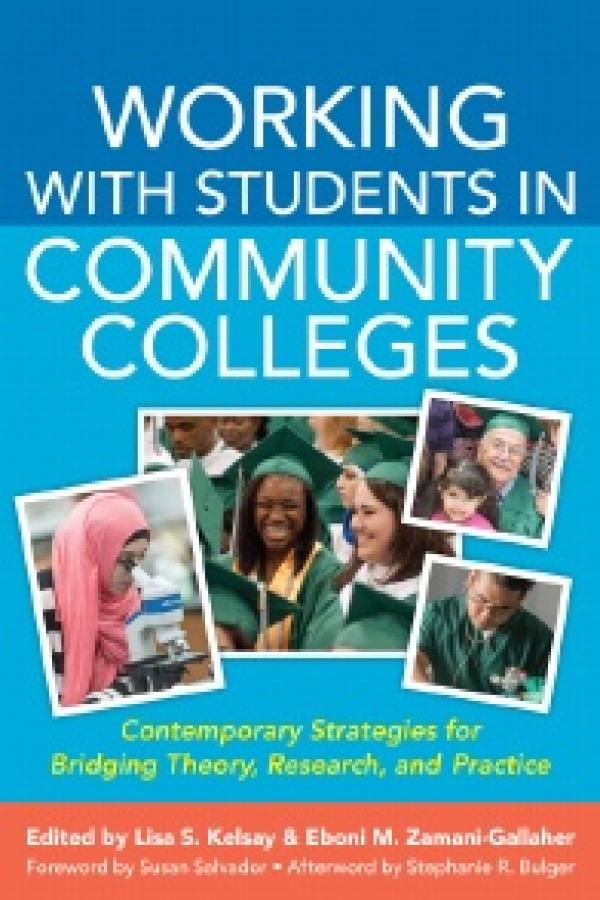
Click Here for Book Review Abstract: This timely volume addresses the urgent need for new strategies and better ways to serve community colleges’ present and future students at a time of rapid diversification, not just racially and ethnically, but including such groups as the undocumented, international students, older adult learners and veterans, all of whom come with varied levels of academic and technical skills. The contributing researchers, higher education faculty, college presidents, and community college administrators provide thorough understanding of student groups who have received scant attention in the higher education literature. They address the often unconscious barriers to access our institutions have erected and describe emerging strategies, frameworks, and pilot projects that can ease students’ transition into college and through the maze of the college experience to completion. They offer advice on organizational culture, on defining institutional outcomes, on aligning shifting demographics with the multiple missions of the community college, on strengthening the collaboration of student and academic affairs to leverage their respective roles and resources, and on engaging with the opportunities afforded by technology. Divided into three parts – understanding today’s community college campuses; supporting today’s community college learners; and specialized populations and communities – this book offers a vision and solutions that should inform the work of faculty, administrators, presidents, and board members. (From the Publisher)

Racial Battle Fatigue is described as the physical and psychological toll taken due to constant and unceasing discrimination, microagressions, and stereotype threat. The literature notes that individuals who work in environments with chronic exposure to discrimination and microaggressions are more likely to suffer from forms of generalized anxiety manifested by both physical and emotional syptoms. This edited volume looks at RBF from the perspectives of graduate students, middle level academics, and chief diversity officers at major institutions of learning. RBF takes up William A. Smith’s idea and extends it as a means of understanding how the “academy” or higher education operates. Through microagressions, stereotype threat, underfunding and defunding of initiatives/offices, expansive commitments to diversity related strategic plans with restrictive power and action, and departmental climates of exclusivity and inequity; diversity workers (faculty, staff, and administration of color along with white allies in like positions) find themselves in a badlands where identity difference is used to promote institutional values while at the same time creating unimaginable work spaces for these workers. (From the Publisher)
Click Here for Book Review Abstract: Mentoring At-Risk Students through the Hidden Curriculum of Higher Education reveals how the institutional culture and social networks of universities influence the academic success of underrepresented students. This book is based on a qualitative study that integrates a sociological and higher education theoretical framework to examine the impact of mentoring programs on students’ acquisition of institutional cultural capital and social capital during their college experience. This book offers an innovative mentoring model that illuminates how students can navigate the hidden curriculum of higher education. In addition, the book provides practical strategies on how to avoid academic mine fields in order to thrive in college. This book is written for administrators, faculty, student affairs professionals and students to promote retention, academic success, and create a more transparent, inclusive, and equitable higher education system. (From the Publisher)