Resources
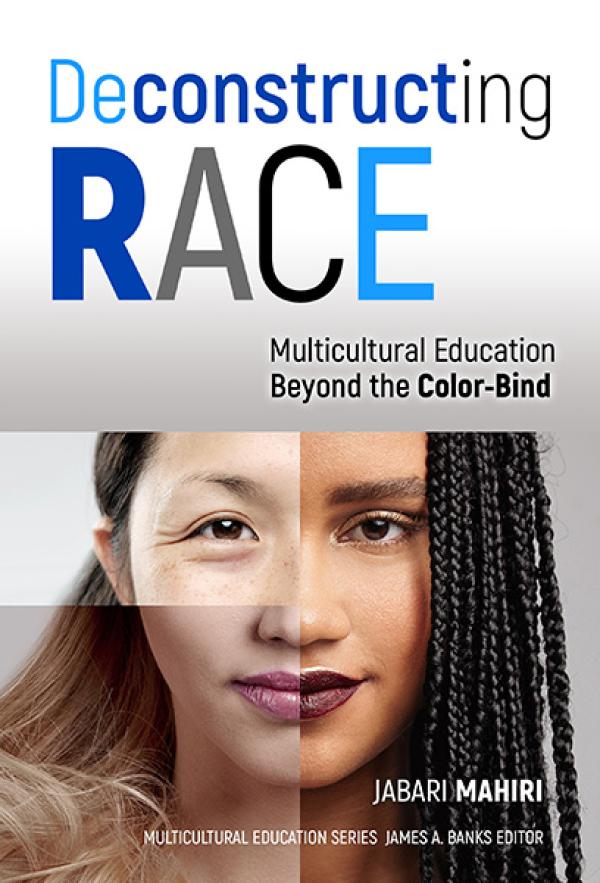
Click Here for Book Review How do socially constructed concepts of race dominate and limit understandings and practices of multicultural education? Since race is socially constructed, how do we deconstruct it? In this important book Mahiri argues that multicultural education needs to move beyond racial categories defined and sustained by the ideological, social, political, and economic forces of white supremacy. Exploring contemporary and historical scholarship on race, the emergence of multiculturalism, and the rise of the digital age, the author investigates micro-cultural practices and provides a compelling framework for understanding the diversity of individuals and groups. Descriptions and analysis from ethnographic interviews reveal how people’s continually evolving, highly distinctive, micro-cultural identities and affinities provide understandings of diversity not captured within assigned racial categories. Synthesizing the scholarship and interview findings, the final chapter connects the play of micro-cultures in people’s lives to a needed shift in how multicultural education uses race to frame and comprehend diversity and identity and provides pedagogical examples of how this shift can look in teaching practices.
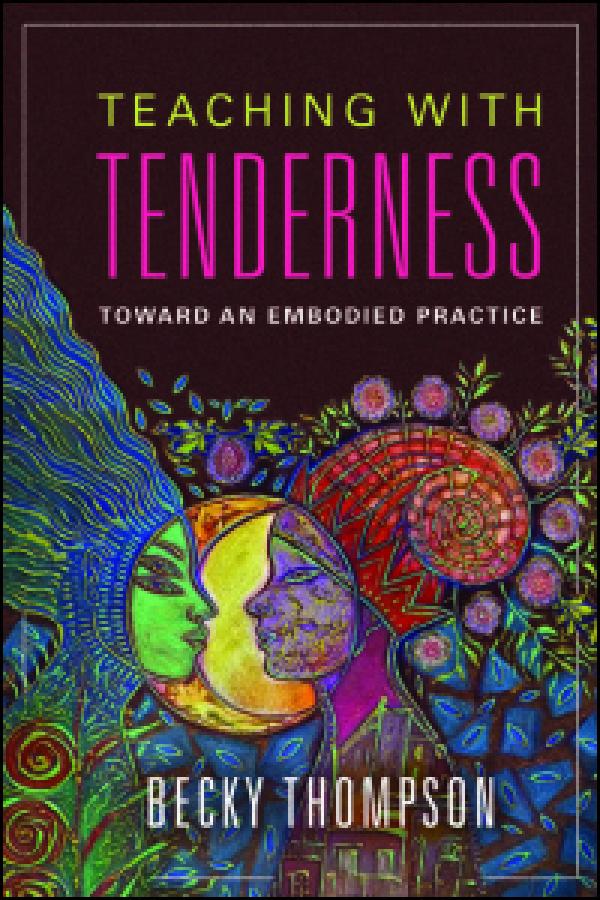
Click Here for Book Review Imagine a classroom that explores the twinned ideas of embodied teaching and a pedagogy of tenderness. Becky Thompson envisions such a curriculum--and a way of being--that promises to bring about a sea change in education. Teaching with Tenderness follows in the tradition of bell hooks's Teaching to Transgress and Paulo Freire's Pedagogy of the Oppressed, inviting us to draw upon contemplative practices (yoga, meditation, free writing, mindfulness, ritual) to keep our hearts open as we reckon with multiple injustices. Teaching with tenderness makes room for emotion, offer a witness for experiences people have buried, welcomes silence, breath and movement, and sees justice as key to our survival. It allows us to rethink our relationship to grading, office hours, desks, and faculty meetings, sees paradox as a constant companion, moves us beyond binaries; and praises self and community care. Tenderness examines contemporary challenges to teaching about race, gender, class, nationality, sexuality, religion, and other hierarchies. It examines the ethical, emotional, political, and spiritual challenges of teaching power-laden, charged issues and the consequences of shifting power relations in the classroom and in the community. Attention to current contributions in the areas of contemplative practices, trauma theory, multiracial feminist pedagogy, and activism enable us to envision steps toward a pedagogy of liberation. The book encourages active engagement and makes room for self-reflective learning, teaching, and scholarship. (From the Publisher)
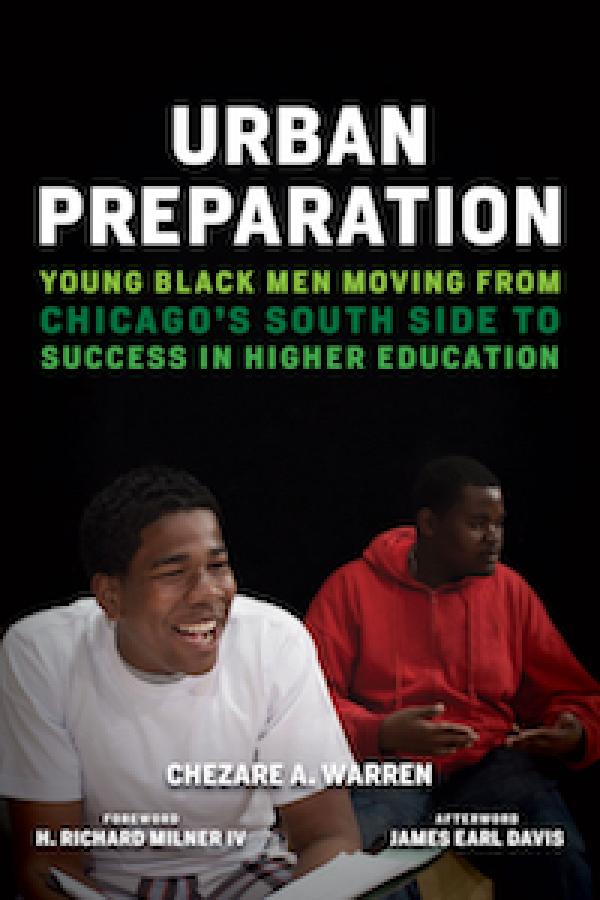
Click Here for Book Review Chezare A. Warren chronicles the transition of a cohort of young Black males from Urban Prep Charter Academy for Young Men to their early experiences in higher education. A rich and closely observed account of a mission-driven school and its students, Urban Preparation makes a significant contribution to our understanding of how young males of color can best be served in schools throughout the United States today. A founding teacher at Urban Prep, Warren offers a detailed exploration of what this single-sex public high school on the South Side of Chicago has managed to accomplish amid profoundly challenging circumstances. He provides a comprehensive portrait of the school—its leaders, teachers, and professional staff; its students; and the community that the school aims to serve—and highlights how preparation for higher education is central to its mission. Warren focuses on three main goals: to describe Urban Prep’s plans and efforts to prepare young Black males for college; to understand how race, community, poverty, and the school contributed, in complex and interrelated ways, to the academic goals of these students; and to offer a wide-ranging set of conclusions about the school environments and conditions that might help young Black males throughout the country succeed in high school and college. (From the Publisher)
This book argues that the cognitive resources for learning of over half our young people have been diminished by the negative effects of economic insecurity, discrimination and hostility against non-majority groups based on race, ethnicity, sexual orientation, or gender identity, and other aspects of difference. Recognizing that these students are no different than their peers in terms of cognitive capacity, this book offers a set of strategies and interventions to rebuild the available cognitive resources necessary to succeed in college and reach their full potential.>br> Members of these groups systematically experience conditions in their lives that result in chronic stress and, therefore, decreased physical and mental health and social and economic opportunity. The costs of the many kinds of scarcity in their lives – money, health, respect, safety, affirmation, choices, belonging – is seriously reduced “mental bandwidth,” the cognitive and emotional resources needed to deal with making good decisions, learning, healthy relationships, and more. People who are operating with depleted mental bandwidth are less able to succeed in school, starting in childhood, and are much less likely to make it to college. For those who do make it, their bandwidth capacity often interferes with learning, and therefore, persisting and graduating from college. This book presents variety of evidence-based interventions that have been shown, through implementation in high schools and colleges, to help students to regain bandwidth. They are variously intended for application inside and outside the classroom and address not only cognitive processes but also social-psychological, non-cognitive factors that are relevant to the college environment as a whole. Beginning with an analysis of the impacts on mental and physical health and cognitive capacity, of poverty, racism, and other forms of social marginalization, Cia Verschelden presents strategies for promoting a growth mindset and self-efficacy, for developing supports that build upon students’ values and prior knowledge and for creating learning environments both in and out of the classroom so students can feel a sense of belonging and community. She addresses issues of stereotyping and exclusion and discusses institutional structures and processes that create identity-safe rather than identity-threat learning environment. This book is intended for faculty, student affairs professionals, and college and university administrators, all of whom have an interest in creating learning environments where all students have a chance to succeed. (From the Publisher)
Click Here for Book Review Every generation has sought to make teaching and learning more inclusive and equitable, but pesky questions always remain, such as, how can teaching and learning be conducted in ways that satisfies and respects everyone? What are the parameters of an inclusive pedagogy? Who defines its principles? How should these principles be taught and by whom? And by what authority shall they be grounded? These types of thorny questions occupy the essence of educators and the authors of this book. This book is about teachers, educators, and topics related to inclusion. Teachers and educators have a lot to know, therefore the topics are broad and relevant to the times. What should teachers know about special needs, religion and spirituality, Aboriginality, the environment, tolerance, and school choice? Although teachers have knowledge of their subject matter, knowledge alone is not sufficient. They must know and understand how people learn. A teacher must also care deeply about who they teach. And this "teacher knowledge" grows and changes over time as teachers become more experienced, informed, skilled, and wiser. At the same time no teacher preparation will be sufficient because there will always be discussions that were never had and knowledge that was never shared. Time has its costs and there is only so much a formal education can prepare someone. This book helps to satisfy a cavity in learning for teachers and educators in general. (From the Publisher)
Click Here for Book Review Teaching the Whole Student is a compendium of engaged teaching approaches by faculty across disciplines. These inspiring authors offer models for instructors who care deeply about their students, respect and recognize students’ social identities and lived experiences, and are interested in creating community and environments of openness and trust to foster deep-learning, academic success, and meaning-making. The authors in this volume stretch the boundaries of academic learning and the classroom experience by seeking to identify the space between subject matter and a student's core values and prior knowledge. They work to find the interconnectedness of knowledge, understanding, meaning, inquiry and truth. They appreciate that students bring their full lives and experiences—their heart and spirit—into the classroom just as they bring their minds and intellectual inquiry. These approaches contribute to student learning and the core academic purposes of higher education, help students find meaning and purpose in their lives, and help strengthen our diverse democracy through students’ active participation and leadership in civic life. They also have a demonstrated impact on critical and analytical thinking, student retention and academic success, personal well-being, commitments to civic engagement, diversity, and social justice. Topics discussed: • Teacher-student relationships and community building • How teaching the whole student increases persistence and completion rates • How an open learning environment fosters critical understanding • Strategies for developing deep social and personal reflection in experiential education and service learning The authors of this book remind us in poignant and empirical ways of the importance of teaching the whole student, as the book's title reflects. (From the Publisher)
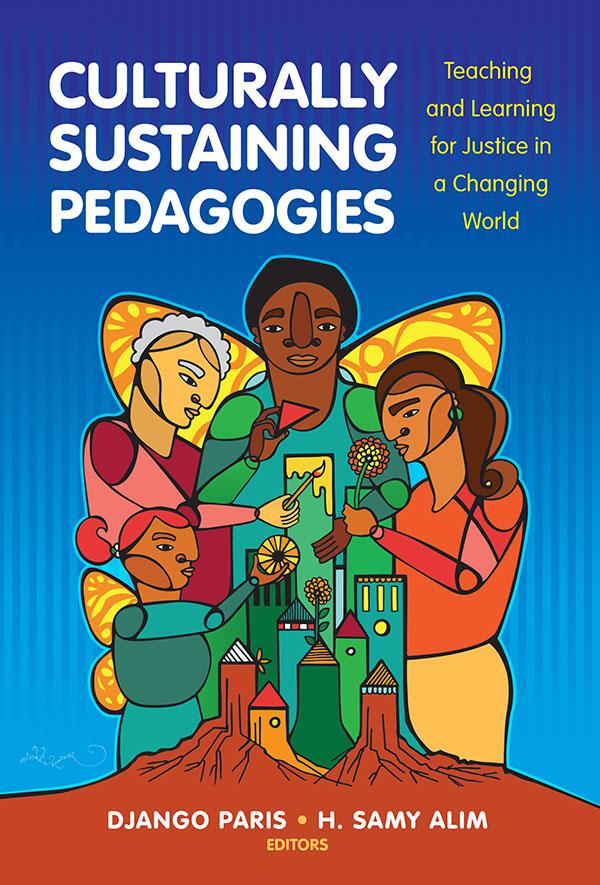
Culturally Sustaining Pedagogies raises fundamental questions about the purpose of schooling in changing societies. Bringing together an intergenerational group of prominent educators and researchers, this volume engages and extends the concept of culturally sustaining pedagogy (CSP)—teaching that perpetuates and fosters linguistic, literate, and cultural pluralism as part of schooling for positive social transformation. The authors propose that schooling should be a site for sustaining the cultural practices of communities of color, rather than eradicating them. Chapters present theoretically grounded examples of how educators and scholars can support Black, Indigenous, Latinx, Asian/Pacific Islander, South African, and immigrant students as part of a collective movement towards educational justice in a changing world. (From the Publisher)
Why do so few Hispanic males enroll in and graduate from institutions of higher learning? Why are Latinas, by contrast, enjoying so much more success than Latinos? Moreover, why is there a dearth of research addressing these questions? This book, which includes twelve chapters written by leading Latin@ scholars, addresses these questions with the goal of broadening readers’ contextual understanding, deepening their comprehension of the specific challenges faced by Hispanic males in higher education, and securing their commitment to Latino success. The book’s contributors adroitly explore the complex challenges that Latino males face in the context of American society and higher education. The book’s first two chapters discuss many of the socio-economic factors contributing to the current Latino “crisis” in higher education. They carefully examine the Hispanic gender gap and the ways in which it is manifested along the educational pipeline, alternate life pathways for Latino males (such as military, low-paying labor, prison), and factors that frequently hinder Latinos from enrolling in college (such as lack of financial aid literacy and inadequate academic preparation). Multiple chapters investigate key cultural factors that significantly impact Latino experiences in higher education. Chapters Four, Five, and Eleven, for example, focus on Latino identity and intersectionality, probing complicated issues (for example, relationships between caballerismo, Latino persistence, and high attrition rates) and introducing humanizing nuances (such as the Latino male privilege paradox). Chapters Two, Seven, Eight, and Nine pose critical questions about the role that familismo plays in hindering and promoting Latino academic success. Those chapters also address other relevant topics such as the unique features of Mexican sub-culture and various forms of Latin@ cultural wealth. The final section of the book calls on academics to more thoroughly research the crisis pertaining to Latinos in higher education. Chapter Ten describes research on college administrators’ levels of awareness about the challenges faced by Latinos in academia. Their findings, namely that administrators’ awareness not only varied widely, but also that some administrators resisted acknowledging problem areas altogether, underscore the urgent need for more research. Chapter Eleven suggests that studies which compare and contrast the experiences of Latinos and Latinas might yield much fruit, while the authors of Chapter Twelve advocate for a strengths-based, data rich, interdisciplinary approach to research on Latinos, an approach which is successfully modelled throughout the book. In conclusion, educational leaders and researchers are sure to find this book – and especially the new research that it presents – a valuable and generative resource. The book’s contributors helpfully shift the research focus from Latino students’ resiliency and deficits to exploration of the social and cultural factors that shape their educational experiences. While the authors do not offer many substantive recommendations for educational programming and practice or directly address issues pertaining to Latinos in graduate education, they do make a strong case for “ensuring that the success of Latino males in higher education” becomes a national imperative. After reading the book, one also hopes that educators will wholeheartedly embrace Latino success as a moral imperative.
With the ongoing Syrian refugee crisis quite literally fanning the flames of Islamophobia across Europe, Adem Aygün’s well-written and meticulously researched book makes for trenchant reading on the state of Islamic religious education for Muslim minorities in Germany. While Aygün’s particular focus is on Islamic youth in Turkey and among Turkish immigrants in Germany, the book raises questions about Islamic religious pedagogy that have larger, E.U.-wide implications, namely through its challenge to both how non-Christian religion is taught (or not) by the secular apparatuses of European universities and secondary schools, and the pedagogical methods for learning theology that are intrinsic to immigrant Muslim communities in a European country like Germany. The book will interest anyone who works on or with the models of faith development as pioneered by the American theologian James W. Fowler (1940-2015); as Aygün rightfully notes, Religious Socialization constitutes one of the first attempts to bring Fowler’s influential step-models to a non-Christian context (183), using Fowler’s “stages of faith” to frame how Muslim youth in Germany and Turkey see themselves in relationship to their religion and the larger, social world. This book is important reading for scholars who work on the state of theological education in Europe, particularly when it comes to non-Christian religions. Fowler, like William James long before him, decoupled belief from catechism or creed, and relocated it (via a developmental psychology derived from Piaget) in the personal experiences of the self. Some of the fundamental characteristics of Fowler’s hierarchical categories of faith development – such as self-realization, and the acceptance of complexity and diversity – are indubitably imprinted by the liberal Protestantism of the nineteenth and twentieth centuries, and it could be said that Fowler’s project was as much a (biased) theological one as it was objectively psychological, or sociological. Aygün’s book, thus, begins by posing a fascinating methodological problem: can Fowler’s typologies, tinged as they are with their echoes of Paul Tillich and H. Richard Niebuhr, even fit a non-Christian setting, where the relationship between the self, God, and the world ostensibly seems to have a fundamentally different kind of constellation? Aygün’s book is part sociological – his seventy in-depth interviews with Islamic youth from the bulk of the empirical chapters of the work – but also part theological, and the first chapters offer illuminating close readings of the Koran and the Islamic concept of Fitrah to demonstrate (in answer to this question) how critical thinking and self-reflexivity are arguably at the very core of Muslim faith. Reading Islamic theology through Fowler’s models, Aygün deftly argues, illuminates how Islamic traditions are more than adequately equipped with the kinds of theological tools necessary for grappling with the individual’s place in modernity, and the successful integration of the self’s belief with all the complexities of the global world (Fowler’s last, and highest, stage of development being the “universalizing faith” of a Mahatma Gandhi or Martin Luther King, Jr.). The empirical portion of Religious Socialization that presents and reflects on the results of Aygün’s extensive interviews provides some surprising juxtapositions between Turkish Muslims living in Germany and their peers in Turkey. Because of the lack of Islamic institutional apparatuses for Muslim migrants in Germany, the teaching and learning about the Koran has strengthened the family as the critical locus for value-building and faith formation, whereas Turkey’s complex and dense history of state secularization and religious politics has meant that Turkish youth have consistently had a much broader and more diverse exposure to the kinds of the theological education necessary for progressive faith development: the net effect being that religious belief among Turkish youth is “easily on average higher” on Fowler’s scale than it is for youth in Germany (183). A fascinating observation is offered by Aygün here, that the ad hoc system of immigrant mosque education that developed in Germany in the seventies and eighties (54-55) has meant that the mosque as a site of faith-formation plays a much more significant role than it effectively does in Turkey. Regrettably, Aygün notes, the dominant pedagogy offered in these German mosques remains a kind of medieval formalism that focuses on catechismal recitations, often at the expense of developing critical thinking and self-reflection. Ultimately, this kind of “imprisoning of the individual into traditional ways of thinking” (193) has hurt the viability of Islam as a public religion, as it loses its functionality within the pluralizing contexts of the E.U. Aygün is not simply casting stones: the book is a strong, pragmatic call for the German (and by extension, European) university and school systems to better integrate Islamic theological education into their curriculums, and thereby inculcate the kind of reflective and dynamic forms of belief that espouse the cosmopolitan values as present in the higher levels of Fowler’s scaled categories of faith development. Such an institutionalized religious pedagogy could help undo stereotypical prejudices against Islam (all the more resurgent now than at the time of Aygün’s original writing), aid in the coexistence of different religions, and even potentially benefit Turkey’s attempts to join the E.U. (197). There is, to date, very little of such institutionalization in place. The recently established partnership between the universities of Frankfurt and Gießen for a Center for Islamic Studies with a special emphasis on teaching (Religionslehrer) is one positive sign of development in this direction (and Aygün is now teaching at Gießen as a professor for Islamic theology and religious education). Given the extraordinary inflow of Islamic refugees into Germany over the last ten months alone – at least 800,000, by conservative estimates – more such university initiatives are urgently needed, both for the state of European inter- and intra-religious education, and perhaps for the fate of the E.U. itself, with its still laudable, if utopic, commitment to a pluralistic open society.
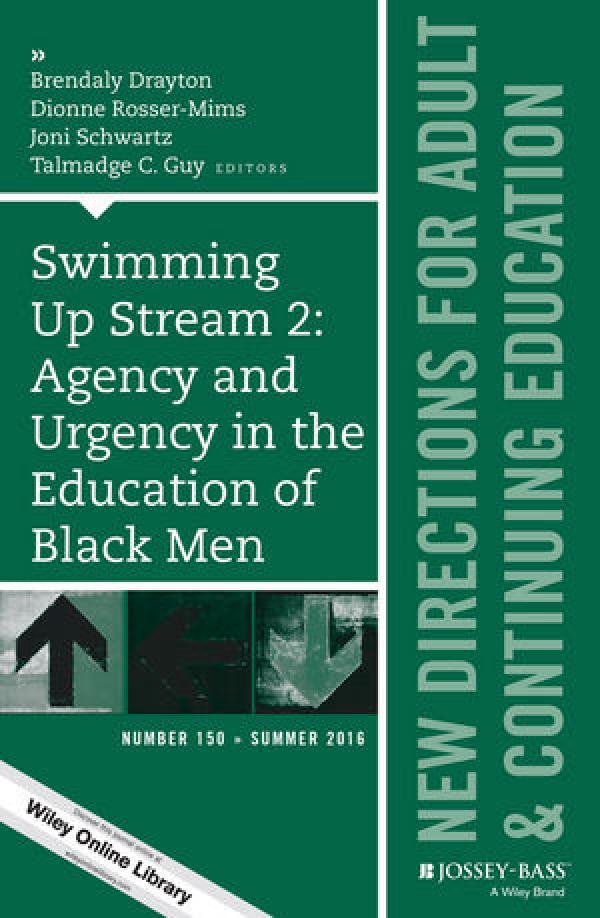
This volume is the continuation of a two-part series that focuses on salient topics and issues affecting Black males as they engage in adult education and learning. Considering the historical and current effects on the way these men participate in adult education, this volume broadens the conversations around adult Black males’ educational experiences by utilizing academic research as well as program descriptions and personal narratives with a concern for the “lived experiences.” More specifically, the authors explore: - the agency of Black men in carving out pathways to success - the programs that support these endeavors, and - the role of civil society in facilitating or inhibiting their progress. Topics covered include the digital divide, sports, professional career development, sexuality, role of religion, college as a choice, and the Black Lives Matter initiative. Practitioners will be encouraged to reflect on their own practices as they work toward engagement of Black males in learning communities. This is the 150th volume of the Jossey Bass series New Directions for Adult and Continuing Education. Noted for its depth of coverage, it explores issues of common interest to instructors, administrators, counselors, and policymakers in a broad range of education settings, such as colleges and universities, extension programs, businesses, libraries, and museums. (From the Publisher)