Resources

I've been sketching, drawing and painting since I was a child. Sometimes people ask, "How do you draw so well?" On occasion I respond, "When you do something every day for a long time you can get pretty good at it." I've been teaching online for 22 years. By now, I've gotten pretty good at it. Here are 15 things that work in my online courses, and three that didn't. 1. Fully outlining the course using a mindmap. Drafting the outline of the course in detail before I even create the online course shell saves hours of guesswork. The branching logic of a mindmap also helps me avoid superfluous content. This is a very efficient brainstorming, planning, and design method; by now I can outline an entire course within one hour. 2. Creating a clean interface design for students. Striving to view my course site from the perspective of the student helps me keep the course design clean, uncluttered, and with a logical flow that is intuitive to navigate. I remind myself that "figuring out your course site is not an assignment." Adding consistent visual cues helps students navigate the course site, recognize standard segments, and important items. 3. Creating an atmosphere of both welcome and challenge. Reminding students that they are taking a "course" and not a "class" helps them appreciate that online learning is a different experience than the classroom. Setting the atmosphere includes an "introduce yourself" forum which can include sharing common experiences, using humor. When a student posts a great response, I will sometimes give them "1000 extra credit points." They don't cost me anything and they don't actually count for anything, but students get excited. Just like a classroom course, I strive to create a "class culture" conducive to learning. 4. Providing a reading schedule checklist and other helps. Because I'm not as present as I am in a classroom, I provide students with helpful resources to help them self-monitor their progress. For example, this handy reading schedule checklist helps students stay on track and helps avoid the "when is the assignment due?" question. 5. Allowing up to two weeks of reading days before the first session. Because my online courses encourage critical reading and interaction with texts, I give students plenty of time to read ahead before requiring them to post responses. Additionally, I have a standard "How to read for this course" orientation that helps encourage reading for understanding, synthesis, and application rather than for coverage. 6. Scheduling one week for wrapping up the course. During the final week of the course schedule no posts or learning activities are assigned. This allows students to catch up on posts they've missed and gives them time to finish the summative paper or project before the submission deadline. 7. Being selective in content and student learning activities. I anticipate that my online class will require more work from students than a classroom version. Therefore, the content coverage becomes more focused (and the amount cut it by half). Aligning student learning activities to the course's student learning outcomes helps avoid overwhelming students with superfluous activities. Aside from reading and posting on forums, two additional student learning activities is the most I ask of students. One of those will often be a summative writing assignment or project. 8. Keeping all course sessions open. Keeping all sessions open allows the student a meta view of the scope of the course, which aids in comprehension, integration, and helps them plan their own schedules. It also allows for eager students to work ahead and for some to catch up as needed. I have found there is little value in keeping things "hidden" from students. 9. Being heavy-handed in responding to student posts for the first two sessions. During the first two sessions of the course I respond intentionally to student posts, communicating what I look for in student responses, highlighting what an effective student post is (and why), pushing for deeper thinking though follow up questions, etc. I emphasize that questions asked by the professor and by students are "real" questions which must be responded to. This provides cues to students about the expected quality of posts. 10. Scheduling two 45-minute log in times for myself. One rule I follow is "never work harder than your students." To avoid being overwhelmed by student posts and to help manage my time I schedule one 45-minute time slot in the morning and in the afternoon to read and respond to student posts. I don't respond to each individual post, rather, I select those posts that provide a chance to "teach to the class" with a response. When I note a student starts getting behind in their posts, I send one check in e-mail, but no more. 11. Providing supplemental enrichment resources. There is a lot of good content available on the internet. Providing optional enrichment resources allows students to "go deeper" into the study and review alternate ways of accessing content (video, podcasts, demonstrations, interviews, model lectures, etc.). However, I try to be judicious and selective to avoid offering too many options in any given session. Alternatively, I sometimes assign students to do an internet search for appropriate and helpful recourses and have them post them on the course site (they must share why the resource is relevant and helpful). 12. Creating opportunity for immediate application. I strive for immediate application starting with the first discussion forum session. The application can be in the form of interpretation, analysis, providing an example, providing a critique, challenging an idea, or applying a concept to the students' experiences. Throughout the course I strive to address multiple modalities of understanding (see Wiggins & McTighe's Understanding by Design taxonomy). 13. Including a mid-course metacognition opportunity. At mid-point in the course I provide a forum with metacognition questions and prompts to help students "step back" and reflect on their learning experience. This provides helpful process feedback for both student and professor. 14. Including a 50-minute Zoom "open office hours." This practice provides novelty and can be helpful to foster a sense of connectivity and to provide an opportunity to discuss concepts that may need a more nuanced treatment. I typically don't schedule more than two during the course. 15. Including a "course closure" section. I have a firm deadline for course closure at which time all assignments are due, no exceptions. I post a firm notice at the start of the course, and on the syllabus, that I accept no late submissions. The course closes on the final date of the course schedule. The final session provides a place for students to post their assignments and a forum where they "sign off." When a student submits a post in this final forum it signals to me that have completed the course, so I don't have to guess when a student is "done." Three Things That Have Not Worked Requiring synchronous sessions forcing students to log on at specific days and times. Requiring students to check in at specific times for a live session tends to not have a significant pedagogical value in my experience. Aside from checking in from different time zones, the necessity of the right equipment, and need for stable internet connections, I haven't found that a "live" session is of significantly high value for the learning experience. Posting a narrated 20-minute slide presentation for content delivery. Early on I tried to translate the classroom lectures with slide presentations to the online environment. That resulted in 20-minute narrated slide presentations students needed to sit through. Ultimately I found it more effective to provide students with a textual narrative of the content. Students can read faster than listening to a slow-paced narrated podcast, and it's easier to review the content. Sure, visual and audio presentations have their place, but the question is, "What pedagogical function does it serve?" Requiring quizzes and exams for a grade. Since students demonstrate achievement of learning through their posts (which are assessed immediately) and in a summative paper or project that synthesizes evidence of higher order learning, quizzes and tests are of little value. On occasion I do provide quizzes for self-assessment and review. Students can take those to reinforce and assess their own learning.
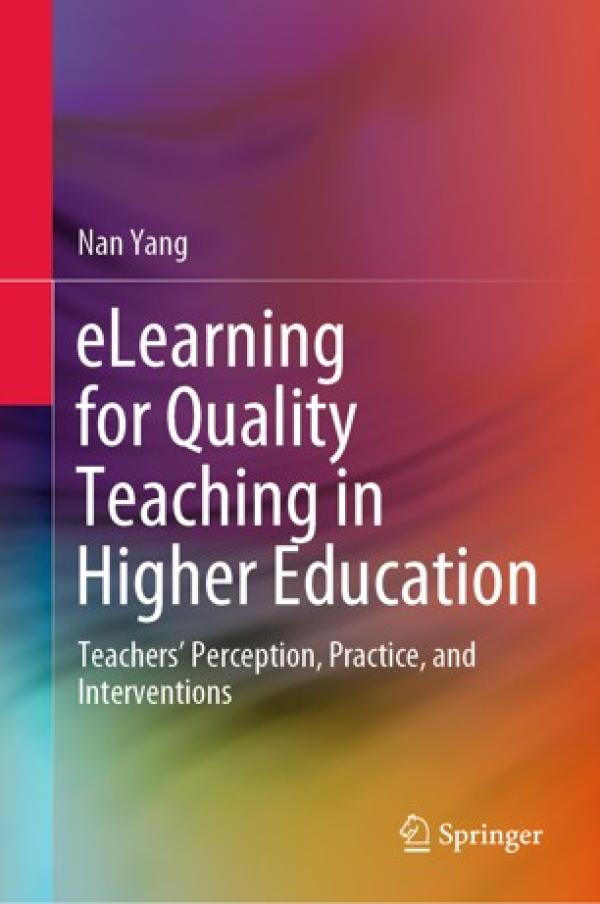
This book explores the impact of eLearning on the quality of teaching in higher education, focusing on three main issues: university teachers’ perception of quality teaching, their strategies for achieving quality teaching in practice, and interventions that design and implement online collaborative activities in a large class. The book argues that if eLearning targets the real problems in practice and is appropriately designed and implemented, it can improve the teaching quality at universities. It also demonstrates the complexity of teachers’ perception of quality teaching and contextual factors that affect teaching practice and quality. Further, it explores university teachers’ perception of quality teaching in Italy, the UK and China – an aspect that is rarely addressed in the literature – and reveals why the impact of ICTs on university teaching is not as great as in other fields by explaining the issues that threaten the quality of day-to-day teaching. Lastly, it confirms that traditional lecturing, combined with online collaborative activities, improves the quality of teaching compared to traditional lecturing alone. As such, this book is a necessary and important resource for the research community. (From the Publisher)

Planning for fall teaching frightens me much more than the spring switch to online teaching did. Going online in the spring was a mad, last-minute scramble, and it felt like an adventure. My students and I had already bonded so I had goodwill built up and I used it shamelessly. It also helped that we were in a crisis. My students didn’t expect me to do things perfectly and I lowered my expectations of them as well. I interacted with them as a fellow human being, providing structure, a sense of normalcy, and a little philosophy. I knew how to do all that, and my students helped me out whenever the technology confused me. But what about the fall? I just went through a few packed training days about teaching online. I left terrified, feeling that I had to spend the summer acquiring technical mastery in online teaching, learning to create snazzy videos and other exciting content. But am I teaching online? I don’t know yet. The situation is too fluid. I need to be prepared to teach online, in person, or in a hybrid format. And I’m tired. I can guarantee that my students will be underwhelmed by any videos that I create over the summer. I won’t have enough time to acquire the technical expertise required to create even decent videos. And because my classes are discussion heavy and lecture light, I’m not sure what I would put into those videos in the first place. Still, I felt pressured to switch to a lecture format, learn to lecture, and then to create videos of those lectures. All in one summer. Wait. Stop. Is that really what I should be working on this summer? No. The online teaching experts who conducted the training forgot that this year is extraordinary. In preparing to teach in the fall, we must start by considering our situation: Our students didn’t choose to take online classes. My students are at a small college, and they came here because of our small in-person classes. If I’m teaching online in the fall, it’s because we were forced into it. Our students are living through a pandemic and political upheaval, so they are distracted and stressed. If they have mental health issues, and many do, those are exacerbated. They are shaken and they feel less safe than they used to. They may have lost loved ones and they are worried about those who remain. We too are living through a pandemic and political upheaval, and it affects us in the same ways that it affects our students. My experts didn’t take any of this into account; they focused on how to create an online course under normal circumstances. And then, I freaked out instead of asking what portion of the advice was applicable to our current situation. Don’t make that mistake. Before spending precious time and energy on your online teaching this summer, ask two questions: What do your students need most from you and your courses under these circumstances? What is your energy level and mental health status, and what are the competing demands on your time and energy? Here is my list of what my students need: A sense of normalcy. A clearly structured course, website, and a set of assignments where expectations and directions are spelled out in simple language. Compassion and flexibility Discussions about meaning and purpose, including some that help them make sense of the current moment. Community and connection. My work this summer will be about doing these five well in any of the possible formats: in-person, online, and hybrid. I’ll work on lectures and videos only if that helps me with the five. I’ll work on technology because I need a better handle on Zoom and our learning management software. But my most important task won’t be about technology. It will be figuring out how to foster community in my classes if we are forced to start the semester online. It’s the most important task for me because I have at least some experience in doing all the others. But how do I build community online? How do we get to know each other? How do we learn to trust each other enough to have a real conversation? I’ll be thinking a lot about that in the next few weeks. Molleen Dupree-Dominguez offers some great places to start.

A traumatic event is one that is sudden and unexpected. Is Covid-19 a traumatic event? Jonathan Porteus, Ph.D., a licensed clinical psychologist who oversees a crisis and suicide hotline in Sacramento, CA., points out high levels of emotional distress from the Covid-19 crisis, and recommends attending to this mental health crisis as a traumatic event. Porteus comments, “Our society is definitely in a collective state of trauma.”[1] The Covid-19 pandemic may also lead to an upcoming wave of mental disorders claims Sandro Galea in an April essay published in the Journal of the American Medical Association.[2] Online learners may be experiencing traumatic emotional distress which may have an impact on their academic performance in their online classes. Then, how can educators in the online teaching of theology and religious studies offer trauma-informed care for online learners? And what should they avoid? What to do: The educator will likely observe changes to an online learner’s behavior and academic performance if mental health challenges arise from traumatic events. In the face-to-face classroom, the educator is, presumably, more easily able to perceive mental health warning signs such as mood changes, change of appearance, absences, and unusual behaviors. In an online class, it is more difficult to assess warning signs of mental health distress. Thus, online educators need to develop strategies for identifying mental health challenges in order to provide appropriate trauma-informed online learning. Trauma often impacts the psychological mechanisms which regulate emotions. If there is a sudden change in academic performance, disruptive interaction in the online discussion, disrespectful behavior toward peers and faculty, or failing grades, an educator should reach out and check on a student’s emotional state. It is critical for educators working from a perspective of trauma-informed online learning to know the warning signs of mental health challenges. Bonny Barr offers these guidelines for identifying the warning signs of mental illness or emotional distress in online students.[3] ATYPICAL BEHAVIORS (a change from the usual) UNUSUAL BEHAVIORS ACADEMIC PERFORMANCE PROBLEMS (Sharkin, 2006) Becoming irritable/short-tempered/obsessive Emails are accusatory, manipulative, sexually inappropriate or threatening Late assignments from beginning of course Sudden deterioration in quality of work Discussion post contents are: bizarre, fantastical, paranoid, disruptive, confused, or show disorientation Failing quality of work from beginning of course Abruptly begins turning in late assignments Student clearly seems out of touch with reality Not returning emails or phone calls Becoming disrespectful in discussion posts Not turning in work at all Stops responding to email Not re-doing work when given an opportunity Content of work becomes negative/dark/odd in tone Ongoing display of anxiety about assignments Trauma-informed care in online-learning is to acknowledge the earlier signs of traumatic experiences. It means that it is valuable to contact online learners when they display atypical behaviors. As Bruce Sharkin states, “Early intervention can help reduce the chance of a student’s problems turning into a crisis situation later on.”[4] An online educator should be encouraged to address a mental health concern in the early stages of a sudden change of behaviors and identify the emotional distress caused by stress. What not to do: Trauma-informed online learning begins to create a safe space in the learning interaction. When an educator reaches out to learners by any vritual communication, it is critical not to be judgmental. Remember you are not there to give a diagnosis or ‘solve’ mental health challenges. Your first contact is to initiate safe conversations with acceptance and encouragement. For example, an educator can say, or write an email, “I’m touching base with you because I noticed you hadn’t submitted anything for several weeks. It seems as if you are having a rough time,” or “In the discussion post, I see you are stressed out.” An educator’s concern and empathy can be expressed by virtual communications. This approach will encourage a learner to share their struggles without having defensive responses and confrontations. An education in trauma-informed online learning can be the first responder for students. Also, a trauma-informed educator needs to equip themselves to have counseling resources available to students and to know the institutional policies for students with mental health challenges. If anything in the initial conversation leads the educator to be alarmed or have increased concern about the mental health of the learner, then the academic support process can be initiated. Trauma-informed educators in online learning occupy a unique position to help learners be aware of their mental health struggles and seek helpful resources for their well-being. Further, trauma-informed educators in the online teaching of theology and religious studies are in a unique position to influence religious communities by caring for the online learner. When online educators equip themselves to address the mental health challenges of learners, the online educator becomes a great support system for responding to the psychological needs and wellness, not only for online learners, but also for religious communities during the Covid-19 pandemic. [1] Katherine Kam, “Mental Health an Emerging Crisis of COVID Pandemic,” https://www.webmd.com/lung/news/20200508/mental-health-emerging-crisis-of-Covid-pandemic?ecd=wnl_spr_051120&ctr=wnl-spr-051120_nsl-LeadModule_title&mb=210I6N5H5gRJeKEyXlsPHQPCAlmlkpgV9%40IzB8Po%2fgY%3d, May 8, 2020, (Accessed May 12, 2020). [2]Sandro Galea, et.at., “The Mental Health Consequences of COVID-19 and Physical Distancing: The Need for Prevention and Early Intervention,” Journal of the American Medical Association, Published online April 10, 2020. (Accessed May 12, 2020), doi:10.1001/jamainternmed.2020.1562. [3] Bonny Barr, “Identifying and Addressing the Mental Health Needs of Online Students in Higher Education,” Online Journal of Distance Learning Administration, Volume XVII, Number II, Summer 2014 University of West Georgia, Distance Education Center, (Accessed May 12, 2020) https://www.westga.edu/~distance/ojdla/summer172/barr172.html [4] Bruce S. Sharkin, College Students in Distress: A Resource Guide for Faculty, Staff, and Campus Community (Taylor & Francis, 2013), 52.

The day before we were told to go online, rumors that we would transition were flying think and fast. It was a Tuesday. I was supposed to head to Vanderbilt that evening to give a talk on Wednesday, but the night before, it had been canceled. Given this, I suspected that we (CU Boulder) would be going online soon. Earlier in the day when I met with my seminar (a class that, despite being label a seminar, had over 30 people), I told them that I thought online was coming. The entire room burst into conversation, much of it unease, some of it amusement, most of it because they knew I was barely managing our minimalist Canvas site. We had already experienced some small adaptations together. A week or two before, a student who was experiencing back spasms asked if she could lie on the floor during the class. I said yes, and she participated while lying flat on her back. Prior to our last in-person session, a student had emailed me to say that he thought he had Covid-19 and asked if he could attend via FaceTime, on a classmate’s computer. I said yes, and he participated from his screen. Using that flexibility as our foundation, we spent 30 minutes planning our online transition together. In the end, I am responsible for the decisions that were made, but I am very glad that my students and I worked through the plans together. We discussed the possibility of meeting over Zoom. While people really liked our classroom community, we had concerns about trying to have a 34-person conversation over the computer. (At this time, I had never used Zoom and did not realize that I could break the class into small groups with the push of a button.) In addition to questions about the feasibility of the Zoom platform, students were anxious about internet access, changing work schedules, and responsibility for younger siblings. So, we decided that we would have discussion boards. I asked them if they thought that it would be fair to have everyone post one initial thought and two comments on existing posts per day. We agreed, as a group, that one comment could be part of an ongoing conversation on your own post, but that the other comment had to be on someone else’s. We discussed what they wanted and needed in order to make this plan work. Deadlines. They wanted clear deadlines and they wanted me to promise that I would not move things around on them. As the semester would wear on, one by one, they would repeatedly thank me for never moving anything around. We agreed that the initial post needed to be up by the start of class time, and that they had 25 hours to post responses. I talked about what I wanted in the discussion boards: for them to try not to repeat each other, and to make sure that someone commented on almost everyone’s post. When I brought up that second concern, one student nodded. I knew she would monitor our inclusivity. I was delighted, and feel that I can take very little credit, for what happened on our discussion boards over the following weeks. I posted questions to get them going; one of which was always, “Share a quote that struck you as interesting and tell us why you were intrigued by it.” They answered. They picked quotes they liked, they picked quotes that they did not understand, they picked quotes for which they needed more context. They brought their confusion to each other. Frequently, I would log in to discover that a question posed late at night, and probably aimed at me, had been answered by a student before I woke up. But maybe more impressive than their willingness to share their vulnerability, to share their “I do not knows,” they were willing, firmly and politely, to disagree with each other. They challenged each other repeatedly. They debated interpretations of texts, but they also called each other on more charged issues, like failures to see structural racism. Each time, I was struck by the fact that they did so without pointing fingers or descending into accusation. They remained firmly in intellectual community with each other. To be clear, some of these things had been happening in the classroom all along, but most were not, or at least included only the most talkative of the class. These discussion boards were very surprising to me, and upon reflection, I think this kind of connection occurred because I let them choose a format. I did not let them chose the format because I knew that it would lead to these conversations—I did it because I have never taught online, did not know what to do, and wanted to get buy-in for my plan. Wonderfully, my students responded by taking ownership of the space. They had been asked what they wanted to do, and with that freedom they went ahead and did it.
Teaching that prioritizes inclusion and equity is an essential task for instructors. However, teaching remotely due to the Covid-19 pandemic presents unique questions that faculty should address to support their students’ emotional and cognitive well-being. Below, I present six tips to promote an inclusive and equitable remote learning space for this moment. Acknowledge your own and students’ emotions Given the current moment, many students are experiencing stress and trauma. A trauma-informed pedagogy asks instructors to acknowledge and reflect on their own emotions as they prepare to enter this new learning space. Similarly, provide a space for students to process their own emotions as well. This can be done through individual reflection prompts, asynchronous discussion boards, or a guided discussion in a synchronous space. Consider if you can give students agency in the course Since we know students may be experiencing additional burdens and stress, consider ways that you may be able to provide students flexibility in the remainder of the course. A first step is to allow students to help shape the learning environment, including considerations for engagement and their expectations for themselves and others in the course. Additionally, it may be beneficial to give students choice in the types of assignments or tasks remaining in the course. Giving students some agency will allow them to feel some sense of control in a time of great uncertainty. Understand students’ unequal access to technology in determining how to run your course A recent post from PhysPort, a blog about teaching in physics provides considerations for what faculty should consider when thinking about students ability to access the course: Recognize that not all your students will be able to attend synchronous online classes due to internet access, connectivity, scheduling, health, and family situations. Some platforms allow participants to call in via phone, which allow them to hear and participate in audio conversations, but not see slides, screenshare, or video. Find ways for students who can't connect in real time to still participate (e.g. by making recordings available after class), or consider not running synchronous classes at all: asynchronous learning can be much more equitable for students with different levels of access, health and privilege. These are also good things to keep in mind when you are teaching in-person classes. Consider available grading options This may be difficult for some faculty in professional schools and in some undergraduate programs, but I encourage instructors to be open to new ideas for grading. For example, some have suggested that you tell students that they cannot receive a grade lower than what they currently have in the class. Such an approach will help deescalate student stress levels and acknowledge that not all students will have equal opportunities or access to complete the rest of the work for the course. Ensure your materials and technology are accessible As you integrate new ways to engage students and access materials for your course, ensure that these new platforms and methods are accessible. You should consider how students who use assistive technologies can engage the course as well as best ways to students with accommodations. Do what you can to promote your own self-care We recognize that this is a difficult time for you as instructors as well. For some, this new reality may mean balancing professional and personal responsibilities in unique ways. For others, this can heighten feelings of loneliness and isolation. Regardless, of your situation, it is important to do what you need to do to take care of yourself. It is though caring for our own well-being that we can best support our students. These six steps are only a beginning for how to foster inclusion and equity in your remote course. I recognize that this moment presents many challenges. I also recognize that others may have ideas to promote an inclusive and equitable course environment. If you have additional ideas, feel free to leave them in the comments for others to read. Additional Resources “As Human as Possible” by Colleen Flaherty, Inside Higher Ed “Hope Matters” by Mays Imad, Inside Higher Ed “Inclusion, Equity, and Access While Teaching Remotely” from Rice University Center for Teaching Excellence “Maintaining Equity and Inclusion in Virtual Learning Environments” from san Diego State University “Please Do a Bad Job of Putting Your Courses Online” by Rebecca Barrett-Fox

I, like so many, have been flooded with a mixture of emotions during this pandemic and self-isolation. While feelings of fear and anxiety often overcome me, I also have a profound sense of gratitude. I am privileged to be able to take a step back and ask religious questions those deep questions of meaning and value–with fellow religious educators. It is from phone conversations in isolation that Dr. Kathleen O’Gorman and I came to wonder what is this emergent curriculum, or “curriculum of pandemic,” that has descended upon us all, teaching us? What might we learn and how we are we called to respond in meaningful, educative ways? The first place Kathleen and I thought to process this emergent curriculum was with our learning community, to learn from this pandemic with our students and alums. We invited a small group of about 10 people, all of whom were enthusiastic about this gathering, into a process of introspection and learning. It was apparent from our initial correspondence leading up to and during our first session that we all want to feel connected in some way right now. This affirmed for me the need not just for community, but to create an intentional learning community. I –we– longed for a “community of conversation”–to connect and make meaning together. For me, the calling to teach means both teaching and learning and this pandemic called my colleague and I to be more intentional about our praxis as teachers and learners together. Kathleen coined the titled for our virtual sessions “Pandemic Pandemonium.” There is no script or textbook that tells us what we can learn and how we should respond to this global crisis; therefore, we developed a framework of four sessions from which will flow a process of unpacking this curriculum of pandemic. Drawing inspiration from Kathleen’s gifts of music and aesthetics, we framed each one around a different song to evoke our affective sensibilities. In our first session, we set the context for our process of teaching and learning through the pandemic by listening to Sam Cooke sing “A Change Is Gonna Come” set to a video with still images of people standing up for their human rights across the world throughout different moments in history. In sharing our interpretations and insights from this video and song, we discussed how we might connect these historical movements for change to the change emerging before us right now. What change do we want to see from this experience of sheltering in place, from teaching in learning through new modes and mediums, and from recognition the earth is healing itself while we remain still? We concluded that first session by observing how each movement for change in society was a movement towards deeper inclusion. How, then, is this curriculum of pandemic guiding us towards greater inclusivity? This set the tone for our next session, “Go to your room” (something Mother Earth seems to be telling us right now), and the introspection on our feelings and emotions as we withdraw from everyday life. Following John Lennon’s song, “Isolation,” we invited our group to start thinking about how this time away has opened new patterns of living. How have our feelings given rise to new ways of thinking and experiencing the world and how might we help others (those we serve, family, friends) discern the meaning and value of isolation as we are experiencing it? Our third session will reimagine how we “Come Together” (using the Beatles cover song by Gary Clark Jr.), by asking: What now? What is the meaning of all this? What are we learning from gathering in new ways and how does that inform and transform our praxis as religious educators; how does this change in patterns of living call us to rethink our curriculum and praxis towards greater inclusivity? In our final session, we curated a curriculum of closure to be the start of a new beginning. With help from The Beatles again, “Let it Be,” we reflect the meaning of Sabbath during this time as we ask what is Mother Earth telling us? How are we called by Mother Earth to Let it Be? We end our session with a pastoral plan informed by what we learned and how we are called to respond. I hope to return to these reflections as our process unfolds in the coming weeks. In the meantime, I am sharing this experience in developing a process curriculum to invite others, if you have not already begun to do so, to engage in a process of introspection and discernment with your learning community to uncover how your teaching and learning can respond to a curriculum of pandemic.

So many of us are struggling to connect meaningfully with our students during this period of unexpected distance. When we don’t get in-person connection time, it’s critical for us to build social and spiritual connection with our students within the online learning space. Giving our students numerical feedback and written feedback on submitted assignments is not enough. While some of my students have a strong network of relationships and resources to sustain them during this time, some do not. I see it as my responsibility to provide some opportunities for students to maintain and deepen connections with each other, themselves, and God. Live check-ins In my live, online classes, we check in with simple questions to start the session. I lean toward the veiled spiritual direction during these times—directing my students’ attention toward where God *is* present, rather than where God isn’t present. For example: • What is working for you in this time of isolation? • For what are you grateful right now? • Where are you finding light within so much darkness? It is my hope that students will take inspiration from each other’s answers. To be clear, this is not to approach the pandemic with a ‘Pollyanna’ point of view, but rather to illuminate that God is still at work, even when we are confronted with challenging circumstances. Student-led prayer on live meetings At the start of each live meeting, there is a student responsible for leading prayer. I instruct my students to choose a video, piece of art, or poem to share with us. We follow it with a minute or two of silent reflection and close with “words directed at God”—in other words, prayer. I provide them with links to prayers and examples of “words directed at God.” We do this in the classroom as well, and I find it to be a nice piece of continuity with the online learning environment. Collect evidence or fun or frivolous “accomplishments” I had my students check in one day with “What’s something fun or frivolous you’ve ‘accomplished’ during the shelter-in-place?” I found it important to clarify the idea of ‘accomplishment’ for this exercise. I explained the capitalistic assumption that we can still produce during this quarantine. This is not that. Rather, what are they doing for fun? Which hobbies are they picking up—either from a while ago or for the first time? We collected video and photographic evidence of their ‘accomplishments’ on a Padlet, a handy, potentially private, online board where students can creatively post their work. Students posted audio clips of music they composed, videos of themselves walking in the woods, and photos of knitting creations or plates of cookies, to name a few. It’s important for us to demonstrate to our students that having fun, letting loose, and being creative are critical parts of being a full human being, especially when we might feel like our usual outlets are cut off for these activities. It is my hope—again—that students might be inspired by others and offer support and encouragement to their classmates’ endeavors. Community building on FlipGrid I like the online learning platform of FlipGrid because it allows me to connect asynchronously with my students face-to-face and voice-to-voice. This is especially helpful for students who face challenges making it to the live online meetings. I recently posted a prompt for a simple game of two truths and a lie for my students. It was a fun, simple way to connect and communicate while getting to know each other better. Here’s a great article with even more ideas for ways to connect with students. All in all, it seems more important than ever to be attentive to the social aspect of our classroom learning environments, especially in the field of Religious Studies and Theology. I hope these steps will be helpful for you in nourishing this facet of your students’ academic lives!

In the history of Christian thought, suffering has frequently been conceptualized as a process of “refinement.” Suffering “refined” believers and religious communities by (painfully) stripping away the unnecessary, as well as by revealing and perfecting the core dimensions of religious practice. I am writing this on the first day of the Spring Break—normally a time to slow down and reinvigorate oneself in the midst of a busy semester. However, this year it also comes in the midst of the global Covid-19 outbreak. In the state of Oregon, where I teach, the governor issued the stay-at-home order this morning. All universities in my state had temporarily shut down last week, and my institution is moving from face-to-face to fully online delivery. This is also the case with many universities across the country. Instead of refreshment, Spring Break has brought an accelerated work pace, deep concern for our families and communities, and a host of uncertainties about what lies ahead. As a teacher, alongside my colleagues, I am working to determine the best ways of adjusting our traditional face-to-face classes to alternative modes of delivery. As a theologian who studies the history of Christian theologies of suffering and healing, I cannot help but think of the Covid-19 crisis as a reality painfully refining our pedagogies, stripping away the obsolete and revealing and perfecting the essential dimensions. I am not suggesting that this global health disaster is somehow a positive force in the history of higher education (or humanity in general). I mourn the lost lives and the health, economic, and social tolls of this pandemic, the full extent of which we are yet to experience. At the same time, I am convinced that, as self-reflective educators, we are called to think creatively, including about negative factors, and, without denying the harm, still imagine possibilities of a positive impact they might bring upon our practice of teaching. By, painfully, taking away our more conventional models of instruction, the current crisis might refine essential, but at times, neglected core dimensions of a vibrant pedagogy; one that includes innovation and creativity, meaningful connection with our students, and awareness and responsiveness to wider cultural questions. As Covid-19 forced classes to move online, it presented faculty with a novel challenge of adjusting all face-to-face courses for remote delivery. As I ponder the best practices of successfully conducting my undergraduate honors seminars over Zoom, these sustained deliberations yield new pedagogical insights and highlight some deficiencies of the ways I have taught this class in a traditional format. The Covid-19 challenge pushes us to exercise renewed pedagogical creativity with our courses, which we are being forced to re-examine, reform, and even re-invent afresh. The recent days have brought a heightened awareness of many students’ daily sacrifices in pursuit of a college degree. I learned of some of my students’ lack of high-speed Internet access in their homes, of others’ inability to afford plane tickets, and yet others’ struggles with academic demands due to anxiety, intensified due to the outbreak. Covid-19 and the resulting academic adjustments have fostered a new, more meaningful, level of knowing my students, understanding their unique needs, and therefore being better able to teach, mentor, and support them. In an academic era anxious about the relevance of the humanities, the daily disruptions of Covid-19 may present students with intellectual opportunities to develop their own responses to the crisis in relation to the humanies’ rich traditions of making meaning of and resisting suffering. As instructors, we might intentionally make space in our courses to integrate questions exploring such connections between the past and the present (expressed in world religions, literature, philosophy and art). After all, this profound and unsettling crisis might yield unexpected refinements of our students’ pursuits of knowledge and justice, akin to its refining of our own teaching craft. (This blog has previously appeared on the University of Chicago’s Craft of Teaching the Academic Study of Religion blog.)

The most important pedagogical practice I have engaged in during this time of pandemic stress and isolation is making sure to check in with my students. At the beginning of every class, after we pray, I poll the students to find out how they are doing. Responses are anonymous (though have I have had many students email me to follow up about their answer, letting me know which responses were theirs). This honors the humanity of my students and gives me the opportunity to know what is in the Zoom room with us when we are trying to learn together. This also gives the whole class the opportunity to know how we can pray for the members of our learning community. My school moved to online learning the week of March 16. Each week I have asked different questions and offered different ways to engage while also offering space for how my students are coping. I have maintained four core questions: How am I doing in general? How am I feeling about my work in this course? What else do I need my professor to know? How am I feeling? This past week, I added a question about how they were feeling about the end of the semester. The week after Easter I asked students to share where they had seen signs of hope and new life. I have shared with my students that the most important thing right now is their mental, spiritual, and physical health. Not their schoolwork, not even for my class (I’m teaching my favorite class this semester and everything!). Taking time at the beginning of each synchronous learning time shows them that I am serious about that. When I ask students how they are doing in general, I have a multiple-choice response and one of them is “falling apart, like the world around me.” As their professor, I need to know when I have students who feel like they are falling apart. Not only do I take the opportunity to remind them that I am praying for them, but I also remind them that this is a perfectly normal response to a highly stressful situation and encourage them to seek help. I also get to remind myself that talking about course material might matter very little to the students who share that they feel this way. When I ask students how they feel about the course itself, I have another multiple-choice response option. One of those responses is “Help! I’m drowning!” I need to know when students feel like they are drowning in coursework. Just like me, my students are strapped for time to get work done and may often get interrupted by family members (including small children). Just like me, they may experience brain fog sometimes. When I know students feel like they are drowning, I can offer them a lifeboat. Do they need me to cut out some readings? Extend a deadline? Read a draft because they can’t tell if they are on the right track? Right now, my policy is that I will be as flexible as I possibly can with students; but if I don’t know that they need flexibility, I can’t offer it. When I ask students how they are feeling, I receive answers in the form of a word cloud. Each class these word clouds are profound, real, and heartbreaking. They are works of art reminding us of our humanity and the humanity of our peers in the classroom. We are tired, anxious, and stressed. We are worried and grateful. We are excited about graduating and devastated that it won’t be happening like we’ve been dreaming of for years. We are happy. We are sad. In a normal semester at the beginning of class, I ask students “How are you all doing today?” I usually receive short answers that are varying shades of “fine.” But this is not a normal semester, and we need more opportunities to check in and care about each other. We need to know that we are valued for more than our productive output in the classroom. What I am teaching my students through this practice is that I care about them as people, and I care about and honor whatever they are going through. As a seminary professor, this lesson is at least as important as the pedagogical content of my courses.