Resources
One page Teaching Tactic: describes a scaffolded semester-long design encouraging student self-assessment of their work.
In this article we address the affective dimensions and challenges of teaching about Islam and Islamic studies in the current American political and cultural environment and make two related arguments. First, we explain how the impact of certain kinds of digital media in the past few years has heightened the association of Islam with violence in the minds of many Americans, leading to a classroom affective environment characterized by the “posttraumatic” experience of knowledge about Islam. Second, we argue that the pedagogical use of digital media as a tool for ethnographic and empathic engagement with individual Muslim lives can help meet this particular teaching challenge. We show how the pedagogical employment of digital ethnography can turn the affective power of digital media into a positive learning tool, and model its responsible social and intellectual use.
The learning goals of a well‐designed course in the liberal arts include not only the imparting of knowledge but also the development of critical thinking and disciplinary expertise. A class on Luther can help students acquire those intellectual skills associated with the discipline of history and the liberal arts more generally as they consider broader questions about institutional religion, spirituality, moral choices, and human agency. Current scholarship on how people learn highlights the importance of adequate mental frameworks for the acquisition, retention, and retrieval of new ideas and information. This scholarship underlies the choice of specific strategies used to teach about Luther and the Reformation. Assignments provide “scaffolding,” which begins with modeling and then moves from simpler to more complex assignments. Students practice the specific intellectual skills of critical reading and textual analysis over the course of the semester.
One page Teaching Tactic: students annotate popular song lyrics to help them review material from the course by analyzing that material in a new context.
One page Teaching Tactic: a highly structured scaffolding of assignments to support students' ethnographic site visit to a local religious place of worship.
One page Teaching Tactic: students work in groups to identify and discuss differences between scholarly and non-academic sources.
One page Teaching Tactic: using worksheets to provide a structure for a group of students to increase their reading and analytic skills by walking together through a longer and more complex text.
Students increasingly appear anxious, risk‐averse, and worried about getting things “wrong.” They may appear to lack intellectual curiosity, and be unwilling to engage in independent study. This essay explores how teaching and assessment in theology and religious studies might help students learn to take intellectual risks, and increase their resilience. One approach is to encourage students to experiment and “fail safely,” to increase their confidence that they understand what is expected of them, and to help them begin to understand learning as more broadly formational, not always directed toward a grade. I suggest three strategies: more formative assessment; a stronger narrative about the purpose of formative assessment; and an appeal to values, virtue, and the cultivation of character. Via these approaches, students might be encouraged to understand assessment in less utilitarian terms and increase their resilience for a world characterized by volatility, uncertainty, complexity, and ambiguity, prepared both critically and dispositionally to thrive and contribute positively to society.
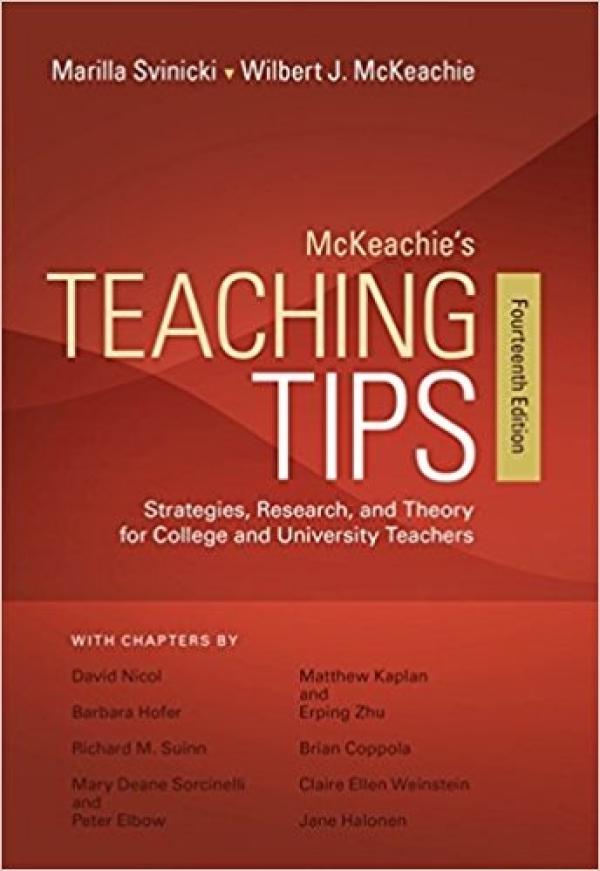
This indispensable handbook provides helpful strategies for dealing with both the everyday challenges of university teaching and those that arise in efforts to maximize learning for every student. The suggested strategies are supported by research and adaptable to specific classroom situations. Rather than suggest a "set of recipes" to be followed mechanically, the book gives instructors the tools they need to deal with the ever-changing dynamics of teaching and learning. Available with InfoTrac Student Collections http://gocengage.com/infotrac.
This chapter outlines the best teaching strategies to use in intensive courses to achieve the best possible learning outcomes. It explores how students experience intensive courses differently than they do traditional scheduling formats and the factors that contribute to high-quality intensive course experiences.