Resources
Role‚Äêplaying games have been a part of scholarly conversations about pedagogy for several decades. However, more work is needed in understanding how gaming pedagogy can best fit with and augment particular disciplines. After providing two examples of role‚Äêplaying games that have been used successfully in teaching the New Testament, this article argues that role‚Äêplaying games contribute to theological and religious studies classrooms by forming positive values (e.g. openness to multiple viewpoints, civility, and empathy) and assisting students in integrating their faith and learning. Because of the low‚Äêrisk settings that games provide, students can practice skills that increase their achievement of learning outcomes and contribute to their value formation and faith formation.
Games offer unique possibilities for learning, and text‐based interactive fiction (“IF”) in particular lends itself as a low barrier to entry for instructors and students wishing to build interactive narrative games. Understanding by Design provides a framework by which to determine the best possible places for instructor‐ and learner‐built IF in any given course, whether face‐to‐face or online. A thick description of how an instructor conceived and developed two IF games follows, explicitly tied to course‐design considerations like learning goals and assessment performances. The value of IF as a student project is explored, and finally an appendix provides resources for instructors and students to begin building their own interactive fiction.
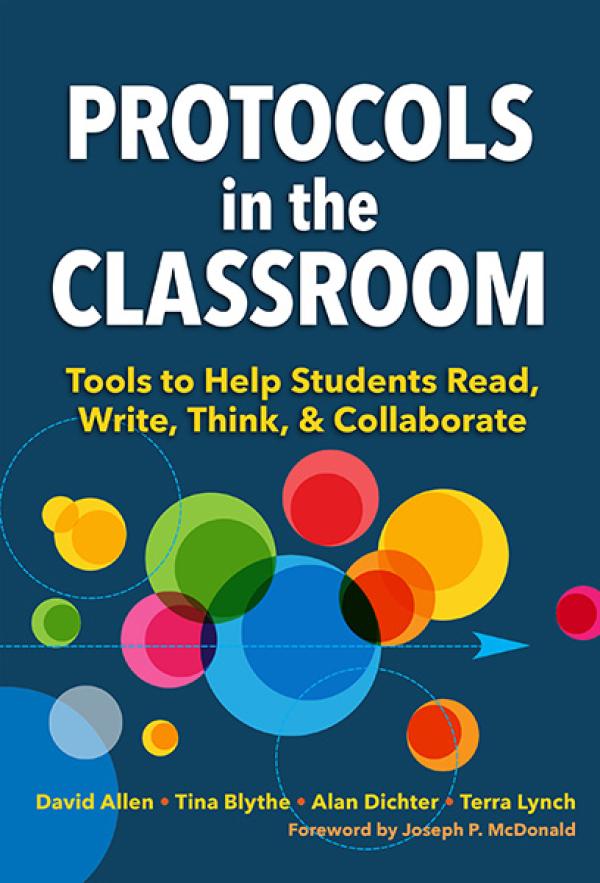
Click Here for Book Review For nearly 2 decades, Looking Together at Student Work and The Power of Protocols have sustained educators in their professional learning. Protocols in the Classroom expands the scope of those books from teachers’ professional learning to include students' learning, providing teachers with the tools they need to use discussion protocols to support students in developing crucial skills and habits as readers, writers, critical thinkers, and active participants within the classroom community. This essential guide provides detailed descriptions of protocols for four critical purposes: -Entering into and engaging with texts of many different types; -Sharing perspectives on questions, issues, or topics; -Giving and receiving important feedback on works in progress; -Exploring one’s own unique learning style. For each protocol the authors provide a clear set of steps, tips for teachers and students in facilitating the protocol, and a story of a teacher using the protocol with students. The book is filled with resources for getting started using protocols with students, as well as for deepening the use of protocols over time. It also relates protocols to other strategies for supporting students’ learning, including Accountable Talk, Thinking Routines, and Socratic seminars. The authors describe how protocols contribute to a schoolwide culture of discussion, inquiry, and reflection. (From the Publisher)
This essay distills pedagogical principles that have emerged through a dozen years of experience teaching a seminary introductory Old Testament course online. The rich interactions and social cues that professors rely on to monitor student learning in face‐to‐face classrooms are replaced by a carefully choreographed pattern of student learning activities and peer‐to‐peer discussion prompts through which the professor “engineers” student learning. A careful description and analysis of the pedagogical intentions and choices embedded in the design of an online course reveals a sociology of online learning and the author's implicit theory of how learning happens.
One page Teaching Tactic: Students are presented with an ambiguous text that helps them explore how their own experiences and contemporary contexts shape biblical interpretation. It introduces the idea that an interpreters’ identities, cultures, politics, and individual histories significantly change their perceptions of a biblical text.
One page Teaching Tactic: a learning design that de-familiarizes students' expectations of what a book is, to open new ways of understanding biblical texts.
One page Teaching Tactic: a process to prompt students to meet and converse in a series of one-on-one discussions, while working to understand course material in preparation for deeper analysis.
The Baltimore Mural Project (BMP) seeks to connect religious studies education to the growing literature on threshold concepts in order to address bottleneck areas in student learning. The project is designed for undergraduate service courses comprised of mostly non‚Äêmajors: for example, world religions. Students in these courses often struggle to understand and apply the discipline's unique approaches to the study of religion (i.e. its threshold concepts). Rather than merely memorize certain facts about a religious tradition's myths [or world forming stories], rituals [or embodied disclosures], materials, and so on... students are asked to apply threshold concepts related to religion, art, and the social good to the study of murals in Baltimore. Through a series of project elements (including: field work, photography, digital geomapping, and quantitative, qualitative, and archival research) the BMP helps students who struggle with threshold concepts in religious studies by creatively connecting the more conventional aspects of world religions courses to social justice issues related to mural art in Baltimore. By experientially helping students to make these connections, they are able to find creative routes through otherwise hindering barriers to their learning in religious studies.
One page Teaching Tactic: structure, prompts, and evaluation rubric for final summative exams conducted orally with individual students.
One page Teaching Tactic: a test-prep strategy in which students prepare a 30 second "elevator speech" in the character of one of the course's major thinkers, that they then present to each other in pairs and have to determine each other's characters.