Resources
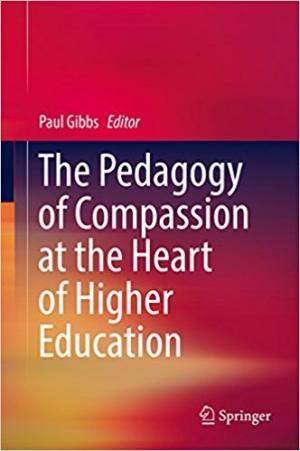
In the opening chapter of his edited volume The Pedagogy of Compassion at the Heart of Higher Education, Paul Gibbs succinctly locates this collection of essays and the topic itself within the current environment of higher education in a way that will be familiar to many: “Given that the consumer model seems to resonate with the context of the majority of higher education institutions, what place do the virtues of humanity and spirituality have in a product-driven consumer service business model of higher education?” (9). It’s a question often asked, and it is one this volume addresses from a wide variety of angles and perspectives. The answer, from adding the sum of the essays here, is that humanity, spirituality, and other qualities of compassion can be observed, practiced, and cultivated in most if not all places within higher education. The variety of topics and perspectives in this volume provide detailed descriptions, arguments, and inspiration for just how such a pedagogy has been prevalent in the history of higher education, and how it can be integrated more into higher education today. Gibbs is mindful to be as expansive as possible in the perspectives he includes, and the book does include authors from the U.K., the U.S., Canada, Hong Kong, and Europe, with voices ranging from senior academics to students. This range demonstrates Gibbs’s point that the book “is neither overtly spiritual nor secular or agnostic” (11). For instance, Richard White’s entry traces compassion through Western and Eastern philosophy, and in doing so provides practical ideas to create a compassionate classroom. Kathryn Waddington focuses on “self-compassion, which involves self-kindness, a sense of common humanity, and mindfulness” (66). Self-compassion, Waddington shows, can influence a change in behavior and understanding at individual, group, and organizational levels. Gibbs is conscious of the structure and organization of this essay collection, and the essays flow well in conversation with each other. This element of the book makes for a very engaging read, and one that further encourages the links between multiple perspectives on compassion in higher education. Following the chapter on self-compassion, Irena Papadopoulos writes on intellectual compassion as a way of cultivating world citizenship, connecting the concepts of interconnectedness of social reality as stemming from twentieth-century philosophers Martin Buber and Emmanuel Levinas. From there, the discussion flows to the relation of compassion within the liberal arts, within Buddhism and Islam, and the transformative power of compassion within South Africa’s anti-apartheid movement. There is also a series of essays focusing on compassion in an institutional way. In The Pedagogy of Compassion at the Heart of Higher Education, Gibbs collects diverse ideas about compassion in higher education. This volume can serve as a guide, for individuals and institutions alike, for an engaging historical and topical conversation on the wide-ranging ways to integrate ideas of spirituality and humanity into realms that have increasingly come to seem consumerist.
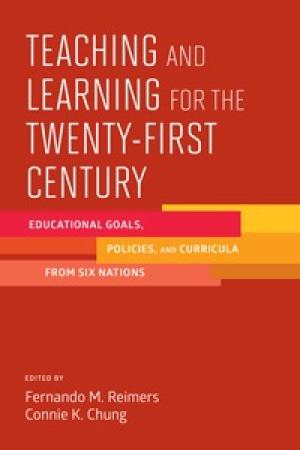
This groundbreaking text does not approach teaching and learning from the do’s and don’ts (the mechanics and tools of pedagogy) but instead offers a comparative cross-national investigation of the goals and purposes of education in Singapore, China, Chile, Mexico, India, and the United States. What has each country set as its goals and purposes for the twenty-first century context of close global interactions and rapid information and communication technologies? And how does each assess tangible outcomes? An overarching inter-country similarity is that the goals of pedagogy result from both changes in each country’s contemporary particularity and in their evolving definitions of the global. For instance, in the twenty-first century, each country faces fast and fluid developments signified by the necessity of learning to learn, of competency of certification, and of online learning. How should teaching and learning respond? Should a nation or civilization choose the route of achieving adaptability to evolving goals? Or should a country center on the technical challenges related to a school’s function? Succinctly, goals mean who should learn what. These goals are not neutral or objective. Various stakeholders in society are vying for the appropriate ways of teaching and learning. Governments seek pedagogical goals that produce patriotic citizens; businesses want ideal employees; faith communities desire moral human beings; graduate schools look for highly educated applicants; not-for-profits hope for volunteer-minded people; and parents seek teaching and learning so their children can achieve meaningful employment or, in some case, simply employment. Drawing on a sophisticated and comprehensive study from the National Research Council (NRC), this book frames each of the six countries within three broad pedagogical rubrics – cognitive, intrapersonal, and interpersonal competencies – that are learned by both teachers and students. Each generic rubric contains relevant subsections. Specifically, cognitive competencies include cognitive processes and strategies, knowledge, and creativity; intrapersonal competencies include intellectual openness, work ethic/conscientiousness, and positive core self-evaluation; and interpersonal competencies include teamwork and collaboration along with leadership development. How does each country implement in practical concretes this NRC framework? The co-editors chose the NRC study because, in their research, it represents the most all-encompassing and science-based study of twenty-first century skills when compared to the other major studies in the world. The NRC readily admits that many aims within its teaching and learning investigations are not novel. But what is new (and is fundamentally different from all prior historical contexts) is that these sought-after competencies no longer belong to the elites of the world (including the United States). All countries now de jure or at least subscribe to a democratization of pedagogical goals for a diversity of citizens. Indeed, a vibrant twenty-first century country requires universal goals for each citizen. After an elaborate and nuanced review of the six countries, the book offers a concluding chapter with the following recommendation. Each nation necessitates a systems theory to integrate all aspects of a country’s goals, methods, practices, and assessment mechanisms to achieve the established competencies. The best system will be one that connects fluid, adaptable, logical, and coherent relationships among curricula, school organization and management, various teaching and learning approaches (such as independent study, didactic pedagogy, outdoor education, and project-based learning), effective communication mechanisms, and emotional buy-in from society’s stakeholders. I highly recommend this book for any civic-minded people, especially those wanting to achieve professional development for teachers and to prepare students for new ways of learning now.
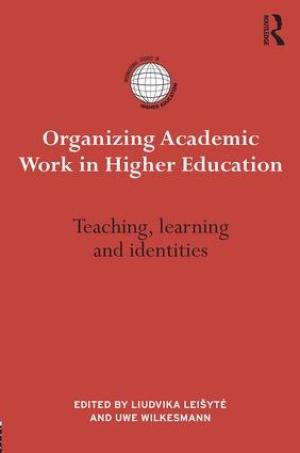
As much as teachers would like to argue to the contrary, the university is a business, an educational business to be specific. Universities, colleges, technical schools and the like are in the business of selling learning. They sell this product to those who see the need for education beyond the formative years, whether that be training in a trade or preparation for an occupation such as medicine, psychology, or religious service. Institutions of higher learning have been in existence for around a millennium, and have served as a tent pole artifact for institutional culture – universities have either set the bar of cultural progression or have fallen behind, sputtering to keep pace with the practitioners outside their hallowed walls who are establishing new trends and raising the bar set by the university. We seem to be in a contextual epoch that is squarely set between each of these extremes. There is still a hushed reverence that comes from finding a peer who attended Harvard, Stanford, Princeton, or Emory. Many in the academic community clamor to hear special lectures from Continental colleagues who have attended or are employed by Oxford, the University of Paris, or the University of Amsterdam. In some pockets, simply having a college or graduate degree can still mean higher pay, positional advancement, or advanced social standing. In the United States, we seem to be living in a time of both saturation and scarcity. Higher learning institutions are continually creating new and engaging programs to prepare interested individuals for securing employment in an ever-evolving, technologically-driven, globally-emerging marketplace. And yet the number of students seems to be shrinking as many weigh the cost of attending college or find that their career choice may not even require a college degree. Responsiveness to the changes taking place in society and academic preparation for those changes is of concern for leaders at universities, colleges, and trade schools. On one hand, the administration crunches numbers and devises business strategies to ensure that the institution remains open. On the other hand, faculty craft courses and develop programs to ensure that teaching is what keeps the institution open. This is the discussion that editors Leisyte and Wilkesmann present before the reader. Assembling over twenty scholars from across the globe, this volume demonstrates that the New Public Management model can be used to successfully organize institutions of higher learning. In providing specific examples from Germany, China, the UK, and the Netherlands, as well as individual authors speaking out of their own experiences, this volume shows how academic managers can integrate business-based operational models with rubric-based educational models to promote academic integrity and marketplace relatability. Change will continue to be the one true constant of the educational universe, and this volume provides a good map for the road ahead.
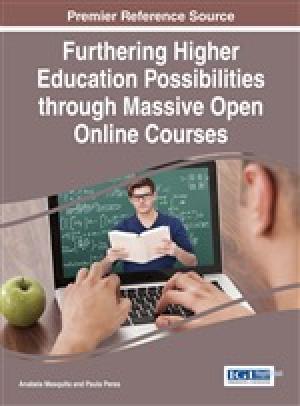
Twelve articles clustered in four sections under this ambitious title evince a desire to promise revolutionary changes that have been associated with Massive Open Online Courses (MOOCs: term-based courses available to the mass free of charge via online media). The authors are truthful to this vision, offering vast ranges of topics including distance learning, open learning, innovations, academic administration, business management, and educational technologies. The book includes a detailed table of contents that provides a concise synopsis, and each chapter concludes with an extensive list of references and other resources. Section 3 offers two articles with case studies. The first features a MOOC that deals with the problem of bullying in schools. It reflects on the use of test cases and finds that timely feedback is critical. The second examines LMOOCs (language MOOCs) that facilitate foreign language acquisition with the aid of mobile platforms. In LMOOCs, mobile devices function not only as a portal to the course site but also as a gateway to real-world language environments. The final section, which contains one chapter, outlines a planned course on mechatronics in a hybrid format, combining the benefits of the face to face approach and a MOOC. The major strength of the book is that it provides guidelines for the implementation of MOOCs in practical terms, away from the clichéd terms (such as “revolution,” “hype,” or “innovation”) that are often associated with them. While the MOOCs revolution is rumored to be coming to an end, the authors assign to the movement a role that could still be made to higher education. To this end, the book calls for pedagogical refinements as well as a clear analysis of the financial viability of MOOCs. Parenthetically, most of the authors assembled in this volume hail from social and geographical locations with European hues. It leaves one to wonder whether claims in this book would have been different if it also included North American or other global contexts, where the movement of MOOCs was born and is still growing.
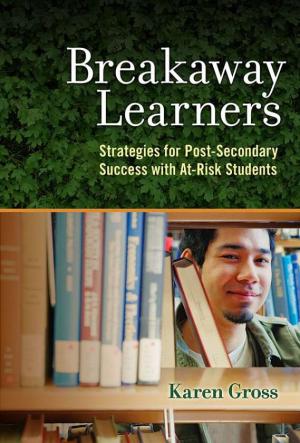
Two root words for education, educare and educere respectively express the complementary principles, to train or mold, and to lead out from. Of the two root words, Karen Gross’s book exemplifies educere, to lead out from, since her basic premise is to meet “students where they are and asks – demands – that institutions do vastly more to understand and respond to the students now enrolled in our educational system” (15). More than a student-centered learning approach to education, Gross suggests that the educational system as a whole should assist students in developing lasticity, a term she uses to describe the quality necessary to enable breakaway students not only to complete their degrees, but also to succeed as adults in the working environment. Gross prefers the term “breakaway learners” rather than “at-risk learners” because it describes more accurately that these students are breaking away from the societal, economic, and familial circumstances that often have hindered their progress in the educational system. She notes that these students have developed the capacity, often overlooked, for lasticity. She defines lasticity as a set of conditions that enables individuals to flourish in education and life. Lasticity is built upon a two-part equation of six qualities (the six Ts) and five building blocks. While she does explain the six Ts (trust, transparency, tranquility, teachers and teaching, tolerance, and temperance), Gross focuses mostly upon the five building blocks of elasticity, plasticity, pivoting right, reciprocity, and belief in self. Within her chapters, she provides clear examples of each of these five building blocks, noting that the first three are centered on the students themselves, whereas the last two require engagement between students and institution. For example, her chapter “Pivoting Right,” while centering on the individual, does describe four ways educators can foster making wise decisions. While Gross addresses developing lasticity in higher education, she also notes that the educational system as a whole, from early childhood to college, requires a re-examination of its purpose and goals. As such, Gross recognizes the challenge of changing the educational pipeline and landscape that would enable the development of lasticity. She identifies both macro and micro challenges that need to be surmounted. Further, she addresses the hurdle of money and provides suggestions as to how to assist students better, even to the recommendation of changing the FAFSA form itself to make it more accessible to all parents and students. Even though her text focuses on changing the educational pipeline, some of her examples can be used now by educators and within institutions. Developing trust, enabling student voices, and encouraging belief in self can be done in many of the ways she suggests as well as through understanding better those whom we help learn along the journey of life. In essence, Gross would probably agree that the process begins with changing the focus of education from educare to educere.
In Echoes of Insight: Past Perspectives and the Future of Christian Higher Education, co-authors Patrick Allen and Kenneth Badley mine voices from the past for fresh wisdom to assist Christian universities in their efforts to balance programming (glitz), the pursuit of truth (glue), and the goal of being transforming institutions “for the sake of the Kingdom (300)” (hope). The text is a response of hope, intended to refocus the mission, identity, and curriculum of Christian universities on its well-being and its ultimate purpose, which is "to provide a clear and rigorous program of instruction, spiritual formation, and vocational preparation (255).” The text, therefore, proposes a distinct move away from the sometimes exclusive, albeit important, conversations around money, branding, and jobs for graduates. To do this work, the authors examine eleven influential thinkers of education. Using a format that very closely resembles the multiple editions of Daniel L. Pals’s Theories of Religion, each chapter in Echoes of Insight offers a brief biography, a synopsis of classic and relevant works, a discussion of applicable ideas, and questions for reflection. Part One: “The Classroom and the Student Instruction, Formation, and Vocation,” introduces five thinkers and attempts to connect their ideas with the perceived “challenges faced by Christian higher education in the twenty-first century (18).” Part One begins with Alfred North Whitehead, but the works of Dorothy Sayers, Hannah Arendt, Flannery O’Connor, and Maria Montessori, via their respective chapters, come alongside to help to facilitate a larger discussion on the human experience and the current challenges faced by Christian universities. Cooperatively, these works support Whitehead’s claim that “all parts of a student’s education should fit together epistemologically and should connect to the student’s day-to-day life (29).” In other words, how faculty members treat students, how colleagues convey mutual respect, or where the roots of authority lie all contribute to the students’ learning experience. Part Two: “The Faculty and the Administration: Mission, Vision, and Values,” examines the work of John Henry Newman, Abraham Flexner, Thorstein Veblen, Jose Ortega y Gasset, Robert Maynard Hutchins, and Karl Jaspers. Unlike Part One, the thinkers included in Part Two are those who had a vested interest in higher education and maintained distinct ideas about the university and the pursuit of truth. Allen and Badley found that all agreed that a common mission, a strong academic program, an emphasis on learning, and the freedom to pursue truth were essential. Overall, the text is an enjoyable read. In fact, although it is written for a scholarly audience, the authors’ often tongue-in-cheek humor makes the manuscript a rather accessible and entertaining page-turner. More importantly, the authors’ passion and genuine interest in the success of Christian higher education makes Echoes of Insight both engaging and insightful. Echoes of Insight is an important work and a valuable addition to this area of scholarship. Thankfully, the authors are already planning a more inclusive and diverse second edition, because the current text falls short in these areas. Indeed, the glaring absence of writers, theologians, or philosophers of color is problematic. Such an omission not only silences and makes invisible select people groups, but it also disregards the distinct experiences of minority students on predominantly white Christian campuses. Consequently, this text, whose argument is predicated on integration, connection, and the unhindered pursuit of truth, failed to take seriously just how much race and racism in American education and American Christianity unjustly impacts people of color and negatively informs their day-to-day life and learnings experiences. Thereby rendering many of them grossly untouched by Allen and Badley’s vision of a transformational institution. Given the philosophical and theoretical emphases of Echoes of Insight, graduate students and specialists (namely faculty and administrators) with scholarly interests in this subject matter would benefit most from reading this text.

Change is the constant in theological education, though it may not seem so from some vantage points. Most people in an organization desire a sense of permanence. Given the nature of the day-to-day routine, most people experience on the job, it's not difficult to appreciate they are lulled into a sense of stability and immutability in their organization. From their perspective, the constancy of the job gives a sense of continuity. Even for Faculty, the annual rhythm and cycles and the academic year can give an unwarranted sense that things change slowly from year to year. From the perspective of the dean, however, change is the constant---intended or not. Deans will confront, manage, resist, hold at bay, or instigate change every year. Most deans would welcome a single year with a minimum amount of change that can provide a "breather" from the steady stream of issues, challenges, and problems that bring about some level of change at multiple levels. Unfortunately, the nature of the job means deans will work amidst a constant swirl of change. C. William Pollard, author of The Soul of the Firm, provides a perspective on change that is critical to theological education in this era. Pollard said, "Without change there is no innovation, creativity, or incentive for improvement. Those who initiate change will have a better opportunity to manage the change that is inevitable." Leaders in theological education should also take his caution to heart: "Learning and innovation go hand in hand. The arrogance of success is to think that what you did yesterday will be sufficient for tomorrow." Theological school deans, then, should embrace that change is part of their job, and accept that not everyone will like it. Deans, however, are also stewards of change in their organizations. As such, wise deans will also question change---that is, they will avail themselves of critical questions that can help them discern the purpose, necessity, and nature of the change they will lead. Questioning Change Here are sample perspectives that can help deans "question change": Do you have a legitimate rationale for the change? Can you rely on good data to inform the change? How much change do you need? What can help leverage the change? (trust, data, internal authority, external pressures?) What is the institution's capacity to absorb change? Has the institution navigated a similar change in the past? Did it succeed or fail? Why? How much risk can you absorb? What will you have to give up to realize the change? Who will you leave behind? What do you want to preserve? What will people grieve? What may be unintended consequences? What level of change is required? (Drastic or incremental?) What type of change is needed? (cultural, organizational, administrative, policy, technological, structural, programmatic, developmental, evolutionary, social?) What is your timeline for change? Is there a window of opportunity that creates urgency? Will your mission change as a result of the change? Does it need to? Will the change actually solve the problem being addressed? Who will commit to the change? Who is most invested in the change? In staying the same? Do you have the resources to make the change? How will you know the change is successful? What metrics will you use? Who will most benefit from the change? Who will be the most disadvantaged by the change? How will the change impact curriculum? Faculty? Students? Finances? The seminary culture? Administration? Can you see the changes through? (Will you leave office or the institution before the change is completed?) Abigail Brenner cautioned that "Change without transition may only serve to recreate old scenarios and reinforce old patterns of behavior. For change to have a salutary effect on us, we need to learn to effectively work with it and not to run the other way when it presents itself." ("The Nature of Change," Psychology Today. May 6, 2011).

Funded by the Ford Foundation, neighboring universities joined in a two-year partnership hoping to make the “learning climate” on each campus “more inclusive of minority voices and ways of knowing” and safer “for the free exchange of ideas” (ii). This spiral-bound handbook documents the plans and experiences of the faculty, administrators, and staff at Alaska Pacific University and the University of Alaska Anchorage who sought to deepen “civil discourse” on each campus. The project primarily focused on faculty development for “difficult dialogues” within classrooms, but also addressed broader campus atmosphere and structures of support. The volume is meant to be a “conversation-starter and field manual for [those] who want to strengthen their teaching and engage students more effectively.” The first four chapters (Ground Rules, Rhetoric/Debate, Race/Class/Culture, Science/Religion) are framed by the training faculty received as part of four day-long faculty intensives. Rather than a straight narrative, each chapter reads as both a how-to manual and an assessment of implementation – summaries of proposed pedagogical techniques are followed by faculty essays that document what happened when they applied those approaches in the classroom. A fifth topical chapter (Business/Politics) documents an additional set of teaching techniques and case studies. Brookfield and Preskill’s Discussion as a Way of Teaching served as a guiding text for the group’s work, but they also drew from the wisdom of fellow faculty. The book’s essays, by thirty-five faculty and staff involved in the initiative, make clear they found the project’s prompt to reflect and adapt teaching approaches to be helpful. The final chapters (Outcomes, Keep Talking) offer an assessment of the two-year project (successful in its deepening of the sense of each institution as a place of “profound learning, of courageous inquiry, [and] deep transformation” for “students, faculty, staff, administrators, and community partners” [247]) and brief suggestions for maintaining the project’s benefits. Every chapter includes color-coded lists, summaries, and tips, which prove useful when skimming the text for material relevant to a variety of topics and contexts. The volume closes with a list of references and readings on topics discussed in the chapters, including: academic freedom, safety, contrapower harassment, rhetoric, argument, debate, identity, privilege, culturally responsible teaching, politics, and social justice. Start Talking includes a deep storehouse of pedagogical and practical wisdom. In many ways the volume reads more like a grant proposal and summary of results than a cohesive narrative. As a result, rather than reading the text straight through, faculty members or departments facing specific issues might search the volume for targeted resources to navigate difficult conversations. Similarly, institutions hoping to shift campus climates in contentious times might identify approaches to pilot with small teams over the course of an academic year. Finally, and particularly because most of the volume’s content addresses difficult conversations around issues other than religion (such as race, class, culture, politics, and science), the book’s resources provide a useful, lower-stakes entry point for faculties at religiously-based institutions to think about how to navigate contentious theological discussions.
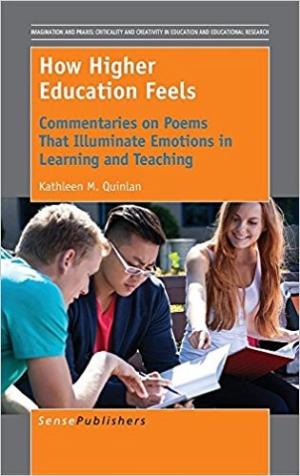
Studies in higher education seem to have given limited attention to the emotional aspect of the teaching-learning experience. Emotion has, nearly for the greatest part, been isolated from cognition. Underlining this distrust of emotion in academia, How Higher Education Feels, explores the less charted trails of emotional dimensions of teaching and learning. Holding to the hypothesis that emotions cannot be separated from rational engagements, the book attempts to demonstrate how emotion is deeply intertwined with thinking and reasoning in higher education. This book is thus about journeying with, and reflecting upon, the emotional landscapes of courses we teach and students we impact. The first two chapters set the stage and agenda of the book by outlining the need for study of emotions in higher learning, the methodology with which to explore emotional experiences, the significance of poetry in relation to emotions, and the conceptual tools used to examine the role of emotions. A teacher’s regulation of his or her own emotions in the context of student-centered teaching is a key element in the discussion. The next nine chapters each include ten to fifteen poems that address specific themes of experience in university education. Some of the key themes include: transition to higher education, taking care of students and ourselves (teachers), love of people and culture, love of arts and or science, success and failure, and introspection and retrospection. The poems were compiled to serve as case studies expressing and illustrating various feelings in relation to significant aspects of learning, teaching, and development. They are rich in content and language, duly accompanied by brief commentaries as well as a well-researched expert commentary that places the poems in their specific contexts. They are simple and complex, metered and irregular compositions just like the life and moods of many academics. Poems are personal and touching, deep and sensitive, and quite successfully serve the purpose of the book. While the poetry is meant to serve as case studies in emotion and feelings, the book seems to become a compilation of poems rather than a pedagogical discourse. Thankfully the commentaries, especially the expert commentaries, rescue the reader from being lost in the anthology of poems. The theoretical framework is also well conceptualized and the final chapter recaptures the mission of the monograph. It successfully shows the importance of emotion in experiences of higher learning from enrollment to graduation and beyond. It further shows the centrality of emotion and feelings of a student in relationship with subject, with teachers, with peers, and with self – all summed up, in this study, in poetic expressions. As the compiler of this groundbreaking work, Kathleen Quinlan of Oxford Learning Institute, deserves appreciation for pointing attention to an important direction in higher education – the centrality of emotion and its powerful expression in poetry. She has liberated emotion in education from being the sole property of psychology and opened it up, with the help of poetry, for reflection on its socio-cultural contexts. How higher education feels? It feels terrifically poetic!
Editors Khine and Areepattamannil contribute to the series Contemporary Approaches to Research in Learning Innovations with volume nine, Non-cognitive Skills and Factors in Educational Attainment. The premise for the volume is that non-cognitive skills are equally important, or are even more important, than cognitive skills for effective educative processes and student success (3). Examples of non-cognitive skills include resilience (grit or toughness), well-being, social awareness, curiosity, creativity, work ethic, self-evaluation, collaboration, self-regulation, self-confidence, and motivation (16). The book is organized in three parts: I – Introduction, II – Conceptual and Theoretical Underpinnings (on non-cognitive factors), and III – Evidence from Empirical Research Studies. In Part II, six chapters are devoted to the relationship between non-cognitive success in learning and the educational process. A key question is: “Why are non-cognitive constructs important?” (17). Research shows that the cognitive development of persons should be accompanied by intentional non-cognitive development for positive democratic citizenship and personal and social well-being. Authors call for teachers and policy-makers to be aware of the research that clearly shows the significance of non-cognitive learning, thereby challenging current curricula, teaching methods, disciplinary policies, student evaluations, activities, and utilization of assessments (chapter 3). Subsequent chapters in Part II focus on understanding roles of self-efficacy and emotional intelligence, a repertoire for educators based on their attention to non-cognitive factors, attitudinal changes regarding assessment and correlating interventions, and non-cognitive learning tied to academic performance. Part III provides evidence from empirical research studies that support non-cognitive factors being highly significant for student success both in school and after graduation. For example, self-confidence is a greater predictor of achievement than measures of socio-economic status (166). Passion, perseverance, and self-control contribute significantly to success as well (chapter 9). Chapter 13 provides recommendations for greater student success: provide self-regulation knowledge support for students to improve their preparedness; provide information about available supportive environments; evaluate creativity and practical skill sets equally to cognitive ability; and redesign education from a “fixed intelligence” foundation to a dynamic intelligence focus (311). Chapters 14 and 15 initiate a tested “mental toughness” curriculum for students, and analyze attributes required for such toughness. In contrast, the next chapter recommends socialization through school in early childhood that educates children in social norms and mores through the lens of justice, beneficence, faith, hope, and love rather than with fear, negativity, and external control (370). Issues of future wellness, performance in mathematics, and the impact of culture on non-cognitive skill sets follow in the final chapters. This volume provides exhaustive evidence for its premise. Yet, these studies challenge educators to think pedagogically about what we expect in the classroom and how we intend to educate the whole person in a dynamic learning conversation rather than in a “fixed” curriculum. This book is worthy of attention, and is likely best suited for faculty exploration in broad strokes rather than an essential read for all teachers.