Resources
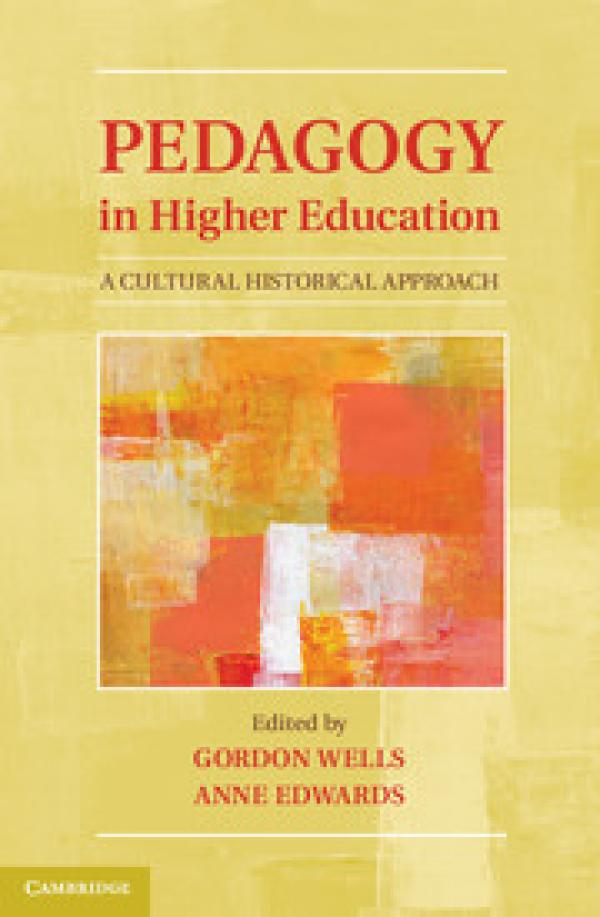
This book poses a central question: “What can Cultural Historical Activity Theory (CHAT) contribute to the solution of the problems facing higher education today?” For faculty teaching in theology and religion, there are further questions: do faculty agree on what the authors propose are higher education’s problems? Is CHAT theory valuable as an organizing resource in our field? And if so, is this the book that will be most useful to faculty for their work? Wells and Edwards have assembled contributions from scholars from all over the world, many in education and many with some interest in sociocultural approaches to teaching and learning. They take a long view on changes in higher education: “[I]n the past two centuries, there have been several specific changes in the ways higher education has been expected to perform its functions for the benefit of the larger society” (1). For example, higher education now functions more like a business than it has in the past (which diverts faculty energies to grant-writing and its associated research). There is more student diversity, although “several categories of young people are still largely excluded” (3). In larger universities, huge class sizes create teaching that amounts to little more than “delivering the curriculum” – which then affects not only pedagogical strategy, but student learning outcomes as well. The editors call for different kinds of pedagogy to meet the new kinds of learning that are needed, such as active learning, undertaken in collaboration with others, in which relationships, emotions, and motivation are taken into consideration as much as cognitive dimensions (4). Higher education should be “not only a preparation for a career but also a basis for lifelong learning as an informed and engaged contributor to the wider society” (4). The book has two main sections. The first section is focused on teaching and learning, the second on “relations between institutions of higher education and the professions for which they prepare their students” (12). This is where some of the disadvantages of this text for theological educators become apparent. First, there is a heavy emphasis on undergraduate education – and enormous lecture classes are not necessarily the context in which most teach. Second, the lens through which educational trends and needs are explored is a somewhat esoteric theory (CHAT) not widely discussed in theological education circles. Finally, the majors the authors use in their examples are not related to theology and religion. When a book costs as much as this one, it needs to be worth the cost. For most faculty in theological institutions, this is probably not the best investment to make. That is not to say this is not a good book; it simply is not the best investment when choosing teaching resources tailored for theological school contexts.
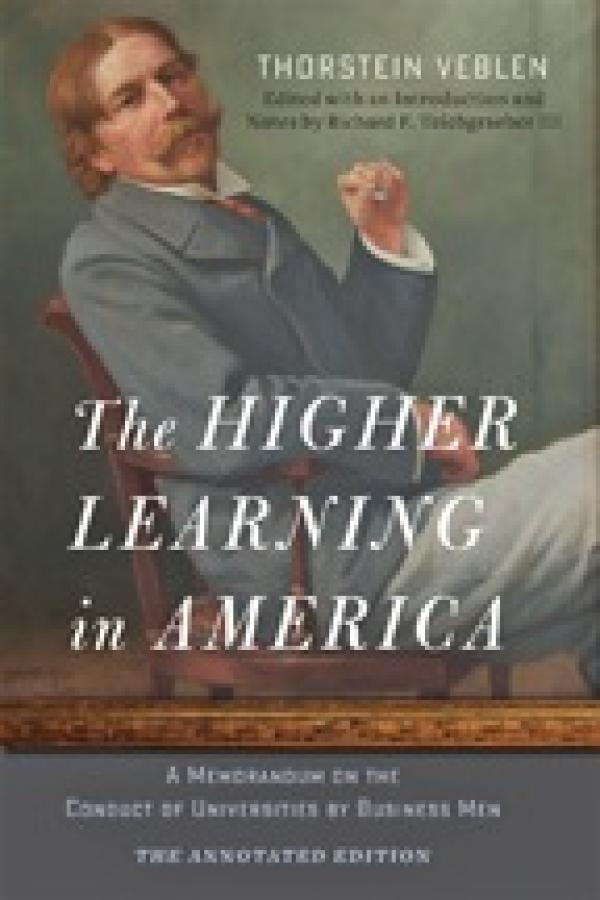
While often repeated, at least by scholars of the original 1918 document, it bears retelling here that the original subtitle of Thorstein Veblen’s The Higher Learning in America was “A Study of Total Depravity.” And while such language was sanitized for publication the author’s irritation with the “bootless meddling” of governing boards and the “skilled malpractice” of university presidents, was no less strident and prevalent throughout his text. The recently published, first-ever annotated edition of Veblen’s important – and, unfortunately, still timely – report put this reviewer in mind of much more recent such studies, and thus will be reviewed here in the context of these recent contributions to what Veblen called “the professors’ literature of protest” (for example, see Ginsberg [The Fall of the Faculty, Oxford University Press, 2011] and Menand [The Marketplace of Ideas, Norton, 2010]). Richard F. Teichgraeber’s excellent “Introduction,” as well as his editorial notes throughout, make this timeliness clear. Veblen retrospectively joins a host of prominent scholars who have engaged a broad institutional critique of higher education, and he was by no means the first to caution against the threat to the American university’s independence, by its uncritical adoption of the methods – and its serving the needs – of the business community. In this Veblen presages the pessimistic diagnosis of American undergraduate education offered in 1996 by the late Bill Readings in his much-quoted University in Ruins (Cambridge, Mass., Harvard University Press), in which the author excoriated the contemporary American “corporatized” university as a “ruined institution” hopelessly “enmeshed in consumerist ideology” (Veblen’s “salesmanlike proficiency”). Many have since echoed this sentiment, not least among them Harvard professor, James Engell, who in 1998 painted a similarly discouraging picture of the current state of affairs for undergraduate study, calling particular attention to higher education’s rush to fall in line with business and government calls for greater “relevance,” “application,” and “preparation for working life” outside the academy – all measured by metrics of cost, efficiency, and productivity. In an article entitled “The Market-Model University: Humanities in the Age of Money,” (Harvard Magazine) Engell cites persuasive evidence that economic pressures have negatively, if not irrevocably, impacted American collegiate education – for instance, declining enrollments in traditional liberal arts disciplines,with the corresponding reality for faculty equally gloomy: the lowest faculty salaries compared to colleagues in the pre-professional disciplines (full-throatedly denounced by Veblen), the most onerous teaching loads (“notoriously underpaid and so scantily filled as seriously to curtail their working capacity,” according to Veblen), and the least academically prepared and intellectually engaged students. Such a move toward “aggressive mediocrity,” with faculty “managed according to the principles of the consumer-driven marketplace,” as Veblen put it in 1918, has resulted, as essayist and critic William Deresiewicz would have it, in American higher education “slouching toward a glorified form of vocational training” (“Faulty Towers: The Crisis in Higher Education,” The Nation, 2011). “The liberal arts university,” argues Deresiewicz, “is becoming the corporate university, its center of gravity shifting to technical fields where scholarly expertise can be parlayed into lucrative business opportunities.” “Vocational training,” Veblen had long ago warned, “is training for proficiency in some gainful occupation, and has no connection with the higher learning” (168). These and numerous other recent interventions, all resonant of Veblen’s prophesies, have contributed to a complex and increasingly polarizing debate on the future of higher education in America. They argue that an increasingly career-focused (market-driven) education has pressured colleges – even those with strong liberal arts traditions – to become more occupation-focused, and they offer a spirited defense of the value of liberal (Veblen’s “higher”) education on its own terms against the encroachments of economic justification, assessment paradigms, the uncritical embrace of digital technology, and the general misalignment between scholars and professional higher education. “The underlying businesslike presumption accordingly appears to be that learning is a merchantable commodity, to be produced on a piece-rate plan, rated, bought and sold by standard units, measured, counted and reduced to staple equivalence by impersonal, mechanical tests,” Veblen writes in 1918 (190). While in tone Veblen implicitly seems to hold out some hope that genuine compromise could be made between the needs of “higher learning” and the demands of the marketplace, he offers little in the way of solution beyond indignant critique. What he does suggest is that any effort at meaningful reform in higher education will have to originate from within the domain itself, and from a clear understanding of what constitutes academic organizational culture. Any such understanding will have to begin internally with a frank reevaluation of basic missions and standards, systems of reward and sanction, and the patterns of decision-making and praxis. To what degree, we need to ask, are the social realities of higher education structured, shared, and perhaps contested by the participants in the organization? Yet the domain of higher education, if it is to survive current public scrutiny, must look externally as well. It must consider, for example, how it defines and what its attitude is toward its external environment – that is, those critical forces that can positively or negatively influence the profession’s effectiveness. The imposition of standards set outside the university goes counter to the concept of the university as an autonomous institution that sets its own standards, free from external pressures. The result is an inevitable clash of views, then, regarding the relationship between the university providing the service and the society that demands it. And to the extent that university performance is measured by external institutions, autonomy is compromised. The question, presciently suggested by Veblen, is should the profession of higher education engage with its external environment in order to give expression to the latter’s interests, ideas, and needs which are marginalized by self-protective “ivory tower” mentality? If yes, to what extent? Some believe this type of outward focus will ensure the power of the organization to engage practically with the environment’s present concerns in a way that addresses a wider social base as “public” – the true measure of accountability. Others believe this “service to the community” leads only to myopic special interest, bowing to temporary fluctuations in social climate and environmental (political and economic) influences. Until we agree on what the profession is now, and how institutional priorities should be aligned with public needs, it will be difficult to determine how higher education is to engage with its environment, and what direction its leaders are to take.
Arminio, Grabosky, and Lang (2015) provide a comprehensive overview of student veterans and service members from interviews and analyses of higher education institutions. This book speaks from history and experience of the U.S. military to present outreach opportunities for the modern reader. The best audience for this book would be higher education administrators and counselors because it primarily discusses the challenges of transitioning to student life in higher education. More importantly, the authors consider the life of the students beyond school, what the students have seen, the makeup of the military world, and how it sheds light on this one. The study consisted of semi-structured interviews of sixteen higher education employees and fourteen students, and included a military spouse, and students at a community college and a public research-intensive institution with multiple campuses. Although this is a small set from which to draw specific conclusions, the volume provides valuable insights about service veterans and members enrolled in higher educational contexts. Student veteran and service members did not have direct support services at the research-intensive institution until after 9/11. The book documents how this change came about when students organized themselves and the campuses responded. The authors provide helpful lists of behaviors of facilitation (53) and advocacy of the student (61) and the system (65). Drawing on an advocacy model put forth by Lewis, Arnold, House, and Torporek (2002) of the American Counseling Association, Arminio, Grabosky, and Lang describe best practices in higher education for this target student group. For example, there should be regular review of degree progress corresponding to military financial benefits and possible deployment. The authors also give weight to possible needs for counseling and disability services. The three predominant cultural transitions between the military and higher education are the loss of collectivism, hierarchy, and masculinity. According to the study, student veteran and service members perceive themselves as outsiders in this environment (105). At the same time, "the military experience influences the college experience, but how it does depends on the individual and his or her experiences and contexts" (106). While the U.S. military is historically less tolerant of the LGBT community, one student participant in the study who identified as a lesbian felt accepted by her military colleagues (107). Higher education could further offer her the advocacy available at campus LGBT resource centers (89). If we continue to take her example, she still might find the individualistic culture of academics as a source of isolation when she once found quick comradery in the military world. A few of the interviews in the study mention that academics are a source of concern because they differ from the hierarchy and structure of the military in their exercise of power as teachers, with one person commenting that they prefer instructions for assignments to be more direct about resources and expected outcomes. A lack of specific directions can be disconcerting to past and present military-related students. Although the book gives insight into specific teaching styles for student veterans and service members transitioning into higher educational contexts, it does not offer as much as it might. On the whole, the book is geared toward the student as a part of the higher education community.
Higher education in the U.S. is hardly a utopia. Despite common mischaracterizations in the media, neither is it an ivory tower looming, pristine and untouched, over the pedestrian affairs of plebian life below. Rather it stands in the center of academic life like a dilapidated monument which we tirelessly remodel and renovate to make relevant and meaningful in the present day and age. But what is it that needs to be preserved and what needs to be updated? Perhaps it is a kind of perverse patriotism which makes American academics believe that a free society is dependent on what the Gitlows describe as the “tripartite” academic mission of American universities: the transmission of knowledge, the extension of knowledge, and development of critical thinking (165). Academics, however, cannot ignore the other mission of higher education in America… the preparation of students for employment. It is this open acknowledgement that institutions, and those actors inside them, are working with multiple – sometimes harmonious and sometimes contentious – missions in mind, which makes the Gitlows’ book a refreshing read. Perhaps it is due to the fact that this father and son team have spent a combined seventy-five years in academia, not just as scholars but also as administrators, that their combined work presents such a reasoned approach. The authors address some of the most daunting challenges that higher education in the U.S. is currently facing in chapters entitled “The Fundraising Challenge,” “The Budgetary Challenge and Fiscal Responsibility,” “The Academic Pecking Order and the Unionization of Academic Staff,” and “Conflicts of Interest and Division I Sports.” The Gitlows also revisit some of the most devastating events American universities have faced in the last fifty years, such as the economic crisis of 2008-2009 in which schools that relied too heavily on a single source of funding found themselves strapped for cash if not perilously in the red. As new models for higher learning, such as MOOCs (Massive, Open, Online Courses) and for-profit universities, challenge the standard model of the American college experience, the authors suggest that readers should evaluate what type of threat these new modes of learning actually pose to the underlying missions of higher education. The Gitlows provide a rather optimistic view of MOOCs, deeming their introduction as “evolutionary, not revolutionary” (182). The authors see MOOCs as altering but not replacing the traditional collegiate model. For-profit institutions (like the University of Phoenix), although presenting a seemingly daunting visage to the traditional college model in the early 2000s, were finally reined in when new rules regarding federal student loans were implemented by the government in 2010. The authors suggest that now that they are being held accountable for abuses, for-profit institutions will, like MOOCS, continue to alter the landscape of higher education, but they will not bulldoze it and build a glorified strip mall of education. So if the largest threats to higher education in America are not MOOCs or for-profit institutions… what are they? The Gitlows point to conflicts of interest and Division I sports representing major threats to U.S. higher education. They write, “a lurking danger for the academic institution is the possible distortion of research motivation and faculty priorities as they assess their institutional responsibilities” (120). Research and the proliferation of patents generated by universities can be both a blessing and a curse. While the authors might present a rather reasoned argument for the nuances and complexities involved in evaluating potential threats to higher education in the U.S., they do not mince words regarding the corrosive effect Division I sports has on the academic foundation of American universities. The authors support a rather unorthodox solution to the ills that plague academic institutions which house sports empires... one that recommends “breaking the power of the NCAA and ESPN” and one which, the authors openly acknowledge, would require a massive overhaul of the current system (146). While a must read for anyone contemplating a future career as a university president or provost, this book also proves to be insightful to administrators, faculty, and policy makers, or anyone whose professional life is grounded in the world of higher education.
Entering his career as a high-flying yet narrowly trained graduate researcher in astronomy, Aveni’s engagement with students in his discipline and in the interdisciplinary context of liberal arts education has seen his own research flourish -- as indicated by his full title as Russell Colgate Distinguished Professor of Astronomy, Anthropology, and Native American Studies at Colgate University. That this flourishing has been driven by continually seeking ways to entice his students to enjoy and collaborate in learning and research, rather than by dint of solely private endeavor against the grain of his teaching commitments, is marvelously set out in his tales of fieldtrips, flunked comet observations, and explosive co-teaching assignments. Teachers of religion and theology may find themselves under increasing pressure to justify their place in the liberal arts context. Aveni shows clearly how imagination and good teaching practices can both competitively enhance a discipline’s standing and co-operatively benefit collegial efforts in other areas. My particular interest in the book arises from the challenge of leading general education redesign efforts at an institution where religion and theology are deeply cherished. I have needed to imagine how other disciplines can enrich my teaching of theology as integral to a liberal arts education. Aveni, with a lifetime of experience, has been helpful both practically and philosophically as I approach my local task. For example, where we emphasize interdisciplinary integration with some co-teaching and team teaching, Aveni looks at those arrangements as more beneficial when disintegrative – that is, when conflict between teachers generates a learning opportunity for students. Those not yet inducted to the professional discourse on general education and the liberal arts will find this text a winsome entry, shorn as it is of the social science research-speak that can clog the fluency of that vital conversation. Aveni is a dedicated practitioner, demonstrating in his own prose the liberal arts skills that should be demanded even of those in STEM. Aveni questions the commodification of education in his last full chapter: “Education just isn’t a commodity, and I don’t think students in the midst of a classroom experience can fully judge its value” (175). He is, at the same time, also able to take the long view on teaching evaluations to recognize their relative worth. He is not a traditionalist in the sense of insisting on a classical western canon, claiming that its proponents, such as Allan Bloom, are “many whose backgrounds demonstrate a profound lack of inquiry into cultural ideals other than their own” (183). Readers will be rewarded with this kind of punchy delivery that invites learning by agreement or disagreement, but not through over-complication and obfuscation. Aveni writes as a generous peer. He is quick to recognize the importance of senior mentors, alongside mundane realities of budgetary constraints, innovative grant-seeking, and teaching driven by research. Throughout, the author’s wit and humor stand out, but readers will be struck most of all by his care for his students.
This book contains an introduction by the editors and eleven papers from the Consortium of Higher Education Researchers (CHER) conference in Lausanne in September, 2014. The first five papers address arguments over the rationales for public funding of higher education, especially in current political contexts: “How Do University, Higher Education and Research Contribute to Societal Well-being?” by Michèle Lamont, “A Persian Grandee in Lausanne” by Sheldon Rothblatt, “A New Social Contract for Higher Education?” by Peter Maassen, “Higher Education and Public Good: A Global Study” by Simon Marginson, and “Defending Knowledge as the Public Good of Higher Education” by Joanna Williams. The remaining six papers focus on regional or national developments: “Partisan Politics in Higher Education Policy: How Does the Left-Right Divide of Political Parties Matter in Higher Education Policy in Western Europe?” by Jens Jungblut, “Access Equity and Regional Development: a Norwegian Tale” by Rómulo Pinheiro, “Shrinking Higher Education Systems: Portugal, Figures, and Policies” by Madalena Fonseca, Sara Encarnação, and Elsa Justino, “Pathways to Higher Education in France and Switzerland: Do Vocational Tracks Faciliate Access to Higher Education for Immigrant Students?” by Jake Murdoch, Christine Guégnard, Maarten Koomen, Christian Imdorf, and Sandra Hupka-Brunner, “The Development of the Québec Higher Education System: Why At-risk College Students Remain a Political Priority” by France Picard, Pierre Canisius Kamanzi, and Julie Labrosse, and “Engineering Access to Higher Education through Higher Education Fairs” by Agnès Van Zanten and Amélia Legavre. The editors ground the collection in social contract theory, specifically the claim that higher education should foster equality of opportunity (2). Many of the chapters discuss how that goal is being problematized and privatized by political pressure to emphasize education’s economic benefits to individuals and society in a knowledge-based economy in place of other kinds of personal and public goods, such as an informed citizenry. These political shifts have the effect of calling peer review into question as the standard for evaluating academic research because different generations of researchers may emphasize different standards and measures of performance, and because public managers impose their own criteria (13). These articles document some paradoxical developments, such as declining student demand for science and engineering courses in some countries (139). They also illustrate how the increasing internationalization of higher education standards, through processes internal to the European Union and also due to the rising prominence of international rankings, puts disproportionate pressure on humanistic disciplines that tend to emphasize national or regional topics (12). Higher Education in Societies provides an important reminder of the crucial role of national politics in formulating the goals and ideals, as well as the funding, of higher education. For this reader, it highlights by omission the unusual situation of American academics like myself who work for private colleges and universities, which disproportionately dominate the teaching of theology and religion in the U.S. (A complementary discussion of theology and religious studies in European universities appears now in Christoph Uehlinger’s “Is the Critical, Academic Study of the Bible Inextricably Bound to the Destinies of Theology,” in Open-Mindedness in the Bible and Beyond [Korpel and Grabbe: Bloomsbury T & T Clark, 2015], 287-302).
The articles in this anthology seek to establish both theoretical boundaries and practical guidelines for feminist practice in the classroom. The essays are, on the whole, very successful in regard to the first goal; however, this reviewer wishes there was more in the way of concrete advice, assignment structure, or assessment design throughout. Every essay in this collection clearly shares a passion for feminist pedagogy. Throughout, the authors share a clear understanding of feminist methodology and praxis and make clear their desires to transform and invigorate classroom experience through this knowledge and experience. In one of the more powerful examples of theory influencing the classroom, Jennifer Browdy de Herndandez discusses the ways in which Gloria Anzaldua’s concept of conocimiento (“awareness” or “knowledge”) is foundational to her course “African Women Writing Resistance.” While this work stands out in its clear discussion of feminist principles as foundational for teaching, each essay in the volume displays clear grounding in both feminist theory and pedagogical research. The editors are to be lauded for finding such a diverse group of authors with such uniformly strong methodological knowledge. However, the volume faltered in two ways. First, the discussion of method and theory, while a strength in many ways, became repetitive over the course of fifteen chapters and an introduction. It might have served the anthology better to have a methodological section toward the beginning of the volume that set the tone for the work as a whole. Application, course design, and even assessment sections that drew on the work of the previous scholars could have followed the preliminary discussion. Instead, the various contributors repeat many of the same methodological and theoretical preoccupations throughout: decentering, contextualizing, intersectionality, gender performance, and so forth. For those who read the volume beginning to end, this recitation of method and theory becomes unnecessarily repetitive. Second, this reviewer found the volume lacking in practical approaches to the classroom, particularly regarding assignment design and discussion processes. Several chapters mention the classroom, but few authors share their actual day-to-day work, assignments, or assessment data. For example, in the initially fascinating essay on a non-credit outreach humanities course (“Rethinking ‘Students These Days’: Feminist Pedagogy and the Construction of Students”) the authors spend the majority of the discussion on the social location and needs of the participants. This is crucial information, to be sure, and welcomed by the reader. However, when it came to the class itself the authors offer no observations about discussion practices, relevant assignments, or course assessment. The reader was left to wonder: how do they achieve such positive results? And how could I, with similar students, replicate their achievements? Many of the other essays similarly offer no discussion of the course or courses as they were practiced; instead, authors employ vague language about discussions, stakeholders, or their experiences of the course as a whole. From the perspective of a reader, and fellow feminist teacher, I was left at a loss as to how to change my courses now to enact in the classroom the strong methodological framework displayed throughout this volume in any practical way. The clear exception, in regard to practical advice for transforming assignment design and assessment, was the chapter by Linda Briskin, “Activist Feminist Pedagogies: Privileging Agency in Troubled Times.” This essay emphasizes the importance of moving from a “caring for” or charity model of service learning to a community-based model. The theoretical framework here is spot-on, emphasizing context and avoiding the patriarchal and colonialist subtext of charity-focused work. However, Briskin also includes three sets of inserts for extra information concerning writing assignments and questions from the course and follows these with a potential model for analysis of these assignments to show student learning. As a teacher, I learned more from this chapter – and certainly more that I can put into immediate practice – than from any other work in the volume. The discipline of feminist pedagogy, in both its theoretical and practical forms, is a promising horizon for transforming and liberating higher education classrooms. While this volume did not offer as many practical tools as it might have, the reviewer was heartened to read of the broad support and sophisticated theoretical grounding in feminist pedagogy from among its authorship.

There is a loss of confidence in college education today that is arguably unmatched at any point in modern American history. Government officials and the general public express concern about the goals and directions of higher education and the degree to which its institutions succeed or fail to meet the needs of society. Business leaders and state legislatures charge that our colleges and universities are overpriced, underperforming, and unaccountable to the public. Moreover, the modern institution of higher education faces declining growth and increasing operational complexity; meanwhile, costs continue to soar and resources become ever more difficult to secure. Indeed, the role and very definition of higher education has changed significantly in recent years. The focus now is on issues of relevance, applicability, and preparation for working life outside the academy’s protective walls, and difficult questions are being asked about cost, efficiency, productivity, and effectiveness. One educator, however, in a heartfelt culmination of a lifetime’s devotion to the classroom, offers a vision of education in the deepest sense: “a vision of what education is for in an existential, not merely an instrumental, sense” (4). Marshall Gregory’s posthumous Teaching Excellence in Higher Education is a beautifully written, insightful, humorous, and jargon-free reflection on pedagogical theory and an ethical vision for teaching as it should be, not necessarily as it is. “Excellence,” too-often a vapid buzzword deployed in the literature on higher education today – suitably vague as to commit to nothing, really – is anything but lifeless with Gregory’s masterful handling. The book, edited by his daughter, Melissa Valiska Gregory, associate professor of English at the University of Toledo, after the untimely death of her father, Harry Ice Professor of English, Liberal Education, and Pedagogy at Butler University for many years, reads like a teacher’s memoir, tracing the way he came to think about his students, his vocation, and his vision for education over the years. “Excellence” for Gregory is the “‘extra’ burden of helping students become the kind of citizens, neighbors, voters, spouses, parents, and general thinkers who play all of their life roles with judiciousness, thoughtfulness, and the ability to endure cognitive dissonance, ambiguity, and complexity” (18). A tall order indeed, but anything less, he insists, “is merely the training of expertise.” While higher education has acknowledged for some time that it is woefully deficient in teaching young graduate students to teach, Gregory takes this concern in a refreshing direction, not simply as a matter of classroom mechanics (protocols such as classroom management, syllabus design, testing, grading, and so forth) and the structures of our disciplines; rather, he digs deeper. Our training as researchers and scholars, Gregory argues, have obscured what we, as educators, really need to know in the classroom. He offers the seemingly startling claim that our individual disciplines are, in effect, beside the point; they are, rather, a means to something far more complex. Teaching excellence, he suggests, depends on our awareness of the difference between the intellectual content of our disciplines – the subject matter of our courses – and what he identifies as the “background issues” of ethical dynamics: “The deepest kind of learning is the learning that makes persons desire not some particular thing or some particular doctrine, but instead makes them desire to become someone different – more self-aware, more autonomous, more self-critical, more judicious, more thoughtful, less impulsive, and less in thrall to the clichés of their day and moment” (61). His is a vision informed by cognitive psychology and by the lasting wisdom of the humanist tradition itself. Gregory does this by coupling (re-coupling) intellect with ethics: “The ‘who’ that any of us is ethically is in large part a function of the ‘what’ that any of us knows intellectually” (79). Ethics, in other words, is not something to be grafted onto our teaching, as in statements of classroom conduct for students and guidelines for ethical behavior for faculty; rather, it is part of the very ether of the classroom experience, “running in the background like software code” (6). He sums up this negotiation quite nicely in a set of unspoken questions students ask of teachers and teachers ask of their students: “Are you honest? Are you kind?… Are you sensitive and fair, or are you a selfish pig and an insensitive butt head” (82). The ethical demands on teachers are many, and they are exacting dispositions: “open mindedness, creativity, curiosity, intellectual flexibility, civility, making good arguments, having a nose for evidence, making defensible judgments, and so on” (75). But these demands for ethical commitment – fairness, respect, charity, and civility – are not, Gregory reminds himself as well as his readers, some Hallmark card version of classroom kumbaya. They are defenses, in a sense, in the struggle against a notion of education as narrow utilitarianism and credentialing. It is not that those who have entered the profession with some genuine sense of vocation are unaware of these principles; rather, the disciplinary focus and scholarly commitment to content have obscured them, or trained teachers not to pay them much mind. The reclaiming of “excellence” for higher education is, for Gregory, a teacher of teachers, the performing of an “authentic, autonomous, thoughtful, socially responsible, and morally defensible life” (113).
What is the unique value of higher education? What is effective instruction? Is there a cost crisis that is threatening the value and efficacy of higher education? Can technology offer a solution? These are a few of the questions posed by William Bowen and others in Higher Education in the Digital Age. This readable and thought-provoking book consists largely of lectures delivered by Bowen at Stanford University in 2012. The discussion of these issues is expanded to include other voices of leadership in higher education, all of whom contribute responses to Bowen’s original lectures. Bowen addresses the pressures facing university administrators who must balance all aspects of post-secondary education: cost to students, quality of education, financial support of research, and costs of personnel. The first two of three sections are lectures Bowen delivered at Stanford. The first lecture describes the economic issues facing institutions of higher education, including problems of affordability and the lack of productivity-increases in higher education compared to other industries. The second lecture implores leaders in higher education to address the dual issues of rising tuition and rising expenditures and to, at the very least, try to slow the rates of increase. His possible solutions look to technology (online or hybrid instruction) to increase productivity. In so doing, he opens up a larger discussion on what qualifies as actual learning and what costs (to quality of education and to funding for development and implementation) are acceptable. The discussion among higher education leaders and administrators in the third section of the book is its greatest value. The discussion hits on many of the economic and societal issues Bowen brings up: the flattening of family incomes, rising tuition rates, issues of completion rates, the pros and cons of MOOCs (Massive Open Online Courses), and issues raised by the existence of for-profit degree-granting institutions. All of the authors come from top tier research institutions: Harvard, Stanford, Columbia, and Princeton. One wonders how different the conversation would be if more publicly-funded universities, smaller liberal arts colleges, or community colleges participated in the discussion. While some of the writers acknowledge this bias and seek to qualify it by examining data from other types of institutions, their solutions (that require a large amount of funding) seem removed from the reality at other institutions. In spite of this limitation, the authors of Higher Education ask questions that invite reflection and conversation, given the financial situation in which many institutions find themselves. What value do we offer our students? Will the drive to increase productivity take that value away? Does technology offer opportunities to improve education while also increasing productivity? Can online learning maintain what is most valuable in a liberal arts education? The solutions offered are not a total fix (by the authors’ own admission), but the dialogue initiated in Higher Education presents administrators, faculty, and staff with an opportunity to rethink and innovate traditional teaching methods.
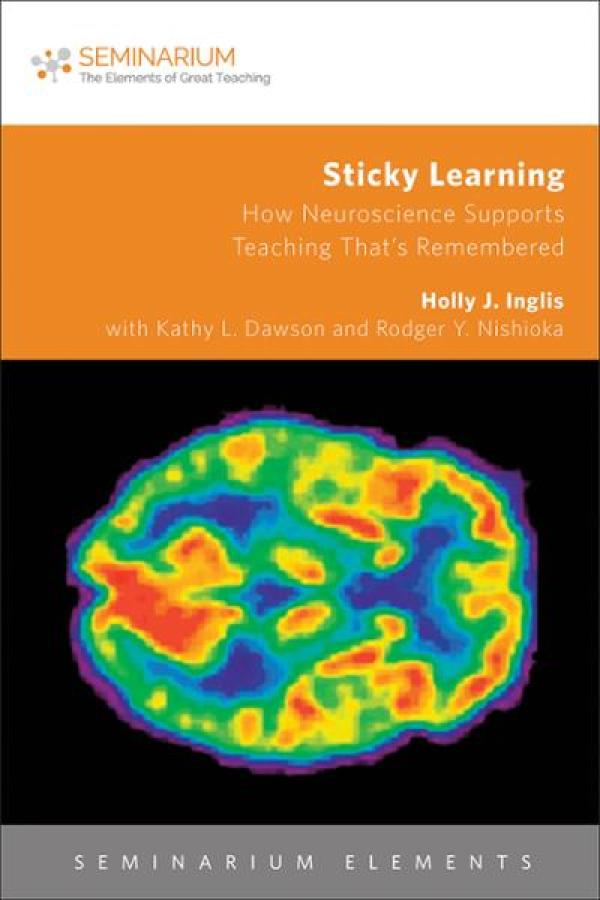
In many ways, Sticky Learning is all business. It has no traditional introductory or closing material and ends simply with a works cited list. This volume is divided into three major sections. The first section (composed of only chapter one) lays out the current landscape of education. In it, Inglis asks readers some basic pedagogical questions, such as what defines “effective learning” and how did we learn to teach. The second section (chapters two, three, and four) lay out a roadmap for where learning is headed. Inglis argues in chapter two that there is a differentiation between teaching and learning. Teaching occurs when an instructor simply imparts knowledge; learning occurs when the students interact with the instructor and actively apply what they have been taught. In chapter three, Inglis moves from learning theory to brain studies. As with each chapter in this book, her discussion is marked by brevity. She offers a concise, easy to understand introduction to brain science research condensed from larger, more detailed volumes such as Brain Rules by John Medina (2008) or Learning and Memory by Marilee Sprenger (1999), both of which are cited in the chapter. The majority of the research comes from the work of noted biologist James Zull and is operationalized through David Kolb’s model for experiential learning. In chapter four, Inglis discusses the five “pathways to memory” and three major reasons why we have trouble remembering information. Again, most of the material in these chapters is a concise summation of what the reader can find in the books by Medina and Sprenger noted above. In this reviewer’s opinion (one who has a limited working knowledge of the relationship between neuroscience and educational psychology), these two chapters alone are worth the price of the volume. After reading through these chapters, I was informed about the readily accepted correlation between neuroscience and educational psychology and also was empowered to integrate these theories into my own teaching. (I am already using Kolb’s theory, but now understand how to maximize it in my teaching.) The “Making It Stick” features that follow each content section provide reflective questions and practical applications which promote a “learn-do” environment for the reader to immediately assess the validity of Inglis’ arguments. The final section (chapters five through eight) provide a challenge to take what Inglis has argued in the previous half of the book and apply it directly to classroom contexts. While chapters five and seven – both authored by Inglis – were helpful, I found that chapters six and eight cancelled each other out. Chapter six, by Nishioka, provides a response from one who has used these concepts in his classroom, as demonstrated by the real-life examples. Chapter eight, authored by Dawson, offers a case study of how one can apply the arguments and concepts set forth in the book. In my opinion, either one should have been chosen over the other, or Nishioka’s reflections should have been included in the larger treatment rather than as a stand-alone chapter. This is, however, my only real complaint with this volume. I especially appreciated the websites and QR codes to unlock additional content that are scattered throughout the book. Overall, this is an important book for educators at any level to read and wrestle with as they continue to seek the best ways to educate their students.