Resources
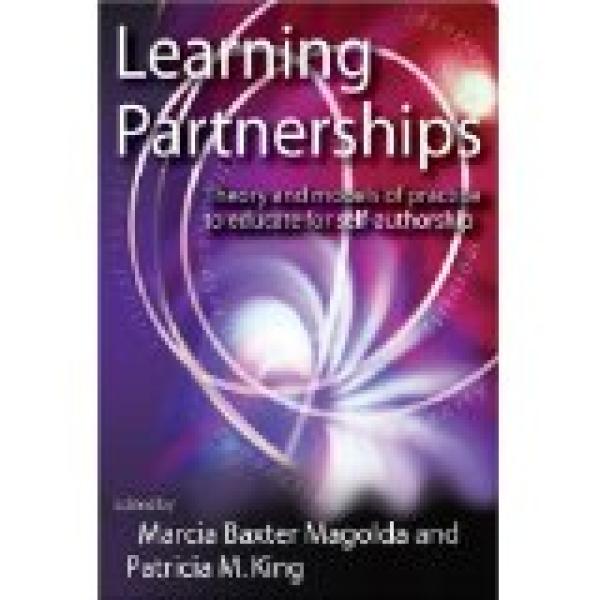
While a common goal of higher education is to improve student learning to prepare young adults for the professional, civic and personal challenges of their lives, few institutions have a model to facilitate these outcomes. Learning Partnerships offers a grounded theory and practical examples of how these objectives can be achieved at the college course, program, and institutional levels. The book takes as its foundation Marcia Baxter Magolda's Learning Partnerships Model, based on her seventeen-year longitudinal study of young adults' learning and development from their undergraduate years through their thirties. Based on nearly a thousand participant narratives, the model offers an empirically grounded yet flexible approach to promote "self-authorship." Marcia Baxter Magolda describes the nature of self-authorship -- its centrality to the learning goals of cognitive maturity, an integrated identity, mature relationships, and effective citizenship -- and the Model. The book then documents examples of actual practice and the learning outcomes they have yielded. The settings include community college and undergraduate courses, exchange and internship programs, residential life, a Masters' program, faculty development and student affairs organization. Learning Partnerships offers models for all educators -- faculty and student affairs staff alike -- who work to balance guidance and learner responsibility to prepare students for the complexity of the twenty-first century. (From the Publisher)
In this new book, the authors of Creating Learning Communities advance the exploration of this important innovation in undergraduate education. They address issues involved in enhancing, sustaining and expanding learning communities, such as campus culture, curriculum, pedagogies, and faculty development. (From the Publisher)
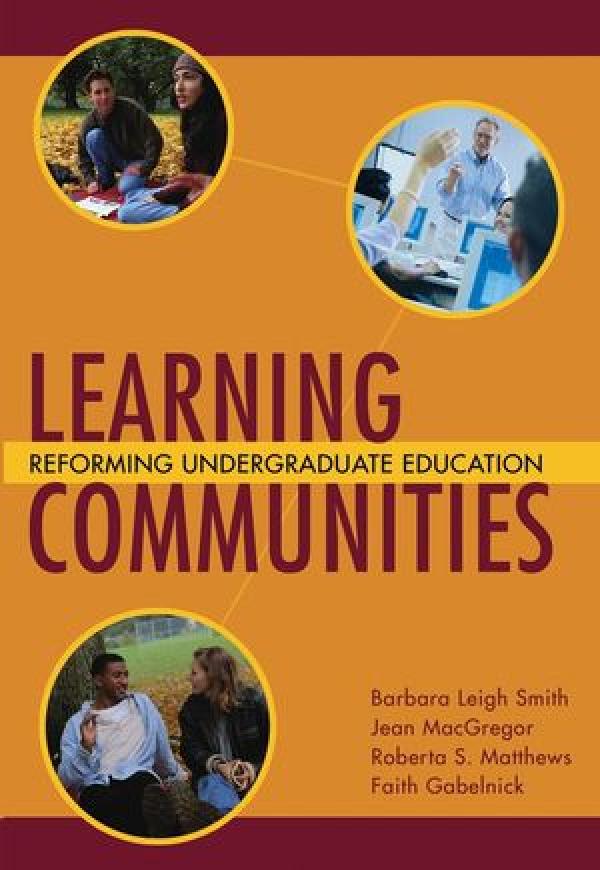
Learning Communities is a groundbreaking book that shows how learning communities (LCs) can be a flexible and effective approach to enhancing student learning, promoting curricular coherence, and revitalizing faculty. Written by Barbara Leigh Smith, Jean MacGregor, Roberta S. Matthews, and Faith Gabelnick¾acclaimed national leaders in the learning communities movement¾this important book provides the historical, conceptual, and philosophical context for LCs and clearly demonstrates that they can be a key element in institutional transformation. (From the Publisher)
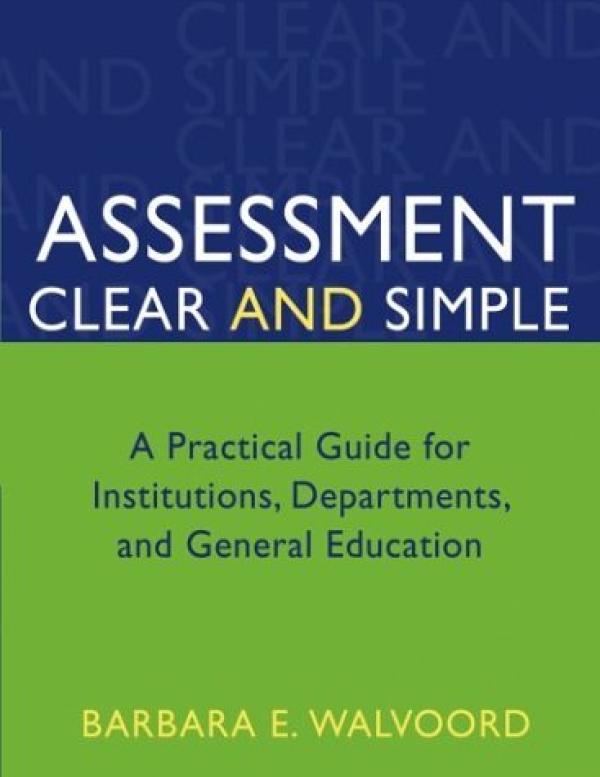
Assessment Clear and Simple is "Assessment 101" in a book -- a concise, step-by-step guide written for everyone who participates in the assessment process. This practical book helps to make assessment simple, cost-efficient, and useful to the institution, while at the same time meeting the requirements of accreditation agencies, legislatures, review boards, and others. Assessment Clear and Simple can help your institution employ assessment as a powerful instrument for improvement and provide a basis for wiser planning, budgeting, and change in curriculum, pedagogy, staffing, programming, and student support. (From the Publisher)
Creating ways to make a discipline come alive for those who are not experts - even for students who may not take more than one or two courses in the disciplines they study - requires rigorous thought about what really matters in a field and how to engage students in its practice. Faculty from Alverno College representing a range of liberal arts disciplines - chemistry, economics, history, literature, mathematics and philosophy - here reflect on what it has meant for them to approach their disciplines as frameworks for student learning. The authors all demonstrate how the ways of thinking they have identified as significant for their students in their respective disciplines have affected the way they design learning experiences. They show how they have shaped their teaching around the ways of thinking they want their students to develop within and across their disciplines; and what that means in terms of designing assessments that require students to demonstrate their thinking and understanding through application and use. (From the Publisher)
Learning communities are small groups of students who come together with faculty and student affairs professionals to engage in common learning experiences. In Building and Sustaining Learning Communities, the authors, along with many of their colleagues, describe the rationale for learning communities, particularly in a large university; the process for setting them up; and reflections on these unique environments. After reading this book, administrators and faculty members will know precisely why they are worth considering and how to successfully create them. (From the Publisher)
Why Do Some Students make the most of college, while others struggle and look back on years of missed deadlines and missed opportunities? What choices can students make, and what can teachers and university leaders do, to improve more students' experiences and help them achieve the most from their time and money? Most important, how is the increasing diversity on campus -- cultural, racial, and religious -- affecting education? What can students and faculty do to benefit from differences, and even learn from the inevitable moments of misunderstanding and awkwardness? From his ten years of interviews with Harvard seniors, Richard Light distills encouraging -- and surprisingly practical -- answers to fundamental questions. How can you choose classes wisely? What's the best way to study? Why do some professors inspire and others leave you cold? (From the Publisher)
* Do students gain when they are taught by active researchers? * Should all faculty be involved in research? * What are the benefits students (and their parents) should get from studying at an elite research university – and paying higher fees for the privilege? In Scholarship Re-Considered, Ernest Boyer challenged US universities to "break out of the tired old teaching versus research debate." This book provides an international perspective on how universities, departments and individual faculty have successfully sought to connect their research to the benefit of student learning and institutional mission. It directly addresses the ways teaching-research links can be developed. Building on research, the literature and wide practical experience, the authors show how academic research activity can be connected to academic teaching activity in such a way as to ensure that neither operates in a vacuum and, most importantly, that each can be enhanced by the other. The book addresses the issues at the individual, course and institutional levels, as well as at the level of public policy. An important work for faculty, faculty developers and administrators. (From the Publisher)
Explores the issue of institutional productivity and student learning outside the classroom. Reviews the conditions that can foster a climate where out-of-classroom experiences can contribute to greater educational productivity. (From the Publisher)
The ability of the Internet and the World Wide Web to provide a wealth of on-line information that can be easily accessed at any time is changing the basic structure and operations of organizations, especially educational institutions. Written by a blue-ribbon panel of contributors -- thirteen experts in various fields of educational technology and teaching and learning -- Technology-Enhanced Teaching and Learning: Leading and Supporting the Transformation on Your Campus offers academic leaders the advice they need to help their institutions initiate, implement, and manage the transformation in order to become Internet-based communication and learning environments. The authors show how leaders can meet the challenge of the information age and the student demand for interactive learning by creating supportive environments that allow faculty to adapt to and sustain this sweeping institutional transformation. This book offers the insights, practical suggestions, and strategies that are essential for engaging the campus community in the transformation process. (From the Publisher)