Resources

Nancy Lynne Westfield Associate Professor of Religious Education Drew Theological School When you are a teenager, at least in the 70’s, the house with abundant food and a loving mother was the place to gather. Our house had both. Unlike all the other mothers in the neighborhood, Nancy Bullock Westfield

Dr. Molly Bassett Associate Professor of Religious StudiesGeorgia State University “Timeliness is next to cleanliness and godliness; we don’t want to waste a minute. Plus, I’ve been looking forward to this moment since at least January, and it was hard to sleep a week ago.” That’s how we began..
Dr. Molly Bassett Associate Professor of Religious Studies Georgia State University By the time you read this, I will have met the students in “Religious Dimensions in Human Experience: Between Animals and Gods.” In this completely redesigned dual-level (grad/undergrad) course, we will explore how people can know a single animal—the...

Kate Blanchard This is a post about that time I taught a semester-long class on a topic about which I knew almost nothing… or perhaps I should say “the most recent time.” This was no one’s fault but my own. I work at a college that has no requirement for...
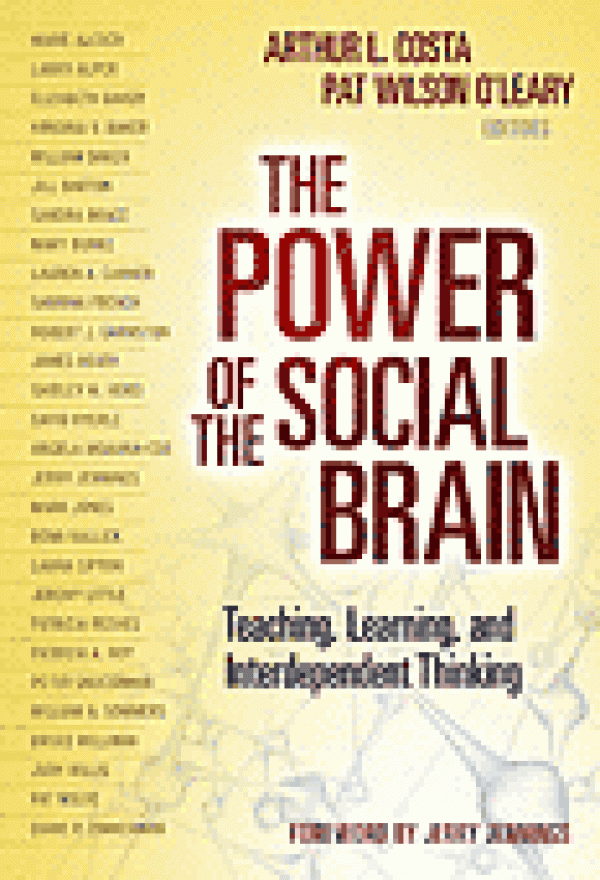
This interdisciplinary collection of twenty essays makes the case for the benefits of collaborative thinking in a variety of settings. These brief essays are packed with useful classroom activities to promote collaborative learning. Several essays offer first-hand examples of how collaborative learning is vital to architecture, industry, orchestras, theater, and athletics. Few would dispute that these are team-based enterprises. Still, these experiential accounts yield worthwhile reminders. Readers will also appreciate the contributions from researchers in the cognitive sciences. The neuroscience behind collaborative thinking is presented in clear and jargon-free language. Evolutionary biologists reveal how the human brain evolved to allow more complex social organizations. Neuroscientific research explores how brain structure and function are enhanced in collaborative settings. Moreover, good collaborative work dispels our instinct for survival and engages our capacity for emotional awareness and control. In addition to increasing the brain’s plasticity, there are chemical benefits to thinking with others. Collaborative activities release dopamine and other pleasurable chemicals in the brain. So if interdependent thinking is so good for the brain and for human well-being, why is it so hard to achieve in the classroom? The remaining essays illumine both obstacles to and strategies for promoting interdependent thinking. Many contributors focus on the important role the facilitator plays in teaching others to become better listeners, to develop skills such as empathy, paraphrasing, productive questioning, as well as managing gender and cultural dynamics. Some essays offer productive verbal cues and exercises to promote better collaborative thinking in the classroom. Yet, this is more than a “talking cure” to our false sense of independence or autonomy. One essay, by David Hylerle and Larry Alper questions whether verbal expression alone is too linear to capture the highly associative and non-linear patterns in collaborative thinking. They thereby promote the use of visual tools and cognitive maps to capture and advance more interdependent non-linear thinking. Although presuming K-12 settings, this volume has much to offer college and seminary professors who value engaged and productive classroom discussion. First, it provides useful essays on telling the difference between activities that promote shared thinking and those that generate more meaningful interdependent thinking. In addition to providing a detailed index, several essays include helpful comparative tables of collaborative discussion strategies (for example, pausing, paraphrasing, posing questions, providing data, generating ideas, attention to self and to other, and positive dispositions) and the nature of independent, shared, and interdependent thinking. Lately, a bestseller – Susan Cain’s Quiet: The Power of Introverts in a World that Can’t Stop Talking (Broadway Books, 2013) – asks whether group work ignores some important voices. The Power of the Social Brain offers a welcome counterpoint to Cain’s caveats. The essays here remind faculty of the need to foster meaningful group work. Educators will appreciate this volume’s concrete suggestions for cultivating effective strategies to make classrooms even richer transformational spaces.
Kate Blanchard I recently found myself on a Friday night amid a group of twenty-somethings, mostly women, who were celebrating their periods. Yes, you read that correctly. The students of the women’s resource center on campus decided to host a “menarche party” in honor of their monthly bleeding. They wore...

Eric D. Barreto I really don’t intend to undercut the title of this series of blogs. I promise I don’t. But what happens when the classroom doesn’t have a front where the eager students sit ready to learn or a back where more laid-back students lean away from us? What...

Lea F. Schweitz, Associate Professor of Systematic Theology/Religion and Science, Lutheran School of Theology at Chicago As a teacher, whenever I utter the words, “Okay class, please get into your small working groups,” I remember the sense of dread that...
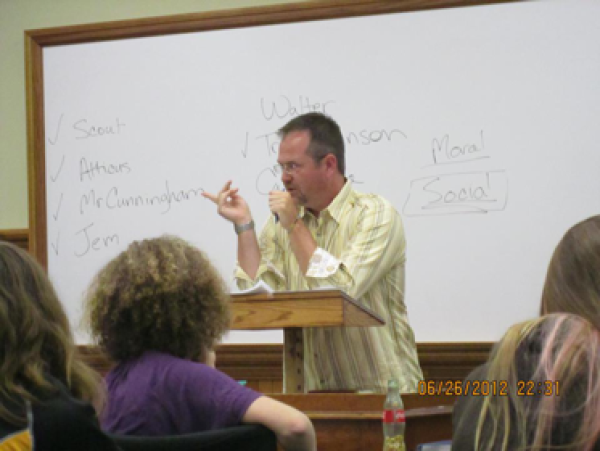
Greg Carey, Professor of New Testament at Lancaster Theological Seminary We all know that our students’ social and religious contexts shape the way they understand the Bible – in theory, at least. But how do we bring that knowledge into...

Wil Gafney, Associate Professor of Hebrew and Old Testament, Lutheran Theological Seminary at Philadelphia (At Brite Divinity School as of 9/2014) As the saying goes, “sometimes the old ways are best.” (Eve Moneypenny and James Bond in Skyfall, 2012) Hevruta...