Resources
Compares the “percentage” grading system to the “class-curve” system, to derive a set of goals or criteria for grading systems, which are then employed to evaluate three additional illustrative grading systems. Idea Paper no. 19, from the series developed by the Center for Faculty Evaluation and Development, Kansas State University.
Guidelines for writing good multiple-choice exam questions that can evaluate higher levels of learning (such as integrating material from several sources, critically evaluate data, contrast and compare information), as well as provide diagnostic information. Idea Paper no. 16 , from the series developed by the Center for Faculty Evaluation and Development, Kansas State University.
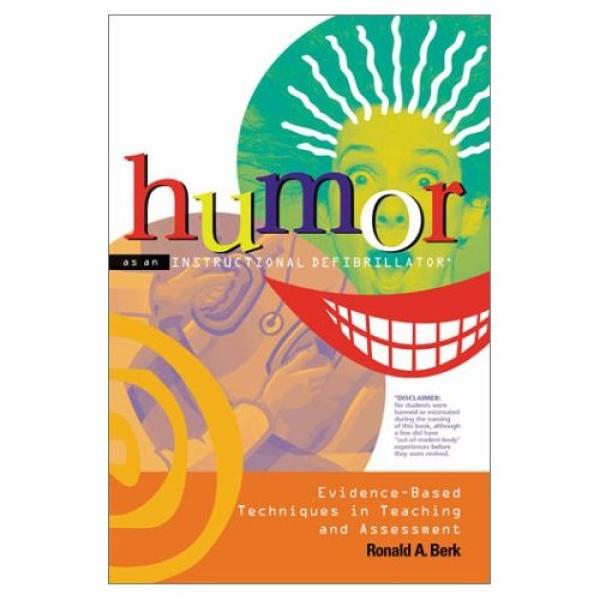
Grab those paddles. Charge 300. Clear! "Ouch!" Now how do you feel? "Great!" Humor can be used as a systematic teaching or assessment tool in your classroom and course Web site. It can shock students to attention and bring deadly, boring course content to life. Since some students have the attention span of goat cheese, we need to find creative online and offline techniques to hook them, engage their emotions, and focus their minds and eyeballs on learning. This book offers numerous techniques on how to effectively use humor in lectures and in-class activities, printed materials, course Web sites and course tests and exams. These techniques can convert any course into an adult version of Sesame Street. (From the Publisher)
Bill Timpson presents his conception of metateaching. As metacognition is the idea of thinking about thinking, metateaching is the idea of thinking about teaching. Your mind will be infused with new, innovative — yet practical — ways to think about your classroom after reading this book. You will learn about the Instructional Map, a systematic tool to help you organize your classes and visualize the direction, components, and impact of different aspects of teaching. Ideas from the fields of cartography and orienteering will give you a fresh angle from which to view your teaching practice. (From the Publisher)

This report explores the connection between the process of writing and the process of grading. It also explains how to construct effective writing assignments, resolve issues of fairness and professional judgment, include students in the process of assessment, and provide effective feedback to students as they revise their writing. Speck synthesizes the best practices in teaching and learning to help faculty and part-time instructors envision grading as a process, not a product. (From the Publisher)
In this book, Grant Wiggins outlines design standards for performance-based assessments that promise students - no matter what their ability - clear and worthy performance targets, useful feedback, coaching, and the opportunity to progress toward excellence. Educative Assessment furnishes the information needed to design performance-based assessments, craft performance tasks that meet rigorous educational standards, score assessments fairly, and structure and judge student portfolios. It also shows how performance assessment can be used to improve curriculum and instruction, grading, and reporting, as well as teacher accountability. In addition, the book includes numerous design templates and flowcharts, strategies for design and troubleshooting, and myriad examples of assessment tasks and scoring rubrics that Wiggins has developed and repeatedly refined using feedback from clients in schools, districts, and state departments of education. (From the Publisher)