Resources
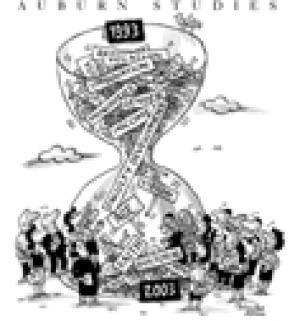
This issue on theological school faculty and doctoral students, who are the theological faculty of the future, revisits a topic first studied ten years ago by the Auburn Center for the Study of Theological Education. The findings of the present study, compared with those of Auburn’s earlier research, suggest that theological education is, on the whole, a stable enterprise. On many items and indicators, theological faculty and theology and religion doctoral students today look and sound very much like those surveyed ten years ago. In some other areas there are slight but steady changes over the decade that may indicate trends and a few dramatic changes that invite analysis and interpretation. This report also address a new topic—theological faculty members’ teaching practices and attitudes toward teaching. (From the Publisher)
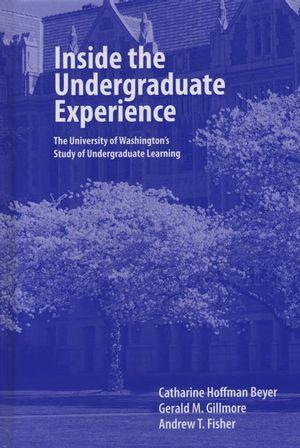
The University of Washington’s Study of Undergraduate Learning (UW SOUL) tracked 304 entering freshmen and transfer students as they moved through their college experience from fall 1999 to spring 2003. Unparalleled in its scope, this longitudinal study focused on six areas of learning: writing, critical thinking/problem solving, quantitative reasoning, information literacy, understanding and appreciating diversity, and personal growth. This book provides faculty, staff, and administrators at two- and four-year institutions with a model of assessment that both captures the complexity of the undergraduate experience and offers practical information about how to improve teaching and learning. Data from surveys, open-ended email questions, interviews, focus groups, and portfolios make it possible for the authors to create case studies of individual learning paths over time, as well as to report the group’s aggregate experience. Honoring the authenticity of student voices, this book illuminates the central roles played by the academic disciplines and by faculty in undergraduate learning, offering powerful evidence for the argument that assessment of student learning is most complete and most useful when conducted at the department level. (From the Publisher)
A publication of The Carnegie Foundation for the Advancement of Teaching, this important resource builds on the work of Carnegie's best-selling books, Scholarship Reconsidered and Scholarship Assessed. The Advancement of Learning explores the premise that the scholarship of teaching and learning holds the key to improving the quality of higher education. The Advancement of Learning answers questions readers are likely to have: What are the defining elements of the scholarship of teaching and learning? What traditions does it build on? What are its distinctive claims and possibilities? What are the implications of the scholarship of teaching and learning for academic culture and careers? How does it shape the student experience?In addition, authors Mary Taylor Huber and Pat Hutchings introduce a new concept that expands on the scholarship of teaching and learning - the teaching commons. As the authors explain, the teaching commons is a conceptual space in which communities of educators committed to inquiry and innovation come together to exchange ideas about teaching and learning and use them to meet the challenges of educating students for personal, professional, and civic life. (From the Publisher)

Called "The Entitlement Generation" or Gen Y, they are storming into schools, colleges, and businesses all over the country. In this provocative new book, headline-making psychologist and social commentator Dr. Jean Twenge explores why the young people she calls "Generation Me" -- those born in the 1970s, 1980s, and 1990s -- are tolerant, confident, open-minded, and ambitious but also cynical, depressed, lonely, and anxious. Herself a member of Generation Me, Dr. Twenge uses findings from the largest intergenerational research study ever conducted -- with data from 1.3 million respondents spanning six decades -- to reveal how profoundly different today's young adults are. Here are the often shocking truths about this generation, including dramatic differences in sexual behavior, as well as controversial predictions about what the future holds for them and society as a whole. Her often humorous, eyebrow-raising stories about real people vividly bring to life the hopes and dreams, disappointments and challenges of Generation Me. GenMe has created a profound shift in the American character, changing what it means to be an individual in today's society. The collision of this generation's entitled self-focus and today's competitive marketplace will create one of the most daunting challenges of the new century. Engaging, controversial, prescriptive, funny, Generation Me will give Boomers new insight into their offspring, and help those in their teens, 20s, and 30s finally make sense of themselves and their goals and find their road to happiness. (From the Publisher)

CTI Resource Notebook compiled by Jeanene Reese for the 35th annual Summer Institute at the School of Theology and Ministry, Seattle University, 2006. (From the Publisher)
Journal Issue.
Journal Issue.
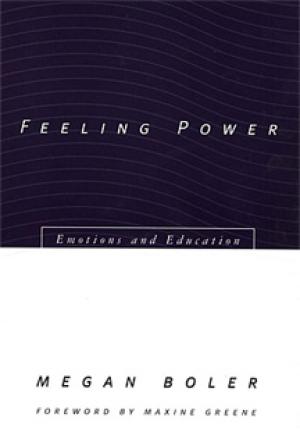
Megan Boler combines cultural history with ethical and multicultural analyses to explore how emotions have been disciplined, suppressed or ignored at all levels of education and in educational theory. Feeling Power begins by charting the philosophies and practices developed over the last century to control social conflicts arising from gender, class and race. The book traces the development of progressive pedagogies from civil rights and women's liberation movements to the author's recent studies of "emotional intelligence" and "emotional literacy". She concludes by outlining a "pedagogy of discomfort" that examines empathy, fear and anger to negotiate ethics and difference. Drawing on the formulation of emotion as knowledge within feminist, psychobiological and poststructuralist theories, Boler develops a unique theory of emotion from contemporary educational discourses. (From the Publisher)
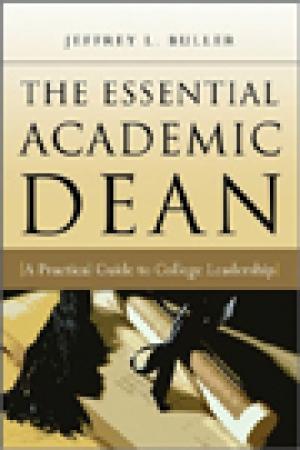
The role of an academic dean is extremely complex, involving budgeting, community relations, personnel decisions, managing a large enterprise, mastering numerous details, fundraising, and guiding a school or college toward a compelling vision for the future. But no academic dean can quickly master all of the intricacies involved in this challenging position. For instance, how do you build support for a shared vision of your unit's future? How do you interact effectively with all of the different internal and external constituencies that a dean must serve? How do you set, supervise, and implement a budget? How do you handle the volume of documents that cross your desk? How do you fire someone, ask a chair to step down, respond to a reporter on the telephone, and settle disputes about intellectual property rights? How do you know when it's time to consider leaving your current position for another opportunity? The Essential Academic Dean is about the "how" of academic leadership. Based on a series of workshops given by the author on college administration and management, each topic deals concisely with the most important information deans need at their fingertips when faced with a particular challenge or opportunity. Written both as a comprehensive guide to the academic deanship and as a ready reference to be consulted when needed, this book emphasizes proven solutions over untested theories and stresses what deans need to know now in order to be most successful as academic leaders. (From the Publisher)
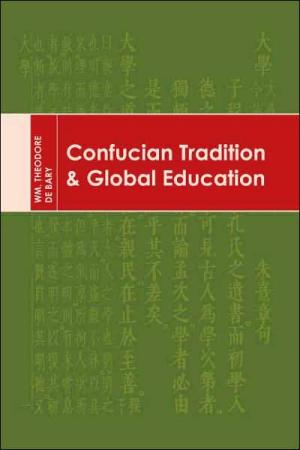
Drawn from a series of lectures that Wm. Theodore de Bary delivered in honor of the Chinese philosopher Tang Junyi, Confucian Tradition is a unique synthesis of essay and debate concerning the future of Chinese education and the potential political uses of Confucianism in the contemporary world. (From the Publisher)