Resources
A 15,000 word article from AAUP (American Association of University Professors), addressing faculty recruitment,  tenure and advancement, sexual harassment, academic freedom, and protections against personal liability. “In the end, if you apply institutional policies consistently and fairly, you will be in a solid position to defend decisions.”
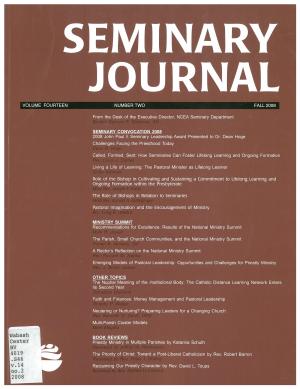
Journal Issue.
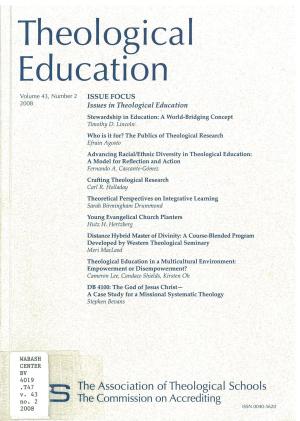
Journal Issue. Full text is available online.
New lecturers, part-time teachers and graduate teaching assistants are often required to both deliver an existing course and design their own teaching based on a module description. But where do they start? Underpinned by sound theory, Designing Learning is a practical guide that aims to help busy professionals design, develop and deliver a course, from module outcome outline to effective teaching. Illustrated with useful checklists and action points, this book covers the essentials of designing learning: supporting and promoting student learning, matching content to outcomes, selecting effective teaching and learning methods, assessment that supports and promotes learning and provides feedback, learning materials and resources for diverse learners, C&IT tools and how to use them best, creating an inclusive learning environment, managing and evaluating your course, quality enhancement and assurance processes. Guided by principles of good practice and reflecting the educational research that underpins them, this book is essential reading for anyone new to teaching in higher education.(From the Publisher)
A group of eminent African American scholars of religoius and theological studies examines the problems and prospects of Black scholarhip in the theological academy. They assess the role that prominent African American scholars have played in transforming the study and teaching of religion and theology, the need for a more thorough-going incorporation of the fruits of black scholarship into the mainstream of the academic study of religion, and the challenges and opportunities of bringing black art, black intellectual thought, and black culture into predominantly white classrooms and institutions. (From the Publisher)
Preaching's most able practitioners gather in this book to call for a radical change in how Christian preaching is taught. Arguing that preaching is a living practice with a long tradition, an identifiable shape, and a broad set of norms and desired outcomes, these scholars propose that teachers initiate their students into the larger practice of preaching-the habits of mind, patterns of action, and ways of being that are integral to the ministry of preaching. The book concludes with designs for a basic preaching course and addresses the question of how preaching courses fit into the larger patterns of seminary curricula. (From the Publisher)

Journal Issue.
Delivers uncomplicated and useful techniques for better teaching to nonmajors in liberal arts courses. Teaching Nonmajors focuses on what dedicated teachers want to know—how can I teach better in the classroom? Unlike most books on teaching, this book delivers uncomplicated and immediately useful techniques and strategies for teaching required courses to nonmajors. Providing practical examples and brief anecdotes drawn from a variety of disciplines in the liberal arts and sciences, the author describes simple ways to break up lectures, how to stimulate the best discussions, the art of assignments, how to improve student ratings, and successful strategies for engaging nonmajors and for handling problem students. Teaching Nonmajors is written especially for liberal arts college and university professors at all career stages—from adjuncts and new professors, to seasoned professors looking for a fresh approach heading into a new term. (From the Publisher)
Evangelicals and Roman Catholics have been responsible for the establishment of many colleges and universities in America. Until recently, however, they have taken very different approaches to the subject of education and have viewed one another's traditions with suspicion. In this volume, Mark Noll and James Turner offer critical but appreciative reassessments of the two traditions. Noll, writing from an evangelical perspective, and Turner, from a Roman Catholic perspective, consider the respective strengths and weaknesses of each approach and what they might learn from the other. The authors then provide brief responses to each other's essays. Thoughtful readers from both traditions will find insightful and challenging ideas regarding the importance of Christian learning and the role of faith in the modern college or university. (From the Publisher)
"To respect the many differences between people"--this is what Howard Gardner says is the purpose of learning about multiple intelligences (MI). Now, in the 2nd edition of "Multiple Intelligences in the Classroom," Thomas Armstrong has updated his best-selling practical guide for educators, to incorporate new research from Gardner and others. Gardner's original studies suggested that the mind comprises seven intelligences--linguistic, logical-mathematical, spatial, bodily-kinesthetic, musical, interpersonal, and intrapersonal. This new edition includes information on the eighth intelligence (the naturalist), a chapter on a possible ninth intelligence (the existential), and updated information and resources throughout the text to help educators at all levels apply MI theory to curriculum development, lesson planning, assessment, special education, cognitive skills, educational technology, career development, educational policy, and more. The book includes dozens of practical tips, strategies, and examples from real schools and districts--as well as solid outcomes of MI, including improved test scores and discipline. Armstrong provides tools, resources, and ideas that educators can immediately use to help students of all ages achieve their fullest potential in life. (From the Publisher)