Resources
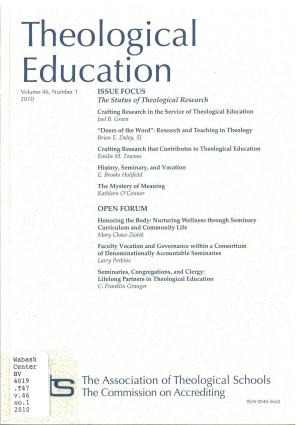
Journal Issue. Full text is available online.
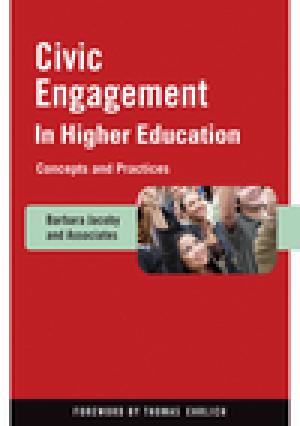
Numerous studies have chronicled students lack of trust in large social institutions, declining interest in politics, and decreasing civic skills. This book is a comprehensive guide to developing high-quality civic engagement experiences for college students. The book defines civic engagement and explains why it is central to a college education. It describes the state of the art of education for civic engagement and provides guidelines for designing programs that encourage desired learning outcomes. In addition, the book guides leaders in organizing their institutions to create a campus-wide culture of civic engagement. (From the Publisher)
The concept of learning styles is based on the theory that an individual responds to educational experiences with consistent behavior and performance patterns. The complexity of the construct, the psychometric problems related to its measurement, and the enigmatic relationship between culture and the teaching and learning process means that the body of research on learning styles must be interpreted and applied carefully. Analyses presented in this paper suggest that the widespread conclusions in the literature that African American, Hispanic American, and Indian students are field-dependent learners who prosper academically when taught with field-dependent teaching strategies are premature and conjectural. Research does not support the supposition that members of a particular ethnic group have the same learning style. The body of research does have implications for enhancing the academic achievement of culturally diverse students by reminding teachers to be alert to individual students' learning styles as well as their own actions and methods in reference to their students' cultural experiences and preferred learning environments.
An introductory textbook for theological education. To contextualize theological education is to engage three contexts: academy, church, and society. In this new collection, faculty at Candler School of Theology reflect on particular meanings, insights, challenges, and implications of such an engagement. (From the Publisher)
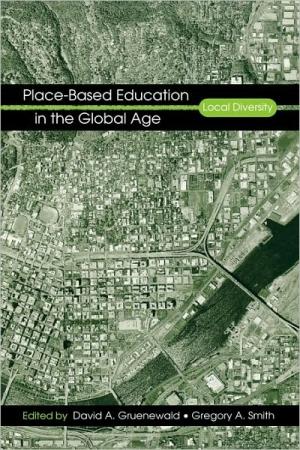
“Polished, clear, insightful, and meaningful.... This volume amounts to nothing less than a complete rethinking of what progressive education can be at its best and how education can be reconceptualized as one of the central practices of a genuinely democratic and sustainable society.... It is the kind of book that has the potential to be transformative.” Stephen Preskill, University of New Mexico “The editors and contributors are pioneers in the field of educational theory, policy, and philosophy.... They are opening new areas of inquiry and educational reform in ways that promise to make this book in very short time into a classic.... The practical applications and experiments included reveal the richness of grassroots initiatives already underway to bring educational theory and policy down to earth. While spanning the richest and deepest intellectual ideas and concepts, the stories told are the types that practitioners and teachers will be able to relate to in their daily undertakings.” Madhu Suri Prakash, The Pennsylvania State University This volume ‚Äî a landmark contribution to the burgeoning theory and practice of place-based education ‚Äî enriches the field in three ways: First, it frames place-based pedagogy not just as an alternative teaching methodology or novel approach to environmental education but as part of a broader social movement known as the “Anew localism”, which aims toward reclaiming the significance of the local in the global age. Second, it links the development of ecological awareness and stewardship to concerns about equity and cultural diversity. Third, it presents examples of place-based education in action. The relationship between the new localism and place-based education is clarified and the process of making connections between learners and their wider communities is demonstrated. The book is organized around three themes: ‚Ä¢ Reclaiming Broader Meanings of Education ‚Ä¢ Models for Place-Based Learning ‚Ä¢ Global Visions of the Local in Higher Education This is a powerfully relevant volume for researchers, teacher educators, and students across the fields of curriculum theory, educational foundations, critical pedagogy, multicultural education, and environmental education. (From the Publisher)
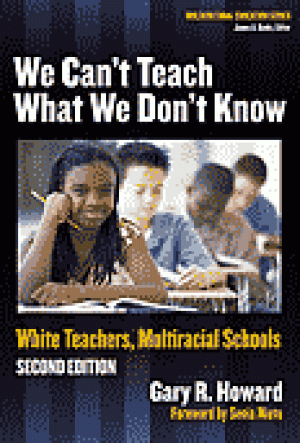
With lively stories and compelling analysis, Gary Howard takes his readers on a journey of personal and professional transformation. From his 25 years of experience as a multicultural educator, he looks deeply into the mirror of his own racial identity to discover what it means to be a culturally competent White teacher in racially diverse schools. Inspired by his extensive travel and collaboration with students and colleagues from many different cultures, We Can't Teach What We Don't Know offers a healing vision for the future of education. (From the Publisher)
From the Pubisher Pedagogy of Place focuses on the embodiment of purposefully created space resulting from the creation and enactment of its participants' cultural and social conditions. It is also about education, the purposeful creation of spaces that comprise learning environments, and the aesthetic dimensions of the created space called school. The essays present the concept of space - the place where learning happens and where the lives of student and teacher can thrive or wither - a place rich in human potential. In an attempt to address the diversity of what we define as space, Pedagogy of Place addresses issues around place and identity in three distinct strands: as social, as aesthetic, and as political and historical. As a collection, these essays are attempts to open conversations with persons interested in what counts as curriculum, teaching, and learning within the spaces and places that release human potential and nurture the human spirit.
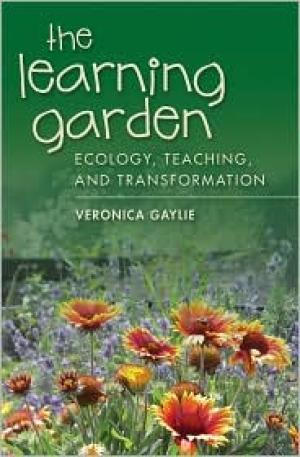
This book tells the story of building a campus “Learning Garden” over a series of cohorts of student teachers and environmental education students. The garden began with high ideals, no funding, and a strong desire to “do something” about the environment. The result was a transformation in attitude toward nature, community and toward the learning process itself. Described through three metaphors (garden as environment, garden as community, garden as transformation) this book provides a bridge of theory and practice for ecology-centred teaching and learning. As new teachers and teacher educators decide how to include “the environment” and principles of “sustainability” into their lessons, this groundbreaking text provides a bridge between theory and practice and guides the reader into the ways that teaching in the natural world changes how people learn, and, how they teach. (From the Publisher)

Journal Issue.