Resources

Drawing on the experience with the individuals, campuses, and professional associations associated with the Carnegie Academy for the Scholarship of Teaching and Learning and the Institutional Leadership Program, this important resource examines four critical areas where engagement with the scholarship of teaching and learning can have a significant effect. This book is intended for a broad audience of campus leaders, faculty, and people in foundations and other education associations with an interest in supporting new directions in teaching and learning. (From the Publisher)

Navigating an academic career is a complex process – to be successful requires mastering several 'rites of passage.' This comprehensive guide takes academics at all stages of their career through a journey, beginning at graduate school and ending with retirement. A Guide to Surviving a Career in Academia is written from a feminist perspective, and draws on the information offered in workshops conducted at national meetings like the American Society of Criminology and the Society for the Study of Social Problems. Through the course of the book, an expert team of authors guide you through the obstacle course of finding effective mentors during graduate school, finding a job, negotiating a salary, teaching, collaborating with practitioners, successfully publishing, earning tenure and redressing denial and, finally, retirement. This collection is a must read for all academics, but especially women just beginning their careers, who face unique challenges when navigating through these age-old rites of passage. (From the Publisher)
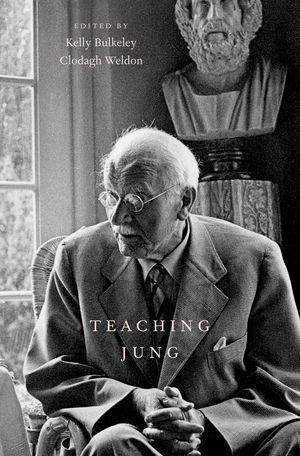
AAR Teaching Religious Studies Series (Oxford University Press) Swiss psychologist Carl Jung (1875-1961) has made a major, though still contested, impact on the field of religious studies. Alternately revered and reviled, the subject of adoring memoirs and scathing exposes, Jung and his ideas have had at least as much influence on religious studies as have the psychoanalytic theories of his mentor, Sigmund Freud. Many of Jung's key psychological terms (archetypes, collective unconscious, individuation, projection, synchronicity, extroversion and introversion) have become standard features of religious studies discourse, and his extensive commentaries on various religious traditions make it clear that Jung's psychology is, at one level, a significant contribution to the study of human religiosity. His characterization of depth psychology as a fundamentally religious response to the secularizing power of modernity has left a lasting imprint on the relationship between religious studies and the psychological sciences. This book offers a collection of original articles presenting several different approaches to Jung's psychology in relation to religion, theology, and contemporary culture. The contributors describe their teaching of Jung in different academic contexts, with special attention to the pedagogical and theoretical challenges that arise in the classroom. (From the Publisher)
Spiritual formation is one of the recognized benchmarks of higher education that is Christian. A communal commitment to spiritual formation is indeed part of the Christian higher education community's DNA, and is in fact reflected in the criteria for accreditation in both the Association of Biblical Higher Education (ABHE) and the Association of Theological Schools (ATS). However, as many Christian institutions of higher education begin to engage in online instruction, even offering entire degree programs online, how can they affirm their campus's commitment to the spiritual formation of students? This article addresses the question of providing intentional Christian nurture toward spiritual formation in online degree programs. The aim of the article is to inform participants of the challenges and opportunities for student spiritual formation in online degree programs so as to better equip participants to develop Christian nurture initiatives for online students from an informed perspective. To do so the article includes two parts: (a) the development of a theoretical matrix for online spiritual formation, based principally on precedent literature and the experience of the two authors; and (b) a survey of actual Christian nurture and spiritual formation models specifically designed for online programs.
The article discusses the emerging models of mentoring as a vital contribution to a successful academic career. Mentoring has been defined as one-to-one relationship win which an experienced faculty member guides and supports the career development of early-career faculty member and research on faculty development. The article highlights the faculty-development resources which were published since 2000 and offers fresh models, concepts and thinking on mentoring in higher education. The resources provides new conceptualizations of mentoring, recent studies on mentoring, faculty-development programs and practices, and issues on gender and race.
Analyzes the spiritual journey of a student affairs practitioner and scholar. Experience gained by the practitioner in educating graduate students; Description of spiritual principles that guided the life of the practitioner; Contribution of the practitioner to student development.
Journal Issue.
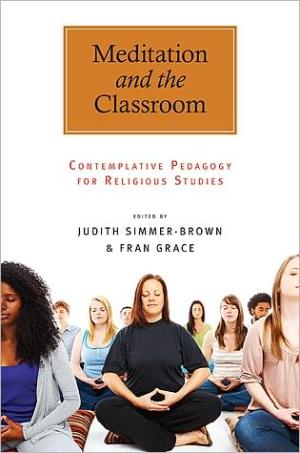
A groundbreaking book on using meditation in education and how it can enhance teaching and learning. Meditation and the Classroom inventively articulates how educators can use meditation to educate the whole student. Notably, a number of universities have initiated contemplative studies options and others have opened contemplative spaces. This represents an attempt to address the inner life. It is also a sign of a new era, one in which the United States is more spiritually diverse than ever before. Examples from university classrooms and statements by students indicate benefits include increased self-awareness, creativity, and compassion. The religious studies scholars who have contributed to this book often teach about meditation, but here they include reflections on how meditation has affected them and their teaching. Until recently, though, even many religious studies professors would find sharing meditation experiences, let alone teaching meditation techniques, a breach of disciplinary and academic protocols. The value of teaching meditation and teaching about meditation is discussed. Ethical issues such as pluralism, respect, qualifications, power and coercion, and avoiding actual or perceived proselytization are also examined. While methods for religious studies are emphasized, the book provides valuable guidance for all those interested in this endeavor. (From the Publisher)
The Survival Guide for New Faculty Members: Outlining the Keys to Success for Promotion and Tenure provides new faculty members with practical, down-to-earth wisdom and suggestions for successfully working through to tenure and promotion. The authors—both successful and experienced administrators and experts in higher education—have provided an extremely well-organized and useful guide for new faculty members. It focuses on all aspects of becoming a new faculty member including the various expectations in completing a successful journey toward promotion and tenure. The book underscores the importance of recognizing the three facets of faculty life of teaching, research, and service. This volume clearly sets out, compares, and separates those three components with clarity and provides very useful advice for putting the three together. Taken together with the chapters on “Documenting Your Progress” and “Promotion and Tenure,” new faculty are provided with a solid, practical introduction to building a foundation for success in higher education. Feedback and tips are also provided within each chapter. It is written in a style that readers will be able to easily comprehend and understand and is supported with many examples. In addition, the information can be easily applied to new faculty at various types of institutions of higher education. (From the Publisher)