Resources
This paper is a guide to the effective design and management of team assignments in a college classroom where little class time is available for instruction on teaming skills. Topics discussed include forming teams, helping them become effective, and using peer ratings to adjust team grades for individual performance. A Frequently Asked Questions section offers suggestions for dealing with several problems that commonly arise with student teams, and forms and handouts are provided to assist in team formation and management. 
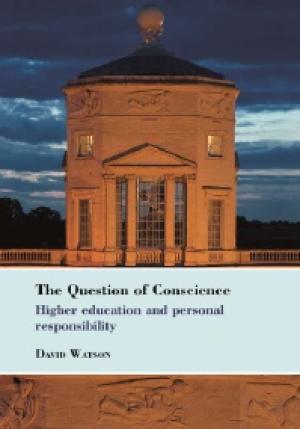
Click Here for Book Review Abstract: Most of the claims about the purposes and achievements of higher education are irreducibly individualistic: it will change your life, through conversion or confirmation of faith, by improving your character, by giving you marketable “abilities,” by making you a better member of the community, or by being simply “capable” of operating more effectively in the contemporary world. All of these qualities scale up, of course, but in differing ways. David Watson explores the question of what higher education sets out to do for students through a number of lenses, including the “evolutionary” stages of modern university history, the sense participants and observers try to make of them, and a collection of “purposes,” or intended personal transformations. The resulting combinations are clustered around major questions about the role of universities for their students, and in society at large. He concludes by testing claims about the role of higher education in developing varieties of personal responsibility. The Question of Conscience identifies and explores how varied these claims have been over the long history of the higher enterprise, but also how strong and determined they invariably are. (From the Publisher)
Neither advocacy nor condemnation of distance learning, this essay offers observations and critical reflection on four years' longitudinal engagement with distance learning pedagogies for formation in higher theological education. Instead, readers are invited to curiosity, communal-institutional discernment, and intense ambivalence. Theological, pedagogical, contextual, and ethical concerns are examined, as well as potential opportunities for innovation amidst age-old practical theological challenges. A moral imperative emerges for those within and outside historic faith traditions, and some plausible impacts on educational and communal life are explored, especially faculty grief.
Is it possible to teach pastoral care online? McGarrah Sharp and Morris describe their process of transforming a residential on-campus pastoral care course into the first online offering of the course at their seminary. They begin by describing a series of pedagogical choices made with the intent of facilitating dynamic movement between peer-to-peer, small group, and whole class discussions throughout the semester. Before and during the course, anxieties arose at many levels of instruction for the professor, teaching assistant, and students. Anecdotes and examples from the online course show how the online course design and facilitation was able to name and respond to anxieties as part of integrating pastoral care course content and practice – a key learning goal for the course. The authors are persuaded that online pedagogy can help identify how anxieties create space for developing empathy as much, if not more than, a traditional on-campus format.
These brief essays by Mary Hess, Eugene Gallagher, and Katherine Turpin are solicited responses from three different contexts to the provocative book by Douglas Thomas and John Seely Brown, The New Culture of Learning (2011). Mary Hess writes from a seminary context, providing a critical summary of the authors' major concepts and their ramifications, positive and negative, for theological education and the church. Eugene Gallagher writes from a liberal arts setting, identifying characteristics of the face-to-face classroom that would go missing in a careless adoption of online learning environments. Finally, Katherine Turpin reports from the classroom, chronicling her experience in a course she redesigned for a graduate theological setting to employ some of the authors' pedagogical principles and strategies. Together, these responses offer critical appreciation and constructive critique of the work Thomas and Seely Brown have done – and point the conversation forward.
One page Teaching Tactic: encouraging more thoughtful engagement with online discussion boards.
One page Teaching Tactic: student preparation of reading material to increase comprehension and engagement with each other and the topic.
One page Teaching Tactic: using twitter as a tool for class discussion.
One page Teaching Tactic: using, and critiquing, social media to learn about and learn to interpret current events and the role of technology.
One page Teaching Tactic: final projects for an online course.