Resources

Click Here for Book Review Abstract: Could we have imagined how much theological education would change in the new millennium? Shifting needs of students, classrooms, and churches have demanded constant revisions of the curriculum, course design, classroom technology, and pedagogical strategies. Saint Paul School of Theology felt the tide of change within our own walls and designed a project called "Proleptic Pedagogy" to address three distinct pedagogical challenges for the future of theological education. First, instead of fitting new technologies into old pedagogies, how are teaching and learning transformed by shifting needs of students who are "digital natives," "digital immigrants," or distance learners? Second, instead of reactive strategies, what pedagogy proactively eliminates "accommodations" because courses are designed with flexibility and openness to diverse learning styles, disabilities, and needs? Third, instead of engaging student diversity with the tools of the 1960s, what new teaching and learning strategies anticipate future student racial and ethnic demographics and interracial educational experiences? This volume of essays narrates our classroom stories, teases out pedagogical issues, examines pedagogical literature, reflects on theology of pedagogy, and constructs pedagogical proposals—with an open invitation for other theological educators to join our conversation about the future of theological education. (From the Publisher)

Click Here for Book Review Abstract: This anthology brings together some of the finest writers on different aspects of adult education and related areas to provide a complementary reader to the introductory text by Leona English and Peter Mayo Learning with Adults: A Critical Introduction. Areas tackled include Disability, Prisons, Third Age Universities, Lifelong Learning Policy, Learning Society, Poverty, LGBTQ, Sport, Women, Literacy, Transformative Learning, Community Arts, Aesthetics, Consumption, Migration, Libraries, Folk High Schools, Adult Education Policy, Subaltern Southern Social Movements, Social Creation, Community Radio, Social Film. Contexts focused on include Africa, Caribbean, Europe, Latin America, Asia (India), small island states. Over thirty authors involved including Zygmunt Bauman, Rosa Maria Torres, Oskar Negt, Antonia Darder, Jim Elmborg, D. W. Livingstone, Palle Rasmussen, Mae Shaw, Leona English, Asoke Bhattacharya, Cynthia L. Pemberton, Eileen Casey White, Daniel Schugurensky, Dip Kapoor, Peter Rule, John Myers, Joseph Giordmaina, Antonia De Vita, Alexis Kokkos, Marvin Formosa, Carmel Borg, Julia Preece, Patricia Cranton, Lyn Tett, Ali A. Abdi, Anna Maria Piussi, Behrang Foroughi, Taadi Ruth Modipa, Robert Hill, Edward Shiza, Kaela Jubas and Didacus Jules. (From the Publisher)
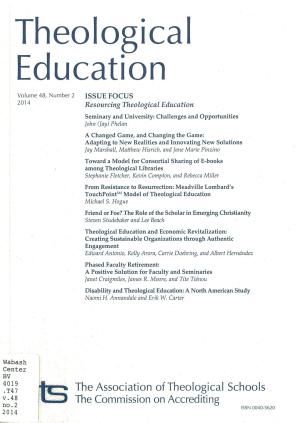
Journal Issue.

For many, the academy has historically represented privilege and intellectual exclusion; for others it has represented an increasingly contested site, as marginalized populations have challenged the myth of the ivory tower being a haven of meritocracy and equal opportunities. Still others persist in viewing universities as a level playing field, a place where people are judged primarily by their ideas and intellectual contributions. Ironically, alongside these charged conversations of exclusivity, privilege, and opportunity has occurred the seduction of the ivory tower by market interests, sacrificing standards in the interests of ill-defined efficiency. Much has been written on the increasingly market-driven culture of higher education; many have called this commodification and instrumentalization the most dangerous ideology of the current historical moment. Yet, within this landscape, there have been scholars willing to make space to critically interrogate higher education in relation to multiple systems of oppression. They are working to introduce new perspectives, nurturing counter-hegemonic knowledges. Many have struggled to cocreate and sustain democratic spheres that decenter dominant interests, with the aim of a more equitable society. They have been part of a larger movement of academic warriors, academics with consciences who live out their commitments by subscribing to the notion that scholarship and activism are inextricably intertwined. This volume embodies their narratives and issues an open invitation.‚Ä® This is 139th volume of this Jossey-Bass quarterly report series. Noted for its depth of coverage, it explores issues of common interest to instructors, administrators, counselors, and policymakers in a broad range of adult and continuing education settings, such as colleges and universities, extension programs, businesses, libraries, and museums. (From the Publisher)

Journal Issue.
When students come into the classroom, they have a prefigured, albeit deeply implicit, notion of what "religion" is and what it is not. They see religion as private, inner, and personal, as distinct from "politics" and "economics." This prefigured conception of religion is, in this author's view, one of the principle obstacles to teaching Religious Studies in an empirical, cross-cultural, comparative manner. Given the overall structure of the cultural configuration within which students think about and live out "religion," i.e., that it is private, utilitarian, and simply an obvious given to them, how can we introduce theory into the Religious Studies classroom? The answer given here is that if we use language-based theoretical models of culture such as structuralism and hermeneutics, we do better, in the main, in applying that theory to the communicative context of the classroom than trying to teach theory directly to our undergraduate students. This paper offers an analysis, using such language-based theories, of those cultural conditions which our students bring into the classroom and which shape their "native" understanding of the category "religion," as well as some suggestions as to how to cope with it in order to teach Religious Studies more effectively.
This "roundtable" collection of articles discusses the notion of renunciation in relation to an experiment in which a college class had the option to renounce the right to learn about their grades during the course. Topics include the history of grading in university and college courses, the problem of plagiarism, and the role of evaluation in higher education. Responses by Kimberly Rae Connor, Michael Desjardins Yasaman Samiksa Munro, Tina Pippin, and Ken Derry

Click Here for Book Review Abstract: Neoliberalism’s War on Higher Education reveals how neoliberal policies, practices, and modes of material and symbolic violence have radically reshaped the mission and practice of higher education, short-changing a generation of young people. Giroux exposes the corporate forces at play and charts a clear-minded and inspired course of action out of the shadows of market-driven education policy. Championing the youth around the globe who have dared to resist the bartering of their future, he calls upon public intellectuals—as well as all people concer ned about the future of democracy—to speak out and defend the university as a site of critical learning and democratic promise. (From the Publisher)
An iconoclastic review of Jonathan Z. Smith’s teaching practice, in contrast to his collected writings on teaching (“On Teaching Religion,” 2013), written by a prominent scholar, and onetime undergraduate student of his.
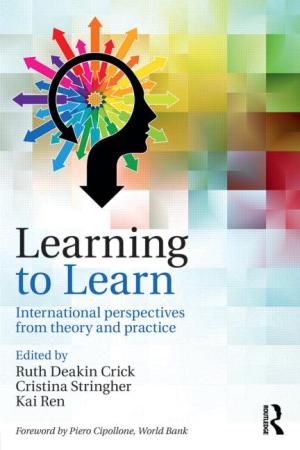
Click Here for Book Review Abstract: Learning to Learn provides a much needed overview and international guide to the field of learning to learn from a multidisciplinary lifelong and lifewide perspective. A wealth of research has been flourishing on this key educational goal in recent years. Internationally, it is considered to be one of the key competencies needed to compete in the global economy, but also a crucial factor for individual and social well-being. This book draws on leading international contributors to provide a cutting-edge overview of current thinking on learning to learn research, policy, and implementation in both formal and informal learning environments. But what learning to learn is exactly, and what its constituting elements are, are much debated issues. These seem to be the crucial questions if assessment and development of this 'malleable side of intelligence' are to be accomplished. The approach of this volume is to consider a broad conception of learning to learn, not confined to only study strategies or metacognition, yet acknowledging the importance of such elements. The book sets out to answer five main questions: • What is learning to learn? • What are its functions and how do we assess it? • What does it promise to the individual and society at large? • How is it conceived in national curricula internationally? • How can it be developed in a variety of contexts? The text is organized into two parts: the first addresses the core question of the nature of learning to learn from a theoretical and policy viewpoint, and the second presents recent research carried out in several educational systems, with special attention to assessment and curriculum. It gives an account of pedagogical practices of learning to learn and its role in individual empowerment from childhood to adulthood. Contributors also highlight the potential use of learning to learn as an organizing concept for lifelong learning, school improvement, and teacher training along with potential conflicts with existing incentive practices and policies. This book is a vital starting point and guide for any advanced student or researcher looking to understand this important area of research. (From the Publisher)