Resources
Journal Issue. In this issue of Spotlight, contributors suggest that the shift to online education involves a complex process of translation. Not unlike language translation, translation from traditional educational models to online environments requires a greater or lesser reconceptualization of education itself. Full text is available online.

Journal Issue. Full text is available online.
Journal Issue. Full text is available online.
Journal Issue. Full text is available online.
Journal Issue. Full text is available online.
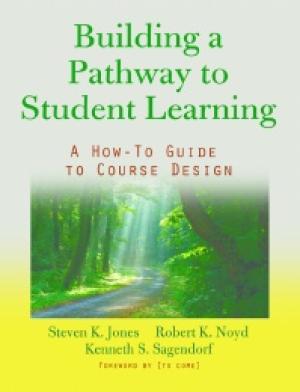
Click Here for Book Review Abstract: This book leads you through the process of designing a learning-centered course. It is written as a “how-to” handbook, providing step-by-step guidance on creating a pathway to student learning, including 26 workboxes (also available free online) that lead you through each element of the course design process and promote a rich reflection process akin to being in a workshop setting. The authors prompt you to (1) consider the distinctive characteristics of your students; (2) clearly articulate your course learning goals; (3) create aligned summative assessments; (4) identify the specific knowledge, skills, and attitudes students will need in order to be successful; (5) craft effective learning experiences, informed by the well-documented research on how people learn; and (6) incorporate formative assessment to ensure you and your students are staying on track. Completion of the sequence of worksheets leads to a poster as a visual display of your course design. This graphic depiction of your course ties the components together, provides a clear map of action for teaching your course, for modifying as you evaluate the success of particular strategies or want to introduce new concepts, and for developing your syllabus. A rubric for evaluating course posters is included. For faculty developers, this book provides a proven and ready-made resource and text around which to design or redesign learner-centered course design workshops or multi-day course design retreats, replicating or modifying the renowned workshop that the authors have developed at the Air Force Academy for both faculty new to teaching and those with many years of teaching experience under their belt. (From the Publisher)

The use of digital technology to capture evidence of learning has been an area of rapid development recently, both in terms of the devices (such as smartphones and tablet computers) and the range of e-portfolios that has become available. Such a rapid pace of change is a major challenge to established practice in assessing learning, which can be daunting for tutors and assessors, even those who have sought to embrace technology in their practice. This book provides lots of straightforward, practical advice on how to use digital technology confidently and effectively to gather, store and report evidence of learning. It will be highly valuable to any adult learning practitioner or manager involved in collecting evidence either for accredited programmes (such as apprenticeships) or for non-accredited programmes. Terry Loane explains how to use both the latest hardware and online systems such as e-portfolios. He also describes how technology is now helping adult educators to move away from the ‘tick-box culture’ towards broader and more holistic methods of recording learners’ achievements. (From the Publisher)

This report analyzes educational borrowing of theological students, updates data from the previous study and offers suggestions for how schools can decrease student borrowing and mitigate some of the effects of debt among their students.

Journal Issue.

Journal Issue.