Resources
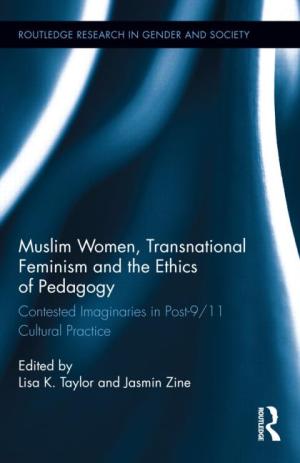
Click Here for Book Review Abstract: Following a long historical legacy, Muslim women’s lives continue to be represented and circulate widely as a vehicle of intercultural understanding within a context of the "war on terror." Following Edward Said’s thesis that these cultural forms reflect and participate in the power plays of empire, this volume examines the popular and widespread production and reception of Muslim women’s lives and narratives in literature, poetry, cinema, television and popular culture within the politics of a post-9/11 world. This edited collection provides a timely exploration into the pedagogical and ethical possibilities opened up by transnational, feminist, and anti-colonial readings that can work against sensationalized and stereotypical representations of Muslim women. It addresses the gap in contemporary theoretical discourse amongst educators teaching literary and cultural texts by and about Muslim Women, and brings scholars from the fields of education, literary and cultural studies, and Muslim women’s studies to examine the politics and ethics of transnational anti-colonial reading practices and pedagogy. The book features interviews with Muslim women artists and cultural producers who provide engaging reflections on the transformative role of the arts as a form of critical public pedagogy. (From the Publisher)
An online journal publishing original syllabi, assessment instruments, assignments and activities, and articles related to college teaching. "A good syllabus is a piece of original scholarship; a great one is also an art form. A research or theory paper go through peer review process to be recognized and validated; the same process should be available to course materials. This is a small step towards taking college as seriously as we take research."
Journal Issue.

Click Here for Book Review Abstract: Once intent on being good to people, Jane Addams later dedicated herself to the idea of being good with people, establishing mutually-responsive and reciprocal relationships with those she served at Hull House. The essays in Jane Addams in the Classroom explore how Addams's life, work, and philosophy provide invaluable lessons for teachers seeking connection with their students. Balancing theoretical and practical considerations, the collection examines Addams's emphasis on listening to and learning from those around her and encourages contemporary educators to connect with students through innovative projects and teaching methods. In the first essays, Addams scholars lay out how her narratives drew on experience, history, and story to explicate theories she intended as guides to practice. Six teacher-scholars then establish Addams's ongoing relevance by connecting her principles to exciting events in their own classrooms. An examination of the Jane Addams Children's Book Award and a fictional essay on Addams's work and ideas round out the volume. Accessible and wide-ranging, Jane Addams in the Classroom offers inspiration for educators while adding to the ongoing reconsideration of Addams's contributions to American thought. Contributors include Todd DeStigter, Lanette Grate, Susan Griffith, Lisa Junkin, Jennifer Krikava, Lisa Lee, Petra Munro, Bridget O'Rourke, David Schaafsma, Beth Steffen, Darren Tuggle, Erin Vail, and Ruth Vinz. "These well-crafted essays continue the conversation about Jane Addams as a distinctive voice in American letters, one that appeals to scholars across academic disciplines. David Schaafsma's collection speaks to a wide variety of readers, particularly those who are themselves teachers."--Katherine Joslin, author of Jane Addams: A Writer's Life "Jane Addams in the Classroom makes major contributions to scholarship on Jane Addams--but also, more broadly, to educational leadership models and teachers’ own individual avenues to social activism. By connecting with Addams as a theorizing story-teller, as well as with scholarship on Dewey, Freire, and other advocates for progressive pedagogy, this collection provides a useful lens for educators seeking to examine their own teaching practices critically. Given the pivotal role that Addams played in community-based education promoting sustained civic engagement, this book is long overdue."--Sarah R. Robbins, author of Managing Literacy, Mothering America (From the Publisher)
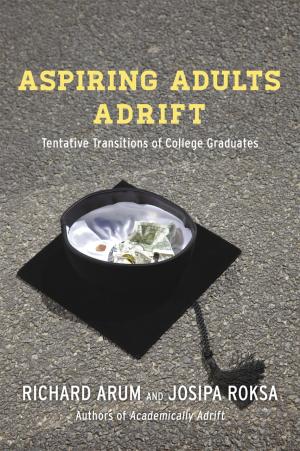
Click Here for Book Review Abstract: Few books have ever made their presence felt on college campuses—and newspaper opinion pages—as quickly and thoroughly as Richard Arum and Josipa Roksa’s 2011 landmark study of undergraduates’ learning, socialization, and study habits, Academically Adrift: Limited Learning on College Campuses. From the moment it was published, one thing was clear: no university could afford to ignore its well-documented and disturbing findings about the failings of undergraduate education. Now Arum and Roksa are back, and their new book follows the same cohort of undergraduates through the rest of their college careers and out into the working world. Built on interviews and detailed surveys of almost a thousand recent college graduates from a diverse range of colleges and universities, Aspiring Adults Adrift reveals a generation facing a difficult transition to adulthood. Recent graduates report trouble finding decent jobs and developing stable romantic relationships, as well as assuming civic and financial responsibility—yet at the same time, they remain surprisingly hopeful and upbeat about their prospects. Analyzing these findings in light of students’ performance on standardized tests of general collegiate skills, selectivity of institutions attended, and choice of major, Arum and Roksa not only map out the current state of a generation too often adrift, but enable us to examine the relationship between college experiences and tentative transitions to adulthood. Sure to be widely discussed, Aspiring Adults Adrift will compel us once again to re-examine the aims, approaches, and achievements of higher education. (From the Publisher)
This research explores key features of the scholarship of teaching and learning presented in nine higher education pedagogical journals. In an effort to better understand the domain in which the journal Teaching Sociology resides, descriptive and comparative analyses indicate that there is notable variation in the type of knowledge offered to teacher-scholars in different disciplines and in the patterns of authorship in terms of solo or multiple authors and gender. Teaching Sociology appears to fare well in comparison with other journals for the criteria examined. The critical issue of determining how this knowledge serves us in practice remains.
Surveys recent research in the preparation of future faculty, citing the nearly exclusive emphasis by graduate programs on preparation for positions in research universities, of which there are very few, at the expense of preparing students for the realities of the jobs that will likely begin their careers. Individual faculty choose what to emphasize to their advisees. Centralized standards for teaching education are rare. Also assess the results of directed programs on preparation for future positions.
A survey of 36 leading seminaries and rabbinical schools, evaluated on criteria for a sexually healthy and responsible seminary. These criteria measure sexuality content in the curriculum; institutional commitment to sexuality and gender equity (e.g., the existence of anti‐discrimination, sexual harassment and full inclusion policies); and advocacy and support for sexuality‐related issues.
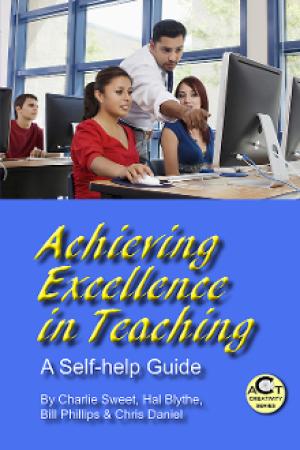
Click Here for Book Review Abstract: This book is designed not only to provide you with a tightly focused set of strategies, selecting only the most fundamental and powerful, but also to offer you a user-friendly method to access your level of success through employment of the strategies. With the authors’ goal of measurable self-improvement in mind, they’ve developed a set of rubrics keyed to each chapter, allowing you to assess where you currently stand as an instructor. Using a Likert scale, the rubrics ask you to evaluate such things as your attitude toward teaching, your alignment of student learning outcomes (SLOs) in your classes with those of larger academic units, and your delivery of class material. At the book’s end you’ll find a series of rubrics that replicate those in the earlier chapters. Comparison of your responses after experimenting with the various strategies offered throughout the text should provide a solid assessment of the handbook’s effectiveness. So, you may start today on a focused, fast path to achieving teaching excellence in your classrooms. (From the Publisher)
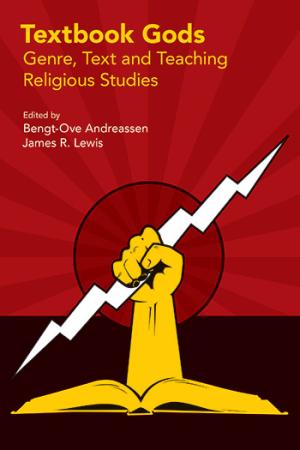
Click Here for Book Review Abstract: In recent years there has been a renewed interest in textbooks, partly because they have maintained their position as an important genre. Not too many years ago – and perhaps currently as well – many considered textbooks outdated or archaic compared with technological advances such as the Internet and different kinds of educational software. Despite these changes, textbooks for school subjects and for academic studies continue to be in demand. Textbooks seem to constitute a genre in which established truths are conveyed, and may thus represent stable forces in a world of flux and rapid changes. Textbook Gods offers perspectives on representations of religion and religions in textbooks. The contributions emerge from different contexts, ranging from European countries, to North America, Japan and Australia. (From the Publisher)