Resources
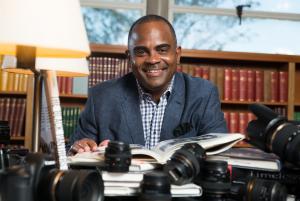
I learned something this holiday season—my first holiday season as a grandfather. My family traveled from Atlanta, Georgia to Orlando, Florida to surprise my mother, Mrs. Earlene Watkins, on her 80th birthday. The surprise is summed up in this moment. [caption id="attachment_239279" align="aligncenter" width="397"] Mrs. Earlene Watkins, My Mother[/caption] My mother didn’t know that that I was coming with my wife. But, we weren’t the big surprise. The big surprise was the new addition to our family. Her new, four-month old, great-grandson, Princeton Josiah Smith. My daughter, Nicole Smith, and her husband, Walter Smith, conspired with us to make this day possible! My daughter Nastasia Watkins and I both videotaped this historic moment. I shot with two cameras: I walked in using my Canon G7 Mark II, and then I shot with my Canon EOS C100. These two cameras are what I am most comfortable with. I had to bring them in large camera bags, set them up, and prepare to shoot. In contrast, my thirty-two-year old daughter, Nastasia Watkins, shot her video with the camera she lives with: her iPhone. She not only shot this video with her phone, but she also edited the video on her phone. She posted her video within minutes. I took my video back to the hotel, edited it on my laptop in Final Cut X, and posted my video on the next day! [caption id="attachment_239281" align="aligncenter" width="392"] My Mother, My Daughter, My Son-in-law and Princeton Josiah Smith[/caption] What did I learn? Nastasia Watkins is no teenager. My daughter is a partner in her own law firm. She and her peers are completely comfortable making memories with what is in their hands. As I watched her shoot video and take pictures over the holidays, it was clear that she was always ready to shoot. On the other hand, it was more work for me. It didn’t come naturally. I didn’t use my phone. I had to go get my camera, get ready, shoot, and then put the camera down. My daughter never put her camera down. It was no challenge for her to be engaged in the moment and shoot simultaneously. I was wowed by her ability to be fully present and to capture the moment. She taught me how her peers and those coming up behind her are processing, capturing, and seeing their world. They see the world with phone in hand. Their phone is not used to make phone calls, but as a way to see, engage, make sense of, understand, and frame their world. For we teachers, these are our students. They see their world through a screen the size of their phones. If we are to understand how to engage them, we must see what they see, how they see, and how they learn to make sense of that which they engage. How do we do this? We must pick our phones up and start to use them as they use them. I have to put my big, expensive cameras down. I am recommitting myself to using my iPhone X for the reason I say I bought it: for the camera. When you see commercials about the latest phone, they never advertise the phone’s ability to make phone calls. They sell the phone as a camera. It was the commercial that sold me, and after this holiday season I have recommitted to using the most powerful pedagogical tool I have with me all the time and that is the camera on my phone. When we use the phone as a camera and editing device, we will begin to engage and make sense of the world our students live in. This will, in turn, inform our teaching and learning. We will see the phone as a teaching and learning device and not as a distraction from our traditional teaching moments. When we see the tool in our hand as a revolutionary pedagogical device, it will change how we use that which we have in our hand. [caption id="attachment_239282" align="aligncenter" width="408"] The Family at the Surprise Birthday Party for Mrs. Earlene Watkins @ 80![/caption] Well, I know you want to see the two videos . . . here you go! Video by Nastasia Watkins https://vimeo.com/382453975 Video by Ralph Watkins https://vimeo.com/382456567 Photo credit: Victor Watkins
Introduction to the Series The cinema has become an important means of cultural communication, a contemporary language in need of understanding and explication . . . Some even believe that cinema studies is positioned to become the new MBA, a means of general preparation for careers in fields as diverse as law and the military.[1] Although multimedia literacy is not one of the accreditation standards for theological schools (yet!), add theological studies to the diverse fields mentioned in the quote above. As seminary education continues to follow the higher education trend toward online teaching and learning, instructors are recognizing the need to enhance their multimedia literacy. Minimally, it is important to note that many of our students are already literate in the contemporary language of cinema. Many students would agree with the following: Movies serve not simply as a commodity but as a primary storytelling medium of the twenty-first century, interpreting reality for us, providing us with a common language, and acting as a type of cultural glue.[2] For many, “image” has replaced “text” as the central tool of communication. This substitution challenges theology’s centrality of the Word (text) and revives a longstanding love/hate relationship between the pious and images. The obstacles are especially palpable for an oral/aural ecclesial practice like preaching. After all, faith comes through hearing (Romans 10:17), not seeing, right? Despite such challenges, the Reformation spirit asks us theologians to embrace new means of communicating the gospel. Cinematic competency seems to be today’s printing press. So, in an attempt to meet students where they are (and teach others along the way), I’ve tried to boost my multimedia literacy by becoming a student of the cinema and seeking convergences between filmmaking and homiletics for the purposes of enlivening the preached word, communicating the gospel, and impacting hearers and their/our world. Part 1: Nobody Goes to the Cinema to Read the Screenplay Despite numerous obvious differences between the two fields that might render them too dissimilar for comparison (for example, films take years to produce and preachers generally have to squeeze sermon preparation into 6 busy days; films are primarily visual experiences, sermons are primarily aural experiences), preachers have much to learn from filmmakers. In this 4-part blog series, I will propose elements, concepts, and techniques from filmmaking that can serve preachers. We begin with this week’s reminder: Nobody goes to the cinema to read the screenplay . . . or even to hear it read. In the same way, nobody goes to worship to read a written sermon . . . or even watch the preacher read it. Oh, yes, people in the pews have become accustomed to the latter, but they should expect more from us preachers. You see preaching is inevitably a kind of performance. These two “p” words are often considered to be at odds since preaching is not solely for entertainment or to heighten the performers ego (to be sure, performers in a variety of arts, including film, expect their performances to move beyond these two outcomes as well). However, preaching is a performance in that it “completes, carries out, accomplishes” something, as its Old French etymology suggests (par-fournir). Indeed, preaching brings an experience to life. T.S. Eliot noted that “Literature was turning blood into ink.” Preaching, on the other hand, turns ink (the written biblical text) into blood; that is, it intends to bring the sacred text to life. Therefore, a sermon is a road map or a blue print for a transformational experience. “Road map” and “blueprint” are often used for screenplays as well. Preachers would do well to consider the following analogy from a screenwriter. However brilliant, [a screenplay is] always in a state of becoming, forever on the way to being something else—a film. You can admire a cocoon for its marriage of function and form, but ultimately it’s the butterfly that will make its way in the world.[3] Or, as another puts it, “. . . screenplays don’t really exist until they’re made into movies.”[4] In the same way, one might consider that a written sermon doesn’t really exist until it’s preached. So, how does this connection to the digital world guide the teaching of preaching? First and foremost, simply making the analogy explicit quickly resonates with preachers-to-be. Therefore, students are challenged to make their “scripts” (yes, I call them scripts) a means to an end, and not the ends themselves. Sermons that pay attention to sermon delivery from the beginning of the writing/crafting process tend to create more of an experience for and with the listeners. Such preaching has more of a chance to turn ink into blood and “make its way in the world.” [1] Robert K. Johnston, Craig Detweiler, and Kutter Callaway. Deep Focus: Film and Theology in Dialogue, 11. [2] Deep Focus, 10. [3] Dan Gurskis. The Short Screenplay: Your Short Film from Concept to Production (Aspiring Filmmaker's Library), Kindle Edition, xii. [4] Joel Engel, Oscar-Winning Screenwriters on Screenwriting (New York: Hyperion), 2.
A 2019 course by Joshua W. Jipp at Trinity Evangelical Divinity School offers a "study of the Synoptics and Acts with emphasis on developing the skills necessary to be effective interpreters of these texts."
A 2019 course by Seth J. Nelson at Trinity Evangelical Divinity School "explores the equipping of educational and other church leaders through teaching and learning, curriculum development, discipleship, and team building as well as generational and intergenerational ministries with children, youth, emerging adults, adults, and aging adults."
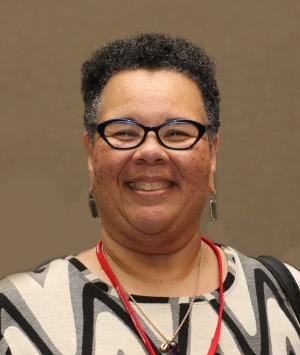
With the possible exception of Drew University Theological School where I was on faculty for twenty years, the Wabash Center has been the most influential institution to my vocational formation. I participated in my first Wabash workshop in 2000 and received my first grant in 2001. Since then, I have worked as a consultant, workshop/colloquy leader, blogger, and committee member. For twenty years, I have been a stalwart fan of the Center’s important mission. I have regularly traveled to and from Crawfordsville, Indiana – but never thinking, in my wildest dreams, that one day I would call C-ville home. Peering out of the van windows as I was being comfortably driven to and from the Indianapolis airport, the sight of confederate flags made me uneasy. I have noticed on many occasions the gun racks and guns in the pick-up trucks parked in the drug store parking lot. Like many towns in America, racial/ethnic diversity is still a contested issue in Crawfordsville. The Wabash Center staff has learned to be conscious of the racist climate and prejudicial views of some members of the Crawfordsville community, and they make every effort to limit negative interactions and foster hospitable space for participants when we leave the campus and venture into the town. The generous hospitality of the Wabash Center always seemed to over-shadow the backdrop of its location in small town middle America. However, visiting, even regularly, is quite different from taking up residence. I have become a resident of 47933! How did this happen? The Tuesday before Thanksgiving 2018, my phone rang. When I answered, my enthusiastic colleague informed me that the position of director for the Wabash Center had been posted. The friend was calling to encourage me to apply for the position. I asked smugly, “Is the Center going to still be in Crawfordsville, Indiana?” With the response of yes, I changed the subject. I had no interest in living in a small, rural town in Indiana. The call ended with my friend asking me to consider applying and me saying, unequivocally – no! Over the next weeks, my rigid response gave way to a full-blown process of vocational discernment. During the weeks, I quickly learned, again, that vocational discernment is not for the weak hearted, cowardly, or those who give a hasty “no.” As I pondered the possibility of the move, the new job, the new responsibility, the new reality, many people, trying to assure me that I should consider the position, reminded me that the most stressful times in life are divorce, death of a loved one, and moving across country. I cannot say I was grateful for the data. My discernment churned deeply – unearthing unfamiliar, difficult, and at times exhausting, questions. To lighten the burden of the challenging discernment process, I turned to read the masters. In this instance, the masters I read for guidance, wisdom, and strength were Maya Angelou and Toni Morrison. When you put Maya Angelou in conversation with Toni Morrison – you get inspiration and more to the point – you get trouble. In my case, tectonic plate shifting trouble! Toni Morrison spoke first as I wrestled with whether or not to make application for the job of director of the Wabash Center. Morrison spoke to me directly, personally, through her novel Home. In the novel, after the character Cee has gone through a long regimen of prescribed healing, Miss Ethel talks to her about freedom … Look to yourself. You free. Nothing and nobody is obliged to save you but you. Seed your own land. You young and a woman and there’s serious limitation in both, but you a person too. Don’t let Lenore or some trifling boyfriend and certainly no devil doctor decide who you are. That’s slavery. Somewhere inside you is that free person I’m talking about. Locate her and let her do some good in the world. As I reflected upon Morrison’s lesson, I was confident I had accomplished a modicum of the work of freedom in my 57 years on the planet and in my womanist approach to teaching. Yet, in considering if I should make application to the post at Wabash, I was being asked to do it again, some more, but deeper and with more tenacity. I was haunted in my discernment by the notion of re-locating and getting re-acquainted with my inside free person. I did the work of conversation, meditation, and prayer; she found me. This time she informed me that we were moving to Crawfordsville, Indiana. I cannot say exactly when in this discernment and transition that Maya Angelou reached out to me and joined the conversation – but she did. Through her poem entitled “On the Pulse of Morning,” Dr. Angelou spoke into me to… Give birth again To the dream…. Each new hour holds new chances For new beginnings. Do not be wedded to forever To fear, yoked eternally To brutishness. The horizon leans forward, Offering you space to place new steps of change. Here, on the pulse of this fine day You may have the courage To look up and out upon me, The rock, the river, the tree, your country…... In my big scary move toward freedom in, of all places, Crawfordsville, Indiana, I am placing new steps of change, giving birth again, and eager for the pulse of the fine day. I have moved to Crawfordsville, and, so far – I like it very much. I am not suggesting that anyone else uproot their lives and move to unfamiliar spaces. I am bearing witness to my experience from which I have learned that the work we are about as teachers committed to being free people and committed to the work of freeing others has chasms, demands, and opportunities which, regardless of how long you have done this work – will surprise and disorient. I am learning anew that the work of freedom requires new-fangled excavations, renewed explorations, and new ideas about old thoughts for the doing of good in the world. I’m thinking about buying a pick-up truck. To say that I tumbled into Crawfordsville is an understatement. Like most cross-country moves, there was stress, distress, decision fatigue and moments of utter confusion. As well, there were experiences of family, friends, and strangers helping in my uprooting and successful replanting. I am soundly in this new place, in this new job, in this new phase of freedom and free-ness, of being free and of teaching freedom in new ways. I am especially grateful for new friends, and new fictive kin who are helping me get oriented, set-up and settled in. My big scary move was met by folks with large hearts and willing hands of compassion and care. The Wabash Center will be celebrating twenty-five years of service in 2020 - at the same moment I am assuming the position of Director. I am humbled and glad to be part of the staff in this celebration. My blogging will continue under the moniker Teaching on the Pulse as homage to my wise-ones, Morrison and Angelou. In my blogs, I will keep you updated on the work of the Wabash Center as well as provide my observations and testimony to the goings-on in the religion academy and world. I am pleased that the Lilly Endowment, Inc (our exclusive funder) will be conducting a year- long program assessment. This program evaluation will allow us to dream about future directions and foci of the Wabash Center. During the year of assessment, our programming will not be curtailed. Also, the staff and I are adding a few items to the program planning for which I am focusing. I will be convening a group of senior African American women colleagues to write a second volume of the anthology Being Black/Teaching Black. This second volume, written in creative non-fiction, will focus on the ways the cultural, intellectual, racial, and spiritual formation of African American women shaped their classroom teaching. We are partnering with the Malcolm X Institute on the Wabash College campus to celebrate their fifty years of service. This blog will keep you informed as we move forward with assessment, the typical programs, and these new initiatives. Loosing my free person from inside me has begun in Crawfordsville, Indiana and at the Wabash Center!

There’s a term for the anxiety many novice instructors feel about the online teaching-learning environment. It’s called “transactional distance.” This relates to the dissonance of feeling “distant” or disconnected from students when one is used to only the experience of the face-to-face classroom experience. Tisha Bender, in Discussion-Based Online Teaching To Enhance Student Learning (Stylus, 2013), identified the pedagogical components that can mitigate the discomfort of transactional distance (something that potentially affects both teacher and student online). Interestingly, but not surprising, they are the same things that are applicable in the classroom learning environment. Arguably there is as much, if not more, transactional distance in a traditional classroom experience as there is online. I've done classroom observations where I witnessed over half of the students spending most of their time on Facebook, Instagram, and shopping sites while an oblivious professor lectured on. Here are the things we know enhances student learning: For the student: Experiencing a sense of belonging Having a safe place where they can risk learning Having the opportunity to learn from others Feeling self-motivated to learn Receiving feedback from the instructor Understanding and feeling comfortable in the social environment of the learning context. For the instructor: Practicing hospitality in the learning environment Providing a place where respect and affirmation of others' opinion is affirmed Providing opportunities for collaborative learning Giving feedback Creating the conditions for learning (interest, curiosity, challenge, and meeting student needs) Understanding and managing the social environment of the learning context (classroom or online). All that to say, one way to overcome anxiety about transactional distance is to remember: • Learning is learning, in whatever context • Learning is a social phenomenon; pay attention to the important “non-instructional” dynamics of the learning environment and experience • It is the application of sound pedagogy that makes the difference in the effectiveness of learning (context and modes are secondary) • The context of learning matters, but no context is perfect and learners have great capacity for being resilient when it comes to contexts of learning • Pedagogically sound course design can mitigate the challenges of the online environment that create transactional distance • The role of the instructor is critical to effective learning. The two absolutely necessary components for successful online learning are: (1) teacher engagement, and (2) student participation. Whether you teach in the traditional classroom environment, design a hybrid course, or facilitate an online learning experience, how well are you paying attention to transactional factors for successful learning?
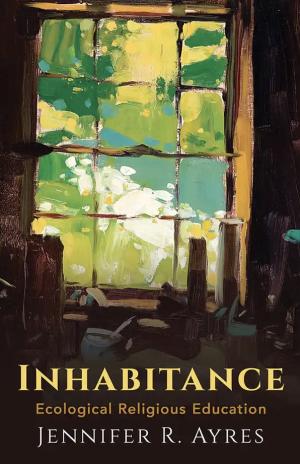
Like other creatures, human beings are inhabitants of their ecosystems. But are humans good inhabitants? According to Jennifer Ayres, the way of inhabitance is stubbornly elusive. The work of understanding, loving, and tending God’s world is constrained by patterns of alienation, exploitation, and systemic neglect and injustice. Faced daily by evidence of ecological death and decay, Ayres determines that this important work of inhabitance is constantly threatened by ecological despair. Ecological despair stems from alienation from the natural world, acute and generational grief resulting from loss of home places, and, for many, an overwhelming guilt at having been complicit in the planet’s suffering. In Inhabitance: Ecological Religious Education, Ayres proposes a solution to this increasing alienation: the way of inhabitance. Just as other animals live and thrive within their ecosystems, so do humans live in a habitat created, sustained, and loved by God. This God perpetually invites us to become better inhabitants. Many religious communities already cultivate inhabitance as a way of life, work that they consider to be central to their deepest theological commitments. Inhabitance examines a diverse array of such practices that foster more intentional engagement with the particular places in which people live. Ecological religious education, Ayres demonstrates, nurtures a disposition of loving commitment toward God’s creation. Inhabitance demands a willingness to love other beings and a willingness to courageously encounter the human and ecological suffering of the world and be fully present to that suffering. And even as humans live more lovingly, courageously, and attentively within their particular places, their lives are opened up to the deepest sources of human well-being—for when God’s world around us flourishes, so do we. (From the Publisher)
Recently, I worked with a colleague to conduct student surveys with currently enrolled students and alumni from the first decade of our distance MDiv program. We asked students what they would like our faculty to know about their teaching strategies for the online portions of classes. About two-thirds of respondents mentioned a desire for increased faculty presence and investment in the course. In some cases, these were very strongly worded: “Faculty participation and engagement online is a make or break factor for the class.” “Beyond a reasonably well-designed course, the instructor(s) showing they are present and attentive is the most important aspect.” “And seriously folks, just because the coursework is online is no excuse for the instructor to not be present in the class . . . . Be present with us. Respond to our posts as if you were responding to our embodied voice breathing the same air at the same time. Don't make us self-teach ourselves with your materials and not with your experience/presence.” Now, faculty responses to this data were mixed. Rightfully so, they felt that in the structuring of the class, the selection of materials to engage, the formation of discussion questions, responding to student posts, providing instructions for written assignments, and numerous other ways, they were regularly “in” their classes. But all of this work that the faculty member put into designing and implementing the course did not always equate to the student’s sense that faculty were present in real time, invested in student learning, and cared for them as people. And for most of our students, this social presence was the most critical factor for good online teaching. Faculty simply weren’t perceived by students as “being there” when they were present in textual form. And, here I am stretching a bit beyond my data, but I believe students often experience textual communication from faculty as evaluative, directive, and disembodied. In creative nonfiction and memoir genres many writers can make themselves socially present through the written word. But, this feat takes a different kind of writing than most faculty are trained to do. The ways we are trained to write as academics tend to communicate a distant expert, a not-so-humanizing aspect of our teaching selves. One nearly effortless way for faculty to make themselves more socially present in an online course is by creating a kind of connective tissue throughout the class in the use of short, informal videos. As a teaching coach to online faculty, I was initially pretty anti-video. I worried that talking head videos were just a non-dialogical information dump, either through reading written lectures to present content or worse, recording lectures in a residential class and using them later for an online section. These were not the kinds of videos our students desired. The videos that the students felt created social presence often involved faculty just hitting record on their laptop and chatting in real time. Faculty were using these videos to share weekly updates about how the class was going, to give brief lecturettes to help students navigate difficult material, to provide a frame for the topic of the week and identify its importance, to offer introductions to readings or other course materials, and to coach for success on writing assignments. While it feels awkward to stare meaningfully into the top of your computer screen and speak directly to students, these videos presenced faculty in a very different way than either voice recording or textual communication. Students felt more connected to those faculty who used these short, informal videos. Most of the time, these videos contained the kind of offhanded explanatory speaking that you might do in the first and last five minutes of class, when you present an assignment, or in response to student questions. Our students marked the importance of these video appearances in their sense of having access to and benefitting from the expertise of the professor, establishing a relationship and sense of trust in the professor, helping with course integration, and believing that the professor was actively guiding the course. Of course, their power to invoke the presence and care of the faculty diminished when the videos were obviously designed for an earlier class, which makes me regret my choice to ever change my hair length and style. Professionally staged or highly polished videos also reduce the communication of a caring human presence. Sitting in the office speaking into a phone camera may feel like a ridiculous way to connect with students, but it turns out that the vulnerability of offering your regular teacher-self helps you be present to your students in powerful ways.
This podcast, hosted by Bonni Stachowiak, airs weekly. The podcast focuses on topics such as excellence in teaching, instructional design, open education, diversity and inclusion, productivity, creativity in teaching, educational technology, and blended learning.
Podcast Series. A podcast for people who know religion is weird, but love it anyway. Your hosts, Leah Payne and Brian Doak, are both professors, authors, and pop culture aficionados, whose interests range from archaeology and history and linguistics to LARPing and The Walking Dead. Episodes tackle some piece of media highlighting the wonderful weirdness of religious experience—a documentary, a television show, a Twitter scandal—and use that as a thread on which to hang pearly reflections on a wide variety of topics. Heaven. Hell. The perils of fame within the evangelical world. Church attendance. Atheism. Gamer communities. Starting a cult. Join us.