Resources
A 2019 course by Jacob J. Erickson at Trinity College Dublin explores "contemporary theological and ethical perspectives on eating and drinking: from food systems to vegetarianism to scarcity and more. How might contemporary ethics shape and be shaped by what we eat or drink, how we eat or drink?"
You may have heard the announcements that the Wabash Center has launched a new open-access, online journal, The Wabash Center Journal on Teaching. The entire contents of the inaugural issue of the journal is now available for free download online. For twenty-two years the Wabash Center has been publishing Teaching Theology & Religion (TTR), owned by Wiley-Blackwell. Now we’ve moved our whole editorial team from TTR to this new publishing venture in order to make our efforts available digitally without subscription. Although the Wabash Center will no longer be involved in the publication of TTR, Wiley-Blackwell intends to continue publishing it with a new editorial team beginning with volume 23 (January 2020). When we started TTR as a new and unknown center for teaching in the 1990s, we needed the prestige of a major publisher in the field of religion and theology to lend gravitas to the emerging field of the scholarship of teaching and learning. But for many years now we have regretted the paywall our articles have lived behind, limiting our ability to promote this scholarship, support authors, and inspire readers. The Wabash Center Journal on Teaching will continue publishing the high-quality, peer reviewed scholarship on teaching in the fields of theological and religious studies that has been the hallmark of TTR for over two decades. The new journal carries forward the same scope and focus of scholarship – but now our efforts will be freely available online. In the new journal you’ll find the popular Teaching Tactics. In addition to Forums (with contributions now listed individually) we will also highlight Special Topic sections. And the new journal reintroduces Book Reviews, which were removed from TTR in 2015 to allow more space for articles in the print journal. So while you’ll find The Wabash Center Journal on Teaching familiar, you will also begin to notice new developments. The open-access online platform allows us to provide convenient links to sources on the internet and links back to previously published articles. But more than that, the new platform provides the opportunity for The Wabash Center Journal on Teaching to become more than just a print journal available online. It’s easy to insert links to video clips, graphics, or sound files – although these links must be found on the web or created by authors. It takes a leap of imagination to conceive how teaching issues and contexts, arguments and evidence, could be represented graphically, in motion, visually. Until now, the written word would have seemed to be the distinctive home for sustained rigorous, reflection on teaching. But we’re moving into a new world in which the “text” that creates and makes legible academic thinking needn’t be limited to words on a page. So we issue this challenge to our readers and authors: send us sustained critical reflection on your teaching practice and context that explores the boundaries and possibilities of representational forms and genres available on an open-access online platform. 4 Highlights of the Inaugural Journal Issue 1. “State of the Field” essays by: Frank M. Yamada Eugene V. Gallagher and Joanne Maquire A Conversation with Maryellen Weimer (longtime editor of The Teaching Professor, and leading authority on disciplinary based scholarship on teaching) 2. Reflections on the teaching legacy of Dr. Katie Geneva Cannon by several of her former students: Stacey M. Floyd-Thomas Karen K. Seat Miguel A. De La Torre Angela D. Sims Edwin David Aponte 3. Special Topic: Threshold Concepts in Biblical Studies (with contributions from John Van Maaren, Tat-siong Benny Liew, Richard A. Ascough, and Jocelyn McWhirter) 4. Teaching Tactics Zoom in on Interpretive Skills by, Amy Beth Jones, Stephanie Day Powell The Buddha's Positionality, by Christina Anne Kilby Maximizing Engagement between Online and On-Campus Students Via Zoom, by Daniel Orlando Álvarez Does This Sound Religious?, by Amy DeRogatis, Isaac Weiner

Some things are best expressed digitally. When the Wabash Center's "Teaching with Digital Media" Workshop challenged my preoccupation with using text to explain visual concepts, I decided to create a video rather than typing a "Dos and Don'ts" list for students in preaching courses. With the help of two savvy graduate assistants, we produced this VLOG. Spoiler alert: everyone survives!
Katie Geneva Cannon equipped generations of students with analytical tools to reckon with the past and present and to creatively construct previously unimaginable futures. Her body of work teaches us to find new paths as we critically plumb our own historically situated epistemologies and put them in conversation with a variety of traditions. As my teacher, dissertation advisor, and mentor during my graduate studies in religion at Temple University from 1993-2000, Dr. Cannon taught me to examine rigorously my own story in its larger historical and geopolitical contexts, to parse the privileges and perils of pursuing the academic study of religion as a white woman, and to engage deeply with multitudinous ways of knowing. See companion contributions to this Forum written by Edwin David Aponte, Miguel A. De La Torre, Stacey M. Floyd-Thomas, and Angela D. Sims.
Written by her first doctoral student, this essay is a tribute to the legacy and lessons of Dr. Katie Geneva Cannon (1950-2018), the progenitor of womanist ethics. The author embraces Cannon’s signature womanist embodied pedagogy, which takes embodiment as a Black woman seriously and serves as a paradigm for those who purposefully and poignantly live intersecting roles of race, gender, and class. Through both a personal account of the grief experienced by the passing of her mentor and a critical reflection on lessons learned by Cannon’s legacy, the author exposes the daunting challenges faced by womanist scholars as they navigate the front line of the classroom and the frequently death-dealing and dismissive terrain of higher education. See companion contributions to this Forum written by Edwin David Aponte, Miguel A. De La Torre, Stacey M. Floyd-Thomas, Karen K. Seat, and Angela D. Sims.
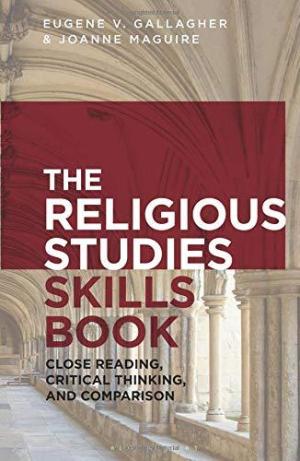
Click Here for Book Review This book supports students engaged in the study of religions by helping them understand key processes particular to the field, including bracketing and comparison, and general humanities skills, like critical thinking and close reading. The authors offer useful examples throughout the book and augment those with further exercises available online. - Molly H. Bassett, Georgia State University Studying religion in college or university? This book shows you how to perform well on your course tests and examinations, write successful papers, and participate meaningfully in class discussions. You'll learn new skills and also enhance existing ones, which you can put into practice with in-text exercises and assignments. Written by two award-winning instructors, this book identifies the close reading of texts, material culture, and religious actions as the fundamental skill for the study of religion at undergraduate level. It shows how critical analytical thinking about religious actions and ideas is founded on careful, patient, yet creative “reading” of religious stories, rituals, objects, and spaces. The book leads you through the description, analysis, and interpretation of examples from multiple historical periods, cultures, and religious traditions, including primary source material such as Matthew 6:9-13 (the Lord's Prayer), the gohonzon scroll of the Japanese new religion Soka Gakkai, and the pilgrimage to Mecca (hajj). It provides you with typical assignments you will encounter in your studies, showing you how you might approach tasks such as reflective, interpretive or summary essays. Further resources, found on the book's website, include bibliographies, and links to useful podcasts. (From the Publisher)
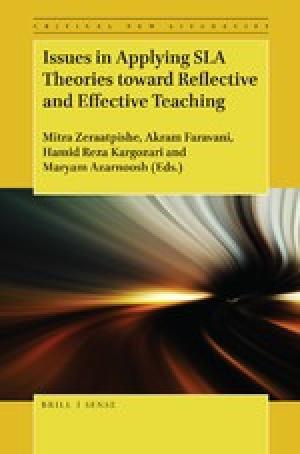
Issues in Applying SLA Theories (hereafter Issues) comprises volume seven in the series, Critical New Literacies: The Praxis of English Language Teaching and Learning (PELT). What is meant by reflective teaching? In their article on writing, Zeraatpishe and Azarnoosh offer the following definition: “Reflection is regarded as a process through which teachers observe their beliefs and practices, assess, restructure their teaching and learning so that they can better situate themselves as agents of change in the immediate contexts of teaching” (165). Effective teaching, in contrast, involves conscious monitoring of student needs and progress, followed by corresponding adjustments in one’s instruction. Issues is a collection of fourteen essays by a global array of authors. Most hold doctoral degrees, with teaching experience ranging from assistant professors to emeritus professors. Several serve as editors of major publications in the field of Second Language Acquisition. Part One concentrates on six theories that have influenced language learning pedagogy. Part Two addresses eight skills necessary for learning a language. Theories explored in Part One include behaviorism, cognitive approaches, constructivism, connectionism, interactionism, and critical theories. Behaviorism’s attention to stimulus and response led to the emphasis on language drills found in the Audio-Lingual Method. Cognitive approaches bring together rationalist and empiricist viewpoints, valuing both Chomsky’s innate Universal Grammar and also the importance of learning through experimentation. Constructivism in language learning involves forming increasingly more complex categories of information by analyzing similar elements, whether individually (cognitive constructivism) or in community (social constructivism). Connectionism draws from the design of digital computers to consider how parallel distributed processing (or artificial neural networks) serve the task of pattern recognition. Interactionism holds that language learners benefit from conversational communication, which involves input, negotiation of meaning, noticing, and second language output. Critical Second Language teaching would value “a listening phase on the part of the course designer or teacher, and… finding out about the learners’ real lives and needs” (70), then creatively adjusting the course correspondingly. The remaining eight chapters turn from theory to praxis, exploring what it means to teach particular skills in a reflective and effective manner: pronunciation, grammatical competence, vocabulary, idioms, speaking, writing, listening, and reading. For example, instructors are encouraged to journal after class sessions to become attentive to trends in student performance of pronunciation. Grammatical competence can be enhanced by immersive use of illustrated fiction readings, with discussion and open-ended composition assignments. Vocabulary learning will be more effective as students are encouraged to master roughly 2000 words, whether isolated lexemes, word families, or phrasal vocabulary, so that they may produce them in speech and in writing. Idioms will be learned more effectively through a pragmatic approach that is attentive to context and the speaker’s aims. Speaking will improve as instructors facilitate conversation that is incremental and attentive to stages of students’ proficiency. Writing instruction can be segmented into eight discreet stages. And listening comprehension improves as students appreciate and attend to specific processes at work during periods of concentrated listening. Reading fluency, defined as the ability to read “effortlessly and confidently at a level of understanding and a rate appropriate for the purpose or task and the material” (Day, 203), requires automatic recognition of words which results from students having read large quantities of easy and interesting material. Instructors of English as a Foreign Language comprise the principal audience for Issues. Those who, like the reviewer, teach a classical language will benefit primarily from R. R. Day’s insights concerning literacy (199–208), and also from Nurmukhamedov and Plonsky’s essay on vocabulary (115–26).
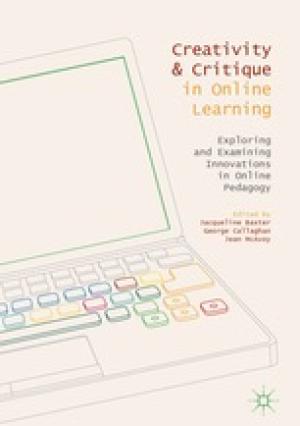
Online learning has come a long way in twenty years. Although distance education has been around in one form or another for a really long time, online education had fairly humble beginnings in California in the late 1990s. As noted in the foreword of Creativity and Critique in Online Learning, “At the end of the 1990s the internet was seen as an interesting application, but not necessarily relevant to all subjects or modes of teaching” (vii). The initial benefit of distance and online education was that it would connect learners together in a networked classroom that spanned further than four cinderblock walls. What initially started as a distance enterprise, where students would log in to a remote learning server and be funneled into a class with potentially dozens to hundreds of other faceless paying customers (and may or may not have received an actual education), the Learning Management System (LMS) has evolved into a “commonplace and essential piece of technology infrastructure in almost every university” (viii). Yet creativity does not come without critique, as is often the case when boundaries are stretched and broken. This volume provides a summary of the creative side of online learning as well as a critique of the overall process, at least within the purview of Open University’s experience as a leader in online learning, answering significant challenges and squashing anecdotal myths throughout. The editors and contributors, all of whom are either faculty at Open University or products of one of Open University’s online programs, seek to rewrite the narrative regarding online education. Rather than asking “Can online study really replicate the challenges and occasional joy of learning in a face to face environment?” (2), these contributors shift the focus to answering questions such as “How can [online learning] help teach the ‘hard to reach’ and how can it provide learning for those who have failed in (or rejected) learning in a face to face context?” (2). Putting aside such arguments as online education being more cost-effective in a bloated yet dwindling brick-and-mortar learning environment and what tools and techniques work the best in an online context, the contributors pull directly from their experience and ground their findings in action research that seeks to add a cogent and coherent voice to the ever-widening field of online learning studies. Creativity and Critique in Online Learning presents real-world problems with and in online learning with real-world solutions from real-world practitioners, some of which worked and some which did not. Of particular note in this volume are the chapters on developing effective forums (chapter 3), engaging students in informal learning communities (chapter 5), addressing concerns with academic dishonesty (chapter 7), and developing appropriate yet effective teacher-learner relationships (chapter 11). Overall, I found this volume helpful. As the director of a completely online graduate program in biblical studies and Christian leadership, I recognize the growing challenge of developing online learning experiences that are academically rigorous while also developing spaces for relational connection and personal growth. I was afraid this book would be another “do it our way” argument. However, the essays are more akin to the casual conversations we catch over coffee at a professional conference than the peer-reviewed “expert” keynote that we actually paid to hear.
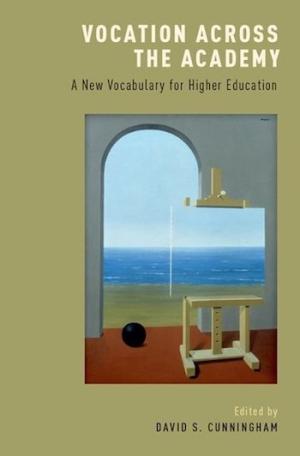
Against the backdrop of growing debate over both the nature and value of higher education, David Cunningham and twelve scholars offer what they believe may serve as a “common purpose” – vocation. Along with the word, “calling,” vocation has theological roots, but Cunningham argues that a “more expansive” approach to the word “is attentive to questions of profession, work, and employment” and “encompasses a much broader range of concerns that will arise during a college student’s current and future life.” The writers of this volume do not believe that appealing to the concept of vocation will eliminate conflict swirling around competing visions of the academy, but they do believe that the concept appeals to both the roots of the modern university and the goals of faculty from across the academy (3). With that goal in mind, Cunningham and his co-contributors divide their effort into four parts. Eschewing a disciplinary-centered approach to their work, they instead consider “four different pathways or approaches through which the disciplines can come into conversation with one another: first by emphasizing certain themes that are common to them all; second, by borrowing concepts from one discipline that can apply to many other disciplines; third, by focusing on the future lives of undergraduates…; and fourth, by considering some of the institution-wide obstacles that need to be addressed if the language of vocation and calling is to be perceived as relevant to all academic departments and programs” (14). In a closing epilogue, Cunningham notes that the volume demonstrates that neither vocation nor calling exhaust the concerns that arise from their use in the academy. The words, “responsibility, character, virtue, mission, covenant, mapmaking, storytelling, performance, work, [and] leisure,” along with others, figure in the contributions to this volume (315). That should come as no surprise, he argues. From the very beginning, Cunningham commends a definition of vocation that is “capacious, dynamic, and elastic” (315, cf. 10ff.). Accordingly, he argues that one should approach the issue of vocation prepared to use multiple vocabularies that reveal different, but interrelated discoveries. To have a vocation means that one is shaped by that calling (317ff.); that one is summoned “from without” (319f.); that one must decide what to do (320f.); that those who are called inevitably consider their link to the callings of others (321f.); and that they are compelled to think about the impact their vocations will have on the future (322ff.). This is the second of three volumes in an ambitious and welcome effort to recapture the inspiration of vocation as a locus for higher education. The first, published in 2015 under the title, At This Time and in This Place, focused on pedagogy. The third, published in January of 2019 appeared under the title, Hearing Vocationally Differently, and expands on the vocabulary associated with vocation, relying on contributors from diverse religious traditions. One may well wonder what the prospects will be for the project of this series. Embattled as the academy is – by forces both within and without – one would hope that scholars will find a common inspiration that will lend new energy and focus to their work. But even cursory attention to the debates roiling college and university campuses underlines the truth that “an optimist is someone who is not in possession of all the facts.” It is difficult to believe that disciplines that are struggling to define a shared vision of the work that they are doing could agree on a vision for the larger work to which the whole academy is devoted. The task that the writers propose is made all the more difficult by the choice of “vocation” as the organizing principle around which they attempt to rally their readers. As Cunningham himself observes, the verb vocare is transitive (317). As such, it implies that one is not only called, but one is also called by someone or something. The absence of a shared understanding of who or what issues that call - if anyone or anything does – underlines how little shared vision may be in the offing for the modern academy. For theological educators the answer to that question and others ought to be easier to achieve, but anyone who teaches in the modern divinity school knows better than that. As seminaries struggle to address declining enrollments, degree programs are crafted with an eye to the individual’s goals and the notion of vocation – and the spiritual formation that accompanies it – has slipped again to the margins of theological education. Where it still lingers, it is necessarily governed by private definitions. In the meantime, seminary faculties differ with one another as much or more on such questions as the faculties at any college or university. The effort made by Cunningham and his co-contributors comes, then, as both question and indictment: What is it about the concept of vocation that leads even a small but brave cohort of scholars without shared confessional commitments to imagine that they can galvanize their work around the concept? The indictment is this: What are the factors that have relegated the question of vocation to the margins of the very institutions that gave birth to the vocabulary?
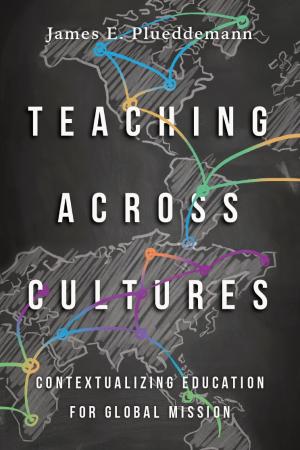
As a Roman trained missiologist who teaches intercultural pedagogy and ministry, as someone who grew up on the US-Mexican border and who has worked in religious formation since the age of twelve, I was drawn to this book’s title and cover design, a world map on a chalk board. I am blessed with a large number of international graduate students, most of whom will be returning to their home countries or will be called to work internationally. The book’s title seemed a tall order – but it did not in the least disappoint. Penned by a seasoned missiologist and professor who knows how to draw educationally from his extensive international travel and work abroad, the work is exceptionally readable, one which strives to integrate course content, or knowledge of the biblical tradition, with contemporary human experience, or alternatively phrased, an appreciation for an ongoing dialogue between a course being content-centered and student-centered. Plueddemann does this especially by engaging Edward Hall’s highly effective categories of “high and low context” styles of communication, together with Geert and Gert Jan Hofstede’s development of power distance. Filled with examples and anecdotes, not only from his own teaching but also from other practitioners appropriately placed at the end of every chapter, he makes a strong case for paying attention to biblical pedagogy, one which is profoundly experiential and cognizant of diverse contexts. His sources are carefully selected so as not to overwhelm the reader with jargon and very applicable to those wishing to respectfully do global Christian mission in a way in which Bible and culture inform each other, especially in contexts which are much more communal than our U.S. contexts. His brief inclusion of key learning theorists such as Piaget, Lewis, Dewey, MacDonald, and Freire show their continued relevance, and provide a necessary bibliography for further study. It is not often that we find good pedagogical material specifically aimed at teaching theology or religion, so this little gem is a welcome one, a work carefully tailored to shifting contexts, learning styles, and contemporary media globalization. Much to my amazement, Plueddemann’s tools can be applied to a variety of educational tasks such as teaching language, preaching, summer camp work, Sunday school, mentoring and coaching, and even parenting. His appreciation of the teaching potential of novels and other forms of art provides ways in which teachers unfamiliar with local contexts can begin to enter these learners’ worlds. Teaching across Cultures’ ecumenical sensibilities, similarly, such as the inclusion of the work of Thomas H. Groome, well-known in Catholic educational circles, makes it a useful text beyond the Protestant world. Will I assign this text? Definitely! My own use of some of the biblical and anthropological tools he cites will be enhanced by his examples of how they can be applied to educational and pastoral settings, not only to those which demand intercultural sensitivity, but even to those which we think we already understand.