Book Reviews
In The Pietist Vision of Christian Higher Education, Christopher Gehrz convenes an impressive array of scholars to offer fresh, cross-disciplinary reflections on how the Pietist mandate to form whole and holy persons can invigorate institutions of Christian higher education. Gehrz is professor of history and chair of the history department at Bethel University, and his ongoing work is focused on both tracing and promoting the Pietist impulse within Christianity. His co-authors represent a variety of disciplines, including English, theology, ethics, geography, psychology, nursing, anthropology, physics, philosophy, communication, sociology, and library sciences. The breadth of expertise serves to reinforce the underlying thesis of the book: the Pietistic traditions of seventeenth- and eighteenth-century Germany, nineteenth-century Sweden, and twentieth-century Minnesota can provide a “usable past” with which Christian colleges and universities in the twenty-first century can navigate the many challenges facing higher education. Faculty, staff, and administrators need not serve at institutions traditionally associated with the Pietist tradition to find resonance with the authors’ ideas and perspectives. While the chapters offer a healthy accounting of the influence of Pietism on Christian higher education, the calling to form “whole and holy persons” is broadly shared within the Christian tradition. To be sure, the chapters are written squarely from the Pietist perspective. However, all Christian educators can find avenues for reflection and practices for implementation within this book. The dedication to a holistic vision of student formation, mentoring, teaching, scholarship, and service is a shared and unifying value across the diversity of Christian institutions today – and even as this vision is articulated and pursued in different ways, the Pietist vision offers a unique and compelling framework for contemporary application. The Pietist Vision of Christian Higher Education is organized into four sections and includes an introduction and conclusion by Gehrz. Part one investigates the themes of teaching, scholarship, and community in the Pietist university. Part two explores how changed people change the world. Part three offers responses to the Pietist vision from the natural and health sciences. Part four then explores problems and proposals for putting the Pietist vision into practice. Each chapter is written by a different author, and this brings a refreshing collaborative tone to the entire volume. Even with seventeen different contributors, the book maintains a consistent tone and stays focused on Pietism’s unique influence on Christian higher education. The book is a testament to how the Bethel community deliberately embraces the “usable past” of their own Pietist tradition. Each author has a direct connection to the university, and this means that readers receive rare insights into the Pietist workings of an institution from many different perspectives, disciplines, and backgrounds. The downside to this institution-centric approach is that readers may be challenged by how to appropriate the uniquely-Bethel Pietist ethos to other institutional contexts. However, even though we now know what it means to foster Pietism’s usable past at Bethel, other universities can and should glean from Bethel’s insights as they explore the implications of their own usable pasts for innovation in the future.
The five essays in this volume – on outcomes-based collaborative teaching, learning, and “authentic” assessment, and “connectivist” (86-87) uses of technology and media – are written for Western educators teaching in Asian contexts, but also for teachers in U. S. higher education. The volume is beautifully organized, with short summaries before each essay, as well as strong visuals – charts and illustrations – that summarize information and suggest application. The essays are individually valuable, but they do make a whole volume. The metaphor that the editors use for teaching and learning is choreography, “the rhythmic dance evolving between instructor and learner in the educational setting within higher education” (1). The teacher is a facilitator, moving students through “challenges and uncertainties,” with an emphasis on collaboration, in the Asian classroom. Tieyuan Guo’s introductory essay sets up the discussion, as it examines learning styles of students in and from Confucian Heritage Cultures (CHC). In CHC, students tend to be pragmatic learners (7), motivated by concrete outcomes. Confucian teaching emphasized ren, the cultivation of the human person, throughout a lifetime, towards virtue. The social, practical application of ren was in examinations (keju) used to identify and to promote government officials. This resulted in CHC students’ orientation to passing examinations that led to upward social mobility. Though the Confucian system officially ended in 1905, the understanding remains. CHC students, therefore, put more effort into study than their Western peers (9), and the student persona is different than the Western student. Confucian education values active silence in the classroom, indicating reflection and attentiveness; memorization, mastery, and understanding before application and critical analysis. Silence also involves respect for authority. These may combine to create only “surface learning” (14-15), leading CHC students to so worry about understanding that they do not move to critical thinking and about “losing face” that they do not ask questions. Non-Asian instructors should develop cultural understanding and sensitivity to make sure that CHC students learn. As van Schalkwyk illustrates, in a useful chart, an Asian student raised in a CHC culture accepts rules and hierarchy and prefers high levels of structure. A CHC student may need time in learning; therefore, group discussions and in-class assignments that a non-Asian student might enjoy may generate stress for the Asian student. In the third chapter, van Schalkwyk suggests ways to construct learning activities so as to be sensitive to CHC cultural realities. The fourth essay suggests linking activities to “authentic assessment,” in performance-based, sequential, and interlinked activities that move students towards higher-order cognitive processes (75). The final chapter examines the uses of technology to meet these goals. This important volume asks us to step back from now accepted language of, for example, outcomes assessment in American teaching and learning to understand their impact on Asian students, both in Asian societies and in the U. S. We should take up this challenge and add to it, working to understand how our institutional and classroom structures affect the learning of all students from diverse backgrounds.
A single-frame cartoon rests on the upper right-hand corner of my university office door. A professor stands before a full room of students; the board behind her is full of lecture material, most likely a quantum mechanics equation based on the arrows and lines. She is smiling from ear to ear having finished, saying to herself, “That was a great lecture.” Across from her sit her students. They are wide-eyed and, collectively saying to themselves, “I am so confused!” The caption underneath declares it all: “Great Moments in Teaching.” I can hear the collective groaning even as I type. I would like to think that I am becoming a good professor. Not just a good professor, but an effective professor, one who is shaping the minds of future leaders. Many professors would like to think that of themselves. That is why many are in the noble profession of education. The question is, then, are teachers effective in the classroom? Jay Howard’s Discussion in the College Classroom opened my academic eyes to be sensitive to teaching better. I had fallen into the trap similar to that of the professor in the comic – I assumed that because there were no questions the students had listened to and processed everything that I had said. Howard calls this “civil attention,” something that the author claims has become common in college classrooms across the country. According to Howard, the current generation of college students are good students who want to show respect to their faculty members. They do this by quietly checking their Twitter feed, reading the latest Reddit forum, or watching a Vine post from one of their friends. They will laugh in the right places, answer the patented questions correctly and perform well on our rubric-based tests not necessarily because we are the sensational sages that we think we are but because they have learned how to beat the system at its own game – civility receives an “A.” Howard has an antidote for this type of dilemma – figure out your students, how they learn and process information, and then guide them in discussions in ways with which they can effectively engage. As many writers have mentioned, teachers need to become partners in the educational journey. The difference with Howard is that he has mounds of data to back up this assertion. What the book lacks is practical application for contemporary classroom contexts (only the final chapter offers any actual advice on bettering a teacher’s discussion abilities).
Critical Race Theory in Higher Education: 20 Years of Theoretical and Research Innovations is an in-depth description and analysis of critical race theory. The book addresses contemporary issues facing our society in general and higher education specifically. Dorian L. McCoy, a professor at the University of Tennessee and Dirk. J. Rodricks, a doctoral student at the University of Toronto collaborated on the book. It is part of the Higher Education Report periodical series. It is interesting that this book was launched during some disturbing times involving race in the United States. The book addresses critical race theory at the time when the slogan “Black Lives Matter” becomes the rallying cry against injustice and the attacks on black lives by the criminal justice system and police specifically. Although the book addresses this issue, it is not what propelled the authors to write it. The authors define critical race theory (CRT) as: "A form of oppositional scholarship that centers race and racism while challenging the Eurocentric values established as the accepted norm in the United States; is used to examine the unequal and unjust distribution of power and resources politically, economically, racially, and socially; a movement of scholars committed to challenging and disrupting racism and other forms of oppression; composed of the following key tenets: the permanence of racism, experiential knowledge, interest convergence theory, intersectionality, whiteness of property, the critique of liberalism, and commitment to social justice." (91) Throughout the book the authors take their definition of critical race theory and present research on each aspect of it. This not only serves to educate students in higher education, but also to enlighten those who are part of the hiring process. As one who has served on search committees at institutions of higher education, I find the research in this book to be very stimulating. The documented disproportionate number of professors of color teaching in institutions of higher education makes this research very helpful for search committees in these institutions. Astute people will use this information to further promote equality and even the playing ground in institutions of higher education. Critical Race Theory in Higher Education serves as an educational tool for administrators, board of trustee members, and faculty in higher education, especially for the ways by which it encourages deeper reflection on the subject. The weakness from this reviewer’s viewpoint is that the book becomes somewhat overwhelming with so many references. This sometimes causes the flow of reading to be cumbersome particularly when reading some technical terms. That said, McCoy and Rodricks have put together a large corpus of research on critical race theory that could be helpful to faculty teaching in North American contexts. The book is very timely as it explores a very important subject to address in our present time of heightened awareness of multiculturalism and pluralism. Overall this book is a valuable resource for all who have an interest in higher education.
If one were to ask faculty to describe the developmental continuum of an academic career, the responses would probably be structured along the titles that correspond to the faculty ranks of assistant professor, associate professor, and professor. In Mapping Your Academic Career, Gary Burge takes a different approach, examining how faculty careers are shaped by developmental shifts that occur naturally across an adult lifespan. His central thesis is that the development of most faculty proceeds along predictable trajectories that are related, yet not necessarily identical, to their rank. Burge identifies three stages of development in a faculty career, which he labels as “cohorts.” These do not necessarily correspond to faculty rank or age. Instead, they are shaped by: (1) a scholar’s perception of themselves, their career, and their relationship to their institution; and (2) the institution’s perception of the scholar’s career progress and value within the institution. Consistent with other lifespan developmental theories, each cohort is characterized by a central developmental task or question, which influences the choices they make and the forms of support they need. For cohort one, which corresponds to the early phase of an academic career (or possibly a shift to a new institution for experienced faculty), the central task is finding security and vocational identity, with tenure or a long-term contract being the watershed. The central task in cohort two, the midcareer period, is success – that is, achieving mastery and developing a unique voice in one’s teaching and scholarship. For cohort three, who are typically senior, tenured, full professors, it is finding significance – determining their value to the institution and the guild. As a newly tenured faculty member, I approached this book under the assumption that it would focus, at least in part, upon mapping the path to tenure and promotion; that it would discuss the institutional commitments and guild activities that would most likely gain the approval of promotion committees, provosts, and president. Burge’s text, however, is not primarily concerned with how to get to each phase. He spends virtually no time discussing how to get a tenure-track position, how to get tenure, or how to map your path to professor. Instead, he is concerned with the health and vitality of faculty careers and how faculty can successfully navigate the tasks of finding security, success, and significance. Burge devotes a full chapter to each of the three cohorts, describing the individual, interpersonal, and institutional characteristics that predict successful navigation of the stage. He also notes that there are “predictable pitfalls” within each cohort, which may negatively impact, and in some cases end, a scholar’s career. Burge’s text is most helpful for mid-career and senior faculty, as well as for the administrators who oversee them. Because of the prominent role and impact of tenure, faculty development efforts inordinately focus upon it. There is little attention upon helping tenured faculty intentionally reflect upon their vocation, including their commitments to teaching, scholarship, and service within their institutions and the larger society. Burge’s text draws attention to the ways in which faculty evolve as they mature. He provides some insight into the issues that contribute to faculty members’ loss of focus or motivation following tenure or promotion. A significant shortcoming of the book is that it lacks a sound basis of support. Burge provides no description of the methodology used to identify the cohorts. There is no interview data and little support from extant literature to support many of his assumptions. His analysis relies heavily upon personal experience and anecdotes, which he often interprets in troubling ways. While he tries to include issues of race, ethnicity, and culture, his handling of those issues is sometimes clumsy and shortsighted. He does not question or critique institutional structures or systems that hamper the success and vitality of female and ethnic minorities. He treats these issues instead as individual problems that are the responsibility of ethnic minority and female faculty members to navigate. Still, Mapping Your Academic Career is a worthy effort and a helpful book that faculty and administrators should read. In it, Burge names what is often unnamed in faculty development. And while the book has little in the way of firm support, it provides a good foundation for research on the developmental shifts and challenges facing faculty across their careers
The ability to teach across cultures is more important than ever and many professors are searching for practical resources to help navigate the complexities of twenty-first century classrooms that are both face-to-face and online. Ikpeze’s Teaching across Cultures offers practical tools and it provides the theory behind the approaches he outlines although at times, he leaves the reader wanting more detail on how to incorporate his strategies in the classroom. Ikpeze trains teachers in pedagogy for a cross-cultural context, and emphasizes that all classrooms are multicultural. Through his own experiences as a teacher, he identifies the gaps and missteps that occur in a multicultural classroom and how to address these problems primarily with two approaches: Cultural Responsive Pedagogy (CRP) and the cultivation of “Third Space” in classrooms and online environments. Ikpeze shares freely the classroom problems he encounters as a self-disclosed foreign born (of African descent) and accented English speaker. His openness is refreshing and invites the reader to connect their own teaching challenges with his. CRP demands a responsive teaching style that invites students to bring their wisdom and cultural selves to learning. The creation of third spaces brings together opposing viewpoints into a space where they are questioned and blended. It is an ambiguous space that moves out of binary modes of thinking and learning to a mode of hybridity. The first step Ikpeze covers is the concept of a self-study. Self-study involves intensive data gathering that moves beyond the troublesome student course surveys that often perpetuates race, gender, and class biases to a mode of gathering data from a variety of sources to construct a picture of a teacher’s self-presentation, reception of this presentation, and pedagogy. It is not a one-time process. Ikpeze emphasizes the need for maintaining academic rigor and teaching objectives while addressing the problems discovered in the self-study. The second step in his work emphasizes building relationships between student and teacher, between students and their selves, and between students to allow greater understanding. This work allows the creation of a “third space” where students’ knowledge from day to day living is invited into conversation with academic knowledge. This technique requires intentional exercises and regular engagement with students both in and outside the classroom. Teaching across Cultures is theory heavy and at times frustrates the practitioner who wants to move directly to the practical strategies. While Ikpeze emphasizes relationship building as the foundation for cross-cultural pedagogy, the realities of class size and teaching load shapes the ability of professors to effectively employ many of these tools.
A group of English, Scottish, Irish, and Australian scholars has produced a thorough and insightful resource for effective teaching in higher education that seeks “to bring together the latest knowledge and understanding of teaching, learning, and assessment in higher education” (xi). The editorial team developed the approach to reflective teaching on the basis of the ten point Teaching and Learning Research Programme (TLRP) developed in the UK. The chapters in each section refer to the relevant principles in TLRP and put forward credible arguments grounded in recent empirical research. The editors intersperse useful reflective activities and case studies throughout each chapter in order to promote reflective inquiry by individuals and groups of teachers. The editors organized the book into five parts: Becoming Reflective; Creating Conditions for Learning; Teaching for Understanding; Reflecting on Consequences; and Deepening Understanding. Taken together, these five elements constitute a model for the development of effective teaching in higher education that is comprehensive, open-ended, and ongoing. The approach offered here functions like a dynamic spiral toward adaptive expertise. The emphases on evidence-based theory and practice, constructivism, teaching as jazz improvisation, assessment as a crucial component of learning, and robust inclusion all recommend this book to contemporary educators in higher education. I find only two deficiencies in this impressive body of work. At four hundred pages, only the most dedicated teachers or administrators in higher education will read the work as a whole. I tried to plow my way through to the end several times, but could only make limited progress in any one session of reading due to the density of the material. I think a book half the size of the existing volume would have sufficed. The second problem concerns the commitment of the authors to critical pedagogy. Toward the end of the book, the editors advocate ever more strongly for a largely Frierian-based approach to diversity and inclusion as the best – perhaps the only – way forward in higher education today. While I have more than a passing interest in critical pedagogy, I find the narrowing of the philosophy of education bandwidth advocated here to be overly confining and surprisingly uncritical. I would have liked to see a treatment of multiple approaches that would support the establishment of egalitarian and inclusive communities of learning in higher education. I see four likely uses for this book. Those charged with leading doctoral seminars on teaching in higher education may find this a particularly valuable resource. I know that I will. It could well serve as a viable alternative to Barbara Gross Davis’s Tools for Teaching (2nd ed., Jossey-Bass, 2009). This book could also help new professors develop the kind of reflective practice that will enable them to become expert practitioners of the craft of teaching. Many individual chapters of the book could find use by those leading in-service faculty development sessions. Finally, academic deans or committees responsible for promoting effective teaching in faculties could profitably work their way through this resource in its entirety as a way to gain a 360° sense of effective teaching and learning in higher education today.
The high attrition rate of doctoral candidates remains a major problem for higher education in the United States. Drawing upon her experience as the manager of graduate research and retention at Western Michigan University, Di Pierro offers an engaging text aimed at new faculty who are advising candidates and their advisees. Di Pierro argues that “despite abundant research and often-echoed affirmations that something must be done to quell doctoral attrition, progress is essentially hampered by a reluctance to recognize that advising faculty cannot continue to work with doctoral advisees by replicating models that are passé” (1). She believes that faculty and candidates need to be aware that models have changed “and are moving in the direction of collaborative, integrative, and interdisciplinary styles” (10). Furthermore, faculty need formal advising training before directing dissertations or serving on committees. Di Pierro makes dissertation committee work a reoccurring subject throughout this book. She begins by addressing communication within committees and with the advisee. She covers expectations, roles, duties, expertise, and responsibilities not by offering a model but by outlining the areas the advisor needs to establish to ensure healthy and helpful communication on the committees. She also explores topics such as vetting a committee by the candidate, dealing with toxic committees, and considerations for faculty members to consider before accepting a role on a committee. Another major subject of Di Pierro’s work is the actual writing of the dissertation. She explores subjects including finding a dissertation topic, the role of literature reviews, concept papers, maintaining draft files, combating the writing blues, responding to plagiarism, and working with human subject review boards. Building on the theme of communication, some of Di Pierro’s strongest chapters cover expectations for editing both from the perspectives of the advisors and the advisee. She explains line-by-line editing versus conceptual editing, explores using technology to give editorial feedback, and engages the problem of when editorial feedback is not working. In her final chapters, Di Pierro offers a number of ideas including developing a “Student’s Bill of Rights” and a “Dissertation Advisor’s Bill of Rights” (173-174) and dealing with the post-dissertation blues. In her closing, she presents her views on the future of doctoral education by calling for the establishment of dissertation wellness checks and envisioning the creation of Graduate Centers for Scholarship, where candidates will find writing experts, statisticians, qualitative and quantitative methodological experts, and digital technology experts all in one place. Di Pierro’s work is very reader-friendly with take-away lists, end-of-chapter biographies, and checklists, but the overall organization of the chapters seems out-of-sync. The author jumps around quickly from topic to topic and back again frequently. That said, the content of the chapters is valuable for its intended audience. Chapter 25, which provides an outline of each chapter, is a useful tool for navigating the book itself. For schools of theology and seminaries, dissertation completion and dissertation quality are important subjects for both PhD and Doctor of Ministry programs. With limited resources for faulty training, Di Pierro’s book offers a valuable discussion starter for faculty and administrators and could serve as a planning tool for overhauling program handbooks. This title is strongly recommended for academic libraries with PhD and Doctor of Ministry programs, veteran faculty who want to improve their advising for candidates, as well as the book’s target audience of new doctoral advising faculty and their graduate students.
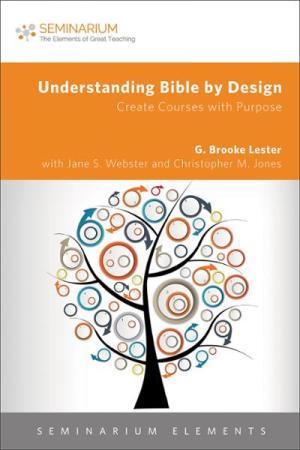
Lester, Webster, and Jones came together from different academic contexts to create a practical, succinct resource for professors on course design. Lester and his co-authors set out to demonstrate how the principles of Grant Wiggins and Jay McTighe’s 2005 updated Understanding by Design (UbD) model can be applied to theological or religious disciplines in higher education. UbD is a method for designing courses that intentionally fulfill the instructor’s stated course goals from day one. UbD is a learner-centered approach intended to focus on the macro-level objectives of the course. UbD seeks to generate courses where each class is connected clearly with the objectives. Lester finds that UbD works best for course units or individual lessons in his Master’s level courses on the Bible. He provides helpful examples of how he applies the concepts of UbD to his teaching approach or assessment of assignments. While Lester uses the model’s “essential questions” to structure course units, the other authors show how UbD could apply to an entire course. For teachers of undergraduates, Webster’s chapter is very insightful. She provides in-depth examples of the types of assignments she assigns, exam questions and “metaquestions” utilized throughout the course. For her New Testament course, Webster assigns sixteen one- to two-page papers that build on each other and advance students’ writing skills. This is an ideal assignment for any instructor, but it must be noted that all three authors have teaching loads lighter than a typical small liberal arts college faculty member’s teaching load of 4/4 or 4/3. Nevertheless, such assignments constitute a helpful resource for all higher education teachers. The final chapter demonstrates how the principles applied by Lester and Webster aid in developing non-biblical courses. Here Jones writes about his successes and failures as he developed his courses on Rituals and Early Judaism for the first time. The benefit of this chapter is the honest analysis of how he set up his course and his own reflections on the results, including pitfalls for new followers of the UbD model and thoughts on the unique pressures of teaching at a college or university for the first time. The chapter on creating an online course is less effective because half of the chapter is a general defense of online teaching. The other half of the chapter lacks the type of precision one finds in the other chapters since it does not include a specific course as an example. This small volume is a great resource and quick reference for graduate students, new professors, and professors who have had little guidance on teaching. Each author introduces the concepts of Understanding by Design in a succinct and accessible manner that moves smoothly through the thought process of implementing it. For anyone who has been teaching for a longer period of time, the book could be a good resource for modifying current courses. While the work is geared toward courses on the Bible, the concepts can be transferred effortlessly to nearly any other theological discipline.
This edited volume addresses the common assumption that professors have overwhelmingly liberal or radical political views and that they have significant biases against conservative thought. Grounded in both quantitative and qualitative research, the editors suggest that the common stereotype of academic culture as hostile to political worldviews that do not fall on the leftwing of a continuum does not stand up to the scrutiny of data. Instead, their eleven chapter, method-rich book reveals the political and social thought of most individual members of the academy is, indeed, typically progressive, but that the effect of these individual worldviews on the collective environment of higher education is more nuanced. Moreover, the standard notion that so-called liberal professors discriminate against conservatives because they are conservatives does not emerge from the results of any of the contributors’ work. The backdrop for much of the book is an agreement on the part of the editors that American higher education is in crisis. This crisis involves many factors, including finances. Colleges and universities are feeling the effects of a constricting economy. Competition for students is fierce. The need for revenue is great and institutional endowments are shrinking. That some attribute the crisis in higher education to the social thought of the educators in higher education motivated this study to examine the precise nature of higher education’s social worldview. The volume’s primary orientation is the sociology of higher education and includes the sociology of intellectuals. A unifying observation is that the professoriate, as well as other elements of the academy, possesses a progressive political worldview. This worldview grows from a number of factors, including but not limited to the social class of those who enter professions in higher education. The current orientation of the academy toward progressive politics is not new and studies of it are not new, either. Gross and Simmons provide a brief survey of literature exploring the history of political and social views of academics, noting the significant presence of higher education professionals who worked in New Deal related positions in addition to their work in colleges and universities. Their book, focused on the current state of affairs, explores higher education since 2006. Professors and their Politics has value for all professionals associated with American higher education. The various studies in the book make a case for why progressive values are dominant among those who enter vocations associated with colleges and universities, as well as how these values shape research agendas, hiring practices, and treatment of students. If their conclusions are correct, and the various authors have provided data to support verifiable conclusions, the political life of the academy is a sign of its vitality, not a cause of its crisis, and the vitality of the academy includes more support for diversity of thought, especially among students, than common stereotypes assume. This volume makes an important contribution to understanding the culture of contemporary higher education.