Resources
If you're like most instructors, this is a question that you've asked yourself many times. That's why Weimer, Parrett, and Kerns have compiled this guide–so it's easier to get the answers that you need to this crucial question. How Am I Teaching? contains nine forms and activities that allow you to gather information about what you're doing and how well you're doing it. The authors begin with a simple diagnostic matrix to guide you to the form or activity which best suits your needs. Then they summarize each of the nine tools, highlighting the value and limitations. Make copies of whichever tool(s) you've selected and you're on your way to better teaching! (From the Publisher)
Applying theory to practice, Women Teaching for Change reveals the complexity of being a feminist teacher in a public school setting, in which the forces of sexism, racism, and classism, which so characterize society as a whole, are played out in multiracial, multicultural classrooms. "A fine book, a rich melding of critical theory in education, feminist literature, and pedagogical experience and expertise." Maxine Green, Columbia University. (From the Publisher)
In this updated version of her landmark book Learning to Listen, Learning to Teach, celebrated adult educator Jane Vella revisits her twelve principles of dialogue education with a new theoretical perspective gleaned from the discipline of quantum physics. Vella sees the path to learning as a holistic, integrated, spiritual, and energetic process. She uses engaging, personal stories of her work in a variety of adult learning settings, in different countries and with different educational purposes, to show readers how to utilize the twelve principles in their own practice with any type of adult learner, anywhere. New material includes: the latest research on learning tasks; updated ways to do needs assessment; and new insights from the field of quantum physics applied to adult teaching and learning. (From the Publisher)
Written by one of today’s leading theorists in the field of pastoral theology, Volume 24 in the Louvain Theological & Pastoral Monographs series critically evaluates the diverse educational models available for ministry in today’s societal and ecclesial context in the West. Johannes van der Ven also proposes his own "reflective ministry" model designed to teach pastors to make self-reliant—yet foundationally sound—choices when working in their own unique ministry settings. (From the Publisher)
Susan Toohey focuses not on teaching techniques but on the strategic decisions which must be made before a course begins. She provides realistic advice for university and college teachers on how to design more effective courses without underestimating the complexity of the task facing course developers. In particular, she examines fully the challenges involved in leading course design teams, getting agreement among teaching staff and managing organizational politics. (From the Publisher)
Tompkins is an English professor at Duke. The book is autobiographical and profoundly evocative. It is an intense interpretation of the innertwinings of her personal and professional life. Tompkins discusses her life--from elementary school, through her doctoral program at Yale, through her life as a nontenured and then tenured faculty member--and, in the process, discusses issues that are important to so many of us in the Academy. She writes wonderfully about teaching, learning, and working at a research university. (From the Publisher)
Over the past 25 years, research findings have continued to underscore the direct and positive impact of women's colleges--institutions where the academic aspirations of women are the focus of the entire educational community. This book identifies the distinctive characteristics that make these colleges preeminent contributors of achieving women to the wider society. The authors also explain how the lessons and legacies of these institutions have the potential to enhance the education environment at all colleges. (From the Publisher)
Since the early days of liberation theology, Northern Hemisphere theological education has used the phrase "solidarity with the oppressed" to denote the religiously and morally appropriate response to situations of violence and oppression. Yet efforts to inculcate solidarity of heart and mind often devolve into a kind of "theological tourism" wherein professors and students visit oppressed communities without truly participating as subjects in the subjectivity of the marginalized. Beyond Theological Tourism shows how one group of theological teacher-mentors and students attempt to overcome the limits of visits as "tourists of the revolution" to exotic locations. Starting from the challenge of Robert Evans of the Plowshares Institute, a group of Chicago-based Christians struggled with new modes of education for prospective ministers. (From the Publisher)
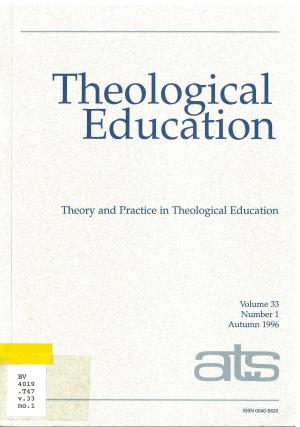
Journal Issue. Full text is available online.
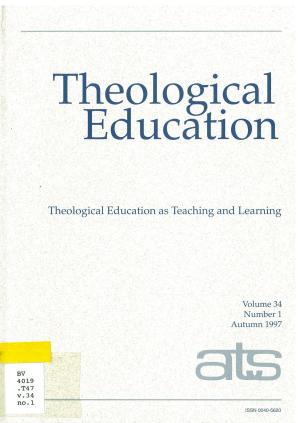
Journal Issue. Full text is available online.
Wabash Center Staff Contact
Rachelle Green, Ph.D.
Associate Director
Wabash Center
greenr@wabash.edu