Resources
Challenges an autonomous model of literacy instruction in favor of one that recognizes and builds on students' facility in navigating other rhetorical contexts. (From the Publisher)
This book provides a provocative look at the issues and controversies surrounding grade inflation, and, more generally, grading practices in American higher education. The contributors confront the issues from a number of different disciplines and varying points of view. Topics explored include empirical evidence for and against the claim that there is a general upward trend in grading, whether grade inflation (if it exists) is a problem, which ethical considerations are relevant to grading, and whether heavy reliance on anonymous student evaluations of teaching excellence has a distorting effect on grading practices. Finally, the contributors offer contrasting perspectives on the prospects for reform. "As state and federal agencies begin to talk about accountability for universities, the topic of grade inflation could become even more politicized. This timely book addresses a topic of significant public interest and does it well. The fact that the contributors disagree, take different approaches, and address different aspects of grade inflation is a virtue." - Kenneth A. Strike, author of Ethical Leadership in Schools: Creating Community in an Environment of Accountability "This book encourages academic communities to engage in constructive debate over their professional responsibilities as evaluators of student academic work. Its greatest strength is that it presents disparate perspectives on the complex topics of grading and grade inflation. The contributors are in a real sense engaged in a discussion on the subject, which makes the book refreshing and intellectually stimulating." - Matthew Hartley, University of Pennsylvania Contributors include CliffordAdelman, David T. Beito, Mary Biggs, Harry Brighouse, Lester H. Hunt, Richard Kamber, Alfie Kohn, Charles W. Nuckolls, Francis K. Schrag, and John D. Wiley. (From the Publisher)

A fresh look at study abroad programs on American college and university campuses. (From the Publisher)
Journal Issue.
A Grinnell College (Iowa) study investigated whether students (n=200) felt that balanced discussion of racial/diversity issues was possible and why they did or did not want to discuss the issues. Most thought balanced discussion was impossible, feared a single viewpoint would dominate, and feared reprisal for speaking against the dominant perspective. Further findings and implications are discussed.

Journal Issue.
This book significantly advances discussion of the mission of higher education in today's multicultural environment and global economy. It sets out the challenges and considerations that must be addressed by administrative leaders, by trustees, and others who shape the vision and direction of the institution but most particularly by academic deans and faculty. The author makes the case that the inclusion of a diversity and globalization in disciplinary work contributes to the research agendas of individual faculty and their departments, aligns with scholarly values, and promotes such student learning goals as tolerance of ambiguity and paradox, critical thinking and creativity. He offers a strategic vision of success, backed by theory and examples of effective application, for creating transformative change; and provides a roadmap to implementing inclusive pedagogical practices and curricula. With implementation dependent on leadership and participation at every level of an institution, everyone with a stake in its future should read this book. (From the Publisher)
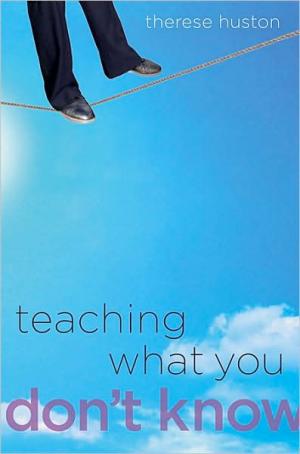
Your graduate work was on bacterial evolution, but now you're lecturing to 200 freshmen on primate social life. You've taught Kant for twenty years, but now you're team-teaching a new course on “Ethics and the Internet.” The personality theorist retired and wasn't replaced, so now you, the neuroscientist, have to teach the "Sexual Identity" course. Everyone in academia knows it and no one likes to admit it: faculty often have to teach courses in areas they don't know very well. The challenges are even greater when students don't share your cultural background, lifestyle, or assumptions about how to behave in a classroom. In this practical and funny book, an experienced teaching consultant offers many creative strategies for dealing with typical problems. How can you prepare most efficiently for a new course in a new area? How do you look credible? And what do you do when you don't have a clue how to answer a question? Encouraging faculty to think of themselves as learners rather than as experts, Therese Huston points out that authority in the classroom doesn't come only, or even mostly, from perfect knowledge. She offers tips for introducing new topics in a lively style, for gauging students' understanding, for reaching unresponsive students, for maintaining discussions when they seem to stop dead, and -yes- for dealing with those impossible questions. Original, useful, and hopeful, this book reminds you that teaching what you don't know, to students whom you may not understand, is not just a job. It's an adventure. (From the Publisher)

Catholic institutions of higher learning are at a crossroads: How can they remain true to their roots while recognizing that many of their administrations, faculties, and student bodies have little connection with the tradition? How can these institutions remain competitive while maintaining a relationship to the Church? During the past several years, Catholic theologian John C. Haughey, SJ, has conducted groundbreaking research on these questions. He has done this in tandem with a team of Catholic scholars from around the United States. Haughey has also conducted numerous workshops with faculty at a dozen Catholic colleges and universities to learn firsthand about their research and teaching aspirations. Those relationships and conversations provide the foundation for this book's many insights. In "Where Is Knowing Going?", Haughey explores what constitutes the Catholic identity of Catholic colleges and universities. Going beyond a doctrinal understanding of Catholic identity to one that engages and is engaged by the intellectual tradition of Catholicism, Haughey does not find that the issue of Catholic identity is adequately dealt with by marketing the distinctive identities of institutions in terms of their founding religious orders or saints. He provides a sure-handed process whereby the pursuits of individual faculty can be better aligned with the formal mission of the institution. (From the Publisher)
Wabash Center Staff Contact
Sarah Farmer, Ph.D.
Associate Director
Wabash Center
farmers@wabash.edu