Resources
Gallagher and Maguire wrote The Religious Studies Skills Book for undergraduate students taking religious studies courses. Recipients of the American Academy of Religion’s Award for Excellence in Teaching and longtime Wabash Center affiliates, Maguire and Gallagher draw on the breadth of their experiences as scholar-teachers to craft an accessible book that covers the basics – and more. They dispel myths, like the assumption that teaching about religions in public universities is unconstitutional, and they clarify common confusion, including the distinction between studying theology and religious studies. They also offer insights into what makes the study of religion so compelling and worthwhile: Students of religion are in a field unlike any other. The field has interdisciplinary breadth and global and historical depth that can’t be found elsewhere on campus. Many students come to the academic study of religion expecting personal spiritual development. Although that might be an accidental outcome of exposure to ideas in any course, teachers tend to be strongly interested in developing students’ skills and knowledge, goals achieved in part by reading, observation, and discussion that brackets personal judgement and biases . . . If a single introductory course in religious studies teaches nothing else, it will at least show you that there are many other ways to understand the world. (69-70) I quote this passage at length because it exemplifies one of the two most important features of this book: the authors write to and for students. They do this from the first to the last page. I never felt like they overlooked the student to speak to a colleague. Midway through, I flipped back to the title page and wrote, “How many of us write for this audience? They’re taking students seriously!” It’s refreshing, and it is one aspect of the book that would make me want to assign it. The book’s other great strength is how the authors model what they expect students to learn. Most chapters include explicit examples. The chapter on comparison offers lengthy examinations of how comparison works using excerpts from sacred texts (Matthew and Science and Health with Key to the Scriptures) and scholarly ones (definitions of religion). In some places, the authors anticipate students’ observations, and in others, they expand their scope. For example, they note fairly obvious similarities between the gospel and Science and Health, and then they expand the comparison through a series of questions about authorial intent. In addition to the explicit examples, Gallagher and Maguire build an argument through the arrangement of the book’s chapters and draw on evidence from scholarship on teaching and learning. The companion website provides more general information and additional exercises, too. My main concern is how the book can reach its intended audience. Ideally, students in introductory courses would read and absorb the Skills Book. Realistically, the motivated majors in a third-year seminar will be carrying copies with dog-eared pages, and, years from now, graduate students learning how to teach will be lucky to find a copy with some dedicated major’s marginalia.
As our students encounter work in what is more and more a gig economy, the authors of this book have been thinking about the implications of such employment for those entering the workforce and also for those who wish to pursue creative endeavors either as full-time or part-time work. The authors focus on creativity as a locus for student and worker resilience and adaptation to changes in global economics. The first several chapters outline various theories of creativity. It is particularly useful that the authors elaborate on many varied theories of creativity within different academic disciplines and contexts. Chapter 1 includes thinking about creativity within a global context, and how different social, cultural, and political situations affect the development of ideas of what constitutes creativity, who is creative, and how they come to be creative. The authors consider the nature of creative development within both collectivist and individualist views of society. They also consider several religious contexts for the development of creativity, including thinking about humans as divine conduits, both as described in sacred texts (such as the story of Moses) and as the Muses working through artists. One strength of the early chapters is seeing the deep theory of creativity in a number of fields. In chapters 3 and 4, the authors turn not just to describing theories, but to challenging them, saying that some might misidentify creativity. The authors probe the sociology and social systems that allow certain types of creativity to become dominant in various societies, and which types of creativity are recognized by their societies. The confluence approaches and systems model, which comprise the central chapters of the book, looks at a number of ways in which creativity can fit or allow a person to thrive within a system. The authors highlight various features such as intrinsic motivation, domain relevant skills (such as knowledge of field and necessary technical skills), and creativity relevant skills. An overwhelming strength of this book is how the reader can look through the authors’ lenses of multiple disciplines and access their background research, ideas, and the main voices in their fields for others to know, which helps readers understand how these ideas apply in various contexts. In chapters 5 and 6, the authors turn from a descriptive project to a constructive one, considering how systems approaches can provide guidance for thinking about effective ways to develop creativity in higher education that will provide students and workers with the necessary tools to adapt to new work situations as our economies evolve. The authors then tease out implications and impacts of such a model and its adaptability to other contexts. All these confluence systems are deeply interactive, and recognize the context in which the person has lived and operates. It is here that the book best provides help to scholars and practitioners in theological and religious studies. While the book is written within the context of media studies, it is clear in the second half of the book where these systems approaches could apply to someone who wishes to either research or serve a religious community, and the authors have begun that work of thinking how this model can work in other contexts. In its last chapters, the book provides multiple ideas about how one’s context can positively shape the ability to develop and foster community.
Out in the Center: Public Controversies and Private Struggles provides a fresh perspective on the inter- and intra-personal dynamics of writing center work. Building upon Greenfield’s and Rowan’s Writing Centers and the New Racism: A Call for Sustainable Dialogue and Change (2011), Condon’s I Hope I Join the Band: Narrative, Affiliation, and Antiracist Rhetoric (2012), and Denny’s own Facing the Center: Toward an Identity Politics of One-to-One Mentoring (2010), this edited collection presents the personal narratives of underrepresented voices in writing centers and invites critical conversation about the complexities of identity negotiation among tutors, writers, and administrators. While some writing centers claim to be neutral spaces where writing is engaged apart from the culture that produced it, this collection acknowledges the ways in which writing and collaborations around writing are always already both personal and political – shaped by a confluence of internal and external factors. Writers, tutors, and administrators bring their selves to the work, thereby making public their past, present, and emerging identities, which are inextricable from the social, political, economic, and cultural dynamics of the communities in which centers reside. The collection is organized into six parts – race, multilingualism, gender and sexuality, religion, class, and (dis)ability – some with more narratives than others. This imbalance likely speaks to the variety of submissions and also signals the need for even more narratives from underrepresented and marginalized perspectives. Additionally, while each part is purposefully arranged, the editors recognize that identities are intersecting and note in the review following each section that identity categorizations are fluid. Part I narrativizes the interplay between the reading or erasure of black female and male bodies in one-to-one consultations and the writing classroom and how those occurrences interconnect with public discourse on issues like black natural hair, Black Lives Matter, and black masculinity. Part II explores the benefits and complexities of multilingualism in the center and ways that tutors can leverage linguistic dexterity. Part III focuses on the role of gender and sexuality in the identity formation of writing center administrators and tutors. Part IV takes up religion, an identity-marker that is sometimes unseen, and asks how inviting disclosure of religious identities might challenge hegemonic norms. Part V considers how class converges with other identities in writing centers, inviting interrogation of economic standing and belonging. Part VI explores how learning differences can shape writing practices and influence pedagogical approaches to tutoring. The collection concludes with a final chapter and afterword that encourage readers to recognize the pedagogical and epistemic value of these lived stories in their own contexts and for future research. Engaging meaningfully and critically with these stories and the intricacies of intersecting identities that they underscore enriches our ability to create more inclusive practices in hiring, training, and tutoring – a worthy charge and a fitting ending for this valuable work.
This edited volume profiles higher education communities of practice, with contributing authors reflecting on their experiences of dreaming, scheming, and implementing communities of practice (CoP) within a variety of higher education contexts. As an elementary teacher turned practical theologian, I am encouraged to see this attentiveness to social learning within higher education. The CoP concept has significant potential for critiquing, enhancing, and transforming teaching and learning practices within religious and theological educational contexts. It is noteworthy that, despite the current climate in higher education being identified as chilly and non-supportive of collaborative activities (xii), the enthusiastic response to Jacquie McDonald’s call for papers exploring the use of CoP for learning and teaching in higher education resulted in two volumes. A more practical focus is evident within this second volume. The Foreword, written by Etienne and Beverley Wenger-Trayner, provides a helpful overview of the history of the CoP concept. CoP theory is identified as having moved through three phases, from the community defining learning, to learning defining the community, to the consideration of a broader landscape of practice, acknowledging learning taking place at the boundaries between communities of practice as well as within them (viii). Theological educators will benefit from considering the relevance of each of these phases. The volume is divided into four parts. Part I consists of case studies. Amongst these first seven chapters, the more generalizable are certainly relevant to teachers of religion and theology. These include the first chapter, with its focus on the use of CoP to support the capacity development of supervisors of HDR students, and the fourth chapter, with its focus on the practice of generous scholarship and collegiality through academic writing retreats. Here Sally Stewart Knowles advocates for attentiveness to the actual practices and processes that lead to publication. Noting the proven value of writing retreats, Knowles implies that the communities fostered by such retreats must move from fringe status to becoming an integral part of a research environment (78). The sixth chapter, with its focus on collaborative autoethnography and decoloniality, may also prove invaluable in terms of researcher preparation in various contexts. Part II focuses on curriculum development. Here theological educators may particularly resonate with an emphasis on “transformational approaches to professional learning” (161) within chapter eight and the interdisciplinary focus on transformative education and sustainability within chapter thirteen. Theological educators and students will benefit from considering the various student-focused CoP within Part III. Doctoral students may particularly engage with the development of informal organic networks outlined in chapter fourteen. Variations on the Equity Buddies concept outlined in chapter seventeen may be valuable for supporting first-year students within theological colleges. Finally, the focus within Part IV on virtual CoP will be of relevance to those engaging students in quality learning experiences through online teaching, learning, and research. Themes that emerge through these chapters include the organic nature of communities and the fostering of a culture of collaboration. Given that some contributors make extensive use of acronyms, readers unfamiliar with these acronyms may need to engage in the discipline of slow reading. While a final summary chapter reviewing and discussing key themes and findings that emerged throughout these papers would enrich this work, educators will nevertheless benefit from focusing on those chapters most relevant to their contexts. Overall, religious and theological education readers are likely to glean inspiration, ideas, and implementation strategies that contribute to learning with and from one another in today’s isolating yet interconnected world.
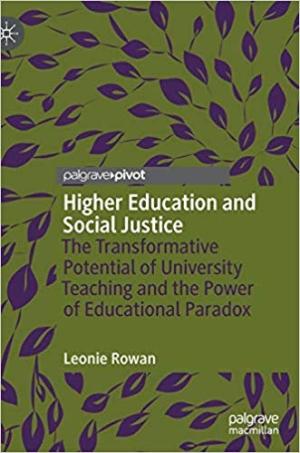
At a recent workshop on “Diversity, Civility, and the Liberal Arts,” I found myself in the company of faculty and staff teams from small colleges and universities around the United States who find themselves, like Leonie Rowan, “motivated by a desire to create university contexts in which diverse learners feel themselves to be included, valued, and safe” (1). This desire names the telos, or end, towards which critical, liberative pedagogy aims – freedom. Unlike the Aristotlean defense of the liberal arts as education suitable for free persons (read: male, property-owning citizens), Rowan’s notion of freedom extends to all learners, especially those whose participation in higher education has been constrained by the unjust dynamics of the sociohistorical contexts in which they happen to be born. Rowan argues that education can be transformational when the decision-making processes in higher education – from curriculum and syllabus design to admissions policies and the student support portfolio – begin with the question: “For whose freedom – in whose interests – do we, now, labor?” (4). It is an important question that suggests that not all student-centric approaches lead to models of student-as-customer and higher education as a private good. For readers who have followed debates about diversity and inclusion in higher education since at least the 1990s, the terrain Rowan is covering and the companions along the way will likely be familiar – notably, the relationship centered, liberative philosophies of Paulo Freire, bell hooks, and Parker Palmer. Like many social currents today, it is difficult to avoid a sense of déjà vu when reading about education and “its fundamentally constructed and negotiated nature” (16) and the need for academics to embrace “the idea that language is a site of struggle” (18). The key move Rowan makes is the attempt to get underneath these now familiar discursive moves in order to understand “what it actually, really, feels like to study within a university classroom” (15). In so doing, she sides with social justice theorists like Nancy Fraser whose notion of participative parity juxtaposes classical questions of social justice as distributive justice with questions related to recognition and representation: “do people have the opportunity to participate in an environment on an equal footing” (14)? The middle chapters demonstrate how pedagogical decisions that flow from notions like participative parity have the potential to transform student engagement. Empirical evidence for this potential is drawn largely from Rowan’s own classroom experience educating future teachers from diverse backgrounds in an Australian university. The data sets consist of student course and instructor evaluations as well as brief “doorstop” interviews with students, most of which confirm what she highlights in the scholarly literature about student engagement and diverse learners. These chapters would, in the end, make much better stand-alone scholarship of teaching and learning articles, offering insights from her own successes and failures to create the type of classroom space she desires. In a telling example of the challenges of actualizing this type of space from chapter four – for me, the strongest section of the book – Rowan describes what she refers to as “one of the most appalling lessons I have ever taught” (115). She acknowledges that in her attempt to empower diverse learners with a lens for critically interpreting past discrimination against First Nations people, she inadvertently opened the door to “inappropriate and offensive language.” The effect was immediate: the goal of a charged but hospitable environment (one of Palmer’s educational paradoxes) devolved into something “destructive and frightening.” Despite her extensive background and skills as a facilitator of difficult dialogues, she acknowledges that this episode created fissures in the class that could not be overcome – indeed, “several of the participants never returned to the class again” (115). What is most striking about this example in the context of her overall argument is the short shrift she gives it. Offered under the heading “A Summary and a Pause,” she relates this anecdote in the space of a page or two, as a kind of aside. Yet, for me, this anecdote is at the heart of her project, illustrative of the pitfalls of liberative pedagogies that fail to adequately acknowledge the priority of her other pedagogical concern: relationships. She concludes the anecdote with an apology to all the students involved, and in this gesture – as well as the telling of the anecdote itself – Rowan reveals herself to be the kind of caring, reflective, intentional pedagogue needed to hold educational paradoxes in creative tension and to resist conflating “giving students an opportunity to have their individual voices” and “anything goes” (116). Yet, the reader is left wondering what she would do differently next time? The evidence she has gathered from years of student evaluations and the practical wisdom she has accumulated teaching these topics semester after semester surely has something important to say about how this might be handled, whether in forms of restorative practice for that particular class or decisions she made the next time to create a more “sufficiently hospitable” (116) environment before introducing similar content. Given her primary data sets for the rest of her argument, it may also have been instructive to hear how students processed that experience in their evaluations. This particular example points to a challenge that has become more acute in recent years as attempts to create participative parity in college classrooms and curriculum have sparked various forms of resistance by those who perceive this type of parity as a threat. While Rowan acknowledges this challenge, the lack of engagement with recent scholarship on concepts like white fragility risks limiting the liberative early insights of luminaries like hooks, Freire, and Palmer. Emerging research on best practices for engaging straight white males as social justice allies on college campuses reveals something about the educational paradox faculty face when introducing issues of social justice in their classrooms – environments that help some diverse learners feel valued and safe may have the opposite effect on other diverse learners (e.g., Vianden 2018). Rowan alludes to this paradox when she coins the term “furiety,” which she refers to as an approach that recognizes, on the one hand, multiple dimensions of diversity including individual differences within traditional categories (e.g., race) and, on the other hand, “a commitment to intellectually charged activities approached through pedagogical variety” (87). Furiety opens a way into a deeper analysis of the example above. More importantly, for those of us who struggle daily to live into the question “For whose freedom – in whose interests – do we, now, labor,” Rowan’s further development of the term may encourage us to respond with greater integrity: “All of my students.”

When it comes to effective teaching, “less is more.” While the brain is an amazing information and multi-sensory processor, research suggests it can only effectively learn one new thing (concept) at a time. The maximum number of “bits of information” the brain can process at any given time is eight (like in the “eight bits” of a computer chip), or, as sometimes notated “7 +/- 2″ (seven plus or minus two).* When it comes to teaching, we do well to focus on teaching one new concept at each learning session (that’s one new concept per class session!). That guide can help inform the structure and scope of your course. It's a helpful corrective to the common anxious temptation of trying to cover too much during a course. So, for a twelve-week course, teach twelve interconnected or derivative concepts! No more! How much information are you trying to pass on to your students in one sitting? How effective are you in focusing on the single most important thing you want your students to learn during a single class period? To be more effective in your teaching, try these suggestions: • Aim at teaching only one thing at a time (one concept, one principle, or one big idea) • Focus on teaching a central concept and no more than two derivative concepts • Spend time on rehearsal of the concept (define it, clarify what it is and what it isn’t, provide examples and non-examples, illustrate it, apply it) • Test for comprehension • Correct misunderstanding(s) of or about the concept • Provide an opportunity for learners to apply the concept. The truth is that learning is a complex enterprise and we are not very efficient at it. Learning involves multifaceted and interrelated processes like attention, motivation, comprehension, concept attainment, rehearsal, reinforcement, acceptance, valuing, accommodation, and application. In order to teach effectively we need to facilitate the learning process for our students as much as possible. Two guidelines that will always serve us well in teaching are: (1) less is more, and (2) K.I.S.S. ("Keep it simple, stupid"). *See George Miller, “The Magical Number 7, Plus or Minus 2: Some Limits on Our Capacity for Processing Information,” Psychological Review 63:81-97 (1956). More current literature on learning that takes into account brain research supports this concept.
This short essay describes a teaching strategy that addresses a key threshold concept in undergraduate biblical studies courses – how an interpreter’s location within a particular tradition influences that interpreter’s understanding of biblical texts about gender, sex, and sexuality. It is a companion essay to John Van Maaren’s “Transformative Concepts and Troublesome Knowledge: Toward a Threshold Concept Framework for Biblical Studies,” also published in this issue of the journal.
This short essay describes a teaching strategy that addresses two of the threshold concepts named by John Van Maaren in his essay “Transformative Concepts and Troublesome Knowledge: Toward a Threshold Concept Framework for Biblical Studies,” also published in this issue of the journal.
One-page Teaching Tactic that sends students walking around campus to take photos that fit prompts sent by the professor using What'sApp.
One-page Teaching Tactic that works with embodied metaphors and drawing to help students draw relationships between complicated concepts.
Wabash Center Staff Contact
Sarah Farmer, Ph.D.
Associate Director
Wabash Center
farmers@wabash.edu