Resources

How is your medicine utilized in your teaching? I’m no medical doctor, but I figure that any medicine that imposes on the body and does not work with the body will ultimately cause more harm than good. Our bodies are brilliant, and they point toward life. If they wanted to kill us, well, we’d be dead. But our bodies are keeping us alive in ways we can and cannot name. I think this is the same with teaching. Our students come to us with worlds of brilliance. Their ideas are keeping those worlds alive in ways they can and cannot name. My job as an educator is not to impose on them. My job is to help them be aware of that brilliance and share it with others. This may mean reintroducing educational nutrients they may be deficient in. Or removing toxic ideologies that cause harm and hinder learning. It’s weird, though. Sometimes I think I’ve been trained to be radiation, and that my students’ curiosity and self-worth are some kind of cancer that I must kill. Or, I’m trained to be insulin that’s priced out of the market. You need this, but can’t afford it. Or maybe I’ve been trained to be something like Ozempic; meant to teach and treat the heart, but utilized as a way to look good for others. In many ways, we are training our students to be aides in the healing process of others. Whether that is by being a spiritual guide, or working at a nonprofit that helps bring in resources, or creating art that brings healing. And as comforting as that may be, we all (us and students included) are working to be healing in the midst of needing our own. I often think of how this process connects with our teaching. Allow me to share a couple of metaphors that help me. Tell me what ails you: Doctors may know a lot, but they don’t know everything. I have never met a doctor who could look at me and instantly tell me what is wrong (although, as a plus-sized Black woman, I’ve had more than enough doctors try). Doctors hold both a wealth of knowledge and access to more resources that aid that knowledge. Despite this, part of the diagnosis must include what the patient can articulate about what ails them. It is in the conversation between doctor and patient that a diagnosis is determined. I think this is also similar to teaching. As educators, we have a wealth of knowledge and access to resources. But it is when we can cultivate a learning environment where students can articulate their educational needs, histories, and discoveries that together we can create the kinds of learning environments where students can grow. There is no such thing as a magic pill, although I wish there were. Too often, pop culture medicine influencers, businesses, and the like are trying to find the one thing that will cure all that ails us. But no matter how powerful a supplement or pill is, there is no one thing that cures us. Our healing requires (and deserves) an ecosystem of help. Yes, it may include traditional forms of medicine. But it also includes natural remedies like exercise, play, meditation, less stress, eradication of systems of oppression, and laughter. Similarly, teaching requires more than just readings, lectures, papers, and tests. It requires us to understand how our pedagogical tools are part of an educational ecosystem that includes our students’ lives, communities, play, funding, and yes, the eradication of systems of oppression, and laughter. You know, I think I want to be an herb. Found in nature, praised by the weirdos who know what’s up. Hated by the institutions because I’m hard to sell. Treatment with me takes too long, mostly because I’m not poison. Poison is efficient. I want to teach the way herbs heal. Drink this. Yes, it tastes funny. No, you don’t know what it is doing. But it is helping you be more of who you were meant to be. It’s not conventional, but learning isn’t either. What about you? If your teaching were medicine, what would it be?
In 2018, I participated in an AAR session on self-disclosure in the classroom. I recall having a heated debate with some colleagues about whether we should reveal elements of our personal lives to students—especially the struggles or darker experiences we might have had—to help students connect their contexts and personal experiences with the material we teach, which are key components of Ignatian pedagogy. I recognize that self-disclosure for the sake of personal promotion is not a good thing. But what about self-revelation that might connect meaningfully with the subject matter or with students’ own experiences? As Parker Palmer writes: “many young people today journey in the darkness as the young always have, and we elders do them a disservice when we withhold the shadowy parts of our lives” (Let Your Life Speak, 18).Several years ago, some colleagues and I engaged in a writing retreat where we explored our vocational calling as teachers, which eventually became a book of essays entitled Why We Do What We Do (2014). The focus of that retreat was to explore whether there was a moment, an event, or an experience that not only led us to pursue college teaching as a vocation, but also shaped the path of our teaching.My own story relayed how my Irish twin brother’s suicide at Christmas affected my faith in God, leaving me wondering where God was in a time of tragedy. It was my theology professor’s willingness to share his own tearful reflections on the meaning of the words of Jesus on the cross—“My God, my God, why have you forsaken me”—that challenged me. He highlighted the notion that the good news of the cross and Resurrection was not that God protects us from harm, but instead is present with us as we create new possibilities out of tragedy. While other students complained he was dismissing their conservative theological beliefs, here is what I wrote:“I responded with tears of my own, not because his words made me sad but because he was the first to speak directly to my experience and to what I was feeling and thinking. The tragedy of my brother’s death was senseless. We never found out why he did it; we could only surmise. But his suicide brought my family together, really together, for the first time in years. Bobby’s death confronted us with the reality of how much we were strangers to one another and how little we knew about each other’s lives. His death rekindled our sense of what it meant to be a family and the love we felt for one another—a love that continues to this day. This was the meaning we were creating together. Was God a part of that? I didn’t know, but it made more sense about God’s role in our lives than anything else… It was then that I knew what my life wanted me to do—to teach, to express the same passion for the ideas, for the people who generate them, and for the students who encounter them.”The text we wrote together became the common reading for the required first-year seminar the following fall. My colleagues sent me notes about how much the students who read my essay resonated with my experiences of loss and grief, of faith and doubt. It gave them a chance to voice their own questions, to see that their struggles—emerging from their contexts and experiences—were not unique. And it opened the door for them to connect meaningfully with the faculty who were teaching them.One of my colleagues wrote:“I just finished reading a stack of journals from my two COR100 sections, in which we read the Why We Docollection. I wanted to let you know that your essay moved a number of my students. I'd say at least a dozen wrote about your piece. Sadly, at this young age, many have already experienced personal tragedies, and your essay really spoke to them. They were stunned by how honest it was, and they felt comforted that some faculty could relate to their experiences (or, in their words, are ‘real people too’). I hope that some of these students will find their way to you someday to ask their own questions. Until then, it's good for them to know that you're here. Thanks for writing the essay you wrote.”Over the years, some of the students did find their way into my classroom. One student wrote:“For some happenstance I found Why We Do What We Do on my shelf tonight and decided to read a few of the essays in there. I found yours and I want to thank you for writing your piece, it brought me to tears. One of the reasons being is that I have been questioning as well for a long time, and I haven't been able to express it to anyone. Your writing made me feel like I wasn't alone in questioning and there's a certain comfort in that.”Another student, who had recently lost her estranged father to a heroin overdose after years of drug addiction, wrote:“The reason I'm telling you all this is because I can barely put in words how much your story impacted me the first, second, and 30th time I've read it. You put into words exactly the struggles I'd been feeling towards my faith, my father's choices, and the pain I've felt for my family as they deal with their own relationships with my dad. I cry whenever I read the interpretation your professor gave you in class that day of Jesus’ words on the cross… I don't even know if I'm giving you enough credit for how much your story has helped me grieve for my dad and process my own relationship with God through this time. There was something so cathartic about realizing the doubts I was having in my faith and in God were not unreasonable or something no one else had felt before.”Self-disclosure of our growth experiences, both good and bad, in the service of teaching and learning lets our students know that we are “real people too” who have struggled and continue to struggle to find answers and meaning. By embracing our own liabilities and limits as well as our strengths, and by connecting them to the subjects we teach, we not only live out our vocation as teachers but contribute to our students’ search to find meaning and wholeness in their lives.
(An audio version of this blog may be accessed here.) As scholar/teachers, we must have and be able to articulate our intellectual project. It is good if it happens in the early career stages of a scholarly career, but it is never too late. A scholar’s intellectual project is: the philosophical cornerstone of their scholarly career the 50,000 foot/big picture pursuit of their intellectual work the grounding of their work the perennial question, issue, the quest the epistemological guiding-star for decision-making toward that which the scholar works their entire career; their scholarly passion and intellectual haunting, that which they are interested in—regardless of their status or season of their career. The intellectual project is your big pursuit, your big idea. Your intellectual project is why you wanted to be a scholar and why you continue in scholarship. There will always be smaller, contributory ventures which engage, address, and actualize your central inquiry or question, BUT those smaller schemes are never the whole of your intellectual project. They may satisfy an aspect or element of your intellectual aspiration. However, the desire of your intellectual inquiry is bigger, much bigger, than any one expression created as a single book, journal article, course offering, or artistic rendering. The key is to be able to articulate the most basic description of your intellectual project. This is a necessary to your scholarship and to participating in a scholarly community. Your intellectual project, over the course of your career, and over the seasons of your work, will refine, deepen. The project might even shift and change. Regardless of these potential changes and shifts, your articulation of your principal project is paramount. An intellectual project is not: a single job or your career; on the contrary, your places of employment are in service to your project a single grant proposal or committee accomplishment a single publication or panel participation defined by your approaches to your scholarship; the methodologies of engagement of your project are not the project dependent upon nor redundant to the conversation in your academic field; your project is meant to add to the conversation already in the field. You need a boiler plate speech. Your project must be articulatable in 3 to 7 sentences. You should have a succinct paragraph that describes, in its most basic, your intellectual project. This is as much for your own comfort and focus as for those who will ask you about your work. Knowing your project, as well as being able to succinctly communicate your project, allows you to work your project. This work is not easy. Your intellectual project’s articulation might feel elusive or vague. Intellectual projects can be bold/ “in your face”/dazzling. They can also be coy, temperamental, and evasive. Knowing your project is good—being able to articulate your project is what is needed; articulation may take time and great effort. Questions to spark, encourage, point toward clarity of articulation of your intellectual project: What is your curiosity? Or, to what are you compelled? To what are you called? What are your perennial questions? What are your big, philosophical, epistemological questions that are worth spending a career or lifetime pursuing? What issues would you study/explore/interrogate/pursue with or without salary? What agenda do you bring to every job? Toward what questions or issues do you bend every job, all writing, and all your courses? What has broken your heart and so now, to mend your heart, what will your scholarship be about? What is your immortal wound, and how are you saving your own life through scholarly pursuit? What, for a lifetime, will you resist, protest, contest, and fight against? What wrong will you right? What makes you so mad that you spring into action – especially the action of intellectual work and scholarly labor? What is your vision for the new world and how will this vision be embodied by your scholarship? At the end of your life, when you look back over your long and illustrative career, to what did you say yes? What is the pattern of your yes-saying and what can you glean as having been your project? Who is your inspiration and what was/is their project? How will you attach to it; fulfill it? What is the intersection of your gifts/talents with the mighty needs of the world? Why did your people send you to school? For them, what will be your scholarly accomplishment and contribution? How will your scholarship liberate your people? Intellectual projects are often vivid to other people, ask someone who knows you and your work. What do they believe your project is? Going through a search process routinely helps with clarifying your intellectual passion, focus, and intent. These processes force you to articulate your vision, perspective, aspirations, and scholarly itches. Consider applying for a job and see what happens with articulating your intellectual project. Beyond participating in a search process, consider the following to assist with coming to know and articulate your project: Write and rewrite a mission statement, write an elevator speech, write in simple prose, 3 to 7 sentences; practice those sentences on family, friends, and colleagues until they make sense to them and have resonance with you. In question format—create a list of 50 to 100 questions which frame your curiosity and pursuits, then cull the list down to the questions you want to pursue for years to come. In poetic or in creative forms, design a rendition of your intellectual project, then contemplate it; after contemplation, write your paragraph. If your scholarly project is woven into a course, assign students the task of mapping, charting, postering or displaying the basic concepts of the course. This allows you a perspective to see what you talk about when you talk about what you talk about. Often our students know our work of thinking better than we do. Invite several faculty colleagues to create public or digital displays of their intellectual projects then host a gathering to explore and celebrate the current and future work of the colleague. Plan several recorded conversations with a trusted colleague who will dialogue with you as you think through, think out loud, and articulate. Re-read your dissertation. Use that as a springboard to say what you are, actually, about.

“It’s like you’re crying out for them to trust you.” These insightful words were said to me nearly 10 years ago in a small group conversation at a Wabash Workshop for Pre-Tenure Theological School Faculty. I remember the conversation with gratitude. We were sharing with each other what we had written down individually in response to reflection prompts about our experience in the classroom. The prompts had elicited some unprocessed emotions in me about my first few years of teaching. I was fortunate to get a teaching job the same semester I earned my Ph.D. I had some confidence in my abilities to do the job well, as I had graduated at the top of my class and gained some valuable classroom experience and mentoring in graduate school. But what little confidence I had was quickly shaken. After I had distributed and explained the syllabus in my first class, a student declared, “We’re going to run you back to Toronto where you came from!” Everyone laughed and cheered. This class was comprised mostly of men, ranging in age from 40-70 years old, with one year left in their graduate program before they were ordained to the deaconate in the Roman Catholic Church. I stood before them as a freshly minted Ph.D., who had just turned 30 years old, and had not yet had the time or experience to find confidence my teaching voice. The demanding syllabus I had crafted may have surprised them, given my age, gender, and long blond hair. I made it through that first semester, but I have the scars to prove it. I still remember one classroom discussion in which a student admitted, “I don’t know why I like to pick on you so much.” In another class, after a student bluntly told me that he didn’t know why I was teaching the way I was, I shouted, “I have a PhD!” In hindsight, over a decade later, I can see the situation for what it was. My body was not welcome in the space. Just by standing in front of the class, as a woman in a position of religious authority, I challenged their assumptions of credible leadership. It’s likely that my students asked the (un)conscious question, “If she can’t be ordained, can she teach those who will?” At the time though, the resistance I faced in the classroom, caused me to doubt my teaching vocation. “Maybe they’re right,” I worried. “Maybe I just don’t belong.” As a first-generation college student, I always felt like a bit of a misfit in graduate school. But now I was feeling for the first-time like a misfit in the church. Sharing these experiences with my Wabash cohort colleagues brought healing and affirmation of my teaching vocation. Each of us in the cohort were all so different in so many ways (i.e., personality, educational background, race, ability, religious affiliation, culture) but we shared a vocation (in addition to a lot of food and fun). Others had not been welcomed in spaces due to their embodiment, in far more violent, ongoing, and consistent ways than I had ever experienced. My cohort experience was also free from the academic pretense that so often deepened my self-doubt. I felt like I could be exactly who I was and that I was valued for it. I belonged. As I began to trust my vocation and my place in the academy and church, my eager desire for my students to trust me waned. It didn’t matter as much. While trust is necessary for real intellectual and spiritual formation to occur, it can’t be earned, begged for, or contrived. In fact, now I understand that the most certain way to gain this trust from students is by embracing who I uniquely am and being true to my vocation.

Self-care has become a familiar concept and an area of interest in faculty development and in student life. For many, self-care has become the substance of our reflections about personality traits that stem from our family of origin to concerns about longevity in our professional and vocational lives. The call to care for self does not go unheard, and for many there’s puzzling about hobbies, a reluctance to make the necessary changes to squeeze self-care into our already overloaded schedules, and perhaps even an eschewing of the import of self-care. A lot of people attempt to find an activity to take up for a couple of weeks (think New Year’s resolutions) that will quell the inner voice reminding us to check yet another box on the to-do list because of an intuitive sense that self-care is indeed a healthy practice. Why write a blog about something that doesn’t seem to require much deliberation? After all, isn’t a response to the invitation to care for self a simple yes or no? I have spent the past eight years piecing together a professional response to vocation. While I pursued a terminal degree envisioning a full-time faculty position somewhere, this picture of my ideal professional life has taken a much different turn. For a few years and holding on to my dream, with each cycle of yet another academic year and another application submitted, there was hope that a full-time faculty position, or any full-time job in a seminary, would eventually materialize. In the meantime, I was a busy adjunct instructor and pastoral minister, all the while juggling the demands of family life. With each year and with each declined application, I found myself in a cyclical pattern of saying yes to adjunct work for the following academic year because I was uncertain that I would have other opportunities. Clearly, this was not what I had expected after many years of hard work, nor did I think this was a way to honor the village that showed up so that I could complete the degree and graduate. Don’t get me wrong, there IS immense gratitude for the enriching opportunities to work and I continue to learn best teaching practices, even in areas that aren’t explicitly in my wheelhouse. With little to no job security, teaching and prepping for each new work opportunity is demanding because an invitation to teach again the following year is dependent on performance and whether there is a need. Increasingly and with significant changes in the terrain of theological higher education, graduates with doctoral degrees are required to reexamine their professional aspirations and shift their expectations according to the reality that there may never be a full-time teaching opportunity. From navigating different institutions as an outsider to developing and teaching new courses, individuals in part-time, contractual, and non-tenure track positions amass a full-time workload with hours accrued from various employers. And so, a resolute and affirmative response to the invitation to care for self in this professional adjunct reality is tempered by the constraints that come with financial strain, the emotional toll of job insecurity, the psychological weight of challenges to self-esteem, and the body’s physiological responses to stress, to name a few. None of these adjunct realities negates the import of self-care, and contractual, “part-time” adjuncts are in no way exempt from the need to care for body, mind, and spirit. Burnout is real and an accompanying and worrisome symptom of burnout is apathy. If an outcome of burnout is that instructors no longer have the capacity to care about students and all the good that happens in physical and virtual teaching spaces, then it’s imperative that teachers and institutions alike look closely at institutional culture and professional location to examine the particularities behind resistance to and an inability to say yes to self-care. Whatever the season and context of teaching, administration, church ministry, or any of the myriad ways people are employed, rather than judgement and shaming for the decision to forego self-care because of sheer exhaustion, lack of resources, and the unrelenting pressure to produce in order to matter, the invitation of this blog is to examine professional location and how this supports or obstructs your ability to practice self-care. And if the good work of theological education is meaningful, life-giving, and worth the marathon, perhaps it’s time to dig deep, to unplug, and to access all our grounding sources for a spaciousness that reminds us that we’re more than what we produce and that we’re worthy of care.

I came across a book during graduate work whose title still haunts me: When Work Disappears by William Julius Wilson (Alfred A. Knopf, 1996). The book is not without controversy as it argues how poverty came to exist in west Chicago because of manufacturing company flight. I am not writing, however, to discuss this argument or its controversy. I am writing about the title, which I cannot shake. It feels all too real; it is all too real for so many of us in theological higher education. This morning, I had a conversation with a good friend of mine, a colleague at another institution with whom I have walked during the last fifteen years in this field. They, unlike many aspiring and newly-minted PhDs, have full-time work. But they, like many PhDs already in the field, face the harrowing prospect of needing to find work elsewhere if they are going to make a living wage. It feels like a sucker punch to the gut when you confront the likelihood of needing to find work in a field that seems to get smaller by the year. You have trained numerous years only to be left facing the reality that full-time work is disappearing, and you wonder if a vocation can be had in a profession and field such as ours. I have more questions and curiosities than I do answers or proposals. Undoubtedly, you are reading this as I am writing it, with wheels turning about different macro-analyses and complexities to explain this upheaval: decreasing involvement in organized religion, generational attitudes towards the cost-value of (theological) higher education, the return on investment of this kind of education in future employment, and so on. This is not a tidy blog post that looks for answers or surefire solutions to very legitimate and far-reaching concerns. The primary intent of raising this topic is that I want to name publicly what many of us feel privately or at least discuss in smaller circles with trusted people. Our collective grieving is happening whether we widely acknowledge it in our respective learning communities, institutions, and guilds or not. Of course, there are theological academic institutions which will survive all of this. The financial wealth of some institutions, coupled with the social investment and concern for keeping these institutions alive, will help them weather the changes in the field. Innovative curriculum and flexible pedagogy might even stave off closure. These are promising trajectories. I wonder, though, how educators collectively, and individually, continue to keep vocation alive when they see their work disappear. Let me put it directly: When you lose (or are on the verge of losing) your faculty position or see colleagues lose theirs, what does this do to your vocation? There are many reasons why we get into the profession of teaching, mostly noble ones. I imagine that, at the heart, we get into teaching and become educators because of vocation. There is something in us that comes alive when we make an impact on the world and people through our teaching and scholarship. What then do we make of our vocation when our professional opportunities close? I do not ask this from afar. I experienced the disheartening reality of a school closure. I have worked on a vocational statement for the last thirteen years. I come back to it every so often as a probing and aspirational exercise. I ask whether this statement continues to describe who I am (probing), while I also look to the statement to guide me in who I am becoming (aspirational). After many revisions and wording changes, the commitment remains the same: my center, call, vocation, and fuel, is to help people live flourishingly. This is more challenging in today’s landscape because work is disappearing. I am adjusting as many of you are too. Checking in with a colleague, serving as a reference for someone doing all they can to secure a position, and having truthful conversations with colleagues as to why you voted to close the degree program they oversee—these are ways to currently express our vocation. There are other small and significant ways you and I keep vocation going. These are not novel ideas, but they take on a deeper quality because of the severe reality that collectively faces us. And if there is a shared vocation in theological higher education today when work disappears, perhaps this is it: that amid our vocation to teach and form is also a vocation to grieve loss in our field and to humanize people who make up and (hope to) carry out the field.

Against the backdrop of growing debate over both the nature and value of higher education, David Cunningham and twelve scholars offer what they believe may serve as a “common purpose” – vocation. Along with the word, “calling,” vocation has theological roots, but Cunningham argues that a “more expansive” approach to the word “is attentive to questions of profession, work, and employment” and “encompasses a much broader range of concerns that will arise during a college student’s current and future life.” The writers of this volume do not believe that appealing to the concept of vocation will eliminate conflict swirling around competing visions of the academy, but they do believe that the concept appeals to both the roots of the modern university and the goals of faculty from across the academy (3). With that goal in mind, Cunningham and his co-contributors divide their effort into four parts. Eschewing a disciplinary-centered approach to their work, they instead consider “four different pathways or approaches through which the disciplines can come into conversation with one another: first by emphasizing certain themes that are common to them all; second, by borrowing concepts from one discipline that can apply to many other disciplines; third, by focusing on the future lives of undergraduates…; and fourth, by considering some of the institution-wide obstacles that need to be addressed if the language of vocation and calling is to be perceived as relevant to all academic departments and programs” (14). In a closing epilogue, Cunningham notes that the volume demonstrates that neither vocation nor calling exhaust the concerns that arise from their use in the academy. The words, “responsibility, character, virtue, mission, covenant, mapmaking, storytelling, performance, work, [and] leisure,” along with others, figure in the contributions to this volume (315). That should come as no surprise, he argues. From the very beginning, Cunningham commends a definition of vocation that is “capacious, dynamic, and elastic” (315, cf. 10ff.). Accordingly, he argues that one should approach the issue of vocation prepared to use multiple vocabularies that reveal different, but interrelated discoveries. To have a vocation means that one is shaped by that calling (317ff.); that one is summoned “from without” (319f.); that one must decide what to do (320f.); that those who are called inevitably consider their link to the callings of others (321f.); and that they are compelled to think about the impact their vocations will have on the future (322ff.). This is the second of three volumes in an ambitious and welcome effort to recapture the inspiration of vocation as a locus for higher education. The first, published in 2015 under the title, At This Time and in This Place, focused on pedagogy. The third, published in January of 2019 appeared under the title, Hearing Vocationally Differently, and expands on the vocabulary associated with vocation, relying on contributors from diverse religious traditions. One may well wonder what the prospects will be for the project of this series. Embattled as the academy is – by forces both within and without – one would hope that scholars will find a common inspiration that will lend new energy and focus to their work. But even cursory attention to the debates roiling college and university campuses underlines the truth that “an optimist is someone who is not in possession of all the facts.” It is difficult to believe that disciplines that are struggling to define a shared vision of the work that they are doing could agree on a vision for the larger work to which the whole academy is devoted. The task that the writers propose is made all the more difficult by the choice of “vocation” as the organizing principle around which they attempt to rally their readers. As Cunningham himself observes, the verb vocare is transitive (317). As such, it implies that one is not only called, but one is also called by someone or something. The absence of a shared understanding of who or what issues that call - if anyone or anything does – underlines how little shared vision may be in the offing for the modern academy. For theological educators the answer to that question and others ought to be easier to achieve, but anyone who teaches in the modern divinity school knows better than that. As seminaries struggle to address declining enrollments, degree programs are crafted with an eye to the individual’s goals and the notion of vocation – and the spiritual formation that accompanies it – has slipped again to the margins of theological education. Where it still lingers, it is necessarily governed by private definitions. In the meantime, seminary faculties differ with one another as much or more on such questions as the faculties at any college or university. The effort made by Cunningham and his co-contributors comes, then, as both question and indictment: What is it about the concept of vocation that leads even a small but brave cohort of scholars without shared confessional commitments to imagine that they can galvanize their work around the concept? The indictment is this: What are the factors that have relegated the question of vocation to the margins of the very institutions that gave birth to the vocabulary?
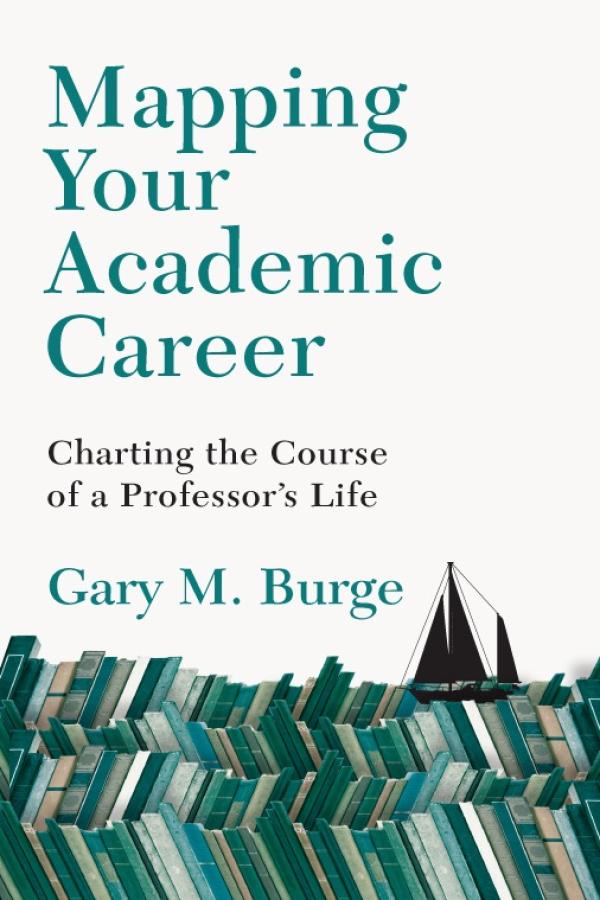
If one were to ask faculty to describe the developmental continuum of an academic career, the responses would probably be structured along the titles that correspond to the faculty ranks of assistant professor, associate professor, and professor. In Mapping Your Academic Career, Gary Burge takes a different approach, examining how faculty careers are shaped by developmental shifts that occur naturally across an adult lifespan. His central thesis is that the development of most faculty proceeds along predictable trajectories that are related, yet not necessarily identical, to their rank. Burge identifies three stages of development in a faculty career, which he labels as “cohorts.” These do not necessarily correspond to faculty rank or age. Instead, they are shaped by: (1) a scholar’s perception of themselves, their career, and their relationship to their institution; and (2) the institution’s perception of the scholar’s career progress and value within the institution. Consistent with other lifespan developmental theories, each cohort is characterized by a central developmental task or question, which influences the choices they make and the forms of support they need. For cohort one, which corresponds to the early phase of an academic career (or possibly a shift to a new institution for experienced faculty), the central task is finding security and vocational identity, with tenure or a long-term contract being the watershed. The central task in cohort two, the midcareer period, is success – that is, achieving mastery and developing a unique voice in one’s teaching and scholarship. For cohort three, who are typically senior, tenured, full professors, it is finding significance – determining their value to the institution and the guild. As a newly tenured faculty member, I approached this book under the assumption that it would focus, at least in part, upon mapping the path to tenure and promotion; that it would discuss the institutional commitments and guild activities that would most likely gain the approval of promotion committees, provosts, and president. Burge’s text, however, is not primarily concerned with how to get to each phase. He spends virtually no time discussing how to get a tenure-track position, how to get tenure, or how to map your path to professor. Instead, he is concerned with the health and vitality of faculty careers and how faculty can successfully navigate the tasks of finding security, success, and significance. Burge devotes a full chapter to each of the three cohorts, describing the individual, interpersonal, and institutional characteristics that predict successful navigation of the stage. He also notes that there are “predictable pitfalls” within each cohort, which may negatively impact, and in some cases end, a scholar’s career. Burge’s text is most helpful for mid-career and senior faculty, as well as for the administrators who oversee them. Because of the prominent role and impact of tenure, faculty development efforts inordinately focus upon it. There is little attention upon helping tenured faculty intentionally reflect upon their vocation, including their commitments to teaching, scholarship, and service within their institutions and the larger society. Burge’s text draws attention to the ways in which faculty evolve as they mature. He provides some insight into the issues that contribute to faculty members’ loss of focus or motivation following tenure or promotion. A significant shortcoming of the book is that it lacks a sound basis of support. Burge provides no description of the methodology used to identify the cohorts. There is no interview data and little support from extant literature to support many of his assumptions. His analysis relies heavily upon personal experience and anecdotes, which he often interprets in troubling ways. While he tries to include issues of race, ethnicity, and culture, his handling of those issues is sometimes clumsy and shortsighted. He does not question or critique institutional structures or systems that hamper the success and vitality of female and ethnic minorities. He treats these issues instead as individual problems that are the responsibility of ethnic minority and female faculty members to navigate. Still, Mapping Your Academic Career is a worthy effort and a helpful book that faculty and administrators should read. In it, Burge names what is often unnamed in faculty development. And while the book has little in the way of firm support, it provides a good foundation for research on the developmental shifts and challenges facing faculty across their careers
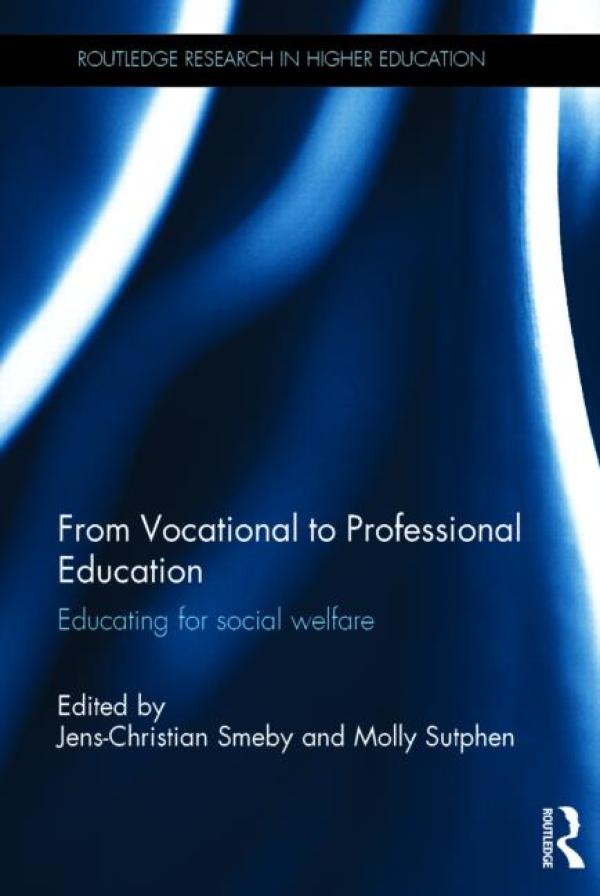
It is not often that edited volumes dedicated to teaching and learning are so easily able to cross the Atlantic. Happily, conference activity funded by the Research Council of Norway provided opportunity for Molly Sutphen of the University of North Carolina and Jens-Christian Smeby of Oslo and Akershus University College of Applied Sciences to collaborate with researchers in the field of education. In a series of international conversations, scholars addressed challenges faced by students in professional schools in the fields of education, social work, and healthcare (3) as a result of academic drift and the subsequent institutionalization of vocational programs into higher education (7). The purposes of this well organized, beautifully written, and coherent collection of essays is to identify these difficulties within their historical context, and – in light of current disciplinary methods – suggest recommendations for future development of the education of professionals. A near-constant defense of liberal arts education as of late has been accompanied since the mid-twentieth century with added pressure of assimilation of professional training in universities, specifically in the fields mentioned above. The professionalization of these programs is complex and the challenges are significant, facts often unknown to other disciplines; professional educators, to name one example, must master a complex knowledge base as well as curricular, pedagogical, and administrative abilities. Central to the success of these tasks within a higher educational setting, writes Smeby in his introductory chapter “Academic Drift in Vocational Education?” (7-25), is the necessity of “perceived coherence” on the part of the students that there are meaningful relationships between both theoretic and applied components of their education (25). But students are not the only ones looking for signs of perceived coherence; the transfer of the locale of professional education has had implications not only for students, but for faculty and the wider university culture as well. In Ala Agevall and Gunnar Olofsson’s “Tensions Between Academic and Vocational Demands” (26-49), three aspects of the transformation of higher education as a result of the academic drift are identified as worthy of note: cultural changes to university systems as they relate to hiring practices and student population; the way in which the link to the university system has altered perceptions of the professions; and the shift in emphasis of the university culture towards professional programs as a matter of concern, vis-à-vis credentials and training. After tracing generations of welfare professional programs in Sweden (28-30), the authors identify principle ways in which institutions of higher education can combine an academic education with professional mastery (31-35), followed by a case study in a Swedish setting. Subsequent chapters on the benefits of cross-field studies for professional students (Little, 50-69), coherence as it relates to bridging theory and practice (Heggen, Smeby, and Vågan, 70-88 and Laursen, 89-104), assumptions that emerge about and within research-based education (Kyvik, Vågan, Prøitz, and Aamodt, 105-23), use of evidence-based methods (Rasmussen, 124-36), dialogical pedagogies (Sutphen and Heggen, 137-45), and international trends in teacher education (Conway and Munthe, 146-63) are followed by a conclusion by the editors. The conclusion offers recommendations for models of pedagogies of coherence that include: “third space” learning (168-69); increased opportunity for research on practice (169); use of cases as opportunity for reflection on potential workplace experiences (169); greater collaboration between higher education and professional placement (169); and finally, educational leadership that is mindful of fragmentation (169-70). I am aware that the purpose of a book review in a journal for teaching theology and religion is to consider how it relates to or is useful for those in the fields of religion, theology, and religious studies. I am of the opinion – however optimistic it might be – that any analysis of education or pedagogy might be applied to any field, and this is true for Smeby and Sutphen’s edited volume on professional education, for this collection is particularly helpful at explaining some of the tensions that exist within universities and colleges around the coherence of the general education of professional students, and the way shifts in higher education have altered the landscape of the educational system, worldwide. In a liberal arts setting, the reality is that students in religion courses are most often there because the university has determined that the study of religion is essential for their general education; it is useful for both parties to recognize that students are seeking coherence and relevancy and are attempting to bridge theory and practice as much as their professors. . While one might hope that the relevancy of an education in the history or theology of any religion would be immediately obvious, nevertheless mindfulness of our students’ majors, disciplinary affiliations, professional aspirations, and desires for coherence can assist the religion professor in shaping her curriculum in such a way to make that applicability more transparent.

At many institutions of higher education, tenure-track faculty positions are exclusively full-time positions, while part-time appointments are for contingent faculty only. Some schools, however, use job-sharing, joint appointments, phased retirement, and other modes to make part-time positions available for tenured and tenure-track faculty members. In Part-Time on the Tenure Track, Joan M. Herbers argues that part-time tenure-track models can benefit both faculty members and the institution. Through the first half of the book, Herbers gathers and analyzes both quantitative and qualitative data on existing part-time tenure-track (PTTT) faculty. These data show that PTTT faculty report higher levels of job satisfaction than their full-time counterparts. PTTT appointments are most common in medical schools, but there are currently eight thousand PTTT faculty across all institutions with tenure systems (5, 22). While flexibility for child-rearing and other family commitments is a common reason faculty seek out PTTT work, it is by no means the only one. Mid-career faculty may pursue consulting or other interests, late-career faculty may step down job obligations in preparation for retirement, and faculty at any stage can face medical crises or other temporary conditions that make PTTT work especially attractive. Most of the junior faculty in Herbers’ analysis eventually receive tenure and hold full-time appointments. In the second half of the book, Herbers advocates for the wider implementation of PTTT positions by addressing their benefits and challenges, providing policy recommendations, and proposing best practices. Herbers asserts that academia has long been driven by an “ideal worker” model that assumes faculty serious about their careers will work only full-time. Thus, along with the technical considerations of salary and benefits, teaching and research obligations, involvement in shared governance, and access to faculty development opportunities, faculty considering PTTT work must also reckon with cultural assumptions that privilege the full-time worker. Yet PTTT work provides welcome flexibility to faculty at various stages of life, including those who might otherwise resign their positions (91). Institutions receive the benefits of satisfied and often extraordinarily dedicated workers (91-92). The most vexing and still-unresolved problem acknowledged in the book is just what constitutes “part-time” work. Telling the story of her own job-sharing arrangement, Herbers recounts that she and her spouse each worked forty hours per week – the standard American full-time work week – in their half-time positions and received together 1.4 salaries (2). She found that schedule to be consistent with the other PTTT faculty she interviewed (100). To be sure, faculty work can be difficult to quantify, since faculty productivity is not usually measured in hours worked. Even so, PTTT positions may reduce compensation for faculty more than they reduce institutional obligations, a pitfall for workers that is both policy- and culture-driven. Part-Time on the Tenure Track is a succinct yet comprehensive look at a little-known model for faculty work. The book will be an especially helpful resource to administrators who write policies and negotiate contracts, as well as to faculty members who may be considering part-time appointments.