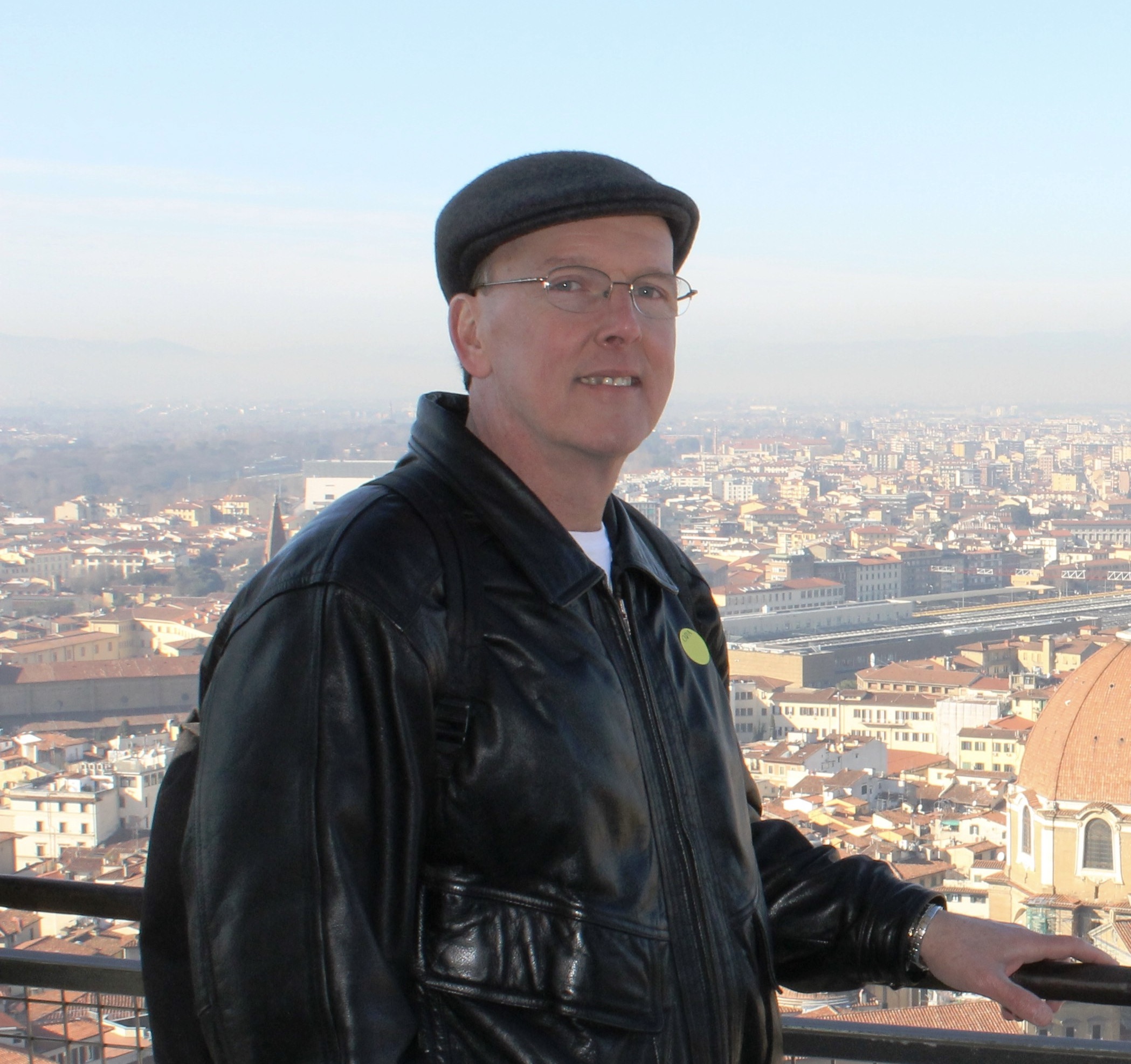
In 2018, I participated in an AAR session on self-disclosure in the classroom. I recall having a heated debate with some colleagues about whether we should reveal elements of our personal lives to students—especially the struggles or darker experiences we might have had—to help students connect their contexts and personal experiences with the material we teach, which are key components of Ignatian pedagogy. I recognize that self-disclosure for the sake of personal promotion is not a good thing. But what about self-revelation that might connect meaningfully with the subject matter or with students’ own experiences? As Parker Palmer writes: “many young people today journey in the darkness as the young always have, and we elders do them a disservice when we withhold the shadowy parts of our lives” (Let Your Life Speak, 18).
Several years ago, some colleagues and I engaged in a writing retreat where we explored our vocational calling as teachers, which eventually became a book of essays entitled Why We Do What We Do (2014). The focus of that retreat was to explore whether there was a moment, an event, or an experience that not only led us to pursue college teaching as a vocation, but also shaped the path of our teaching.
My own story relayed how my Irish twin brother’s suicide at Christmas affected my faith in God, leaving me wondering where God was in a time of tragedy. It was my theology professor’s willingness to share his own tearful reflections on the meaning of the words of Jesus on the cross—“My God, my God, why have you forsaken me”—that challenged me. He highlighted the notion that the good news of the cross and Resurrection was not that God protects us from harm, but instead is present with us as we create new possibilities out of tragedy.
While other students complained he was dismissing their conservative theological beliefs, here is what I wrote:
“I responded with tears of my own, not because his words made me sad but because he was the first to speak directly to my experience and to what I was feeling and thinking. The tragedy of my brother’s death was senseless. We never found out why he did it; we could only surmise. But his suicide brought my family together, really together, for the first time in years. Bobby’s death confronted us with the reality of how much we were strangers to one another and how little we knew about each other’s lives. His death rekindled our sense of what it meant to be a family and the love we felt for one another—a love that continues to this day. This was the meaning we were creating together. Was God a part of that? I didn’t know, but it made more sense about God’s role in our lives than anything else… It was then that I knew what my life wanted me to do—to teach, to express the same passion for the ideas, for the people who generate them, and for the students who encounter them.”
The text we wrote together became the common reading for the required first-year seminar the following fall. My colleagues sent me notes about how much the students who read my essay resonated with my experiences of loss and grief, of faith and doubt. It gave them a chance to voice their own questions, to see that their struggles—emerging from their contexts and experiences—were not unique. And it opened the door for them to connect meaningfully with the faculty who were teaching them.
One of my colleagues wrote:
“I just finished reading a stack of journals from my two COR100 sections, in which we read the Why We Docollection. I wanted to let you know that your essay moved a number of my students. I'd say at least a dozen wrote about your piece. Sadly, at this young age, many have already experienced personal tragedies, and your essay really spoke to them. They were stunned by how honest it was, and they felt comforted that some faculty could relate to their experiences (or, in their words, are ‘real people too’). I hope that some of these students will find their way to you someday to ask their own questions. Until then, it's good for them to know that you're here. Thanks for writing the essay you wrote.”
Over the years, some of the students did find their way into my classroom.
One student wrote:
“For some happenstance I found Why We Do What We Do on my shelf tonight and decided to read a few of the essays in there. I found yours and I want to thank you for writing your piece, it brought me to tears. One of the reasons being is that I have been questioning as well for a long time, and I haven't been able to express it to anyone. Your writing made me feel like I wasn't alone in questioning and there's a certain comfort in that.”
Another student, who had recently lost her estranged father to a heroin overdose after years of drug addiction, wrote:
“The reason I'm telling you all this is because I can barely put in words how much your story impacted me the first, second, and 30th time I've read it. You put into words exactly the struggles I'd been feeling towards my faith, my father's choices, and the pain I've felt for my family as they deal with their own relationships with my dad. I cry whenever I read the interpretation your professor gave you in class that day of Jesus’ words on the cross… I don't even know if I'm giving you enough credit for how much your story has helped me grieve for my dad and process my own relationship with God through this time. There was something so cathartic about realizing the doubts I was having in my faith and in God were not unreasonable or something no one else had felt before.”
Self-disclosure of our growth experiences, both good and bad, in the service of teaching and learning lets our students know that we are “real people too” who have struggled and continue to struggle to find answers and meaning. By embracing our own liabilities and limits as well as our strengths, and by connecting them to the subjects we teach, we not only live out our vocation as teachers but contribute to our students’ search to find meaning and wholeness in their lives.
About Fred Glennon
Fred Glennon’s field of teaching and research is in the areas of Religion, Social Ethics, and Society, particularly their interrelationship with public policies on welfare, poverty, and labor markets. His most recent book is Christian Social Ethics: Models, Cases, Controversies (Orbis Books, 2021). Fred also engages in the scholarship of teaching and learning, in which the classroom setting becomes a locus of sustained scholarly focus. His most read essays include, "Promoting Freedom, Responsibility, and Learning in the Classroom: The Learning Covenant a Decade Later," and “Experiential Learning and Social Justice Action: An Experiment in the Scholarship of Teaching and Learning,” both published in Teaching Theology and Religion (2008, 2004). He served as the Editor of Spotlight on Teaching (2013-2017). He received the AAR’s Excellence in Teaching Award (2008). At Le Moyne, he has been honored with the Kevin G. O’Connell, SJ Distinguished Teaching Professor in the Humanities (1999-2002), the Robert O’Brien, SJ Service Award (2014), and the Magis Award (2023).