Resources by Fred Glennon
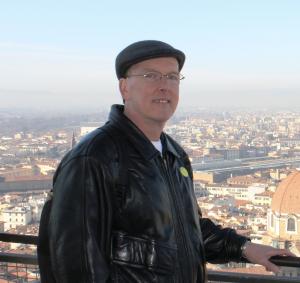
In 2018, I participated in an AAR session on self-disclosure in the classroom. I recall having a heated debate with some colleagues about whether we should reveal elements of our personal lives to students—especially the struggles or darker experiences we might have had—to help students connect their contexts and personal experiences with the material we teach, which are key components of Ignatian pedagogy. I recognize that self-disclosure for the sake of personal promotion is not a good thing. But what about self-revelation that might connect meaningfully with the subject matter or with students’ own experiences? As Parker Palmer writes: “many young people today journey in the darkness as the young always have, and we elders do them a disservice when we withhold the shadowy parts of our lives” (Let Your Life Speak, 18).Several years ago, some colleagues and I engaged in a writing retreat where we explored our vocational calling as teachers, which eventually became a book of essays entitled Why We Do What We Do (2014). The focus of that retreat was to explore whether there was a moment, an event, or an experience that not only led us to pursue college teaching as a vocation, but also shaped the path of our teaching.My own story relayed how my Irish twin brother’s suicide at Christmas affected my faith in God, leaving me wondering where God was in a time of tragedy. It was my theology professor’s willingness to share his own tearful reflections on the meaning of the words of Jesus on the cross—“My God, my God, why have you forsaken me”—that challenged me. He highlighted the notion that the good news of the cross and Resurrection was not that God protects us from harm, but instead is present with us as we create new possibilities out of tragedy. While other students complained he was dismissing their conservative theological beliefs, here is what I wrote:“I responded with tears of my own, not because his words made me sad but because he was the first to speak directly to my experience and to what I was feeling and thinking. The tragedy of my brother’s death was senseless. We never found out why he did it; we could only surmise. But his suicide brought my family together, really together, for the first time in years. Bobby’s death confronted us with the reality of how much we were strangers to one another and how little we knew about each other’s lives. His death rekindled our sense of what it meant to be a family and the love we felt for one another—a love that continues to this day. This was the meaning we were creating together. Was God a part of that? I didn’t know, but it made more sense about God’s role in our lives than anything else… It was then that I knew what my life wanted me to do—to teach, to express the same passion for the ideas, for the people who generate them, and for the students who encounter them.”The text we wrote together became the common reading for the required first-year seminar the following fall. My colleagues sent me notes about how much the students who read my essay resonated with my experiences of loss and grief, of faith and doubt. It gave them a chance to voice their own questions, to see that their struggles—emerging from their contexts and experiences—were not unique. And it opened the door for them to connect meaningfully with the faculty who were teaching them.One of my colleagues wrote:“I just finished reading a stack of journals from my two COR100 sections, in which we read the Why We Docollection. I wanted to let you know that your essay moved a number of my students. I'd say at least a dozen wrote about your piece. Sadly, at this young age, many have already experienced personal tragedies, and your essay really spoke to them. They were stunned by how honest it was, and they felt comforted that some faculty could relate to their experiences (or, in their words, are ‘real people too’). I hope that some of these students will find their way to you someday to ask their own questions. Until then, it's good for them to know that you're here. Thanks for writing the essay you wrote.”Over the years, some of the students did find their way into my classroom. One student wrote:“For some happenstance I found Why We Do What We Do on my shelf tonight and decided to read a few of the essays in there. I found yours and I want to thank you for writing your piece, it brought me to tears. One of the reasons being is that I have been questioning as well for a long time, and I haven't been able to express it to anyone. Your writing made me feel like I wasn't alone in questioning and there's a certain comfort in that.”Another student, who had recently lost her estranged father to a heroin overdose after years of drug addiction, wrote:“The reason I'm telling you all this is because I can barely put in words how much your story impacted me the first, second, and 30th time I've read it. You put into words exactly the struggles I'd been feeling towards my faith, my father's choices, and the pain I've felt for my family as they deal with their own relationships with my dad. I cry whenever I read the interpretation your professor gave you in class that day of Jesus’ words on the cross… I don't even know if I'm giving you enough credit for how much your story has helped me grieve for my dad and process my own relationship with God through this time. There was something so cathartic about realizing the doubts I was having in my faith and in God were not unreasonable or something no one else had felt before.”Self-disclosure of our growth experiences, both good and bad, in the service of teaching and learning lets our students know that we are “real people too” who have struggled and continue to struggle to find answers and meaning. By embracing our own liabilities and limits as well as our strengths, and by connecting them to the subjects we teach, we not only live out our vocation as teachers but contribute to our students’ search to find meaning and wholeness in their lives.
When emotion replaces inquiry, teaching falters. Fred Glennon reflects on passion, objectivity, and missed opportunities in ethical classroom dialogue.
“What are you working on these days?” the President asked. The setting was a professional meeting. I was on the Board of Directors of my professional society, and I was at my first meeting. I discovered that we begin each meeting with this same question. Everyone went around the room to talk about the book, the essay, the project they were working on. Then, it was my turn. I changed the focus away from my own work to the work I did for our professional society. I was brief, and then the person next to me picked up the question.The others at the table didn’t know me; didn’t know the anxiety I was feeling. Given all the work that these professors had published, many I had read, a few I regarded as superstars, I wondered what I was doing in this room. How did I get on this board in the first place? I had no brilliant book that is a must-read for anyone in the field. I had not garnered a prestigious NEH grant worth thousands to my institution. I was just one of the worker bees – chairing a committee where people often ask, “What is it your committee does?”I am a poor kid from the projects who went to a small, little-known church-related college with an open admissions process, not Harvard (although I did live just up the street – a “townie” I am told, often with an air of condescension). My neighborhood was where the Harvard students would come when they wanted to “give back” to feel good about themselves; noblesse oblige I later learned. I was a charity case; I needed their help to succeed – at least that’s what I was told.Yet there I was, sitting with them steering the future of the academy, or at least our part in it. Who was I to be giving suggestions? What the hell did I know? So, at first, I didn’t say much for fear that I would be found out for the imposter I was.I remember completing coursework in grad school and having an obligatory meeting with my advisor. Apparently, the department had conversations about me and my performance to date. My Ivy-League-bred advisor began the conversation, “In truth, we were not too sure what we would be getting with you given your background. We decided to take a chance, and we have been pleased with your performance.” Did they really think that the preparation I received in my previous schools was that poor? I wondered if he had the same conversation with my peers, all of whom had graduated from prestigious schools, one of whom had already received a Fulbright. I knew I wasn’t as polished as they were. Did they think I even belonged in the program with them? Perhaps not.After I graduated, I was not sure I wanted to go into academia, into a profession where I felt – where I was often made to feel – inferior. I had been working as a community organizer in public housing projects like the one I had grown up in. I felt at home there; I knew their struggles and they appreciated the work I was doing.I taught part-time jobs in prisons and in the historically black colleges in the area. Most of my students came from similar backgrounds to me and I found joy in teaching them, which was the reason I pursued a PhD in the first place.I ultimately decided to go on the academic job market and surprisingly landed a job as a “teacher-scholar” at a small, church-related college, much like the one I had attended. My department welcomed me, offered me help as I started my teaching career. This too felt like home, but I was still nervous. The research and publishing requirements were not overly burdensome, but research and writing were not my passion, at least not in a joyful sense; writing was torture save for those times when I could write on behalf of the poor, the unemployed, or about baseball.I poured myself into teaching. I spent countless hours researching and conversing with colleagues at the college and the academy about pedagogy and the best ways to engage students who were in my classes because they were required. I experimented with and developed some competence in active learning and nontraditional adult learning theories and practices even though I knew it limited time for other research. My students appreciated my efforts, nominating me for a teaching award. Had I “made it”? Did I now belong to the academy? My confidence was bolstered by invitations to write about my classroom experiences, to engage in what became the scholarship of teaching and learning. My peers welcomed my contributions at professional societies’ presentations and eventually through the nascent peer-reviewed publications that were emerging in the field. I added a teaching professorate, staff positions on faculty development programs, and several other teaching awards to my resume, including an academy-wide excellence-in-teaching award.The highest achievements in the profession, however, were still measured by and given to scholarship. I could work for my professional society but could never be nominated for its presidency. My contributions to my field of religious ethics have been much less successful. My rejections outnumber my acceptances three to one for both presentations and publications. Was I really a teacher “scholar”? I had earned a place at the teacher table. But I was still a stranger at the table of scholars who gathered at the board meeting. Would this ever change? Does it really matter?After thirty years, definitive answers to these questions elude me. The imposter syndrome still feeds on my soul, periodically eating away my confidence when a student writes he didn’t learn a thing in my class (even though he was only one of thirty-five), or my proposal or paper is rejected. But its meals are less frequent now: in part because I am a tenured full professor; mostly because I have embraced the imposter within. I have learned to use the angst it generates to propel me forward, to become the best teacher-scholar I can be, however limited – just like so many of my imposter colleagues, who I have discovered make up much of the professorate.I still feel uncomfortable at times sitting at the boardroom table, especially with the superstars of my field. But I am no longer quiet. My experiences, my insights into the world in which we work and the struggles most of us endure, are valuable, perhaps even the norm. Imposter or not, I would be irresponsible if I kept quiet. After all, most of the higher education world is filled with “townies” like me.
Jesus H. Christ: Be Aware of What Students HearI was walking into the Den at Le Moyne College when I was accosted by a colleague in the English department. He asked, “What the hell are you teaching in your religion classes?” While I often ask myself this same question, I decided to ask what he meant. He told me that a young woman in his class was also in my Introduction to Religion class. The students in his class were discussing Coleridge’s “Reflections on Having Left a Place of Retirement,” and they came across this line: Sweet is the tear that from some Howard’s eye Drops on the cheek of one he lifts from earthHe asked the students what they thought Coleridge meant. The student we shared in our classes was quick to say she thought it was an allusion to Christ. Intrigued, my colleague asked her how she came upon that idea. She replied that Professor Glennon had said Jesus’ middle name was Howard and that Coleridge was talking about the comfort Jesus continues to give to us from heaven.I chuckled. I told my colleague that this notion came up in a discussion on the Gospel of Mark when Jesus asked his disciples, “Who do people say that I am?” Of course, the question of identity is often related to one’s name and one’s family. With tongue-in-cheek I asked the students what Jesus’s last name was. While many admitted they didn’t know, others said it was Christ. I suggested that, while it is true that title, “Christ,” is connected to Jesus’s identity as his disciple blurted out, it was not really his last name. It is more likely that his last name was bar Joseph, son of Joseph.But I pressed them further. I asked if any of them had ever heard their parents or grandparents, in a moment of anger or frustration, say “Jesus H. Christ”? Many students had. So I asked, “What does the H. stand for?” As you might imagine, no one knew. I decided to enlighten them and told them that the H. stood for Howard. Warily, they asked how I knew that. I responded that it was right at the beginning of the Lord’s Prayer: “Our Father, who art in heaven, Howard be thy name.”Obviously, most students recognized that this was a joke. In case you are wondering, the actual prayer says, “Our Father, who art in heaven, hallowed be thy name.” But somehow this young woman didn’t catch on and took me seriously. She stored this “fact” in the back of her mind. When a few weeks later her English class discussed Coleridge’s reflection, she was delighted by the insight she could offer; the tear came from Howard’s eye because he was the one who lifts those who die from earth.The student and I, and even her mother, laughed about this for the rest of her time at the school. She learned that it is always good to check the information she received for its reliability and trustworthiness. I learned to be sure that whenever I tell this joke in class, which I do at times, that after I reveal the middle name, I look to make sure the students know it is a joke, just in case.Driving the Bus: What is Hell Like?In my classes, I want to make sure that the religious and ethical questions students bring to the classroom find their way into our discussion. I use a strategy I call the Question Bag. The students’ first homework assignment is to anonymously write any religious or ethical question they have that they would like us to talk about during the semester on a sheet of paper. At the beginning of the second class, I collect the questions in a paper bag. Periodically, we draw a question from the bag to discuss at the beginning of the class period. The discussion can take a few minutes or even the entire class period depending on how important the question is to the class.In one introduction to religion class, the question we pulled from the bag was “What is hell like?” I asked students to say out loud what their responses were. Some had obviously read Dante’s Inferno and so talked about the terrible suffering sinners could expect at the hands of Satan’s minions. Others, feeling a bit more enlightened, said it was the experience of forever being apart from the presence of God. Still others suggested hell didn’t exist. When you die, you die.At this point I interjected a few thoughts into the conversation. A few times during the semester, I had referenced the adage, “the road to hell is paved with good intentions.” I noted that some people who had religious and ethical disagreements with me declared that I was heading down that road; in fact, I was probably driving the bus. I mused that some people even say that we are living hell on earth. If so, I pondered aloud, is this really a terrible road to be on? After all, I was a tenured, full professor. I lived a relatively comfortable life, making more than enough money. As a department chair, I only taught two classes per semester with plenty of flexibility and free time. I even had four months a year to do the other things I wanted to do: travel, write, volunteer. I say things in class and people actually write them down!One student in the class, Becca, was a physically challenged and bound to a wheelchair. Although she had overcome many obstacles to get to where she was at the time, she faced them with courage, perseverance, and a good bit of humor. She was a young woman with deep faith and hope in the God she followed. She told the class that this was her question and she blurted out, “Fred, can I ride the bus with you?” Most students smiled but some eyes filled with tears. The students were very supportive of Becca within and without the class, and I would often see them talking with her, eating lunch with her, and encouraging her. Le Moyne students overall are really kind. They knew the challenges she faced and they offered help whenever she asked for it which, given her independent spirit, was very seldom.A year later, Becca decided to have surgery that, if successful, would allow her to become even more independent. She knew the risks, but she insisted on going through with it. Becca died on the operating table.When I think of her, which is often, I recall that classroom conversation and her response. A part of me wishes I had never come across as glib about this life being “hell on earth.” While we all have challenges in our lives, mine could never compare to hers. I never confronted what she did daily, nor have I faced the risk she chose with her surgery. Her faith in herself and in God was strong; I wish I had a fraction of the courage she showed.But one thought continues to give me hope. If the Christian understanding of God, Becca’s God, is a God of love and the promise of abundant life beyond death is true, I am certain that Becca is now living eternal life to the fullest, hopefully driving a bus down that heavenly road welcoming all on board. And, when my time comes, I hope to be waiting at the bus stop as she pulls up so I can ask, “Becca, can I ride the bus with you?”
As a seminarian in Louisville, Kentucky, I was challenged to discern what kind of ministerial vocation I wanted to pursue. I felt my “calling” was to teach, but even teaching, if done with care and concern for the students, could in some ways be “ministerial.” My greater concern was with what model my teaching or “ministry” would follow. Would I be the sage on the stage (or in the pulpit), imparting words of wisdom and knowledge? Or would it be more organic, flowing from the relationships I developed with my class or my congregation? Eventually, the model I chose was one I found in the gospel of Mark when Jesus encounters the blind man Bartimaeus (Mark 10:46-52). Jesus comes upon this blind man, one of the countless beggars asking for handouts at the gates of the city, and he asks him, “What do you want me to do for you?” Are your serious, Jesus? It is obvious to everyone there what Bartimaeus needs. He’s blind, and because of his blindness he has no way of making a living and must beg to survive. He needs to be cured of his blindness! But instead of assuming Bartimaeus’s need and helping him based on that assumption, Jesus, by asking the question, gives Bartimaeus a voice in the form and direction Jesus’s ministry (or teaching?) will take. And this experience, this opportunity, so empowers Bartimaeus that Jesus proclaims, “your faith has healed you.” This model has been crucial for me ever since, never more importantly than when I was a student chaplain at University Hospital in Louisville. One evening I was on call in the emergency room, my favorite place to work, when I received word from the delivery room that a Seventh Day Adventist woman who had just delivered a stillborn child requested that a chaplain come and baptize her child. I was the only chaplain around, but at the time I was a Baptist. You may or may not know that Baptists don’t believe in infant baptism, only in believer’s baptism. (Baptists still find a way to welcome children into the community—they just call it a baby dedication.) Moreover, I had never done a baptism before. How could I in good conscience baptize this infant? When I arrived in the delivery room, I explained my dilemma to the nursing staff, who, despite listening sympathetically, dressed me in a surgical gown and provided me with a basin of water. Apparently, they had done this before, and they needed the delivery room again for another delivery. Nurses are amazing at finding ways to get you to do the right thing even when you don’t want to. Upon entering the room, I saw a tired African American teenager lying on a birthing table lovingly caressing a fully formed, beautiful but lifeless, little girl. The woman’s older brother was there mumbling something about it probably being God’s will because the child was conceived illegitimately, which was clearly causing emotional pain for the girl. What is it with self-righteous older brothers? Why do they think they can speak for God words of judgment and condemnation to their siblings who are experiencing grief and despair (Luke 15:29-30)? Whispering to the nurse, I asked her to find a way to get the brother out of the room which she did with great skill and grace. Thankful for his departure, I came to the young woman’s side anxious about what to say, unsure of what to do, angry at her brother’s rantings. Yet as I looked into this woman’s tearful and soulful eyes, all I could think of was to ask, “What do you want me to do for you?” She looked at me and asked me to baptize her child so that her spirit and her daughter’s spirit could be at peace with God. Full of uncertainty and doubt about what I was doing, I took the child in my arms, asked what her name was, dipped my thumb and forefinger into the basin of water, and anointed her head with the water saying, “I baptize you in the name of the Creator, Christ, and Comforter.” Then I placed the child back into her mother’s arms. Baptists say there is nothing sacramental about the ritual of baptism; no saving grace comes from it. Perhaps. In that ritual act in that delivery room, however, I experienced the presence of God in a way I have seldom since, an experience I can only describe as grace. As I looked at the woman, I could see that she had experienced it as well. The peace the woman requested had come to her, hopefully to her daughter, and, unexpectedly, to me. And this experience enabled me to proclaim confidently to this young woman, “your faith has made you, made us, well.” Through this and countless other experiences, I have learned that if ministry or teaching is about enabling others to find wholeness, whether intellectual, social, or spiritual, then that work will best be accomplished when we take seriously the voice of those with whom we work. When we intentionally ask the blind, the homeless, our students, “What do you want me to do for you?” and respectfully incorporate their responses into our work, we affirm their worth and dignity, and empower them to have faith in themselves, in us, and perhaps in their God. And this faithfulness will go a long way to meeting human need and enabling all of us to become whole.

Welcome to the Common Questions, an exciting initiative brought to you by the Wabash Center for Teaching and Learning in Theology and Religion. In this series, we bring together some of the most esteemed scholars and educators in the field to engage with a central, thought-provoking question. The goal is to challenge and inspire. By exploring these questions, we hope to create a dynamic platform for scholarly dialogue, illuminate complexities in education, and enhance our understanding of the transformative power of teaching and learning in these vital disciplines. Featuring a diverse range of perspectives, this effort is a means of expanding the borders of academic rigor with profound spiritual and philosophical inquiry.This time, we asked…“We are all born with medicine inside of us: unique traits and attributes that contribute to healing humanity on this planet. How is your medicine utilized in your teaching?”Gathered here are responses from:Kristina Lizardy-Hajbi, Iliff School of TheologyRebecca Makas, Villanova UniversityCarol B. Duncan, Wilfrid Laurier UniversityHaruka Umetsu Cho, Santa Clara UniversityLeigh Greening, Loyola University ChicagoLaura Carlson Hasler, Indiana UniversityFred Glennon, Le Moyne CollegeIf you are interested in sharing you response to this prompt or future Common Questions, please reach out to our blogs editor, Donald E. Quist at quistd@wabash.edu.