Resources
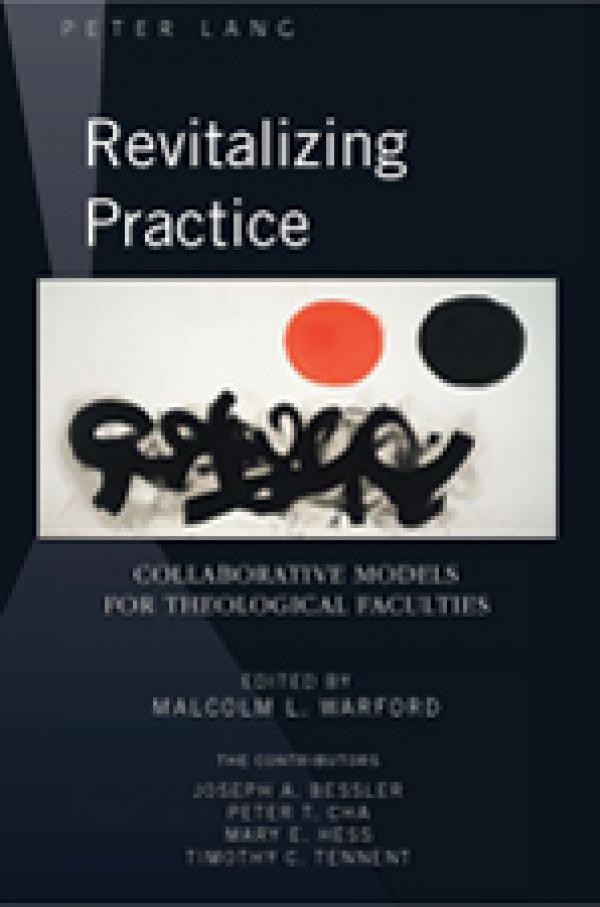
Revitalizing Practice is designed to help theological faculties engage a common set of challenges, particularly in the areas of diversity, formation, and institutional identity. These are not technical problems but are instead the very stuff out of which teaching and learning are practiced. Yet addressing such issues requires intentional strategies and collaborative work. Revitalizing Practice offers four such intentional strategies: «A New Ecology Model», «An Improvisational Model», «An Appreciative Inquiry Model», and «A World Café Model». Each of these models provides a thorough and practical framework (based on sound theoretical concepts) designed to help faculties revitalize their practices of theological teaching and learning. (From the Publisher)
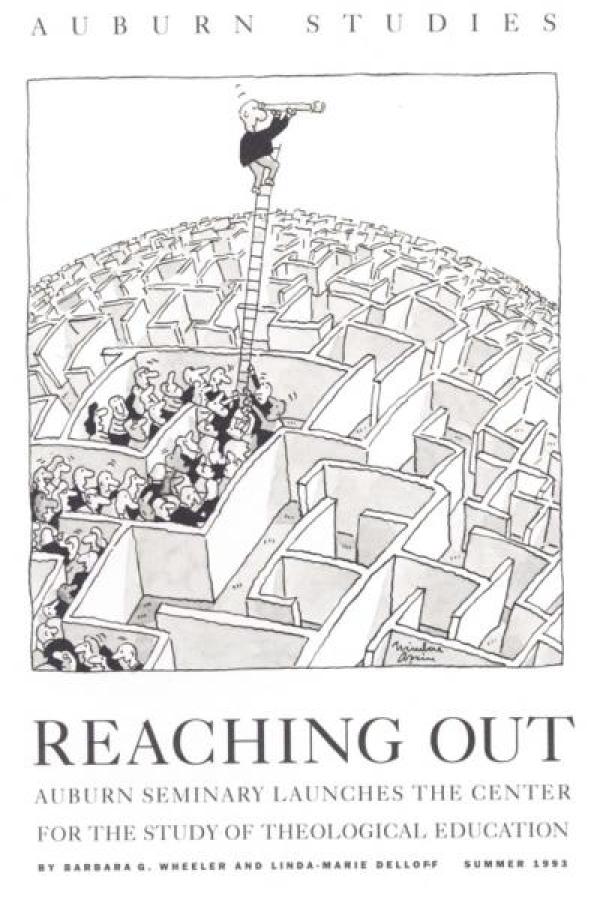
The Center for the Study of Theological Education (CSTE) provides reliable information and perspectives on theological education in North America. It conducts a "cycle of surveys" that revisits segments of theological education--students, graduates, faculty, administrators, trustees, and seminary finances--regularly, in order to track trends over time. CSTE also studies special topics, such as student debt, doctoral education in theology and religion, and the culture of theological schools. Research results are available as issues of the occasional bulletin Auburn Studies or as special background reports. All reports are available on this site in PDF format.  Paper copies of recent reports are available by e-mailing: CSTE@AuburnSeminary.org. Some project results are also available in video format and more will appear in this form in the future. (From the Publisher)
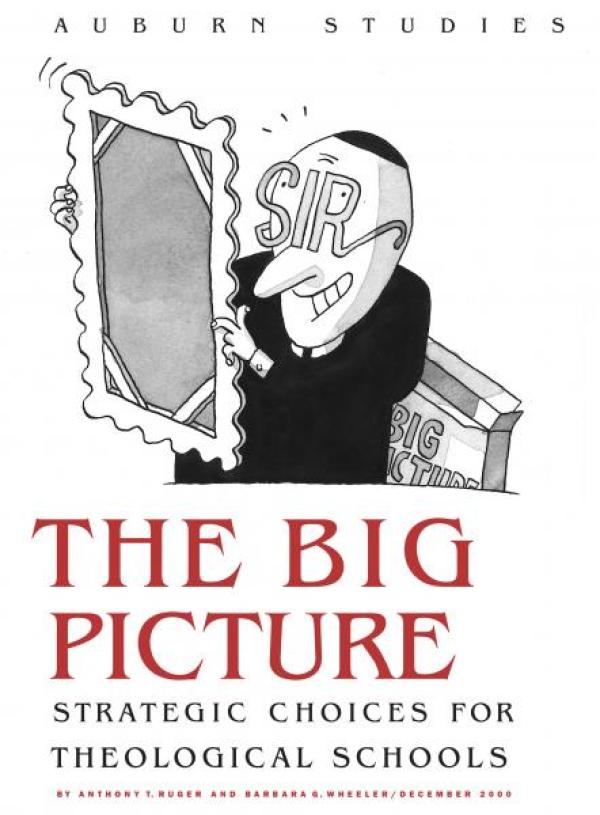
This report helps theological schools situate their strategic choices in the context of theological education as a whole. What are the kinds of choices that theological schools should be making, both in terms of material assets as well as enrollment? (From the Publisher)
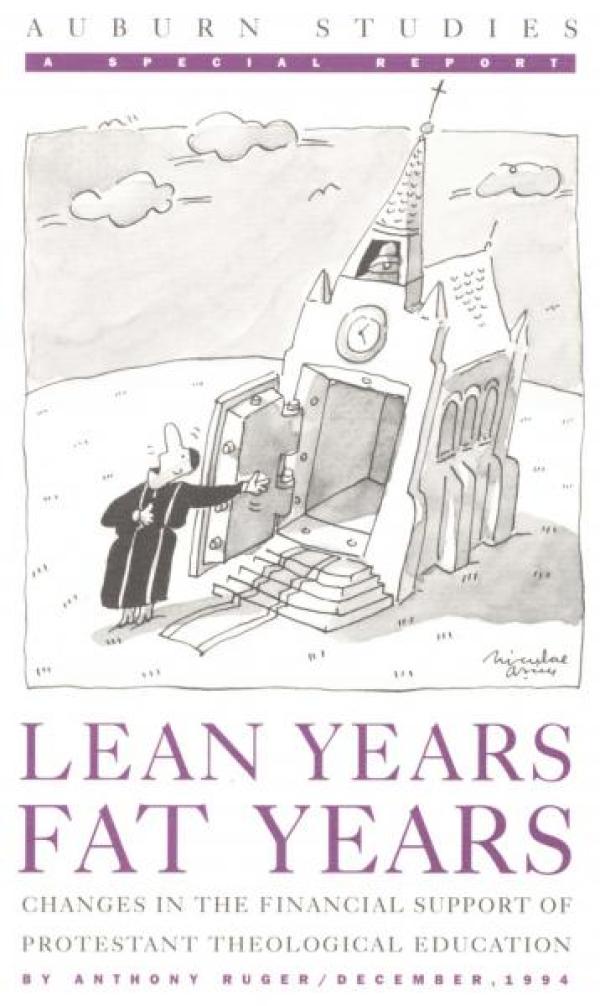
Revenue sources for theological education have changed significantly in the last twenty years with more reliance on endowments, gifts and grants and student fees.
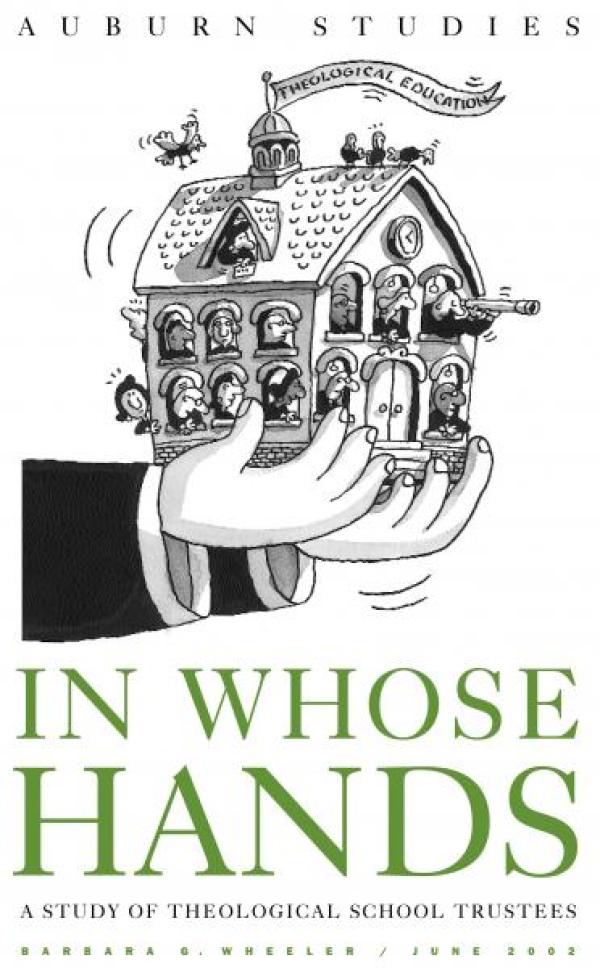
Trustees and boards of theological schools provide long-range guidance and governance for their institution and it is crucial that they have the skills, knowledge and information to make sound and effective decisions. In this issue: • Who are the trustees of the approximately 250 theological schools in the United States? • Do theological schools have the trustees they need? Do they have the perspective, motivation and capacity that their institutions most urgently require? (From the Publisher)
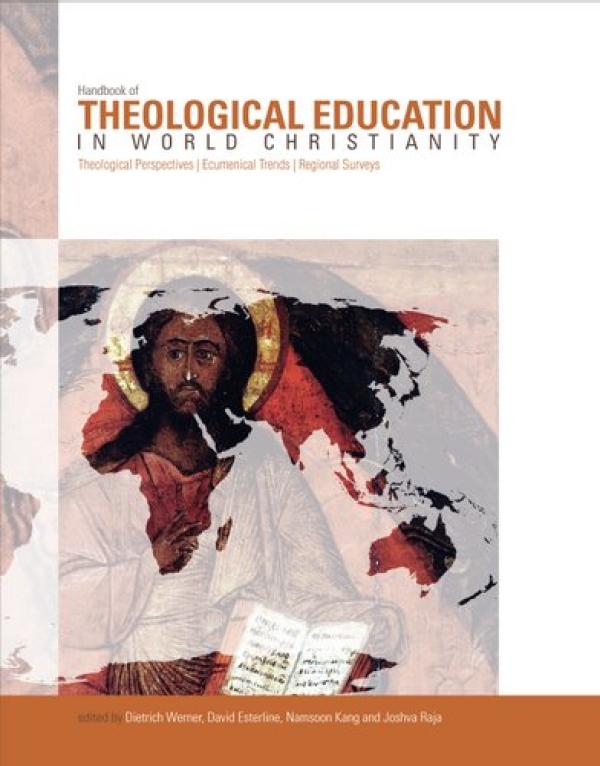
Theological education is vital for the future of World Christianity—this conviction lies at the heart of this publication. Theological education has the potential to be the seedbed for the renewal of churches, their ministries, mission, and commitment to Christian unity. If theological education is neglected by church leaders or in funding, the consequences are far reaching; they might not be visible immediately, but they will certainly become manifest over time in the theological competence of church leadership, the holistic nature of mission, and the capacities for ecumenical and interfaith dialogue and the interaction between church and society. Investment in theological education is investment of hope in the future and mission of World Christianity. The transmission of Christian memory, the education for God’s peace and justice, and the formation for church and community leadership therefore should be priorities in all churches; however, in many places theological education is far from secure or even in crisis at the present time. (From the Publisher)
Hugh Heclo's recent book On Thinking Institutionally (Paradigm Publishers, 2008) analyzes changes that have taken place in the past half century in how North Americans tend to think and act in institutions. The volume is receiving particular attention as it can be applied to higher education and to religious denominations, and so deserves consideration by those who teach in theology and religious studies. At an October 2009 conference, The Wabash Center hosted a lively discussion of Heclo's volume among invited religion and theology scholars, which resulted in the present compilation of four short responses to the book. What was and is clear from these responses is that while Heclo has identified a crucial issue, his analysis and prescription leave important theoretical and practical questions untouched. Indeed part of the energy around the discussion of the book flowed from the ways in which his lack of attention to social class, gender, race, and age circumscribed his ability to robustly describe and diagnose the challenge that gave rise to his book. In order to orient readers to the volume and discussion of it, the "Conversation" begins with a descriptive review of the book.
To increase understanding of how Master of Divinity education actually functions and to respond to accreditors' emphasis on the outcomes of learning, this paper presents a research-based model that focuses on how M.Div. education transforms students. The students-in-seminary model is conceptually undergirded by life course theory. In the model, students attending seminary engage in a messy process in which they respond to competing demands of school, church, and family. The author compares the students-in-seminary model with the dominant message model for theological education articulated by Carroll et al. (1997) and argues that the students-in-seminary model more adequately describes the process of theological education. The author calls for further research to study how seminaries promote key messages to their students, the plasticity of students' sense of calling, the impact of church requirements on M.Div. students, and the complexity of life for multiple-role students.
This essay considers Christian theological education in South Asia highlighting pertinent issues in pedagogical content, form, method, and praxis. Debunking the notion of students as "empty bottles" to be filled, and criticizing the top-down model of education, the paper argues that theological education is an ongoing and interactive process in which students and teachers are participants who share and reflect upon each other's faith and socio-cultural experiences. Participants reject, test, negotiate, and choose – while remaining open to the variety that is embodied in different human experiences. The paper stresses the relationship between the theological college and the church and calls for mutual responsibility, respect, and accountability. In an increasingly communal and fundamentalist atmosphere that poses a threat to multi-culturalism, the role of the laity in shaping theological education is highlighted and public debate is encouraged. The paper calls for interactive and dialogic learning. A version of this paper was published in Ministerial Formation 100 (2003): 5–16.
Theological education typically includes classroom worship, a practice of great pedagogical power and curricular import. As pedagogy, classroom worship does four things. It focuses teaching and learning on God, and fosters theological dispositions necessary for sustaining that attention. Second, it rightly positions the entire class in dialogical relation to the divine Thou, in communal relation to each other, the larger church and the wider world, and in personal relations that risk transformation. Third, it frames theological education as an integrative practice of faith and learning. Finally, it invites teachers to know their students as whole persons and students to trust their teachers as spiritual guides. As curriculum, classroom worship may have greater significance than chapel worship for many students and at particular schools. It should be moved from implicit curriculum to explicit, with careful attention to the null curriculum and to the matrices of relationship within which worship has meaning.