Resources
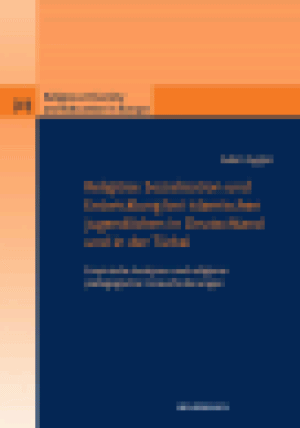
With the ongoing Syrian refugee crisis quite literally fanning the flames of Islamophobia across Europe, Adem Aygün’s well-written and meticulously researched book makes for trenchant reading on the state of Islamic religious education for Muslim minorities in Germany. While Aygün’s particular focus is on Islamic youth in Turkey and among Turkish immigrants in Germany, the book raises questions about Islamic religious pedagogy that have larger, E.U.-wide implications, namely through its challenge to both how non-Christian religion is taught (or not) by the secular apparatuses of European universities and secondary schools, and the pedagogical methods for learning theology that are intrinsic to immigrant Muslim communities in a European country like Germany. The book will interest anyone who works on or with the models of faith development as pioneered by the American theologian James W. Fowler (1940-2015); as Aygün rightfully notes, Religious Socialization constitutes one of the first attempts to bring Fowler’s influential step-models to a non-Christian context (183), using Fowler’s “stages of faith” to frame how Muslim youth in Germany and Turkey see themselves in relationship to their religion and the larger, social world. This book is important reading for scholars who work on the state of theological education in Europe, particularly when it comes to non-Christian religions. Fowler, like William James long before him, decoupled belief from catechism or creed, and relocated it (via a developmental psychology derived from Piaget) in the personal experiences of the self. Some of the fundamental characteristics of Fowler’s hierarchical categories of faith development – such as self-realization, and the acceptance of complexity and diversity – are indubitably imprinted by the liberal Protestantism of the nineteenth and twentieth centuries, and it could be said that Fowler’s project was as much a (biased) theological one as it was objectively psychological, or sociological. Aygün’s book, thus, begins by posing a fascinating methodological problem: can Fowler’s typologies, tinged as they are with their echoes of Paul Tillich and H. Richard Niebuhr, even fit a non-Christian setting, where the relationship between the self, God, and the world ostensibly seems to have a fundamentally different kind of constellation? Aygün’s book is part sociological – his seventy in-depth interviews with Islamic youth from the bulk of the empirical chapters of the work – but also part theological, and the first chapters offer illuminating close readings of the Koran and the Islamic concept of Fitrah to demonstrate (in answer to this question) how critical thinking and self-reflexivity are arguably at the very core of Muslim faith. Reading Islamic theology through Fowler’s models, Aygün deftly argues, illuminates how Islamic traditions are more than adequately equipped with the kinds of theological tools necessary for grappling with the individual’s place in modernity, and the successful integration of the self’s belief with all the complexities of the global world (Fowler’s last, and highest, stage of development being the “universalizing faith” of a Mahatma Gandhi or Martin Luther King, Jr.). The empirical portion of Religious Socialization that presents and reflects on the results of Aygün’s extensive interviews provides some surprising juxtapositions between Turkish Muslims living in Germany and their peers in Turkey. Because of the lack of Islamic institutional apparatuses for Muslim migrants in Germany, the teaching and learning about the Koran has strengthened the family as the critical locus for value-building and faith formation, whereas Turkey’s complex and dense history of state secularization and religious politics has meant that Turkish youth have consistently had a much broader and more diverse exposure to the kinds of the theological education necessary for progressive faith development: the net effect being that religious belief among Turkish youth is “easily on average higher” on Fowler’s scale than it is for youth in Germany (183). A fascinating observation is offered by Aygün here, that the ad hoc system of immigrant mosque education that developed in Germany in the seventies and eighties (54-55) has meant that the mosque as a site of faith-formation plays a much more significant role than it effectively does in Turkey. Regrettably, Aygün notes, the dominant pedagogy offered in these German mosques remains a kind of medieval formalism that focuses on catechismal recitations, often at the expense of developing critical thinking and self-reflection. Ultimately, this kind of “imprisoning of the individual into traditional ways of thinking” (193) has hurt the viability of Islam as a public religion, as it loses its functionality within the pluralizing contexts of the E.U. Aygün is not simply casting stones: the book is a strong, pragmatic call for the German (and by extension, European) university and school systems to better integrate Islamic theological education into their curriculums, and thereby inculcate the kind of reflective and dynamic forms of belief that espouse the cosmopolitan values as present in the higher levels of Fowler’s scaled categories of faith development. Such an institutionalized religious pedagogy could help undo stereotypical prejudices against Islam (all the more resurgent now than at the time of Aygün’s original writing), aid in the coexistence of different religions, and even potentially benefit Turkey’s attempts to join the E.U. (197). There is, to date, very little of such institutionalization in place. The recently established partnership between the universities of Frankfurt and Gießen for a Center for Islamic Studies with a special emphasis on teaching (Religionslehrer) is one positive sign of development in this direction (and Aygün is now teaching at Gießen as a professor for Islamic theology and religious education). Given the extraordinary inflow of Islamic refugees into Germany over the last ten months alone – at least 800,000, by conservative estimates – more such university initiatives are urgently needed, both for the state of European inter- and intra-religious education, and perhaps for the fate of the E.U. itself, with its still laudable, if utopic, commitment to a pluralistic open society.
Lack of awareness about what Islam is and how its followers are religiously motivated to act, coupled with heightened tensions during the 2016 presidential campaign about the patriotism of American Muslims, led me to offer “Arabs and Muslims in the Media” as a first-time offering this semester. The twenty-one students who registered for the seminar include seven who have yet to declare a major, nine who registered for credit through the Critical Identities Studies (CRIS) Program, first-year Beloiters, graduating seniors, an exchange student from Ireland, and four born into Muslim households. Both of my teaching assistants had taken a minimum of one course with me that featured at least one section on the teachings or rituals of the world’s fastest growing religion. “Arabs and Muslims in the Media” was the first exposure to Islam, or to any of the daily realities of Muslims, for the majority of the class. We opened the seminar by engaging with Linda Martin Alcoff’s “The Problem of Speaking For Others,” an essay that challenged students to reflect upon their own positionality and privilege as they approached the two major assignments: a 200-word entry for this blog and a PSA about Islam and/or Muslims. Later in the first week, the class raised questions about the essay and their own insecurity about appearing to “speak” for followers of Islam. The sentiments of one student sums up the concerns of the rest: “I never thought about the impact of my own words on this level before, or how wrong we can be about what we think we know. I’m worried that I am not qualified to complete the final assignment.” To address such concerns, students received a brief survey of Islamic history and the emergence of Muslim communities in the U.S., along with an introduction to beliefs and practices, and the role of gender and sexuality, in Islam. Throughout the seminar, we critiqued a variety of visual and written representations. Guiding our journey were two primary texts: Evelyn Alsultany, Arabs and Muslims in the Media, and Moustafa Bayoumi, How Does It Feel to be a Problem: Being Young and Arab in America. Students reflected on the readings in various ways. Ryan, for one, noted, “By reading [Bayoumi’s work], I was opened up to the realities of young Arabs in America. I was able to read the real struggles they face from these negative stereotypes.” We watched a number of films, Youtube videos, and documentaries including “Frontline: Muslims,” “Persepolis,” “Jihad for Love,” and “The Kingdom of Heaven.” Students were also directed to analyze and review a film, selected from a list of more than 100, whose plots/characters featured Muslims and/or Islam. Interestingly, nearly half the class zeroed in on four: “Malcolm X,” “Slumdog Millionaire,” “The Battle of Algiers,” and “Dirty Pretty Things.” Our TAs, Grace Gerloff, and Joshua Randolph, also created a demo PSA that unpacked the concept of jihad. Their efforts helped students visualize what they could accomplish. While I focused on potential content for both the blog entry and PSA, Grace and Joshua mentored students on technical aspects and how to focus on a single idea. Students will present their PSAs during a public forum on May 5. Here’s a selection of student blog entries. Some students focused on the content of what they learned: Nikki: “Many Americans seem to view the hijab as a plea for help by its wearer, as though it were a sign of oppression rather than religious expression.” Constance: “The Qur’an states that both men and women should dress modestly, but what modesty means is up to interpretation.” Sasha: “Many people think that hijab refers to a specific style of garment worn by Muslim women but in reality, the concept of hijab is present in both Christianity and Judaism as well as other religions and cultures, just under different names.” Alberto: “In the Qur’an, Muslims are reminded that they are not the only people of God.” Diego: “The term “Allahu Akbar” is an Islamic phrase that translates to ‘God is Great.’ This is a phrase that is used in celebration, prayer, happiness, and many other occasions to thank God. However, the phrase is commonly tied only to terrorists.” Charlie: “The Angel Gabriel made me reevaluate the way that I was looking at Islam. Though the connection of Islam to Christianity and Judaism was something I had talked about before, this was the first explicit example I had seen that explicitly linked the three Abrahamic religions.” Chris: “The religion we have been told is the ‘enemy’ of the West, is in actuality more similar to our Christianity than we would currently like to believe.” Joe: “In high school, I enjoyed a series of action novels where the protagonist was an American special forces operative fighting to protect American interests from his Muslim enemies.These books contained blatant generalizations about the violent nature of Islam. I didn’t necessarily believe these statements, but I never questioned them.” Ryan: “By taking this class, I have been given great resources about the Muslim religion and the Quran which have allowed me to be able to pick apart what I have been taught and relearn the truth about Muslims and their beliefs.” Seamus: “This course taught me that no matter how many statistics you may know, they are not nearly as valuable as discourse, and the various identities involved, and the perspectives that they bring.” Jessica: “I personally knew nothing about Islam or any of its teachings before this class and the one thing I was very interested in was the hijab. In papers and stories, it is almost portrayed as a sign of oppression, which is not the case at all. I learned from this class the power of personal identity.” Other students reflected upon their own socialization: Kirsten: “There has been a call in the West to ‘save the oppressed Muslim women’ because of the belief that Islam is an oppressive religion. When I was younger, I fell for this ploy and believed that Islam required women to dress in a specific way.” Katlyn: “I grew up in a conservative household, I heard considerable stereotypes of Muslims. It narrowed my idea of women in Islam.” Diane: “I took this course because I thought it would be a great way to reflect and dive into how I might be able to navigate stereotypes and deep-rooted, false narratives as an aspiring journalist.” Hana: “I’ve learned that being Muslim and Anti-Zionist should not automatically qualify me as being anti-Semitic.” Still, others reflected upon the impact of technology on their new knowledge: Hoodish: “This class taught me that censored media is indeed very destructive. I intend to confront these people by making them acknowledge their biases towards Islam.” Ashley: “Video, specifically, has allowed me to learn about the different struggles that Muslims face depending upon their class, nationality, sect, immigration status, gender, sexuality, age, race, and family status.”

Due to the diversity of Muslims in the southern Ontario region, my classes on Islam always bring together students from a variety of different sectarian, legalistic as well as interpretive, understandings of Islam. For instance, in my “Introduction to Islam” course, one can find Sunnis from various regions of the world, Shias from Ithna al-Ashariyya and Ismaili backgrounds, and Ahmadiyya Muslim students as well – all in one classroom. With such diversity, intra-Muslim dialogue becomes one of the best pedagogical tools I can use to help all of my students (Muslim and non-Muslim alike) understand the complexities of Muslim identity and the great debates that have shaped Islamic thought. While teaching about these many facets of internal Muslim diversity can be a delicate matter and care must be taken to create an atmosphere of curiosity and mutual respect, engaging the real-life distinctions present among Muslims in the classroom can bring the subject matter to life in remarkable ways. Muslim differences are on display quite regularly in the daily news, yet much Muslim discourse tends to downplay their significance. In classes, I try to cultivate greater openness to exploring these differences in an effort to understand them better and build relationships, rather than to dwell on them from a particular partisan standpoint. I point out that for centuries sectarian differences have remained far more resistant to accommodation than differences in jurisprudence. Despite contemporary voices calling for an Islamic ecumenism that embraces Shia as well as Sunni practitioners, early differences over religious leadership have led to enduring intramural rivalries, exacerbated in the last decade by patterns of sectarian mobilization amidst protracted power struggles in present-day Iraq, Syria, and Lebanon as well as simmering tensions in Pakistan, Bahrain, and Saudi Arabia. In order to unpack this history, students learn that the past politicization of sectarian differences has left an imprint on communal attitudes, beliefs, and narratives. In the absence of a robust, well-developed framework for Islamic ecumenism, conflicts rooted in problems of theological, as well as socio-political and economic exclusion, have the potential to cascade in destructive ways, with events in one country or context impacting tensions in other regions. Since the regular class sessions are devoted to helping the students navigate these historical tensions intellectually, I also facilitate supplementary “dialogical” sessions for interested students who would like to explore classroom topics in more detail. These sessions enable some of the best conversations about differences to emerge. For instance, I always open the dialogical session with a student asking a question or sharing an experience. In one session, a student who was a leader of my university’s Muslim Student Association (MSA) started the conversation by stating, “I cannot pray behind a Shi‘ite Muslim.” This statement, of course, was met with a strong reaction from one of my Ismaili students who was himself a member of the Ismaili Student Association (ISA). For the rest of the session, we had a very important sharing of different understandings of Muslim prayer and the meaning infused in different forms of prayer. From this one session, a dialogue between the MSA and the ISA started. We then formed a weekly dialogical session in which the leaders of these two groups and some of their members came together to discuss differences and similarities in rituals, beliefs, and understandings of history. After a year of dialogical sessions, the same student who had stated that he could not pray behind a Shi‘ite Muslim shared with me that “every chance I get I try to pray with a Shi‘ite Muslim.” Another pedagogical tool that I like to use when teaching about sectarian differences in Islam is taking my students on a field trip to the Aga Khan Museum of Islamic Arts in Toronto, the first museum in North America dedicated exclusively to Islamic Arts. Instead of learning through a lecture or textbook about Islam, students learn through rare art, artifacts, material culture, and stories about the different historical circumstances within which these objects were created. They also learn about the Ismaili Muslim community and Prince Karim Aga Khan IV, who is the current spiritual leader of Ismaili Muslims. Known internationally for his various charitable works and developmental projects (the Aga Khan Development Network is a well-respected NGO in the development field) and in Canada for opening the Centre for Pluralism in Ottawa as well as the Aga Khan Museum and Ismaili Centre in Toronto, the man whom Ismailis regard as their 49th Imam provides a counterpoint to many non-Muslim preconceptions about Muslims. Although the Aga Khan Museum highlights particular Ismaili and Shia experiences, it also sheds light on the character and internal diversity of traditional Islamic civilization in a much broader sense. During the field trip, students experience a general tour of the permanent collection. This enables them to learn about many artistic, intellectual, and scientific heritages of Islam and its many cultures, from North Africa to Southeast Asia. In addition, the Aga Khan Museum offers regular exhibits of contemporary Muslim art as well as programs featuring international artists and scholars, thus affording opportunities to learn about more recent manifestations of Muslim music, poetry, and thought through mediums as diverse as workshops, lectures, live performances, and film screenings. Since the museum is located adjacent to the Ismaili Centre, students also get a tour of a distinctive space for community assembly and worship, with its unusual architecture, a library, and a jamat khana (prayer hall) for daily prayers. Muslim and non-Muslim students alike testify that this field trip offers a rich, immersive experience and encourages them to reflect on Islamic religious and cultural heritages in new and exciting ways.
Martin Nguyen Associate Professor, Faculty Chair for Diversity Fairfield University In a time when it is of paramount importance to assert and witness that black lives matter, how do we go about preparing our Islam courses that all too often afford little to no time at all for the societal.
Edward E. Curtis, IV Millennium Chair of the Liberal Arts & Professor of Religious Studies Indiana University School of Liberal Arts at IUPUI (Indiana University - Purdue University, Indianapolis)For the past fifteen years I have tried to teach about Islam as a religiously diverse tradition practiced by communities around
Jeffrey T. Kenney Walter E. Bundy Professor of Religious Studies DePauw University Many Islamicists, specialists in Islam, talk about the challenge of teaching Islam in a post-9/11 world, a world where the War on Terror (WOT), political chaos in the Middle East (exacerbated by the WOT), and global jihadi violence.

Meena Sharify-Funk Associate Professor Wilfrid Laurier University “Women and Islam.” It is a subject that is surrounded by strongly held and divergent opinions, values, and beliefs, as well as by misconceptions, over generalizations, and yes, political agendas. In the 21st Century, there are many competing projects attempting to define who
Sophie Gilliat-Ray Director Centre for the Study of Islam in the UK Cardiff University I ended my last blog entry by noting the value of inter-religious relationships formed among students learning about Islam in the higher education environment. Continuing with this theme, one of the consequences of this mixed-faith, or...
Eren Tasar Assistant Professor University of North Carolina at Chapel Hill I remember how dumbfounded I was the first time a student told me he had grown up believing Catholics were not Christian. He had never, moreover, heard of the Orthodox Church, the only form of Christianity recognized by most
Najeeba Syeed-Miller Assistant Professor Claremont School of Theology I write in a time when the study of Islam is of paramount importance. This blog entry focuses on the teaching of Islam in interreligious settings, with an eye toward the notion of pluralism. So often, engaging this tradition starts with the