Resources
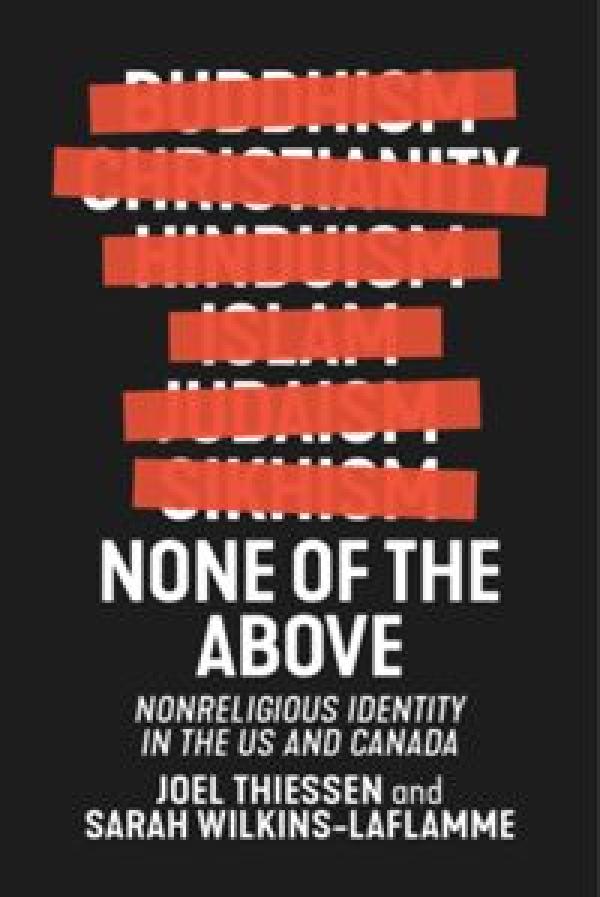
None of the Above asserts that a growing divide between religious and nonreligious populations could engender a greater distance in moral and political values and behaviors. At once provocative and insightful, this book tackles questions of coexistence, religious tolerance, and spirituality, as American and Canadian society accelerate toward a more secular future. (From the Publisher)
This case study explores the learning experiences of three international students who were enrolled in an online master’s program offered by a large university in Canada. The aim of the study was to understand the international students’ experiences with, and perspectives on, the online learning environment. Findings indicate that previous education and especially language proficiency strongly impacted the learning of these students in this environment. Non-native English speakers required considerably more time to process readings and postings and to make postings themselves. Their lack of familiarity with the details of North American culture and colloquial language made it difficult to follow much of the course discussions. They also tended to avoid socializing in the course, which left them at the periphery of course activities. Based on these findings, the authors make the following recommendations for designers and instructors of online courses: 1) Raise the English language proficiency requirement for graduate admissions into online programs because the text-based communication in a CMC space requires interpreting messages without non-verbal cues; 2) Ensure that online distance education course designers are aware of the needs and expectations of international students; and 3) Combine the design principles from both traditional and constructivism theories.
Culturally responsive teaching and design practices flip the online classroom by creating an environment that acknowledges, celebrates, and builds upon the cultural capital that learners and teachers bring to the online classroom. Challenges exist in all phases of online course design, including the ability to create online courses that reflect the instructor’s commitment to inclusive excellence, diversity, and social justice. Designing an online environment that supports all learners regardless of their backgrounds is important in their future success as professionals; thus, it is important for faculty to design courses with all students in mind. The purpose of this article is to share best practices in the design of culturally and linguistically responsive online courses that support the culturally and linguistically diverse (CLD) students we serve. Based on Gay’s (2010) culturally responsive teaching practices, this article provides examples of online activities that are validating; comprehensive; multi-dimensional; empowering; transformative, and emancipatory.
A tool used for implementation of Universal Design for Learning, a framework to improve and optimize teaching and learning for all people based on scientific insights into how humans learn, from CAST (a nonprofit education research and development organization that works to expand learning opportunities for all individuals through Universal Design for Learning). These guidelines offer a set of concrete suggestions that can be applied to any discipline or domain to ensure that all learners can access and participate in meaningful, challenging learning opportunities.
A free MOOC from Columbia University that explores the principles of inclusive teaching and how to apply them in your classroom to support diverse learners. 6 weeks long, 2-3 hours per week.
A grassroots and network-based effort to promote the design of research-based learning environments. Supports the scaled implementation and research related to Universal Design for Learning. Promotes the identification and development of models, tools, research, and practices designed to foster effective UDL implementation in educational environments.
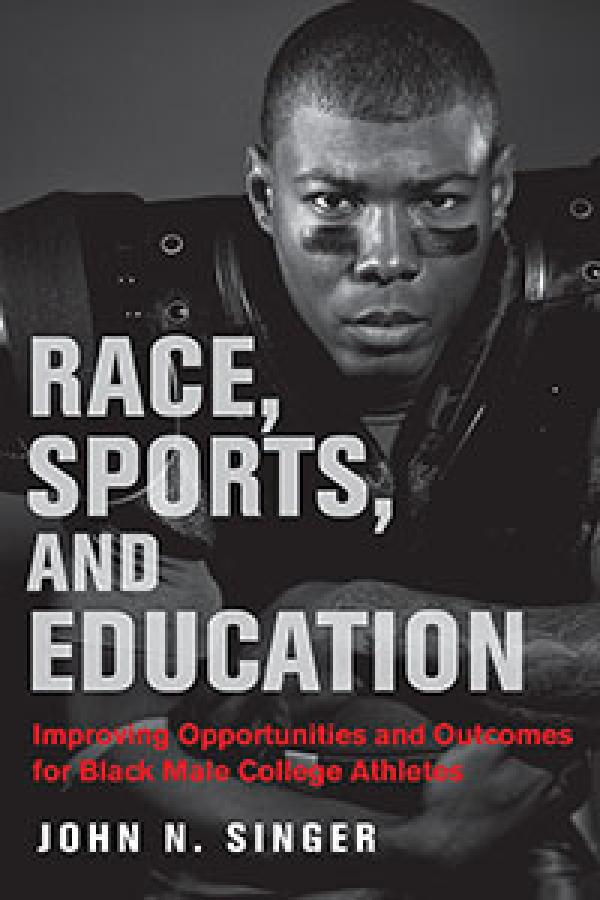
Race, Sports, and Education highlights the myriad ways in which organized collegiate sport has both positively contributed to and negatively detracted from the educational experiences of Black male college athletes. Specifically, John N. Singer examines the educational experiences, opportunities, and outcomes of Black males who have played NCAA Division I football and/or basketball at historically White colleges and universities. Singer is intensely aware of the ways in which many Black athletes have been shortchanged by the collegiate sport system. He describes how the colleges and universities have exploited athletes for the institutions’ financial gain and deprived them of basic educational opportunities that ought to be enjoyed by all students. At the same time, Singer argues that sports do in fact offer genuine educational opportunities and benefits for many of these athletes. He is acutely attuned to the fact that these athletes love their sports, and that their participation in these sports makes unique educational experiences available to them. As Singer shows, to understand the situation and to chart realistic, fruitful reform measures requires a full appreciation of the complexity—indeed, of the many competing and contradictory elements—that characterizes intercollegiate sport and the experiences of Black athletes at the present time. The book brings to the fore the voices, stories, and perspectives of twelve Black male college athletes via a case study of teammates from a big-time college football program and individual reflective vignettes of athletes across several different college programs. Through his analysis of the system and his attention to student views and experiences, Singer crafts a valuable, nuanced account and points in the direction of reforms that would significantly improve the educational opportunities and experiences of these athletes. At a time when collegiate sports have attained unmistakable institutional value and generated unprecedented financial returns—all while largely failing the educational needs of its athletes—this book offers a clear, detailed vision of the current situation and suggestions for a more equitable way forward. (From the Publisher)
Intersectional Pedagogy explores best practices for effective teaching and learning about intersections of identity as informed by intersectional theory. Formatted in three easy-to-follow sections, this collection explores the pedagogy of intersectionality to address lived experiences that result from privileged and oppressed identities. After an initial overview of intersectional foundations and theory, the collection offers classroom strategies and approaches for teaching and learning about intersectionality and social justice. With contributions from scholars in education, psychology, sociology and women’s studies, Intersectional Pedagogy include a range of disciplinary perspectives and evidence-based pedagogy. (From the Publisher)
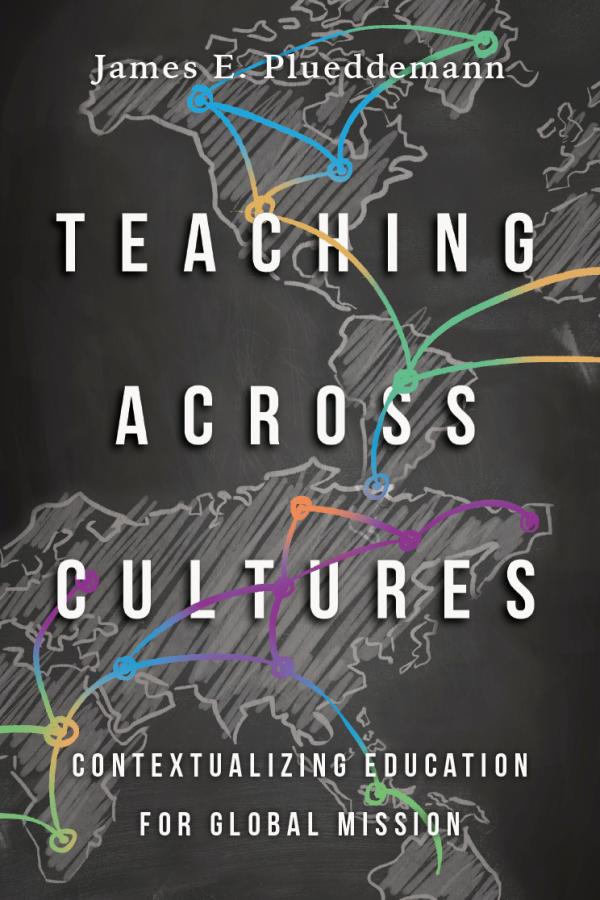
Click Here for Book Review This book, marked by its practical, experiential depth, is a little gem. I look forward to engaging it in my intercultural classroom. - Eduardo C. Fern√°ndez, SJ, Jesuit School of Theology of Santa Clara University In our globalized world, ideas are constantly being exchanged between people of different cultural backgrounds. But educators often struggle to adapt to the contexts of diverse learners. Some focus so much on content delivery that they overlook crosscultural barriers to effective teaching. Educator and missiologist James Plueddemann offers field-tested insights for teaching across cultural differences. He unpacks how different cultural dynamics may inhibit learning and offers a framework for integrating conceptual ideas into practical experience. He provides a model of teaching as pilgrimage, where the aim is not merely the mastery of information but the use of knowledge to foster the development of the pilgrim learner. Plueddemann's crosscultural experience shows how teachers can make connections between content and context, bridging truth and life. Those who teach in educational institutions, mission organizations, churches, and other ministries will find insights here for transformational crosscultural learning. (From the Publisher)