Resources
Traversing a rock-strewn terrain of essentialist methodologies historically employed for teaching Islam, the author espouses a non-Essentialist pedagogy that combines critical reflection, analysis of historical methods, and development of an appreciation for alternative notions about Islam and global interdependence. In this essay the author contends that teaching Islam ought to avoid our and their language and instead aim at helping students think in critically reflective, creative, and relational ways so that they might learn to "think of civilizations as transformative, reflexive, and fluid entities."
In response to our increasingly global and multicultural world, undergraduate degree plans have come to include courses, which meet the Diversity requirement. While diversity may have a variety of definitions, clearly the educational institution believes that all students earning a degree should complete course work that exposes them to cultures not their own. Courses that fulfill Diversity requirements often include "Introduction to World Religions," among others. Even a traditional-style teaching of such a course will accomplish a certain degree of broadening of students' perspectives. The risk, however, is that at the end of the course the students are simply better informed about sets of people whom they would still objectify as the other. This article describes an experiential method of teaching which enables students to begin to change their consciousness, as well as their body of information, by learning to experience the other as self. The author calls this the identification/participation method.
How can teaching and living abroad impact our teaching in North America? This article explores how what I do teaching religion and ethics to undergraduates at Texas Christian University has been influenced by twelve years of teaching in the two-thirds world. It is structured in terms of three insights that correlate with what I call the past, present, and future dimensions of ethics, respectively. First, we need to begin where our students are – taking their contexts seriously. Second, we should expose them to the moral and religious experience of others, so that they might be pulled by those others toward broader perspectives. Third, we should challenge them to envision new ways of living, including new self-understandings and images of society. Drawing on examples of how I use these insights in courses at TCU, I contend that we can best promote transformation in our students by holding these three insights in creative tension.
In this essay the authors describe how four seminary educators pedagogically engage students in practices of interpretation and explore how the variations in their teaching practices shape the critical thinking they seek to cultivate in their students. The piece is excerpted from an ethnographic study of Jewish and Christian seminary educator teaching practices sponsored by the Carnegie Foundation for the Advancement of Teaching (Educating Clergy: Teaching Practices and Pastoral Imagination, Jossey-Bass Publishers, November 2005). The study explores how the classroom- and community-based teaching practices of seminary educators prepare students to integrate professional knowledge and skill with moral integrity and religious commitment in professional practice. In addition to the pedagogies of interpretation explicated here, we observed pedagogies that engage students in practices of formation, contextualization, and performance. Attention is also given in the study to the influence of pedagogies embedded in the traditions of seminary education on student learning and to the cultivation of spiritual and professional practices beyond the classroom in community worship and through strategies of field education and small groups.
Is it effective or even possible to teach an introductory course in religious studies that not only provides first-year university students with the fundamental vocabulary, concepts, and critical tools of religious inquiry but also invites and stimulates the transformation of the religious imagination? In what kind of teaching and learning method could the process of personal transformation occur and how might one assess it? These are the questions that led to an experiment in teaching religion the objective of which was to prepare beginning students for the academic approach to religion and, at the same time, transmit the experience of learning as an embodied process that engages personal narrative within a community context. This essay is based on a three-year project that has made considerable progress in meeting these goals and answering these questions.
Recent decades have seen an increasing stress on the need to monitor and manage educators, and hold them to account. This article argues that, while learning outcomes can be valuable if properly used, they have been misappropriated and adopted widely at all levels within the education system to facilitate the managerial process. This has led to their distortion. The claim that they can be made precise by being written with a prescribed vocabulary of special descriptors so as to serve as objective, measurable devices for monitoring performance, is fundamentally mistaken, and they may be damaging to education when used in this way. After a brief sketch of the background to the notion of learning outcomes, arguments are presented to show their vacuity and uselessness when misused in this way, and explanations of their inadequacies are offered.
The present study sought to investigate the perceptions of 300 ministers, 85 recent graduates from theological colleges, and 954 church members regarding (a) the effectiveness of ministry education, (b) priorities for ministry education, and (c) the acquired competencies of ministers. Participants were surveyed using the Inventory of Ministry Education Perceptions and Priorities (IMEPP), which displayed good validity and reliability in the study. Results of the study indicate that participants were largely satisfied with the effectiveness of ministry education and the acquired competence of ministers. However, on the whole, ministers and recent graduates were less satisfied with their ministry education and acquired competence than were church members. The study also identified significant differences between ministers, recent graduates and church members with regard to the priorities they perceived theological colleges should pursue.
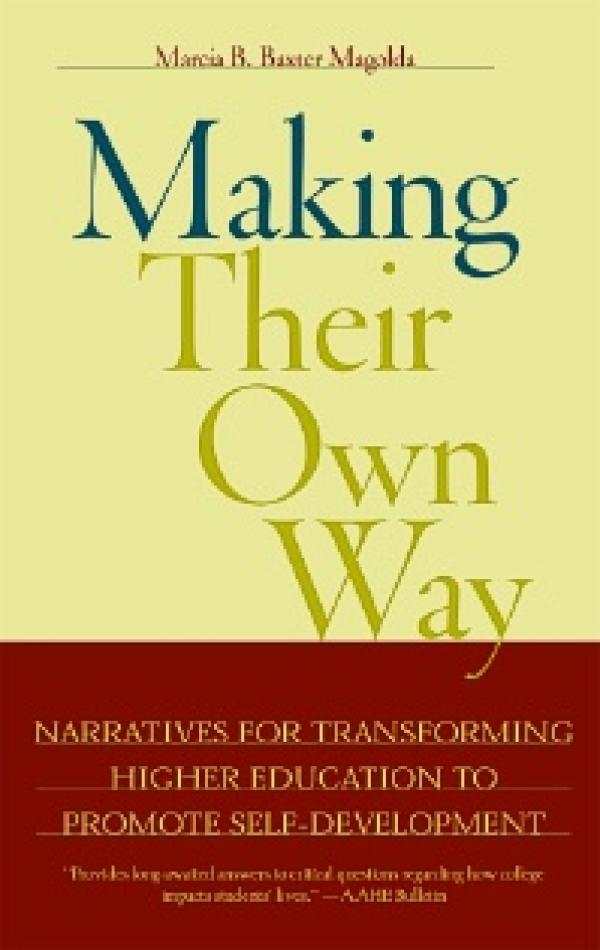
What impact does a college education have on students' careers and personal lives after they graduate? Do they consider themselves well prepared for the complexities, demands and ambiguities of contemporary society? What can we learn from their stories to improve the college learning experience? This ground-breaking book extends a unique longitudinal study of 101 male and female college students started by the author in 1986, and reported in her highly successful and influential book, Knowing and Reasoning in College (1992). This book follows the journeys of the young adults remaining in the study -- drawing on over 300 new interviews -- from graduation to their early thirties. Through the students' own stories, Marcia Baxter Magolda allows us to follow their journeys to an internally-authored sense of identity and belief systems, and in many cases to witness the development of the complex ways of making meaning that are needed for fulfilling participation in modern society. From her observation and analysis, she derives a new framework for higher education to achieve better stewarding and fostering of its students' crucial journeys of transformation. She develops the concept of providing "good company" -- through the shaping of curriculum and co-curriculum, advising, leadership opportunities, campus work settings, collaboration, diversity and community building -- that young adults need along the way to finding and to taking their place as citizens and leaders in the twenty-first century. This is an important book for all teachers and leaders in higher education who are concerned with the holistic development of students, and with higher education's responsibility to foster critical thinking, citizenship and leadership. It has particular relevance for student affairs educators and professionals; as well as for graduate, professional school and continuing education faculty who seek insight into young adult development. (From the Publisher)
Argues that the time is ripe for an institutional reform movement to focus on holistic learning: What does research say about the relationship among the intellectual, social, and emotional elements of student learning? What can individual faculty, student affairs professionals, and institutions more generally do to enhance holistic learning?