Resources

Sex, money, politics: all the things we are told not to talk about. However, as the ethics professor at an Episcopal/Anglican seminary which draws diverse students from across the theological spectrum, teaching on these controversial issues is an important and challenging part of my job. As a professor, it’s easy for me to believe that my responsibility in teaching on controversial issues extends only to giving a compelling lecture or leading an animated discussion. However, unless controversial issues are presented in a context in which the students and I are open to learning and changing, there is always a risk that the class simply confirms the students who already agreed with me in their convictions and alienates the students who disagree, making their future openness to change even less likely. Rather, true transformational pedagogy requires not just teaching concepts, but incorporation into a community which creates the conditions for transformation. In February of 1940, Dorothy Day considered the transformation required in order for the members of the Catholic Worker to confront the difficulties of working for “a new heaven and a new earth, wherein justice dwelleth.” Day described how this work depends on God’s grace, but also demands radical change on the part of the human participants. In fact, it requires “indoctrination”—bringing people into the doctrine of the “mystical body of Christ.” Indoctrination is not simply the reception of information, but actual incorporation—becoming one body—with the community. Incorporation requires formation, which is achieved in part through shared practices such as worship (daily attendance at Mass and communal rosaries), community (carried out in kitchens and at the table), and external engagement (political activism and care of the poor). In the rest of this post, I will consider how these same practices are key for developing a community in which transformative pedagogy regarding controversial issues is possible. First, Day examines how the practice of worship highlights the “correlation” between the spiritual and the material while also emphasizing the primacy of the spiritual. Looking beyond the physical to the spiritual expands the imagination by “quicken[ing] the perceptions” to appreciate other material and spiritual experiences than one’s own. Creating fertile ground for engagement with controversial issues in the classroom requires exactly this type of transformation of the imagination. In addition, worship teaches patience and charity. Confronting our own limitations in contrast to God’s goodness should ensure that “we will not lose faith in those around us, no matter how stumbling their progress is.” In Christian seminaries in a liturgical tradition such as my own, communal practices of worship provide the perfect opportunity to encourage students to look beyond their material circumstances to seek “the presence of God” in their analysis of controversial issues. However, any pedagogical practices which move students beyond the classroom into a mode of reflective engagement—with the beauty of art or nature especially—can also prove valuable resources in a nonreligious or interfaith setting for transformation of imagination and expansion of perspective. Day’s description of the communal practices of kitchen and table point to the context which prepares people to engage with controversial questions. In the time of COVID, we have come to realize how important eating together is to create the bond and trust required for vulnerability. In addition, the cooperation of cooking together or other shared creative activities strengthen and reinforce a communal bond. Creating space for students to engage in these types of activities, whether as a whole class or in small groups, creates the conditions for true openness regarding challenging issues. Through these communal practices, students and professors begin to experience the reality of their identity as a communal body. Like a body, students incorporated in the community will start to feel the hurts and joys of one another as their own—preparing them to approach controversial questions which impact the lives of others with new empathy and urgency. Finally, Day describes the practices of service and activism which are the outgrowth of communal and spiritual practices. These actions, especially those which engage the community in service with the poor, build on the first two categories, as well as providing the end which guides them. Of course, these practices are more easily obtained in service-learning programs. However, even taking advantage of opportunities to genuinely serve others in the community can enhance solidarity within the community while also expanding the participants’ awareness of the sorrows and challenges of the world. Through shared engagement in these practices, students and professor gain a deeper understanding of the impact of controversial questions on people’s lives, confront the limited nature of solutions currently available, and come to appreciate the need not only for knowledge, but action. Will all these practices make teaching controversial issues easier? Not necessarily. In fact, they may complicate emotional engagement and can add to the administrative burden. In addition, they require the professor to surrender pedagogical illusions of grandeur or omniscience. However, as Day reminds us, “little works” matter, and through these small practices both we and our students may change and ultimately grow.

The first religion course I took in college was an introduction to the Bible, one of two required religion courses in our core curriculum. The students’ reaction to the course follows what, I suspect, is familiar terrain for those who teach similar courses. The application of academic tools to the study of their sacred text was, for many students, unsettling; for some, inappropriate and heretical; and, for others, “meh” -- that is, not even curious as to why this tension might show something about their lives or the world we inhabit. I am reminded of that experience each time I teach our required service-learning course. The use of critical academic tools to examine acts of kindness, charity, and compassion is experienced by students as unsettling, inappropriate, political… despite the fact that, like the introduction to the Bible course, this critical approach to service is not new. With the changing religious landscape shaping the experiences of incoming students as well as the diminished place of religion courses in many university curricula, courses involving service-learning may increasingly become the primary sites for introducing critical theories to deconstruct problematic notions of ethical action in the world. The service-learning course I teach most often involves a short-term study abroad component in South Africa. For our students, everything about that course is new; and, as is so often the case, my passion for the topic and the transformative potential of the experience results in an overstuffed bag of history, social theory, religious studies, contemporary politics, peace and reconciliation studies, global health, music, and, somewhere in there global service learning – or, as freshly minted clergy know it as: trying to preach the whole of the Bible in your first sermon. One of the primary methods of assessment typical in these courses is reflective journaling, both prior to and during the trip. It affords an opportunity to see the students’ integration of course materials and their expectations and experiences. These journals also serve to focus evening debriefs while traveling – a kind of focus neither I nor the students are able to achieve during the fragmented nature of a full course load on campus. What do these reflective, real-time reflections consistently reveal? Many students struggle with their newly acquired critical perspective on service, especially when pressed on the (in)appropriateness of doing short-term service learning with children from other countries. The conceptual frame of white/western savior throws into turmoil service identities that have been formed throughout childhood and reinforced by the accumulation of a kind of social capital that finds purchasing power on college applications. (Is it surprising that students who have spent years curating a college resume to cater to our institutions’ premium on volunteering and quantifiable service hours find critical examination of service disorienting?) I have tried a variety of strategies intended to hold together processes of learning and unlearning, or at a minimum suspending one’s previous learning long enough to consider a new perspective. The goal in these strategies is to induce experiences constructive cognitive dissonance and creative disruption, without inducing irreparable irruption. Some strategies, like the use of satire, I test out with trepidation, aware that my own appreciation for the poignancy of the satirical critique draws deeply from an academic literature that remains opaque to the students. (In the case of sub-Saharan Africa, videos by the group Radi-Aid have made consistent cameos in my classes, serving as conversation starters. They also remind me of how problematic, yet persistent cultural tropes about Africa and famine from my childhood in the ‘80s that pricked my conscience then can be critically examined now in ways that re-center the agency of persons who were the objects of international displays of pity.) Other strategies include the move from general reflection to more structured, guided journal entries that invites students to engage directly and critically with their assumptions about volunteering and service abroad; required completion of an in-depth, case study based ethical volunteer module prior to the trip; and, a class blog visible to the wider campus and the students’ networks of support. It is this last one that I have found particularly effective. The semi-public blog, though a lot of work on the trip itself to update – especially when wifi accessibility is variable – has been a new venture for me. As an assignment, I have found it especially helpful in foregrounding questions of representation in ways that student journals and papers do not. Its publicity demands additional reflection on the part of the students and, since they are required to work with me in revising the blog before posting, it provides an opening for a focused conversation about how subtle (and not-so-subtle) colonial and racial frames inform our efforts to depict the lives of others. A lot has been written in recent years about the problematic posting of photos and videos from service trips and their role in reinforcing stereotypes and savior complexes or legitimizing selfie culture as some kind of proxy for service – standard fare now for orientations sessions prior to travel. However, the blog format reminds me that we should be encouraging through our assignments a similar degree of self-awareness in our non-visual (or textual) depictions of service learning. To be sure, not every student comes out the other side of the blog conversation “converted” to a more critically aware approach to service. The decisions they make in conversation with me about what to include in the public-facing blog likely mask the degree to which students’ beliefs about service-learning or the appropriateness of selfies with children “served” remain unresolved. As with so much of what we set out to do in our courses, the introduction of new conceptual frameworks and the accumulation of evidence is not a guarantee of scales falling from students’ eyes. I do take some solace in coming across phrases in journals and spoken aloud in debriefs such as “I had never really thought of … but now…” Such acknowledgments serve as a reminder for me of my own personal path towards critical service-learning, a path that started unsurprisingly, perhaps, with what I would now characterize as problematic encounters, that is, with experiences of serving “others,” and only later – much later, often – with theory. Perhaps this is what a learning as praxis extended over time feels like.
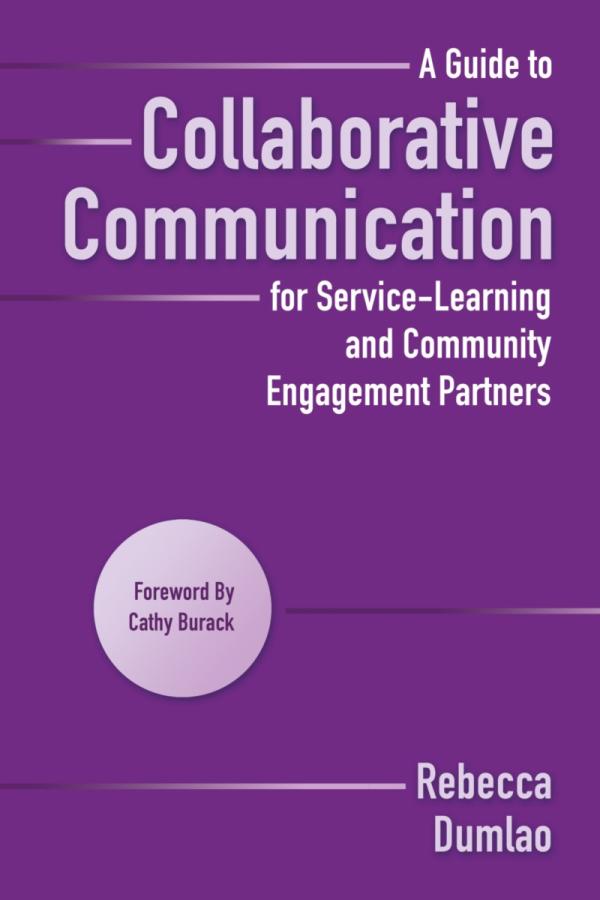
This book focuses on partnerships at the most basic level of interaction – between two people as they work toward common goals. Interpersonal dynamics described in this book are intended to guide formal and institutional relationships between members of a community or community organization on the one hand and representatives from campus on the other. Collaborative communication principles and practices shared can form a foundation for individuals to build flexible, lasting relationships that will weather most challenges and sustain the larger partnerships of their respective organizations. This book offers a conceptual framework of collaborative communication to build and sustain partnerships, recognizing that relationships change over time as the people involved and their circumstances evolve. Collaborative communication uses a repertoire of knowledge and skills that allow partners to make choices that fit their situation or context and to work through differences and challenges as they occur, to include managing conflict and navigating cultural differences. It further takes into account the different means of communication, whether face-to-face, using e-mail, text messaging, or social media. Readers will appreciate the numerous real world examples that illustrate and bring its key concepts to life. This book is addressed to partners at all levels focused on community engagement and service-learning. It is intended for preparing college students to work more effectively in the community, as well as for workshops for community and campus members who work with service-learning students. It can equally be used in leadership workshops in academic and community settings. Scholars, students, or community members involved in community engaged research will also find useable ideas for their work. The appendices offer an annotated bibliography of useful resources and provide readers with a repertoire of activities for building a collaborative communication repertoire. (From the Publisher)
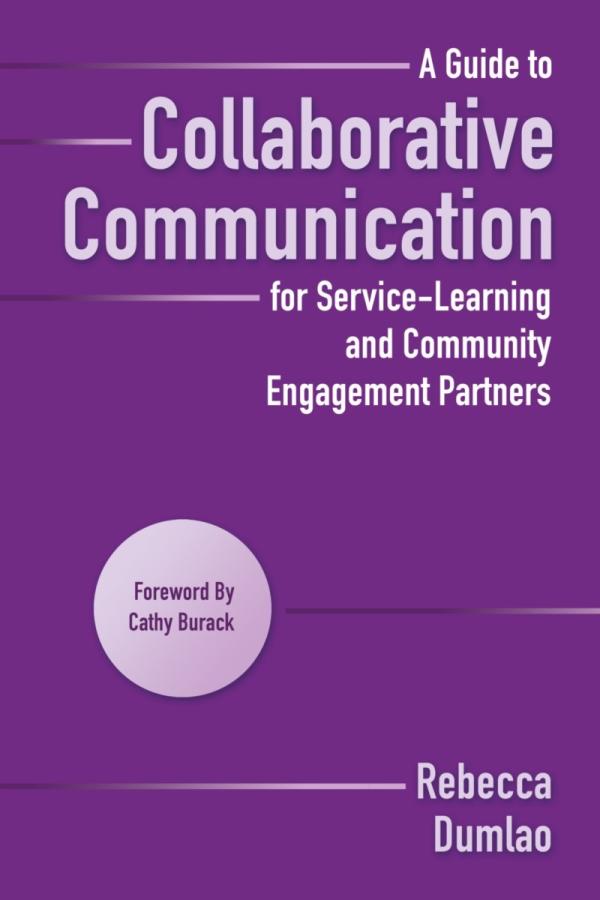
This book focuses on partnerships at the most basic level of interaction – between two people as they work toward common goals. Interpersonal dynamics described in this book are intended to guide formal and institutional relationships between members of a community or community organization on the one hand and representatives from campus on the other. Collaborative communication principles and practices shared can form a foundation for individuals to build flexible, lasting relationships that will weather most challenges and sustain the larger partnerships of their respective organizations.This book offers a conceptual framework of collaborative communication to build and sustain partnerships, recognizing that relationships change over time as the people involved and their circumstances evolve. Collaborative communication uses a repertoire of knowledge and skills that allow partners to make choices that fit their situation or context and to work through differences and challenges as they occur, to include managing conflict and navigating cultural differences. It further takes into account the different means of communication, whether face-to-face, using e-mail, text messaging, or social media. Readers will appreciate the numerous real world examples that illustrate and bring its key concepts to life.This book is addressed to partners at all levels focused on community engagement and service-learning. It is intended for preparing college students to work more effectively in the community, as well as for workshops for community and campus members who work with service-learning students. It can equally be used in leadership workshops in academic and community settings. Scholars, students, or community members involved in community engaged research will also find useable ideas for their work.The appendices offer an annotated bibliography of useful resources and provide readers with a repertoire of activities for building a collaborative communication repertoire. (From the Publisher)
Research on Student Civic Outcomes in Service Learning: Conceptual Frameworks and Methods is the third volume in a series dedicated to research on service learning. This volume, with its timely focus on civic outcomes, is divided into three sections. It begins with an introduction to how student learning outcomes are embedded in service learning, then moves on to various theoretical frameworks by which one can situate research. It concludes with some nuts and bolts aspects of conducting research on student civic outcomes in service learning, defined as “a course or competency-based, credit-bearing educational experience in which students (a) participate in mutually identified service activities that benefit the community, and (b) reflect on the service activity in such a way as to gain further understanding of course content, a broader appreciation of the discipline, and an enhanced sense of personal values and civic responsibility” (10). All three chapters in Part One are useful to the novice in this research area. “Introduction to Research on Service Learning and Student Civic Outcomes” provides a taxonomy of service learning courses, with essential attributes and levels of development for instructors to improve the quality of civic learning opportunities within service learning courses along with clear factors for individual as well as institutional research and assessment. “Student Civic Outcomes in Higher Education” offers a helpful literature review of civic outcomes, while ”Student Civic Learning through Service Learning” concludes Part One with two pertinent questions: (1) What do we know about cultivating civic learning through service learning courses? (2) What do we still need to learn about how the variables of course design influence civic learning? One key point repeated in each chapter is that civic outcomes in service learning should focus on learning with others and not doing for others. Part Two explores research on civic outcomes in service learning through multiple disciplines and theoretical perspectives including social psychology, political theory, educational theory, philanthropic studies, human development, community psychology, critical theories, and activity theory. The chapter “Critical Theories and Student Civic Outcomes” most directly questions the “individualistic” and “server-centered” approach to service learning (184), noting, for example, that serving at a soup kitchen often counts as service learning but protesting does not (187). A critique of the AAC&U Civic Engagement VALUE rubric is particularly thought-provoking on issues of access and power (187-190). Part Three turns more directly to the how-to of conducting research with chapters on quantitative, qualitative, and longitudinal research along with chapters on institutional characteristics and using local and national datasets. One of the most interesting chapters in this section, “Documenting and Gathering Authentic Evidence of Student Civic Outcomes,” asks “What counts as good evidence of learning and for whom?” (303). The chapter identifies two challenges familiar to those who work with assessment: making outcomes explicit and collecting authentic evidence (304-305). Unfortunately, much existing research depends on indirect evidence, and the chapter recommends use of the AAC&U VALUE rubric along with ePortfolios to enable formative and summative assessment. Each chapter of the volume concludes with an extensive reference section. The volume is worthwhile for teachers and researchers who want to improve students’ service learning as a site for civic engagement.
Click Here for Book Review At this time of a renewed call for colleges and universities to create campus cultures that support and develop students’ understanding and commitment to civic participation, what is known about the design of service learning courses and their effectiveness to achieve this goal? This volume presents research on--and deepens understanding of--teaching strategies that foster the knowledge, skills and dispositions of college graduates to be actively engaged in their communities as citizens and civic-minded professionals. The first section offers an overview of civic learning and the importance of intentional service learning course design to reach civic outcomes. The next section employs various disciplinary perspectives to identify theories and conceptual frameworks for conducting research on student civic outcomes. The third section focuses on research methods and designs to improve research using quantitative and qualitative approaches, cross-institutional research strategies, longitudinal designs, authentic data, and local and national data sets. Chapters also address implications for practice and future research agendas for scholars. (From the Publisher)
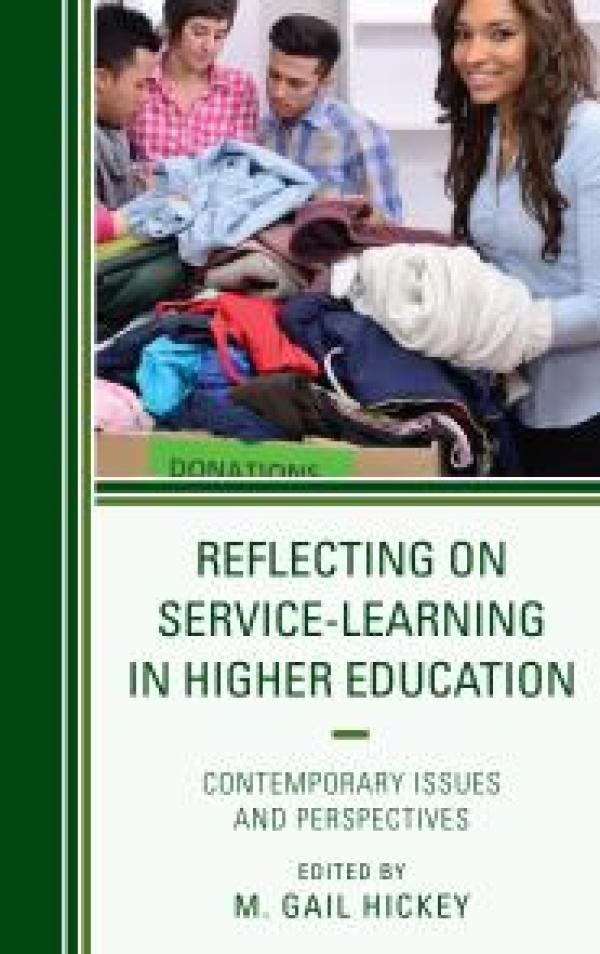
Click Here for Book Review Abstract: Reflecting on Service-Learning in Higher Education: Contemporary Issues and Perspectives examines forms of pedagogy such as service-learning, experiential learning, and problem-based learning in order to determine how students make connections between and among abstract academic concepts and real-life issues. This edited collection is divided into three sections—“Reflecting on Community Partnerships,” “Reflecting on Classroom Practice,” and “Reflecting on Diversity”—so as to represent interdisciplinary subjects, diverse student populations, and differing instructional perspectives about service-learning in higher education. Contributors provide service-learning programs and plans that can be replicated or adapted at other institutions of higher education. This book is recommended for scholars and practitioners of education. (From the Publisher)
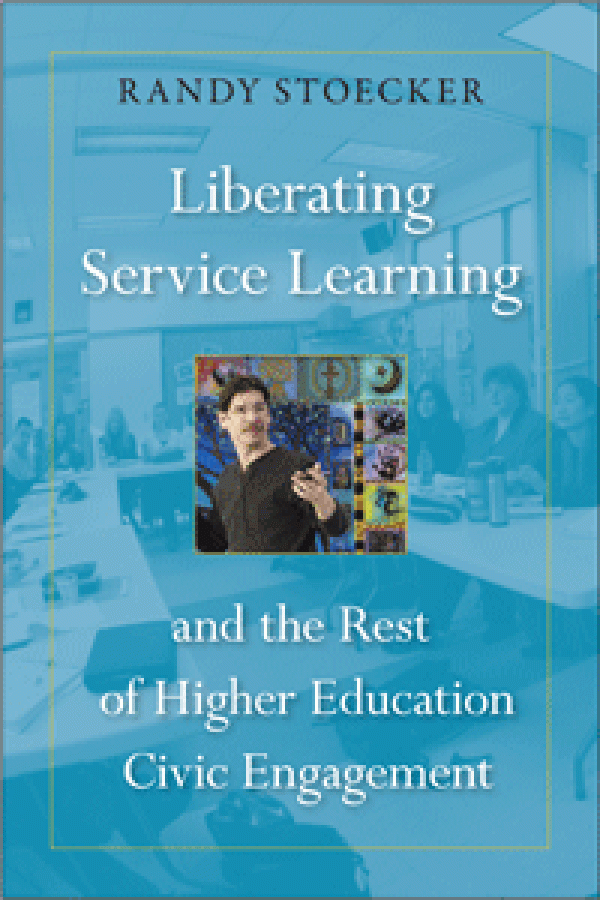
Click Here for Book Review Abstract: Randy Stoecker has been "practicing" forms of community-engaged scholarship, including service learning, for thirty years now, and he readily admits, "Practice does not make perfect." In his highly personal critique, Liberating Service Learning and the Rest of Higher Education Civic Engagement, the author worries about the contradictions, unrealized potential, and unrecognized urgency of the causes as well as the risks and rewards of this work. Here, Stoecker questions the prioritization and theoretical/philosophical underpinnings of the core concepts of service learning: 1. learning, 2. service, 3. community, and 4. change. By "liberating" service learning, he suggests reversing the prioritization of the concepts, starting with change, then community, then service, and then learning. In doing so, he clarifies the benefits and purpose of this work, arguing that it will create greater pedagogical and community impact. Liberating Service Learning and the Rest of Higher Education Civic Engagement challenges—and hopefully will change—our thinking about higher education community engagement. (From the Publisher)
This new revised edition of our bestselling book brings together the best, most up-to-date writing and resources on service-learning, from learning theory and pedagogy to practical guidance on how to implement service-learning in the classroom. This edition reflects the tremendous growth in service-learning that has occurred since the first Toolkit was published in 2000. In addition to updated material throughout, this volume includes expanded chapters on community partnerships, student development, and redesigning curriculum, as well as two new chapters—one exploring the connection between service-learning and civic engagement and the other focusing on community-based research. Revised and expanded recommended reading lists, broken down by topic, bring readers a wealth of print and online resources for further study. The Introduction to Service-Learning Toolkit is an essential resource for faculty and administrators who wish to be part of the growing movement toward civic engagement in higher education. (From the Publisher)
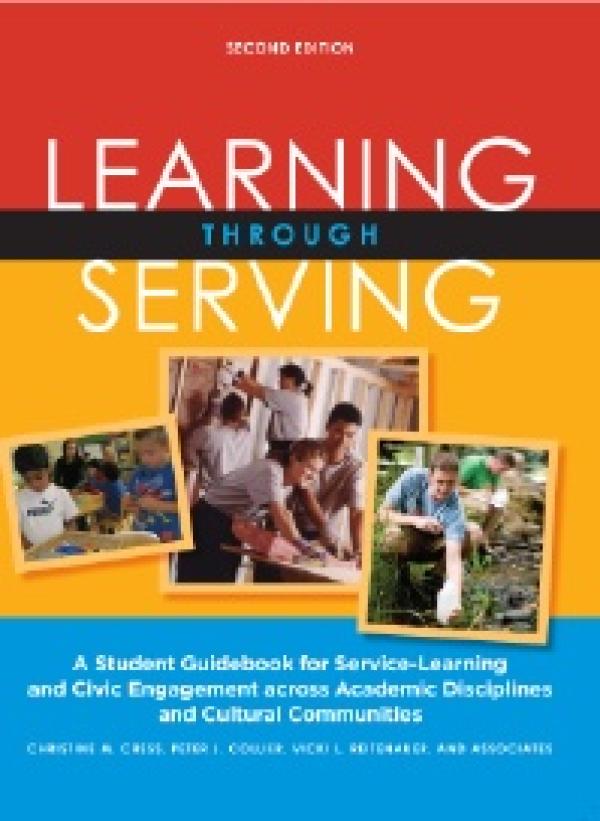
Click Here for Book Review Abstract: This substantially expanded new edition of this widely-used and acclaimed text maintains the objectives and tenets of the first. It is designed to help students understand and reflect on their community service experiences both as individuals and as citizens of communities in need of their compassionate expertise. It is designed to assist faculty in facilitating student development of compassionate expertise through the context of service in applying disciplinary knowledge to community issues and challenges. In sum, the book is about how to make academic sense of civic service in preparing for roles as future citizen leaders. Each chapter has been developed to be read and reviewed, in sequence, over the term of a service-learning course. Students in a semester course might read just one chapter each week, while those in a quarter-term course might need to read one to two chapters per week. The chapters are intentionally short, averaging 8 to 14 pages, so they do not interfere with other course content reading. This edition presents four new chapters on Mentoring, Leadership, Becoming a Change Agent, and Short-Term Immersive and Global Service-Learning experiences. The authors have also revised the original chapters to more fully address issues of social justice, privilege/power, diversity, intercultural communication, and technology; have added more disciplinary examples; incorporated additional academic content for understanding service-learning issues (e.g., attribution theory); and cover issues related to students with disabilities, and international students. This text is a student-friendly, self-directed guide to service-learning that: • Develops the skills needed to succeed • Clearly links service-learning to the learning goals of the course • Combines self-study and peer-study workbook formats with activities that can be incorporated in class, to give teachers maximum flexibility in structuring their service-learning courses • Promotes independent and collaborative learning • Equally suitable for courses of a few weeks’ or a few months’ duration • Shows students how to assess progress and communicate end-results • Written for students participating in service learning as a class, but also suitable for students working individually on a project. (From the Publisher)