Resources
Neutrality is a lovely fiction.There is no such thing as a teacher who enters a classroom empty of convictions, untouched by history, or free from assumptions about the world. We arrive carrying beliefs—personal beliefs, communal beliefs, inherited beliefs, hard-won beliefs. Some have been examined with honesty and care. Others are so deeply woven into us that we mistake them for common sense.Our beliefs are baked in. Sown in. Poured into us long before we stand at the front of a classroom. They become the hidden rebar beneath our teaching, reinforcing the moral architecture of our decisions, our judgments, our dreams, and our expectations for ourselves and for our students.Teaching is never merely the transfer of information. Teaching is the revelation of a way of seeing the world.Whether we acknowledge them or not, our beliefs shape every decision we make. What do we believe about human beings? Are people fundamentally worthy? Capable of growth? Deserving of grace? What do we believe about failure? About power? About justice? About intelligence? About the purpose of our lives together?These are not abstract philosophical questions reserved for late-night conversations or higher education classrooms. They sit beside us while we write syllabi. They whisper while we grade papers. They accompany every conversation with a struggling student and every faculty meeting.Our beliefs teach long before our lesson plans do.Sometimes the greatest challenge is not that we lack beliefs but that we live contradictions. We profess one set of values while practicing another. We announce that every student can learn, yet quietly decide that some are beyond our reach. We proclaim that mistakes are opportunities for growth while responding to errors with disappointment or dismissal.To be human is to live with inconsistency. None of us embodies our deepest values perfectly. Yet the work of teaching asks us to seek greater integrity—to bring our practices into closer conversation with our convictions. Students notice the distance between what we say and how we live. They also notice when we are striving toward wholeness.Our deepest beliefs rarely begin with us. They are handed to us around family tables, in neighborhoods, in houses of worship, in schools, and in communities that loved us as best they knew how. We inherit ways of understanding the world long before we have language to evaluate them.My father gave me one such inheritance.Dad believed in redemption.Not simply second chances. He believed in second, third, fourth, and fifth chances. He believed that broken things deserved another opportunity to become useful again. He believed in repair. In restoration. In refusing to abandon what others had given up on.My father spent his career as a school psychologist in the Philadelphia public school system. He was also a reading specialist and, on weekends, a piano teacher. Early in his career, colleagues discovered that he possessed an unusual gift: he could recognize when children had been misjudged.Part of a school psychologist's responsibility is to evaluate students and recommend educational placement. Too often, particularly in under-resourced communities, marginalized children were incorrectly labeled and assigned to special education programs. Those labels carried consequences that stretched far beyond the classroom. A mistaken diagnosis could narrow opportunities, diminish expectations, and hasten a child's journey toward exclusion rather than possibility.When families appealed those decisions, my father often conducted the reevaluations. His careful work corrected many mistaken placements. His expertise restored educational opportunities to children who had been underestimated. Long before people regularly spoke about systemic inequities or educational justice, my father quietly practiced both.What I remember most is not his expertise.I never heard him criticize the colleagues whose judgments he corrected. I never heard him delight in proving someone wrong. He simply believed that if a mistake had been made, then his responsibility was to help make it right.That was his way in schools.It was also his way at home.Our family owned a ceramic cookie jar shaped like a large apple, painted in bright reds, greens, and yellows. The jar sits on a shelf in my television room today. The lid had a tiny stem for a handle. For two small children with little hands and developing coordination, that tiny stem was an impossible design. My brother and I dropped that lid over and over again. Sometimes it landed safely. Often it chipped. Occasionally it shattered into several pieces.Over the years, I suspect we dropped that lid twenty times.Every single time, my father gathered the fragments.Every single time, he glued it back together.We were never scolded. Never shamed. Never called careless or clumsy. The broken lid was never treated as evidence that something was wrong with us. It simply became another opportunity to practice restoration.More than sixty years later, that repaired lid still rests on the cookie jar, bearing the visible evidence of its history. Veins of glue run across its surface like the rings of an old tree. Every repair tells a story. Every scar witnesses to someone who believed that brokenness did not have to be the end of the story.That cookie jar reminds me that my father believed repair was the holy work of teaching. He believed that preserving was better than discarding. That correcting was better than condemning. That restoration was more faithful than replacement. He trusted that what appeared broken might still hold beauty, purpose, and possibility. Those beliefs shaped his life. They shape my teaching.Teaching asks for our whole selves. We do not leave our beliefs outside the classroom door. They accompany every lecture, every assignment, every difficult conversation, every act of encouragement, and every moment when we decide whether to see a student through the lens of deficiency or possibility.The invitation is not to become perfectly consistent. The invitation is to become more conscious.When we courageously examine what we believe, we become more capable of teaching with wisdom, compassion, and integrity. Our students deserve more than our expertise. They deserve teachers whose beliefs have been lovingly questioned, thoughtfully refined, and generously lived.Perhaps the deepest work of teaching is not simply asking, "What will I teach today?"Perhaps the deeper question is, "What do my students learn about humanity because they have encountered me?"Reflection QuestionsWhat beliefs about human worth quietly shape the way you prepare for class, respond to students, and evaluate learning?Who first taught you what it means to repair rather than discard? How does that lesson appear—or fail to appear—in your teaching?Think about a student who challenged you. What assumptions about that student were you carrying, and what new possibilities became visible when those assumptions were questioned?Where do your classroom practices faithfully reflect your deepest values? Where is there a gap between what you profess and what you practice?If your students remembered only one thing about the way you saw them, what would you hope it would be? What evidence do you offer them of that hope?Imagine your teaching as an heirloom passed to the next generation. What convictions, habits, and stories would you want future teachers to inherit from you?If your classroom became a place where redemption was practiced as intentionally as knowledge was shared, what would change—for your students, for your colleagues, and for yourself?
From the University of Calagry, includes a guide that uses a literature-informed framework to lead you through a series of practical exercises to develop and strengthen your teaching dossier and philosophy, as well as samples and templates.
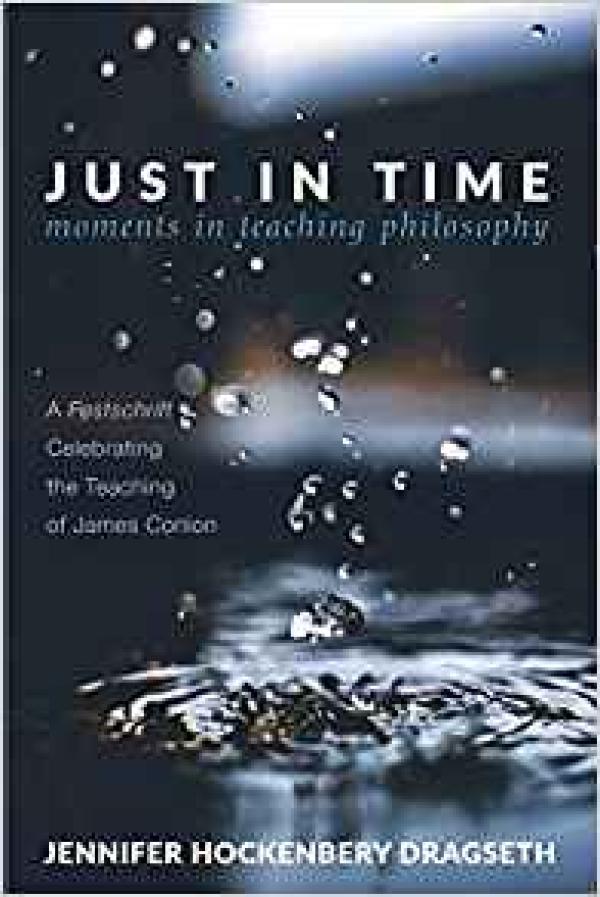
This book is a collection of serious philosophical essays that aim to awaken readers, teachers, and students to a desire for conversation passionately pursued. The essays in this volume speak about sex, movies, poetry, and politics, in short, about those things contemporary Americans passionately discuss. These are the subjects that were taught for forty-three years in James Conlon’s classroom at Mount Mary University, a Catholic urban university for women in Milwaukee, Wisconsin. This volume celebrates Conlon’s work while calling to all who continue to teach and learn about philosophy in contemporary times with the message that relevant philosophy deals with life as it is lived in the moment. (From the Publisher)
This article is for those educators who want to become more intentional in their craft of teaching. The authors introduce eight different pedagogies through their historical lineage, intending for readers to gain an appreciation for, and understanding of, the broader trajectory of educational philosophies, and illustrate how common teaching techniques can be shaped by the pedagogies. By familiarizing themselves with a specific educational philosophy or philosophies, educators begin to identify and name the ways they teach, how students best learn, what counts as knowledge, and the desired outcomes. In doing so, educators increase their opportunities to provide more meaningful and impactful education. This article also includes quick‚Äêreference guides to the pedagogies for readers to return to frequently.
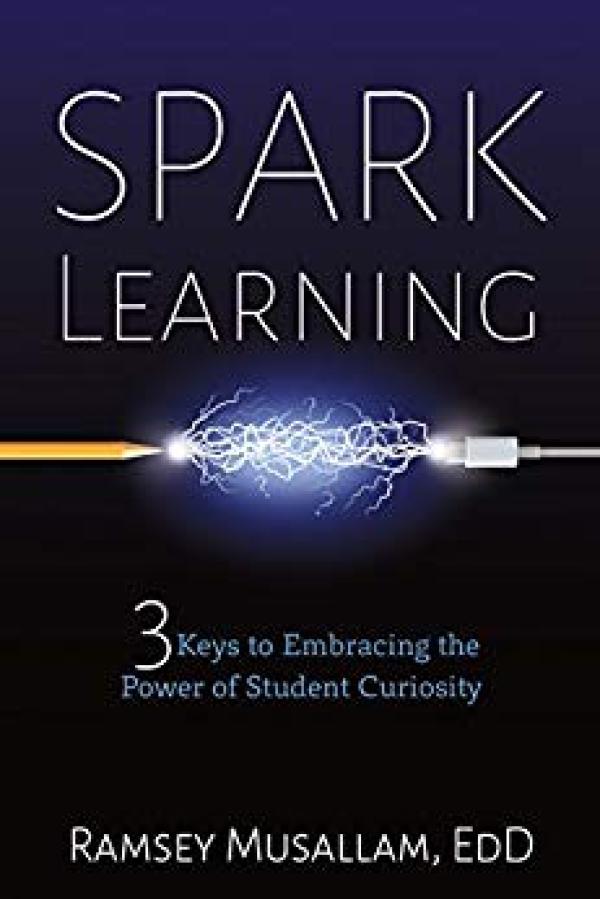
In 2008, Ramsey Musallam was stuck in what he describes as an ineffective rut of "pseudoteaching." Students liked him, but they didn't get the point of his lessons. They did well enough on the tests, but they failed to really understand the material. He wanted more--for them and for himself. Maybe you can relate. For Ramsey, the journey to a better way of teaching began not in the classroom, but on the operating table where he underwent a new, lifesaving heart surgery. His surgeon's confidence, dedication, and curiosity sparked an idea in Ramsey: What if teachers adopted the qualities his surgeon exhibited and were inquisitive, ready to explore, discover, try, and, yes, even fail? What if students could learn to adopt those traits as well? Those questions launched a quest to inspire inquiry and harness its benefits. (From the Publisher)
“Greenscreen Teaching” explores how the stresses of institutional and social change impact teaching and learning, and the creative resourcefulness born out of instability. In precarious institutions and social contexts, relevant outcomes for theological learning include developing attentiveness, robust moral discernment, and courageous speech seasoned by maturing convictions and pastoral sensitivities. I utilize greenscreen acting as a suggestive metaphor for describing four creative teaching strategies targeting these outcomes. Subsections gather insights from: Etymology of disaster‐related words: Capitalize on the moment and “go big.” Creative method: Improvise and keep it sharp. Ritual theory: Creatively repurpose familiar but underutilized traditions. Service learning: Widen the networks of community connection. Each subsection also revisits moments and learning activities from a graduate course in feminist theology. Navigating constant transition impacts every aspect of the classroom. Nevertheless, a teaching scholar can resource this precariousness as creative agency for voice, solidarity, and mutual learning. 5/3/2018
In "Arts of the Contact Zone, Pratt describes a manuscript from 1613 penned by Andean man named Felipe Guaman Poma de Ayala. The manuscript was a letter written to King Phillip III of Spain and was titled The First New Chronicle and Good Government. The manuscript details Spanish conquest in South America. Pratt cites the manuscript as an example of autoethnography. She writes, “Guaman Poma’s New Chronicle is an instance of what I have proposed to call an authethnographic text, by which I mean a text in which people undertake to describe themselves in ways that engage with representations others have made of them”. The New Chronicle ends with a revisionist account of the Spanish conquest. Pratt uses the manuscript as an example of an oppressed person or group resisting hegemony, and she connects the practice of authoethnography, critique and resistance to the creation of contact zones.
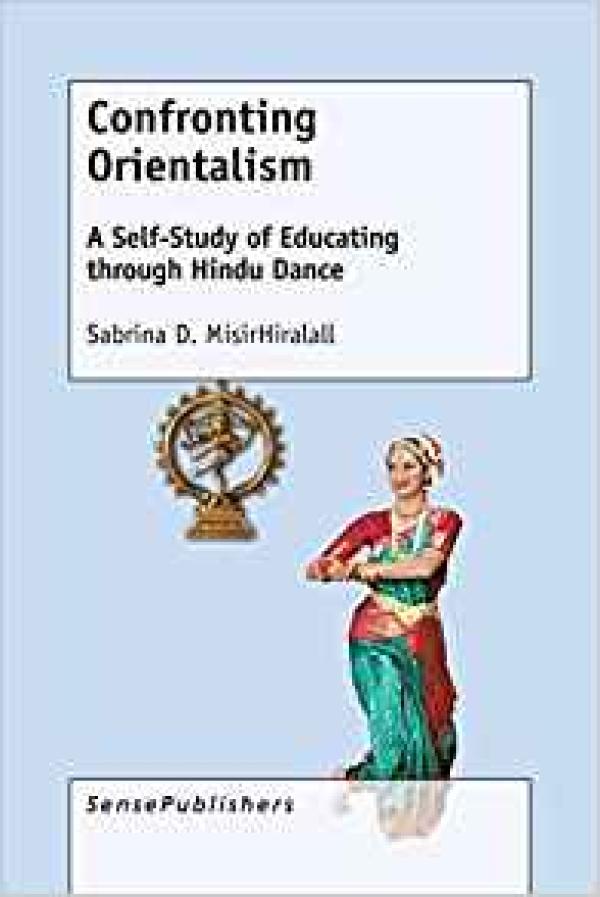
Click Here for Book Review The author aims to use Kuchipudi Indian classical Hindu dance to educate non-Hindus about Hinduism with postcolonialism in mind. This goal arises from her dance experiences and the historical era of imperialism. Colonization occurs when those in power believe there is a need to dominate in a manner that subjugates people. Colonizers created colonies as they moved into territory because they felt there was a need to “civilize” the so-called savages of the land. Postcolonialism is an intellectual discourse that confronts the legacy of colonialism and attempts to de-colonize. With the legacy of colonialism and a postcolonial lens in mind, some research questions arise. How does she, as a Kuchipudi dancer, use Hindu dance to educate non-Hindus about the Eastern literature of Hinduism? For non-Hindus, she feels the power of the exoticizing gaze when she dances, which might very well block the educational intention of the dance. This exoticizing gaze prevents the understanding of the traditional nature of the dance and the introduction to Hinduism as a world religion. The author’s problem is moving the exotic gaze of non-Hindus to an educational gaze that seeks to learn about the ethics of Hinduism in a manner that takes into consideration the multiple perspectives of the complex society we live in today.
Brazilian writer Eliane Brum tells this story: Vanderley was a man who used to go to an agriculture fair in the south of Brazil with a broomstick saying that this broomstick was a pure breed horse. He was known around as the “little cuckoo guy.” One day I asked him, "Are you really Cuckoo Vanderley?" And he said, "Don’t you think I know this isn’t a pureblood horse? That this is just a stick? But this is my way of thinking about that which I will never have.” Perhaps we teachers could be more like Vanderley, a little cuckoo, imagining that which we cannot think, have, or teach, and make it our own. Perhaps we can engage a double pedagogical movement: to listen to those students who actually have a broomstick and see what meanings they give to it, and help those students who don’t have one to invent a broomstick as a pure breed horse, or whatever else, and make it their own. Our classrooms need an inventory of broomsticks! Broomsticks that can give us a sense of our reality. In order to do that we need more art! Art helps us access the madness of our realities. Art helps us think and feel differently. Art gives us access to different forms of reasoning of our bodies and our relations in our world. Art wires our brain differently. Art gives us a space beyond objectivity so we can venture into the unknown in order to reshape our realities. Unfortunately, our pedagogies are often centered in objective knowledge, positivistic thinking based on progress, and detached forms of thinking that celebrate a necessary distance between the seeing and the thing seen. Sadly enough, this form of knowledge can’t catch our realities from the point of view of Vanderley. We need something else. We need other venues and forms of thinking that can help us invent and imagine something that can actually affect our reality. We feel that our objective words can grasp our reality in some forms and yet, it feels also that what we say is like unopened letters that end up returning to us.[1] We can’t be transformed only by precise objective readings of our reality. We need the enchantment of the unknown, gray areas of thoughts and beliefs, the uncontrolled parts of our lives, the broomsticks of Vanderley. The Brazilian theologian, poet, philosopher, and sociologist Rubem Alves lived in the academy for many years and produced many books. One day he realized that his kind of work wouldn’t change people. He then started to write short essays and children stories. With the theoretical knowledge he gained, he delved into the abyss of the quotidian life of people by way of children stories. He would mix Escher, Camus, Bachelard, Bach, Celan and many others with daily events in life. I was introduced to art by his theo-poetics writings. In my classrooms, I am growing more skeptical of only objective readings of realities. We are lost trying to grasp the ever-expansive disasters of our lives. We need rituals! We need art to tap into that aspect where objective knowledge can’t go. Words alone can’t do it. We need other mediums to express the absurd of our present, to retell stories of pain and trauma of our past and imagine our future. Without addressing the present, reshaping the past, and gaining a good sense of future we will be lead to a future that will continue not to be ours. However, life will be given to those who can invent life in its multiple, timely possibilities. And for that, we need new partners! When we bring Doris Salcedo to our classrooms we have a much-expanded way of addressing violence, trauma, and loss. When we invite Tania Bruguera and Weiwei to present their works to us, we can have a better sense of repressive governments and societal systems. It is when we wrestle with Favianna Rodriguez, Justin Favela, Guillermo Gómez-Pena, Jacob Lawrence, Kerry James Marshall, and Alvin Ailey Dance that we can wrestle with a flow of white supremacy, race and identity politics. When we deal with the artist Banksy, we can learn about social contestation. When we engage Giuseppe Campuzano and Miguel A. López, we see new figurings of sexualities and gender nuances and immensities. When we open up to know Raven Chacon, Cristóbal Martínez, and Kade L. Twist, we can see the complex collective interdisciplinary environmental colonial/postcolonial gaze of native people. It is when we listen and watch Mona Haydar, Beyoncé, and Kendrick Lamar, we can deal with the cultural racial pop culture. We indeed need more art in our classroom! But we have many challenges to do that. First, we don’t feel we have enough expertise to do it. We would need to learn how to teach it. Second, we don’t know what to do to assess it. Once in a faculty meeting, I heard from friends that they wish they could use more art but they don’t have criteria to evaluate any work of art. Third, art doesn’t seem to have the same academic weight. We all know the fight Cornel West had to undergo at Harvard when he was accused by the president Lawrence Summers for not doing proper scholarship when he ventured into recording a rap CD. Yes, to use art we need to cross these boundaries. We have to venture into that weary space in order to know a little more. But we can start by looking and imagining. And helping our students to look and invent as well. The best “final projects” in my classes are the ones students can imagine and invent. Perhaps we can give up a little of our sense that we have to control every corner of what is to be taught, both for proper reasoning and meaning, but also for coherence. Not to dismiss intellectualism and proper theoretical work, but to actually expand it for better ways to grasp life. Perhaps we can start by trying some new things out. GO visit a museum, a street artist, a mural. Perhaps we can start by listening to a song, watching a performance in a video, looking at a picture. And let the artists help us expand ourselves and our imagery/imagining. They might help us dream, invent, figure out something else! They might help us see that Vanderley’s broomstick is indeed a pure breed horse! And that we desperately need one too! [1]Eliane Brum, O Brasil desassombrado pelas palavras-fantasmas. Como o sonho e a arte podem nos ajudar a acessar a realidade e a romper a paralisia, https://brasil.elpais.com/brasil/2017/07/10/opinion/1499694080_981744.html Resources: http://www.stedelijkstudies.com/journal/transvestite-museum-of-peru/ https://www.youtube.com/watch?v=idMJIEFH_ns http://postcommodity.com/About.html http://favianna.tumblr.com