Resources
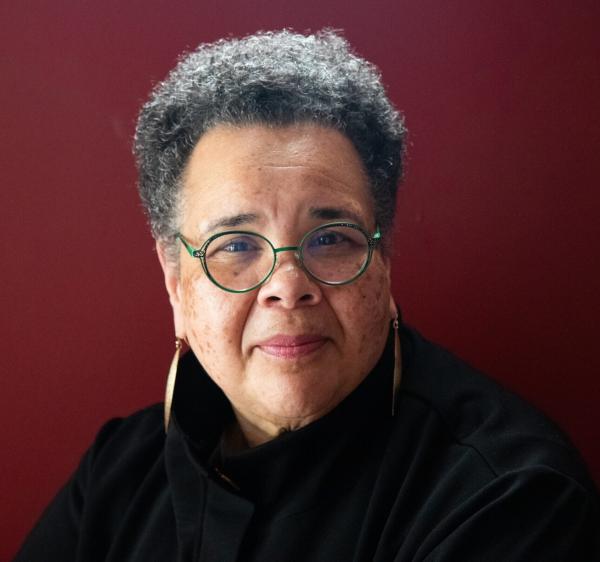
Nancy Lynne Westfield's newest books Thinking Teaching and Glimpses of Me and Mine are available now through November 30 for 50% off and free shipping during an AAR/SBL Conference sale. Just follow this link and use code CONFSHIP at checkout! In New Orleans, the second line is a moving testimony. It is a communal practice of sorrow, celebration and transcendence. The second line is the procession after the procession. It happens at weddings, funerals, and sometimes—the second line happens just to happen.As parade, as stroll, as dance line it is brass and breath, drumbeat and devotion, jubilation in the strut, grief dressed in beads and feathers, the community gyrating celebration. It is the sound of a people who know that life deserves a procession. It is the action of a people who refuse to let subjugation eclipse their joyousness. The streets pulse, the ancestors are summoned, the troubles are lifted, if for a moment. At funerals, the first line—the family, the musicians, the mourners—moves with the weight of loss and the dignity of remembrance. They move with the sound of a dirge. Then the music shifts. The horns rise. The drums speak beckoning all saints and all sinners to join in. The second line emerges behind them, handkerchiefs waving, feet pounding the pavement, bodies remembering what loss sometimes makes us forget: we are still here, still alive. We are still capable of joy. We can carry our dead and dance among the living.At weddings, the second line becomes a declaration of possibility. The couple leads, but they do not walk alone. Friends, family, strangers, and neighbors fall into rhythm, accompanying the newly joined lives into a future none can fully predict. The procession is appreciation, celebration and promise. There is no guarantee that the road will be easy. There is only the music, the community, and the decision to keep moving together.Perhaps this is also a way to understand teaching and the teaching life.Teaching is a procession. We enter classrooms carrying histories, convictions, unfinished questions, private griefs, and extravagant hopes. Some days, we lead. Other days, we follow. Sometimes we are the ones holding the beat, offering structure and direction. Sometimes our students surprise us with a rhythm we do not understand or do not know we need. The lesson we carefully planned gives way to a question that opens the space. A student's insight changes the direction of our thinking, enhances meaning. A conversation asks us to loosen our grip on certainty and learn to move differently. Dynamism enriches the teaching and the learning. Good teaching requires us to know when to lead and when to make room for the second line.The teaching life, like the second line, holds both funeral and wedding. Teaching holds the “just because.” We mourn the students we could not reach, the colleagues we have lost, the institutions that have forgotten their purpose, and the possibilities that never came to fruition. We celebrate the student who discovers their own voice, who dares to imagine something new, the classroom where disagreement becomes a form of recognition, and the moment when learning makes a different future imaginable. We experience healing in its myriads of forms. We carry loss without surrendering joy. We honor what has been while making room for what might yet be – for what we are becoming.We open our hearts to the fact that we do not do this work alone.The second line reminds us that education is not a solo performance. It is a communal practice of accompaniment. Our students bring the beat of their own lives. Our colleagues help us recover our rhythm when the work becomes too heavy. Our teachers, living and departed, leave melodies we continue to interpret. We inherit more than knowledge; we inherit ways of moving through the world, ways of asking questions, ways of making meaning, and ways of staying present when the music changes – and the music always changes.Perhaps the deepest wisdom of the second line is this: the people who follow are not merely spectators. They are participants in making the procession what it is. So it is with teaching. Students are not an audience assembled to witness our expertise. They are makers of meaning, carriers of memory, challengers of convention, and co-creators of the learning community. They change the music even as they learn to hear it.To teach, then, is to practice the art of keeping time with other people. It is to recognize when the moment calls for solemnity and when it calls for celebration. It is to make room for improvisation. It is to trust that a community can hold sorrow and possibility in the same breath.And when the semester ends, when the classroom empties, when the carefully prepared lesson has passed into memory, the music does not stop. Something we said may become a student's unfolding question. Something a student taught us may alter how we teach the next course. The conversation continues long after everyone has gone home, down the line.
Growing up, my family loved playing games. We played with seriousness and delight.In our basement playroom, there were cards, ping pong, knock hockey, and many other board games. Our yard was regularly used for croquet, horseshoes, badminton, and volleyball. When enough family gathered, there were glorious, unruly games of tag.I assumed every family played games the way we did. Then some of my older cousins came to visit.Somewhere along the way my brother and I had quietly rewritten the rules of Monopoly. Whenever someone paid money to the bank—taxes, fees, penalties—that money was tucked underneath the Free Parking space. Whoever landed there collected the whole pile. Free Parking was transformed from an uneventful square into a moment of possibility, a financial windfall.Our cousins were scandalized."You can't do that.""Those aren't the rules.""Get the instructions."They wanted the official rulebook. They wanted Parker Brothers to settle the argument.My brother and I had no interest in consulting the rulebook."It's our board," we insisted. "Our house. Our rules."What began as a disagreement about Monopoly quickly became a struggle over authority. Voices rose. Feelings swelled. Nobody was changing anybody's mind. Somewhere in the middle of our family constitutional crisis, my mother appeared at the doorway and announced that ice cream and cake were being served in the kitchen. Looking back, I suspect she was rescuing us all.The game ended.The argument did not.Years later I realized that we had not really been arguing about Monopoly.We were arguing about power.Who gets to make the rules?Who decides when rules can bend?Who benefits when they do?Who pays when they don't?Rules are never neutral.Every rule privileges someone. Every rule protects something. Every rule imagines an outcome worth preserving. Rules create order, certainly. They also distribute power.Breaking rules carries consequences. Punishment. Exclusion. Suspicion. Labels. Sometimes criminalization. Sometimes silence.Teachers know this. Every syllabus is a declaration of values. Every classroom policy tells students something about what matters here. Every deadline, attendance policy, grading rubric, participation expectation, and late-work penalty announces not only how learning will happen but also who has the authority to define learning.When do I enforce the rules? When do I quietly overlook them? For whom? What assumptions shape those teaching decisions?Which students receive grace because they remind me of myself? Which students receive rigidity because they challenge my expectations? What conflict am I avoiding when I pretend consistency is the same thing as justice?These are not administrative questions.They are the moral questions of pedagogy. ***Ariel was an M.Div. student.He worked full time as the executive director of a denominational agency while carrying a full graduate course load. He came to class prepared. He asked thoughtful questions. He lingered after class to continue conversations. By mid-semester he had completed two major writing assignments, and both were excellent. Ariel was an exemplary student. After class one afternoon he followed me to my office.I set my briefcase on my desk. Ariel settled onto the couch while I sat across from him. We talked casually about the day's discussion. But something in his posture told me he had come for more than this debriefing conversation.Finally, after taking a long breath, he smiled."I have a proposition."I was curious."Tell me."He began carefully, "I've done well on the first two assignments."I nodded."I'm keeping up with the reading. I'm learning a great deal."Still, I waited.He took an anticipatory breath. So did I."I'd like to skip the last two papers."I felt my eyebrow raise and my lips purse. I folded my arms over my chest. "Skip them?""Yes."There was no arrogance in his voice. No manipulation. No entitlement. Only a tired honesty from someone trying to make impossible responsibilities fit inside twenty-four-hour days and this academic semester."I've demonstrated that I'm doing the work," he continued. "I'd like to keep learning without writing two more essays."I admired his audacity. Most students spend energy negotiating for higher grades. Ariel was negotiating for a different way to demonstrate learning.I uncrossed by arms and leaned forward. "We have a syllabus," I said gingerly. "It's our agreement. How do I assign a final grade if you don't complete the remaining assignments?"Without hesitation he answered, "I'll continue being an A student. You give me an A." I snickered. "So, you've come to negotiate?""If I have to.""I need to think."That answer surprised him.It surprised me too.I wasn't ready to say, yes. But I wasn't ready to say, no. I am the girl who put money on Free Parking.We agreed to have lunch two days later.***By Thursday I had a counterproposal. I laid it before him over sandwiches in the campus café."You may skip the remaining essays." His eyes brightened. "...if..." His smile disappeared. "...you tutor the students who are struggling."Silence, but he did not look away. I continued, "One of the deepest ways to learn is to teach. If you help your classmates wrestle with the ideas in the course, you'll understand them even more deeply."He considered it. He was thinking while listening. Weighing his options."How many students?""Before we count students," I said, "there's one more condition."He grimaced.I chuckled."Just hear me out.""There are three other students earning similarly high grades. If I make this arrangement with you, I must offer the same opportunity to them. All four of you become tutors. If everyone agrees, we have a deal. If even one person declines, everyone writes the remaining papers."His response was immediate."That's not fair."I shrugged my shoulders the way you do when you are done talking. "What if they prefer writing essays?""Then," I replied gently, "you'll have to persuade them."Ariel turned his attention to his turkey sandwich and chips—still thinking.We talked about other things. I enjoyed our conversation. Walking back across campus, he finally spoke."Okay."A pause."If I organize the tutors...the essays disappear?""Yes."Within days Ariel had recruited the other three students.Not one of them wanted to write two additional papers.Together Ariel and I organized tutoring sessions throughout the remainder of the semester. Students who wanted help received it. Conversations multiplied. Learning deepened. The strongest students discovered that explaining difficult ideas required even greater mastery than writing about them.By semester's end, the lowest grade in the course was an A-minus.The syllabus had not collapsed.Learning had expanded.***That semester Ariel taught me something I have carried ever since.Rules matter.Justice matters more.The goal of teaching has never been perfect compliance.The goal is transformation.Sometimes the deepest integrity lies not in protecting every rule exactly as it was written, but in asking whether the rule is still serving the learning it was created to protect.The best teachers are not simply rule keepers.We are stewards of learning.That stewardship requires flexibility, discernment, humility, and imagination. It requires us to know the difference between a rule that safeguards community and a rule that merely preserves our comfort. It asks us to remember that equity is rarely achieved by treating everyone exactly the same. Equity grows when every student has a meaningful opportunity to flourish.Perhaps the real question is not whether students should follow our rules.Perhaps the deeper question is whether our rules are worthy of the students who entrust us with their learning.Thank you, Ariel. Reflection QuestionsWhich classroom rule do you enforce most consistently and with the expectation of uniformity? What fear, hope, or value lives beneath that rule?Recall a time when you bent a rule for a student. What informed your decision, and would you make the same decision for every student?Imagine your students were invited to rewrite one policy in your syllabus. Which policy would they change first? What might their proposal teach you about your classroom?Where have you mistaken consistency for justice? Where has flexibility created deeper learning than compliance ever could?If your syllabus were read as a theological, ethical, or moral document, what would it reveal about your understanding of authority, grace, accountability, and community?
I joined the faculty of Drew Theological Seminary in the fall of 1999. Before arriving at Drew, I had taught children, youth, and adults in a variety of settings. I had never taught at Drew. I had never served as a tenure-track faculty member. And I had never taught this particular community of students.But, I knew how to teach. I was confident in my skills and abilities. I trusted my preparation, my instincts, and my experience. Yet, I also knew a truth that every teacher eventually learns. Context matters.At that time, the student body at Drew was richly diverse in racial and ethnic identities, national origins, denominational affiliations, theological commitments, vocational aspirations, and ages. Such diversity was not a problem to solve—it was a gift to honor. Still, I knew enough to know that I needed help learning how to teach effectively in this new environment.The help arrived serendipitously. What began as a friendship became a lifesaving and career-shaping practice.During my first semester, I taught Introduction to Educational Ministries, a required course with thirty-two students enrolled. On the first day of class, the beauty and complexity of that learning community sat before me. Their experiences, questions, assumptions, hopes, silences, and histories filled the room. By the end of the session, I felt wrung out.That afternoon I called my friend, Brother Reginald Crenshaw.Reginald was an Episcopal monk serving a parish in Harlem, New York. We met a couple years before at a house party in Harlem and became fast friends. He had spent more than two decades teaching in one form or another. I called simply to chat. Before long, we were talking about the class session, the students, my preparation, and the intricate work of teaching. For nearly two hours, I recounted the day. At the end of the conversation, I thanked Brother Reginald for listening.The next week we did it again.And then again.By the third or fourth week of the semester, our conversations had become a standing appointment. After class, I would offer a verbal verbatim of the session. I talked through what happened, what surprised me, what delighted me, and what troubled me. Reginald asked questions about my pedagogical intentions, practices, assumptions, and missteps. He invited me to think more deeply.What I remember most is what he did not do.He did not evaluate me.He did not negatively criticize me.He did not offer quick fixes or easy answers.He did not position himself as the expert dispensing wisdom from above.Instead, he listened.Reginald listened as I wrestled with the demands of teaching in a new context. He listened as I tried to understand what was happening in the classroom and within myself. He listened as I searched for language, perspective, and courage.Now, twenty-five years later, I understand something I could not fully appreciate then. Reginald's listening was not merely collegial. It was an act of steadfast love.Brother Reginald loved the craft of teaching. He cared deeply about my flourishing. He wanted me to succeed, not because success could be measured, but because teaching matters. Listening to someone think out loud about teaching brought him joy.Many institutions organize classroom observations and peer reviews to assess teaching. Such practices can be useful. But what Reginald offered was something altogether different.He was not gathering evidence.He was not preparing a report.He was not determining whether I measured up.Instead, he created a space where I could work it out and work it through.Week after week, he offered room for recollection, reflection, perspective, lament, celebration, uncertainty, and even joy. I could tell him the truth about my teaching without fear of judgment. I could revisit moments of brilliance and moments of failure. I could hear myself think. I learned to hear my own voice in a new and needed way as I talked about my teaching. Even confident teachers need such spaces.We need sounding boards. We need reflection partners. We need people who can hold our stories long enough for us to discover what we are trying to say. We need to be heard deeply so we know the meaning of our own teaching. Sometimes growth comes not from being instructed but from being heard. The human practice of being heard might be a lifesaving necessity. In those conversations, Reginald helped me make self-corrections. He helped me recognize when a pedagogical pivot was necessary. He helped me imagine practices that better served the diverse students entrusted to my care. Not by telling me what to do, but by listening carefully enough that I could hear myself and trust the pivot I was considering. Teaching can be surprisingly lonely work. Too often, it becomes privatized labor hidden behind classroom doors. Without reflective companions, even experienced teachers can become trapped inside their own assumptions, rehearsing what they already know.To become better teachers, we need patient and knowledgeable colleagues who will accompany us in the difficult and beautiful work of critical and imaginative reflection. We need communities that value inquiry over performance and curiosity over certainty. We need listeners if we are to improve our teaching. Perhaps the deepest wisdom of teaching is not found in mastering a technique or perfecting a syllabus. Perhaps it is found in cultivating relationships where honest reflection can flourish. In such spaces, teaching becomes less about expertise and more about growth, less about control and more about learning alongside others. Teaching becomes buttressed by dignity and respect. The myth that teaching is best done as a solo performance must be dispelled. Teaching is never a solo act. It is, at its heart, a jazz ensemble, a front-porch conversation, a potluck where everybody brings something to the table. The classroom hums with stories, questions, contradictions, and possibility. We teach, we miss the mark, we try again. We laugh at ourselves, revise our plans, and discover that wisdom often arrives disguised as a good question. Along the way, faithful listeners companion us and help us hear the music above the noise. They remind us that teaching is not merely the transfer of knowledge but the cultivation of human flourishing—messy, improvisational, joyful, and alive.Thank you, Brother Reginald!Reflection Questions In what ways might evaluation culture in higher education silence the honest reflection that teachers need for growth?Who listens to you talk about your teaching, and what kinds of truths become possible when you are deeply heard?Who do you accompany? Who do you listen to deeply as they rehearse their teaching? If teaching is a communal practice rather than an individual achievement, what structures of mutual accompaniment could you create with colleagues?What stories, voices, or ways of knowing are regularly absent from your classroom, and what might become possible if those absences were addressed?Imagine a future learning community where curiosity is valued more than certainty and wisdom more than performance. What would teachers, learners, classrooms, and institutions look like in that world?
The practice of writing and publishing can be among the most life-giving dimensions of scholarship, and, at times, among the most difficult. Recently, I have held both joy and fear in the same open hand.My latest book is now available: Thinking Teaching: Stories, Insights, and Strategies to Ignite Reflection, Discussion, and Imagination.Thinking Teaching is a collection of blogs I have written for the Wabash Center over more than twenty years. In many ways, this volume most fully reflects my pedagogical commitments, both in content and in form. The book gathers sixty-six essays shaped by story, memory, wonder, and hard-earned wisdom—offerings intended to help teachers teach with greater imagination, reflection, and care. Each essay concludes with questions designed to spark conversation and communal discernment.Throughout the book, I draw from my experiences in classrooms and on faculties, while also leaning into the teachings and memories of family life. Womanist pedagogical commitments guide the work deeply. I understand education as a practice of emancipation, healing, and human flourishing. My hope is that this book will serve as a companion for individual readers, small groups, and faculty communities seeking richer conversations about teaching and the teaching life.Anyone who has published a book knows that writing and publication rarely unfold in a straight line. Books often arrive through detours, disappointments, revisions, unexpected grace and help from friends and colleagues. This was certainly the journey of this manuscript’s becoming.Around 2014, I began to imagine my Wabash blogs as a collected work. Though I had not written them according to a systematic plan, I sensed that together they traced meaningful terrain for colleagues engaged in conversations about teaching. I prepared a proposal for an anthology of these essays and carried it with me to a conference where scholarly and trade publishers gathered in search of new projects.I shared the proposal with several publishers. Most were not interested. Then, during a conversation with a fifth editor, I began to feel hopeful. We had a lively and engaging exchange about teaching, writing, and audience. As the conversation came to a close, she said gently, “Of course, you will expand each blog into a full chapter—right?”My heart sank.I wanted the brief essay form—those 750 to 900-word reflections—to remain intact. I believed the short form carried its own integrity, accessibility, and power. After thanking her for the conversation, I quietly set the project aside. With disappointment lingering close by, I placed the dream of a book-length collection on the back burner.Then, in 2022 I met Donald Quist. Donald became both editor and thoughtful conversation-partner for my writing life. He helped me trust my voice again—particularly my love for short-form creative nonfiction. What began as a professional collaboration soon grew into a relationship marked by shared imagination, intellectual curiosity, and mutual trust. Donald’s editorial guidance deepened my writing, clarified my sense of purpose, and refined my voice. Through his encouragement, I began once again to believe that these collected essays could make a meaningful contribution to theological education. Without hesitation, Donald urged me to pursue the book anew.With renewed confidence, I returned to the manuscript.I then called Jack Seymour for help. Together, we shaped a table of contents that finally felt coherent and spacious. My earlier attempts had been tangled and overworked. From among hundreds of blogs, Jack helped identify sixty-six essays for inclusion in the volume. I prepared a proposal for Wipf and Stock Publishers, and in the spring of 2026, the book came into the world. Somewhere between 2014 and 2026, this book slowly found its way toward becoming. Some books, this book, require more time to ripen before they are ready to meet the world.One of my deepest joys connected to this book is its cover art. The cover features an original painting, Eden #13, by Najee Dorsey, artist and founder of Black Art in America in Atlanta, Georgia. The artwork is luminous and beautiful. For the past two years, the Wabash Center and Black Art in America have been in creative partnership. Through that collaboration, Najee has generously shared his work and encouraged artists within his gallery community to contribute artwork for scholarly book covers. This partnership has blessed us in ways both marvelous and unforeseen.When I received the email from the publisher announcing that Thinking Teaching had been published, I felt an overwhelming sense of gratitude, joy, and humility. The dread and frustration that accompanied parts of the journey seemed to fall away. In their place was a deep appreciation for the possibility that my work might accompany colleagues, nourish meaningful conversations, and encourage more liberative approaches to teaching and learning.Reflection QuestionsIn the blog, I describe my resistance to expanding the brief essays into long chapters because I trusted the “integrity, accessibility, and power” of short forms. What forms of wisdom or truth might theology and religion teachers overlook because academia privileges length, complexity, or abstraction?Who are your trusted conversation partners who cheer you on, bring needed skills and expertise, and allow you space to shine in your writing and scholarly work? List them. Thank them.The writing of some books “require more time to ripen.” What in your teaching life is still ripening? What unfinished idea, classroom practice, or project might need patience rather than productivity?What are your practices of relief and release when dread seizes you? How can you better handle disappointment and rejection?For the colleagues who you mentor, advise, and support, how will you encourage their persistence, agency, and tenacity for their creative work?When your work brings you satisfaction and joy, how do you celebrate? How do you show appreciation for those who assisted you?

“Is collaboration always empowering – or might it sometimes be quietly exhausting?”I often invite students to see our classrooms as spaces where “we co-create learning together.” Theological education is, after all, about formation rather than just information. Yet, I’ve started to wonder if our hopeful ideas about mutual empowerment and flattened hierarchies might sometimes hide deeper tensions – particularly for those teaching and learning from marginalized social locations.The more I reflect on collaborative pedagogies, the more complicated the picture becomes. I find myself wrestling with difficult questions: What tensions remain unseen or unspoken? Who truly bears the emotional and practical burdens of collaboration, particularly among marginalized educators and students? Are flattened hierarchies genuinely equal, or do they quietly demand extra emotional labor from those already burdened by systemic inequalities?I don’t offer easy answers here. Instead, I invite you into critical reflection about the real demands of collaboration – and the hidden costs it may entail. Lie #1: We pretend collaborative pedagogy naturally leads to equal participation.Last semester, my teaching assistant emailed me with an unsettling dilemma: “I’m a little uncertain how to grade this. According to my records, two international students spoke significantly less than others, but subtracting points feels like punishing them for cultural differences.” Her task seemed straightforward – evaluate classroom participation – but it quickly exposed troubling contradictions. Should international students be penalized for speaking thoughtfully yet hesitantly due to language barriers? Conversely, should students who confidently dominated discussions – often without genuinely engaging the readings – receive higher marks simply because they spoke frequently and assertively?Her email revealed how participation in collaborative spaces is often influenced by invisible power dynamics and cultural assumptions. If I continue grading participation based solely on who speaks and how often, my “collaborative” pedagogy inadvertently reinforces rather than disrupts existing inequalities. It risks obscuring the real barriers marginalized students face in making their voices heard.Not every voice holds equal power. Some students speak freely, confident their contributions will be valued. Others – particularly students of color, LGBTQ+ students, disabled students, international students, or those from working-class backgrounds – may speak cautiously, code-switch, or fear judgment. True collaborative pedagogy demands careful attention to these social and cultural realities. It also requires us to rethink how we evaluate classroom participation with genuine cultural sensitivity, always aware of the underlying power dynamics. Lie #2: We pretend collaboration equally distributes risks and rewards.As a transnational educator, I’ve personally navigated these tensions, often weighing the risks before speaking. Throughout my academic journey, both as student and educator, I’ve experienced firsthand how silence or selective verbal participation can be misread as flaws needing correction or a lack of confidence. Quiet reflection, thoughtful pauses, or cautious engagement were often interpreted negatively, pressuring me to challenge my thoughtful silence and reshape how I claimed authority in classroom dynamics.Each semester, I enthusiastically embrace collaborative methods – co-designing syllabi, fostering open dialogue, and inviting student-led sessions. Initially, these approaches feel refreshing and energizing. Yet inevitably, sometime during the course tensions arise: awkward silences, confusion about roles, and blurred boundaries. For marginalized educators, these methods often invite scrutiny of authority, competence, and intent, inadvertently reinforcing existing power imbalances rather than dismantling them.Perhaps we’ve too quickly assumed that collaboration automatically empowers everyone, overlooking persistent power imbalances deeply embedded in our classrooms. Are we genuinely ready to support students and educators as they navigate these unequal risks, or have we conveniently assumed collaboration to be inherently equitable? Please, don’t pretend…I fully acknowledge the significant benefits collaborative pedagogies bring, such as vibrant learning environments and mutual empowerment. I always integrate collaboration with my course pedagogy. However, I want to explore the ways in which collaborative methods can disproportionately burden marginalized participants.These “lies” push us to reimagine what a truly collaborative classroom might look like – not simply as a pedagogical trend, but as ethical, pastoral, and cultural commitments. We must critically reassess classroom dynamics: Who defines collaboration? Whose participation genuinely counts? Who determines what matters? Collaborative pedagogy demands ongoing attention to power dynamics, attentive inclusivity, and cultural sensitivity. It invites vulnerability and complexity, necessitating continuous ethical reflection and pastoral attentiveness. Flattening hierarchies alone isn’t sufficient; we must recognize and navigate subtle, persistent power realities.So, let’s stop pretending that fully collaborative pedagogies emerge naturally. They require intentional cultivation, careful attention, and relational sensitivity – bringing both meaningful opportunities and hidden burdens. As we dream about collaboration in our learning journeys, perhaps it’s time to pause and honestly ask ourselves: What exactly are we co-creating, and who silently shoulders its emotional costs?

Perhaps, selfishly, my journey away from authoritarian teaching came from confronting bad teaching evaluations in my first two years of teaching. While my early education was decidedly not authoritarian – I was homeschooled by a mother inspired by unschooling, Waldorf, and Montessori – I often fell into the trap of confusing being rigorous with being an authoritarian. My first few years of teaching, I threw my hands up in frustration, wondering why my students didn’t take pleasure in learning. My thinking remained unproductive until I began to reflect on a difficult question: what energy was I bringing to the classroom? The conclusions weren’t pleasant: I thought that to earn respect, I had to be tough. Being tough meant being inflexible with deadlines (what am I, a pushover?), having an intense, aloof demeanor in the classroom (how else would they take things seriously?), and having rigorous, high standards for grading that were given in an unfeeling manner (no A for effort, kids). As a young woman, I felt like I had a lot to prove and it showed. My teaching evaluations were abysmal. And while yes, there is a lot to be said for gender (and, though it does not negatively impact my evaluations personally, racial) biases in evaluations, I do think that students were picking up on my general insecurity and responding to their own feelings of powerlessness. Put more simply, it is hard to be invested in a class in which you feel you have no control over, and it is easy to assume that everything you don’t like is the fault of your professor. At first, my move into more student involvement was rooted almost solely in improving my evaluations. But after major shifts in teaching practice, I’ve noticed that the more I’ve levelled my authority and engaged in more collaborative teaching with my students, not only do my students enjoy my classes more, but they also learn a lot more too. They also seem to feel much more invested in the material and take ownership of their work and role in shaping the classroom environment. As a professor in a required first-year seminar program, I teach St. Augustine’s Confessionsoften. I am always struck by Augustine’s reflections on the distinct experiences of learning from authoritarian teachers at school. Discussing learning Greek, he writes that “the threat of savage, terrifying punishments was used to make me learn.” He contrasts this to the ease with which he learned Latin, under the gentle tutelage of his childhood caretakers, “without any fear or pain at all.” Augustine concludes that “It is evident that the free play of curiosity is a more powerful spur to learning these things than is fear-ridden coercion.”[i] Inspired by Augustine (along with feminist thinkers such as bell hooks and anti-carceral pedagogy inspired by Mariame Kaba and others), I have sought to create an environment of genuine freedom and joy to explore ideas and improve my students’ critical abilities.In the next entries in this blog series, I will share some of the specific practices I use to create a more collaborative learning environment (such as students creating discussion expectations, collaborating on course policies, changes in how I offer grading feedback, and more). I will also discuss how I maintain rigor in such a classroom. For now, I invite readers to consider a series of questions: am I unwilling to be more collaborative out of fear that I won’t be taken seriously? How can my vulnerability inspire the same in students? How can this shared learning space enrich all who enter it? Notes & Bibliography[i] Augustine, Confessions, translated by Maria Boulding (New York: Vintage Spiritual Classics, 1997), I.14,23.

Like so many of us, I’ve spent the past two years in a paralyzed panic over artificial intelligence’s effects on my classroom. I teach undergraduates, mainly gen ed philosophy courses, and writing has been a key component of all my courses. When ChatGPT hit the mainstream, it became a constantly looming presence, threatening to devour every part of teaching that I care about. I didn’t “wrestle” with it. Nothing so active and dignified. I went on an emotional roller coaster of ignoring it, freaking out, wishing it away, catastrophizing, and then ignoring it again.It didn’t work. AI was still there. I tried writing about it, but that just made me feel worse. And my writing was awful, page upon page of “Oh my god, the sky is falling.” Depressing, unhelpful – and bad writing. I trashed every single page.Some of my colleagues argue that we must incorporate this wonderful new tool into our teaching. We should encourage students to use AI for “basic” tasks like summarizing texts and outlining arguments, freeing them up for more advanced work. Others point out that summarizing and outlining are advanced tasks for many of our students since they don’t know how to do either, and that students need to first acquire skills like summarizing in order to later acquire more advanced skills. To make that learning possible, they argue, we need to build protective walls to keep AI out of our classes. Several want our Writing Center to ban Grammarly and its ilk.I agree with the second group that our students usually don’t summarize or outline well. And I agree that allowing students to outsource tasks they haven’t yet mastered to AI will make it harder for them to learn to read, write and, most importantly, to think critically. I’d love to operate in a sheltered space behind protective walls. But I don’t think the walls will hold.Hence my freaking out. But after two years, I have finally managed a few moment of calm thought, aided by James Lang’s wonderful blog post. I’ve come to the following key conclusions:AI-assisted writing isn’t going away. Damn it.We aren’t reliable AI detectors and we don’t have reliable automated AI detectors (although we can catch blatant and unskilled uses).If we continue to assign take-home essays, some of our students will use AI to write them. We won’t know how many or how much they will use it, and we won’t catch many of them.Take-home essays are important pedagogical tools, and I don’t as yet have any promising substitutes.My immediate task is to figure out how to navigate my classroom spaces with all this and my own teaching goals in mind. What do I want to prioritize, and what am I willing to sacrifice?It is tempting to prioritize not being duped. And making not being duped the priority has the clear advantage of producing simple action steps: No more take-home essays. Switch to lockdown browsers or old-school blue book exams.Following James Lang, I am not switching, at least not yet. This is because I think there are more important things at stake than minimizing the risk of cheating.As I listen to colleagues who are switching to in-class exams, I am thinking about why I’ve been avoiding them for my entire teaching career: They do not test what I want to teach.Switching from essay-writing to in-class exams requires moving from messy and open-ended discussion towards lectures. I don’t want to make that move. My students have enough lecture classes. They don’t need another one from me. But they do need what I am good at teaching. My students need a class that focuses on discussion and self-reflection, inviting them to engage each other and the materials and think through their own lives, actions, and values. I want to teach those classes, and then I want my assessments to provide opportunities for students to chew over things we’ve talked about and the views they’ve encountered in class, developing arguments, reflecting on their experience, pursuing thoughts and objections, and seeing where it all takes them. Take home essays do that.But assigning those essays leaves me wide open to cheating. So what do I do in my classes to reduce the risk?I include more low-stakes writing.I make the papers worth less and include plenty of scaffolding and in-class work on them.I grade a little differently, rewarding bland, generic, but correct writing less and messy and creative writing more.I add some quizzes – and I am experimenting with using AI to draft multiple choice questions.I keep an eye out for obvious AI misuse and I use the built-in detection software. But I try not to obsess about it, and I try to be OK with knowing that some students will get away with things they shouldn’t (this part is definitely a work in progress).Most importantly, I try to connect with my students and I try to convince them that I want to hear what they think, and that their opinions matter to me and to the world. I encourage them to draw on class discussions and their own experiences when they write, and I encourage them to say what AI cannot say because AI is not them.I’m also looking around for guidance from others. Reading a Chronicle of Higher Education newsletter, I just came across Kimberly Kirner’s writing assessments. She sets out to help her students develop their own voices, and she grades based on the students’ progress towards goals that they develop together. I plan to learn from Kirner and others like her over the summer and experiment with her assignments next semester.AI is here to stay and our students have access to it. It’s not the situation I would have chosen but it is what is in front of us. It will be on us as educators to guide students so that they can still develop as critical thinkers and writers. That work has many parts, and thankfully we don’t all have to do all of it. Despite the peptalks from the AI-optimists on my campus, I don’t see myself working with students to help them write better AI prompts, and I don’t yet see a good role for AI in my courses. But reading Kirner and Lang reminds me that there is important work here that I am suited for and that I care about: I can help students see that they and their voice matters and I can help them develop their voices and become better informed so that they can speak and write more effectively. Notes & BibliographyKimberly Kirner is Professor of Anthropology at California State University at Northridge.James Lang is Professor of Practice at the Kaneb Center for Teaching Excellence at the University of Notre Dame.
Lurking on social media the other day, I listened to colleagues discussing how to respond to a student paper in a philosophy class. The assignment was about our responsibilities towards (nonhuman) animals. The student argued that we can do whatever we want with animals because God has given us dominion over them. Presumably, he had Genesis 1.26 in mind, but none of the course readings mentioned Genesis—or God.People in the social media group had lots of suggestions on how to respond:Tell him that religion has no place in the classroom.Tell him that there should be no theist or atheist premises in academic writing.Just write “Irrelevant” in the margin!That last comment got a lot of likes, hopefully because people found it funny and not because they considered it good advice.The consensus was clear: Tell the student that appeals to scripture are inappropriate in college papers.I don’t think that’s good advice.My colleagues were ignoring something crucial. In this sort of situation, we can do deep damage to our relationship with our student and to the student’s relationship with higher education if we don’t tread carefully. Presumably the student who wrote this paper believes in God and the Bible. His religion will be part of his ethical decision-making going forward, and the Bible will influence his thinking and his actions.Bearing this in mind, let’s not tell this student that his thinking about right and wrong in class must be utterly divorced from his thinking about it outside the classroom.My advice would be: Before writing any comments, identify your larger goals. Here are mine:I want our class discussions to help inform my students’ thinking and actions about ethical issues, and in particular about whether it’s OK to do “whatever you want” with animals.I want students to listen when I try to teach them more things after this and I want other professors to be able to teach them even more things. If I reinforce a student’s likely skepticism about professors and religion, I make that harder.I don’t want my actions to increase the chances that my students go out in the world thinking of higher education as an enemy to religion and God.These goals suggest a different approach. Start by taking the paper seriously:Do you think that’s what the Bible means by ‘dominion’? Some people think so, but I've always thought it meant something more like ‘stewardship.’ I mean, God is the Father, right? So, I think of it like if your parents go out and put you in charge of the family dogs. If they come home and discover that you haven’t fed them or given them water, they’ll be mad at you.What do you think someone who doesn’t believe in God and the Bible would make of your argument? How would you persuade them? For instance, imagine that you’re talking to the author of our second reading or to the other kids in the class.I would count this encounter as a success if the student feels like I’m treating him and his religion with respect and if he realizes two things:“Dominion” could mean “stewardship” instead of “freedom to treat them any way I want,” and I need to think more about which one the Bible meant.I need to talk about this differently or I won’t be able to persuade people who don’t believe in the Bible.That’s a start. Much more has to happen before this student writes at college level. Later, I and his other professors will teach him more.It’s a very small step. Growth and intellectual development takes time. I probably won’t see the result of the learning process that I was part of. But occasionally I do.My greatest success story in this context is a student who came into my Intro to Philosophy class as a freshman, determined to prove that Christ rose from the dead. It was rough going, but by the end of the semester, his sources weren’t cringeworthy anymore, and he was presenting an actual argument. And he still trusted me. He majored in math but took Philosophy of Religion with me as a senior, and he explained that he wanted to continue developing his proof.I braced myself. But during the semester, the class discussed faith and reason extensively, and I was able to ask him (privately): Given that you think about faith as being the important thing, what makes it so important to you to prove that Christ rose? He thought about it for a long time and finally decided that he didn’t need to prove that Christ rose. Instead, he wrote a strong final paper in which he reflected on the meaning of faith, discussing his own experience and the course readings.I rarely get wins that size. But taking my students’ religious views seriously makes them possible.
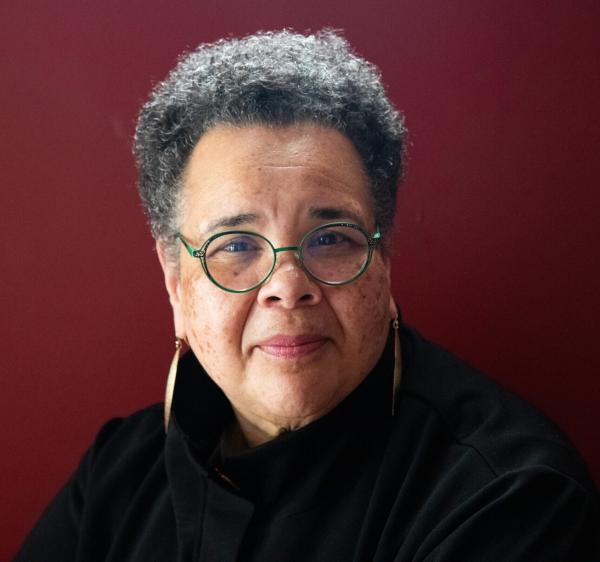
(An audio recording of this blog may be found here.) Classroom spaces are places of intimacy and influence. Teaching is a human-to-human encounter. Course planning typically focuses on the many ways the academic content shapes, forms, and informs students. In our planning, what we too often underestimate, and under plan for, is the personal encounter in the classroom. Students learn as much from the person who teaches the course as they do from the assigned readings, lectures, and rubrics. Often, they are paying as much attention to the teacher as a person as they are to the theories, concepts and approaches being presented. What if the most formational elements of our courses are the ways we, implicitly and explicitly, perform them? If we take a moment to consider the ways students learn more from the behaviors and attitudes of the professor than they do from the topic, we will realize that our classes are permeated by our beliefs and commitments. Your classroom behavior makes vivid your personal values. Are you aware that your personal values are baked into and operative in your courses? Are the values which undergird your teaching aligned with the institutional values? Are you aware that your personal values are see-able, viewable, known by your students? If so, which of your behaviors are inconsistent with your personal values, and which personal values do you wish to make most evident in your teaching? A facilitator at a recent staff development session I attended said, “We judge ourselves based on our intentions; others judge us by our behaviors.” This resonated with me. In other words, it is not what you say, but what you do that tells your students your ethics. If you talk the talk without walking the walk, then you have formed students with confusion, misalignment, and uncertainty. Words, platitudes, and good intentions are shallow without observable actions. It is not enough to have the intent of compassion, hope, courage, dignity — if no one has the experience of these values in interactions with you or through the learning assignments you guide and offer. Colleagues will often say they value such attributes as: learner-centered teaching, but then lecture during most sessions, placing themselves as “the expert” in the center of the course and relegating the students to the margins of the conversation. community and partnership but assign only individualized assignments to be graded. collaboration but offer no group activities as approaches to learning. creativity but ask that students simply regurgitate information. reliability but rarely return graded assignments in a timely manner. persistence but provide no mechanism to award the student who begins the semester with low grades ways to improve the final grade. responsibility but provide for no major decisions for students to make concerning their own learning in the course. care and compassion for others but limit the scope of the course conversation without including neighborhood projects, adventures, or pilgrimages. diversity without including voices other than those deemed as typical, commonplace, and regular. Designing learning environments and experiences which are congruent with and exemplify your personal values will enhance the learning of your students. Creating this kind of integrity will foster learning experiences which nurture trust and instill confidence in your students. Sculpting congruence in the classroom can be challenging, even for the most seasoned teacher. Consider these activities to strengthen your teaching: Ask a colleague to audit your syllabus for the personal values it communicates. Have a dialogue with the colleague about what they see, sense, and suspect about your values. Discuss ways to align the values you want to be operative in the course with the design of the course. Make a list of your personal values. Reflect – ask yourself why you choose these specific values to be exemplified in your teaching. Describe behaviors, practices and habits that are consistent with these personal values. Then, design or redesign a course with the list, rational and behaviors in mind. Ask a colleague to observe your teaching for 3 weeks, 6 weeks, or an entire semester. Ask that they watch for your traits, behaviors, habits which demonstrate the values, beliefs, and philosophies you demonstrate in your classroom. At the beginning of the semester, tell your students the values you are pursuing in the course. Decide, with the students, the behaviors which should be promoted for these values. Reflect – with a trusted colleague – those behaviors that are inconsistent with your personal values that you portray in the classroom. Decide which one or two behaviors you will work-on in the coming semester for better alignment. Our behaviors tell a story about who we are, what we value, and what we are about. How we behave toward one another speaks volumes and teaches lessons likely to last a life time.

In addition to the general tips on teaching mysticism presented in the previous blog posts (part 1 & part 2), I would like to share some in-class and writing assignments I have used when teaching ʻAṭṭār’s The Conference of the Birds. One of the most successful in-class activities I have developed is a discussion of the birds’ excuses. I created a slideshow of the various birds discussed, both in flight and at rest, and we begin by looking at these images. I then ask my students write informally on the following questions: Which bird’s objections would match your own most closely, and why? Why do you think ʻAṭṭār selected this specific bird to represent this issue? (Look back to the hoopoe’s original description [if applicable] and look at the slideshow for images of each bird). What is the hoopoe’s response? Does it make you think more deeply about your own objection, or would you still decide not to go? After writing their responses, we discuss as many birds as time allows. This assignment allows for deep reflection as it asks students to consider their relationship to the poem as well as the success (or lack thereof) of the metaphor of birds. Students are able to reflect on how to represent human characteristics in animals. It also prompts consideration of whether the hoopoe is persuasive or not, and which types of rhetoric invite change versus types which cause people to double down on bad habits. The discussion of the hoopoe (as an allegory for a Sufi master) also allows for a conversation about whether or not a spiritual guide can have nefarious objectives, the potential danger of trusting someone else as much as the poem urges one to do, and why handing over control of one’s life is appealing to some people. The in-class activity of reflection on specific birds and their concerns can be extended to a formal paper assignment. I have asked students to argue which bird needs to go on the journey the most – which prompts them to consider what flaw they believe to be the worst and which personality types would most need the mystical path. My colleague Nancy Kelly asks her students to write a paper on this simple prompt: What excuse is missing? I have used this discussion question and find that it encourages students to think about the issues ʻAṭṭār may not have been able to foresee (such as distractions of technology) or that he simply overlooked or chose not to include (such as childcare, as Nora Jacobsen Ben Hammed observed in a 2021 AAR panel). Because students have found the valleys to be confusing, I developed a group activity to help them understand this difficult part of the text. I put students in small groups and assign each group a single valley. I then give them a worksheet with the following questions: What images does ʻAṭṭār use to describe this valley? Does this imagery fit intuitively with the valley? Why or why not? Why do you think ʻAṭṭār places this valley at this specific point of the journey? Do you think it would make more sense earlier or later in the trip? Based on his language, the images, and so forth, what do you think it would feel like to experience this valley? In other words, what emotions does it bring out for you, and why? Once the groups have finished working, we come together as a class and go through each valley one-by-one. This allows each group to feel more confident as they present a small section of the text, and when students hear the reports from other groups, they gain a new understanding of each valley. I mentioned emotions earlier, but I have found that students generally would feel anxious, scared, or unhappy. This activity prompts reflection on their anxieties around difficult situations and loss of control. In the past, I have turned this into a formal writing assignment by asking students what valley would be the most difficult for the bird they most related to. Their responses show engagement with the questions “Why are certain types of challenges harder for me? How can I prepare, or is it better to learn how to avoid these situations entirely?” Conclusion Mystical texts offer an excellent resource for encouraging deep self-reflection. It is my hope that readers of this series of blog posts (part 1 & part 2) will be inspired to incorporate The Conference of the Birds or another mystical text into a future course to facilitate such reflection with their students. Undoubtably, each reader will adapt these suggestions to the demands of their course, their teaching style, and institutional context. Though there are many other potential avenues for self-reflection through The Conference of the Birds, my experience and examples highlight how a mystical text can provoke insight on identity, whether taught by specialists or non-specialists. In the absence of an exhaustive account of how to teach a mystical text, I simply hope I have provided a glimpse of what the mystical makes possible in the classroom. Yet as ʻAṭṭār says at the end of his poem, “And I too cease: I have described the Way – Now, you must act – there is no more to say” (1984, 245). Notes & Bibliography ʻAṭṭār, Farīd al-Dīn, Dick Davis, and Afkham Darbandi. The Conference of the Birds. New York, NY: Penguin Books, 1984.