The Human Practice of Being Heard
Nancy Lynne Westfield, Ph.D., The Wabash Center for Teaching and Learning in Theology and Religion
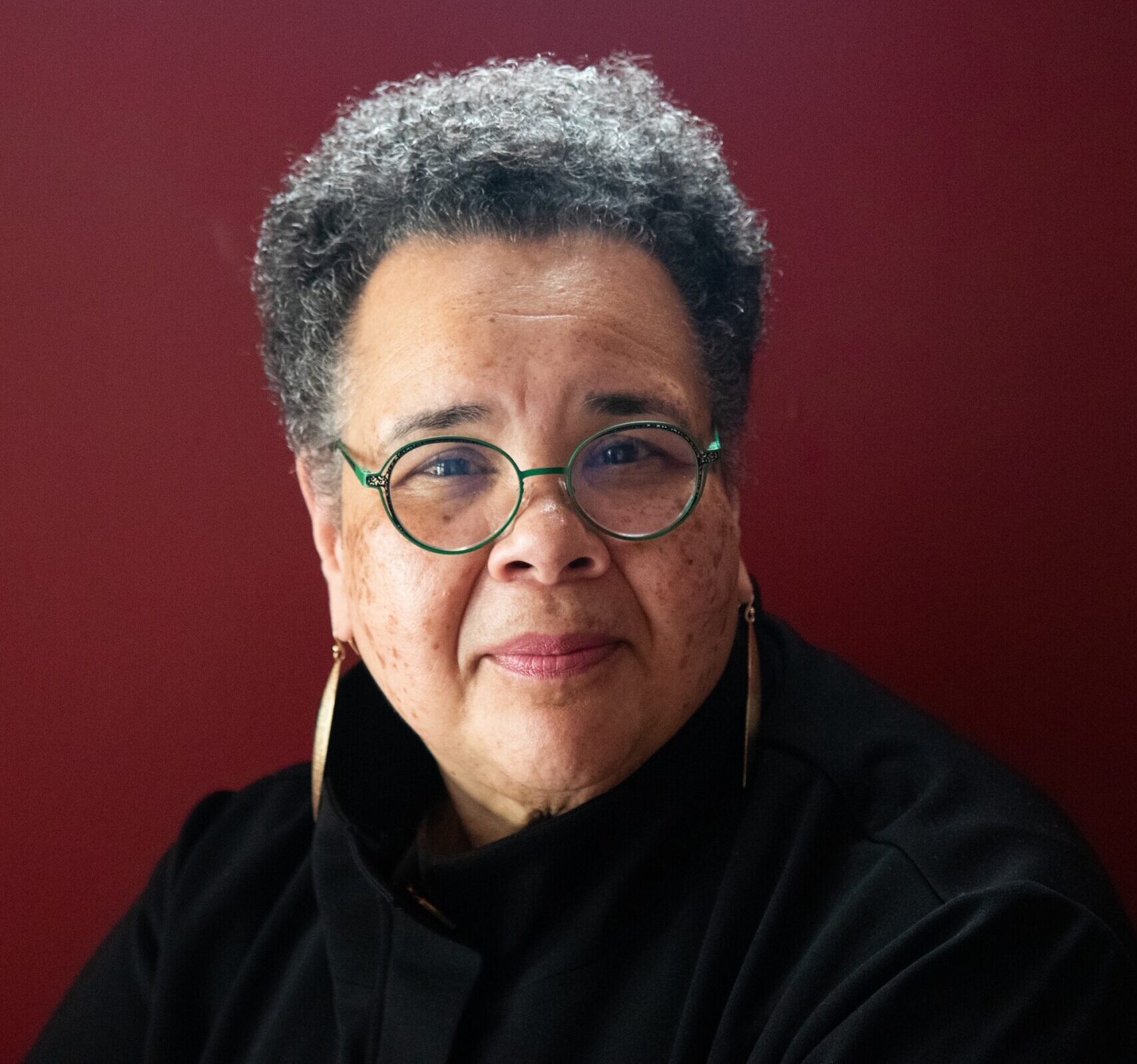
I joined the faculty of Drew Theological Seminary in the fall of 1999. Before arriving at Drew, I had taught children, youth, and adults in a variety of settings. I had never taught at Drew. I had never served as a tenure-track faculty member. And I had never taught this particular community of students.
But, I knew how to teach. I was confident in my skills and abilities. I trusted my preparation, my instincts, and my experience. Yet, I also knew a truth that every teacher eventually learns. Context matters.
At that time, the student body at Drew was richly diverse in racial and ethnic identities, national origins, denominational affiliations, theological commitments, vocational aspirations, and ages. Such diversity was not a problem to solve—it was a gift to honor. Still, I knew enough to know that I needed help learning how to teach effectively in this new environment.
The help arrived serendipitously. What began as a friendship became a lifesaving and career-shaping practice.
During my first semester, I taught Introduction to Educational Ministries, a required course with thirty-two students enrolled. On the first day of class, the beauty and complexity of that learning community sat before me. Their experiences, questions, assumptions, hopes, silences, and histories filled the room. By the end of the session, I felt wrung out.
That afternoon I called my friend, Brother Reginald Crenshaw.
Reginald was an Episcopal monk serving a parish in Harlem, New York. We met a couple years before at a house party in Harlem and became fast friends. He had spent more than two decades teaching in one form or another. I called simply to chat. Before long, we were talking about the class session, the students, my preparation, and the intricate work of teaching. For nearly two hours, I recounted the day. At the end of the conversation, I thanked Brother Reginald for listening.
The next week we did it again.
And then again.
By the third or fourth week of the semester, our conversations had become a standing appointment. After class, I would offer a verbal verbatim of the session. I talked through what happened, what surprised me, what delighted me, and what troubled me. Reginald asked questions about my pedagogical intentions, practices, assumptions, and missteps. He invited me to think more deeply.
What I remember most is what he did not do.
He did not evaluate me.
He did not negatively criticize me.
He did not offer quick fixes or easy answers.
He did not position himself as the expert dispensing wisdom from above.
Instead, he listened.
Reginald listened as I wrestled with the demands of teaching in a new context. He listened as I tried to understand what was happening in the classroom and within myself. He listened as I searched for language, perspective, and courage.
Now, twenty-five years later, I understand something I could not fully appreciate then. Reginald's listening was not merely collegial. It was an act of steadfast love.
Brother Reginald loved the craft of teaching. He cared deeply about my flourishing. He wanted me to succeed, not because success could be measured, but because teaching matters. Listening to someone think out loud about teaching brought him joy.
Many institutions organize classroom observations and peer reviews to assess teaching. Such practices can be useful. But what Reginald offered was something altogether different.
He was not gathering evidence.
He was not preparing a report.
He was not determining whether I measured up.
Instead, he created a space where I could work it out and work it through.
Week after week, he offered room for recollection, reflection, perspective, lament, celebration, uncertainty, and even joy. I could tell him the truth about my teaching without fear of judgment. I could revisit moments of brilliance and moments of failure. I could hear myself think. I learned to hear my own voice in a new and needed way as I talked about my teaching.
Even confident teachers need such spaces.
We need sounding boards. We need reflection partners. We need people who can hold our stories long enough for us to discover what we are trying to say. We need to be heard deeply so we know the meaning of our own teaching. Sometimes growth comes not from being instructed but from being heard. The human practice of being heard might be a lifesaving necessity.
In those conversations, Reginald helped me make self-corrections. He helped me recognize when a pedagogical pivot was necessary. He helped me imagine practices that better served the diverse students entrusted to my care. Not by telling me what to do, but by listening carefully enough that I could hear myself and trust the pivot I was considering.
Teaching can be surprisingly lonely work. Too often, it becomes privatized labor hidden behind classroom doors. Without reflective companions, even experienced teachers can become trapped inside their own assumptions, rehearsing what they already know.
To become better teachers, we need patient and knowledgeable colleagues who will accompany us in the difficult and beautiful work of critical and imaginative reflection. We need communities that value inquiry over performance and curiosity over certainty. We need listeners if we are to improve our teaching.
Perhaps the deepest wisdom of teaching is not found in mastering a technique or perfecting a syllabus. Perhaps it is found in cultivating relationships where honest reflection can flourish. In such spaces, teaching becomes less about expertise and more about growth, less about control and more about learning alongside others. Teaching becomes buttressed by dignity and respect.
The myth that teaching is best done as a solo performance must be dispelled. Teaching is never a solo act. It is, at its heart, a jazz ensemble, a front-porch conversation, a potluck where everybody brings something to the table. The classroom hums with stories, questions, contradictions, and possibility. We teach, we miss the mark, we try again. We laugh at ourselves, revise our plans, and discover that wisdom often arrives disguised as a good question. Along the way, faithful listeners companion us and help us hear the music above the noise. They remind us that teaching is not merely the transfer of knowledge but the cultivation of human flourishing—messy, improvisational, joyful, and alive.
Thank you, Brother Reginald!
Reflection Questions
- In what ways might evaluation culture in higher education silence the honest reflection that teachers need for growth?
- Who listens to you talk about your teaching, and what kinds of truths become possible when you are deeply heard?
- Who do you accompany? Who do you listen to deeply as they rehearse their teaching?
- If teaching is a communal practice rather than an individual achievement, what structures of mutual accompaniment could you create with colleagues?
- What stories, voices, or ways of knowing are regularly absent from your classroom, and what might become possible if those absences were addressed?
- Imagine a future learning community where curiosity is valued more than certainty and wisdom more than performance. What would teachers, learners, classrooms, and institutions look like in that world?
About Nancy Lynne Westfield, Ph.D.
Nancy Lynne Westfield, Ph.D. is a womanist. She grew up in Philadelphia, Pennsylvania. Her father, Lloyd Raymond Westfield, born in Cleveland, Tennessee, was a school psychologist and reading specialist for the Philadelphia Public School District. Her mother, Nancy Bullock Westfield, also born in Cleveland, Tennessee, was a volunteer activist who fought for equal education for minoritized children. Father and Mother were also gifted musicians, known throughout the city of Philadelphia in the 50s, 60s and 70s. Dr. Westfield earned her Bachelor of Science degree in Agriculture from Murray State University, Masters of Arts in Christian Education from Scarritt Graduate School, second Masters in Theological Studies from Drew University Theological School, and Doctorate in Philosophy from Union Institute. Currently, she is Director of the Wabash Center for Teaching and Learning in Religion and Theology. Before becoming the Director in 2020, she was Professor of Religious Education at Drew University Theological School since 1999. She is also an ordained Deacon in the United Methodist Church. Nancy’s first book was a children’s book entitled All Quite Beautiful: Living in a Multicultural Society. Her second book was a publishing of her doctoral dissertation entitled Dear Sisters: A Womanist Practice of Hospitality. Her books written in collaboration include: Being Black/Teaching Black: Politics and Pedagogy in Religious Studies and Black Church Studies: An Introduction. Known for her insightful, creative and experiential teaching methods, she is a sought-after teacher, facilitator of workshops and retreats, keynote speaker at conferences, and consultant for seminaries, non-profits and local churches.