Resources
I joined the faculty of Drew Theological Seminary in the fall of 1999. Before arriving at Drew, I had taught children, youth, and adults in a variety of settings. I had never taught at Drew. I had never served as a tenure-track faculty member. And I had never taught this particular community of students.But, I knew how to teach. I was confident in my skills and abilities. I trusted my preparation, my instincts, and my experience. Yet, I also knew a truth that every teacher eventually learns. Context matters.At that time, the student body at Drew was richly diverse in racial and ethnic identities, national origins, denominational affiliations, theological commitments, vocational aspirations, and ages. Such diversity was not a problem to solve—it was a gift to honor. Still, I knew enough to know that I needed help learning how to teach effectively in this new environment.The help arrived serendipitously. What began as a friendship became a lifesaving and career-shaping practice.During my first semester, I taught Introduction to Educational Ministries, a required course with thirty-two students enrolled. On the first day of class, the beauty and complexity of that learning community sat before me. Their experiences, questions, assumptions, hopes, silences, and histories filled the room. By the end of the session, I felt wrung out.That afternoon I called my friend, Brother Reginald Crenshaw.Reginald was an Episcopal monk serving a parish in Harlem, New York. We met a couple years before at a house party in Harlem and became fast friends. He had spent more than two decades teaching in one form or another. I called simply to chat. Before long, we were talking about the class session, the students, my preparation, and the intricate work of teaching. For nearly two hours, I recounted the day. At the end of the conversation, I thanked Brother Reginald for listening.The next week we did it again.And then again.By the third or fourth week of the semester, our conversations had become a standing appointment. After class, I would offer a verbal verbatim of the session. I talked through what happened, what surprised me, what delighted me, and what troubled me. Reginald asked questions about my pedagogical intentions, practices, assumptions, and missteps. He invited me to think more deeply.What I remember most is what he did not do.He did not evaluate me.He did not negatively criticize me.He did not offer quick fixes or easy answers.He did not position himself as the expert dispensing wisdom from above.Instead, he listened.Reginald listened as I wrestled with the demands of teaching in a new context. He listened as I tried to understand what was happening in the classroom and within myself. He listened as I searched for language, perspective, and courage.Now, twenty-five years later, I understand something I could not fully appreciate then. Reginald's listening was not merely collegial. It was an act of steadfast love.Brother Reginald loved the craft of teaching. He cared deeply about my flourishing. He wanted me to succeed, not because success could be measured, but because teaching matters. Listening to someone think out loud about teaching brought him joy.Many institutions organize classroom observations and peer reviews to assess teaching. Such practices can be useful. But what Reginald offered was something altogether different.He was not gathering evidence.He was not preparing a report.He was not determining whether I measured up.Instead, he created a space where I could work it out and work it through.Week after week, he offered room for recollection, reflection, perspective, lament, celebration, uncertainty, and even joy. I could tell him the truth about my teaching without fear of judgment. I could revisit moments of brilliance and moments of failure. I could hear myself think. I learned to hear my own voice in a new and needed way as I talked about my teaching. Even confident teachers need such spaces.We need sounding boards. We need reflection partners. We need people who can hold our stories long enough for us to discover what we are trying to say. We need to be heard deeply so we know the meaning of our own teaching. Sometimes growth comes not from being instructed but from being heard. The human practice of being heard might be a lifesaving necessity. In those conversations, Reginald helped me make self-corrections. He helped me recognize when a pedagogical pivot was necessary. He helped me imagine practices that better served the diverse students entrusted to my care. Not by telling me what to do, but by listening carefully enough that I could hear myself and trust the pivot I was considering. Teaching can be surprisingly lonely work. Too often, it becomes privatized labor hidden behind classroom doors. Without reflective companions, even experienced teachers can become trapped inside their own assumptions, rehearsing what they already know.To become better teachers, we need patient and knowledgeable colleagues who will accompany us in the difficult and beautiful work of critical and imaginative reflection. We need communities that value inquiry over performance and curiosity over certainty. We need listeners if we are to improve our teaching. Perhaps the deepest wisdom of teaching is not found in mastering a technique or perfecting a syllabus. Perhaps it is found in cultivating relationships where honest reflection can flourish. In such spaces, teaching becomes less about expertise and more about growth, less about control and more about learning alongside others. Teaching becomes buttressed by dignity and respect. The myth that teaching is best done as a solo performance must be dispelled. Teaching is never a solo act. It is, at its heart, a jazz ensemble, a front-porch conversation, a potluck where everybody brings something to the table. The classroom hums with stories, questions, contradictions, and possibility. We teach, we miss the mark, we try again. We laugh at ourselves, revise our plans, and discover that wisdom often arrives disguised as a good question. Along the way, faithful listeners companion us and help us hear the music above the noise. They remind us that teaching is not merely the transfer of knowledge but the cultivation of human flourishing—messy, improvisational, joyful, and alive.Thank you, Brother Reginald!Reflection Questions In what ways might evaluation culture in higher education silence the honest reflection that teachers need for growth?Who listens to you talk about your teaching, and what kinds of truths become possible when you are deeply heard?Who do you accompany? Who do you listen to deeply as they rehearse their teaching? If teaching is a communal practice rather than an individual achievement, what structures of mutual accompaniment could you create with colleagues?What stories, voices, or ways of knowing are regularly absent from your classroom, and what might become possible if those absences were addressed?Imagine a future learning community where curiosity is valued more than certainty and wisdom more than performance. What would teachers, learners, classrooms, and institutions look like in that world?
An audio version of this blog post may be found here.It was the first morning of my vacation. The restaurant at the resort had a waiting list for breakfast patrons. The hostess took my phone number and said I would be called when a table opened. I thanked her and walked to find a comfortable spot in which to wait. Not far from the dining room, guests could choose to linger in any of three adjoining rooms--the bar, lobby, or library.I chose to wait in the library. The room was ringed with mahogany shelves carefully adorned with books and creative objects. Statues, framed paintings, and board games were on display. The room reminded me of magazine covers from Architectural Digest or Good House Keeping. The many chairs and couches were positioned to invite guests to linger in small groups, or to simply sit and read. I picked a chair facing the wall of windows. The windows provided a view of the sprawling pasture setting. I noticed a scrabble board was set on a table near the windows and a chess game was set at another table near the entry door. I, indeed, felt as if I was visiting a friend or relative’s home.As I waited, not because they were loud or intrusive, I overheard a grandfather teaching his grandson to play chess. The boy was about six or seven years old. With the grandfather seated on one side of the board and the boy, kneeling in the chair on the other side, the granddad invited the boy to make the first move. As they played, the grandfather patiently explained the way the boy might move varying pieces. Several times, he encouraged the boy to consider a strategy. At the end of the game, the grandfather showed the boy how to reset the board for the next people who might want to play. I overheard the grandfather say he had taught his daughter, the grandson’s mother, how to play chess when she was about the same age as the boy.Even when I am on vacation, I am thinking about and identifying teaching moments. This tender teaching moment between grandfather and grandson was poignant, delicate, and beautiful. It was not extraordinary. Its beauty was in the ordinary occasion of a grandfather taking time, one-on-one, to play with his grandson.Some of the best, most tender, teaching occurs one-on-one.Classrooms can be marvelous arenas for superb teaching. Classrooms can be sites where the relationship between instructors and learners transforms. Equally ripe with possibility and beauty are the one-on-one relationships between faculty and students which happen beyond the classroom. Teaching students in one-on-one modes has the potential to assist students in ways that the classroom encounter cannot. The opportunity of a sustained conversation with one student can sometimes lead to a long-lasting, life-changing connection.While I was on a faculty, with intention, as part of my teaching agenda, each year I chose to work with a student teaching assistant (TA) and a student research assistant (RA). I considered these relationships with students as key to my teaching responsibility as the courses I taught in classrooms.My practice was to meet weekly with each of the two students to facilitate our prescribed tasks. Then, once a month, if the students were interested, I would convene them for a meal to discuss larger theological issues, hear how they were managing in the day-to-day reality of graduate school life, and encourage conversation about their occupational aspirations and dreams. My aim for these one-on-one relationships was to aid their health and success.I honed my listening skills by teaching one-on-one. Spending time in one-on-one conversations allowed my primary focus to be on the questions, curiosities, abilities, and perspectives of the student. These one-on-one relationships allowed me to make stronger recommendations for further graduate study, employment options, or give my opinion about life’s unexpected twists and turns. A regular dimension of this kind of teaching was when I was able to write very considerate, in-depth, letters of recommendation for my students because I knew the student as a person and not just as a student who had done well in my class. Occasionally, if there was trouble, my relationship with the TA or RA allowed for convincing intervention or advocacy.My practice of intentionally constructing ways of working one-on-one with students comes from my own experiences in graduate school. When I was in graduate school, the professors for whom I was their TA and RA became my career-long mentors and friends. The three-faculty people who I worked closest with in graduate school have been influential in guiding my entire academic career.Recently, I referred one of my current mentees to my mentor for guidance on an issue for which he had expertise. I told my mentee that I was putting them in touch with their “grand-mentor.”Through these connections I know I am a better teacher and colleague. Last week, a mentee who serves on a university faculty and just received tenure, called me and asked me to talk with one of their doctoral students. I was delighted to assist. Just like grandfather was so glad to teach grandson, I am overjoyed to reach out and support a student of my student.
(An audio version of this blog may be accessed here.) The rank of senior scholar is the highest and most revered. The hierarchy of the academy creates senior scholars by assigning newly minted faculty with the status of junior scholar, then over several years through a process of review, tenure and/or promotion, some colleagues reach the status of senior scholar. Promotion to senior scholar, as either Associate Professor, or Full Professor, is perceived as a badge of worthiness and nobility. The academy requires professorial participants to either ascend or be jettisoned. In some schools, earning the status of senior professor means having fought, brawled, struggled, and won. Senior scholar status is entitled to previously unavailable resources, and opportunities—goodies not afforded the junior scholars. Senior scholars are expected to have responsibilities and obligations which are not the onus of junior scholars. However, at some schools, there is not a clear demarcation between the obligations of junior or senior scholars—juniors are given duties and responsibilities similar to, or aligned with, those given to senior scholars. All this is to say, there is a great deal of variation between schools when one considers the culture, hospitality, duties, and obligations attributed to junior/senior scholar status. I am not suggesting that one model is superior to the others. I am suggesting that one needs to read the context and know which model is functioning in the school where they are employed. Who teaches senior professors how to be good senior professors? How do senior professors get mentored into their duties, power, influence, obligation? Who shows senior scholars how to transition from the institutional patterns, habits, and behaviors of junior status? How does the institution assist senior scholars in becoming their most generative selves in this season of seniority? By what process are senior scholars given permission to wield their power for the best impact upon students, community, and the institution’s future? What if most senior scholars operate as novices in the community structure? What if, without senior scholars who are mindful and present, the community cannot become healthy nor flourish to its potential? As I think of my own vocational journey, I have not been privy to conversations about identity as a senior scholar. Without benefit of critical reflection for planning, and without imaginative reflection for doing, it has not been easy to know what to do, or how to be, or what to be about, as a Full Professor. I have never been part of a conversation which helped me parse, decide, live-into, or imagine how the authority of the rank of senior scholar could be used, might be used, or should be used. When I was promoted to the rank of Full Professor, I was glad for the pay increase. Equally true was my lack of interest in the institutional loyalty that was so often inferred by some administrators. I have learned to be a senior scholar by watching and engaging, that is, by trial and error. I have learned from the modeling of others only because I paid attention to those in this rank and wondered about their lives and professional decisions. In so doing, I have noticed three personas of senior faculty, or three modes of professionalism for the highest faculty rank: Gatekeeper, Historian, Elder. I am sure there are other modes. For now, I want to describe these three. Senior Scholar as Gatekeeper The gatekeeper recognizes the power and influence of the highest rank and intentionally wields that power in decision making opportunities which form and shape the institution and its future. In acknowledgement of the gatekeeper’s authority, colleagues assign the gatekeeper as chair of the most central and significant committees. The gatekeeper is consulted on major institutional decisions by the highest administrators including the trustees. If this persona is considerate, gracious, humble, community minded, and collaborative, the colleague is contributing to an ethos of cooperation, deep listening, and shared care. The danger of this persona is when the person operates through power-mongering, tyrannical, opportunistic, mean-spirited, and bigoted decisions. Schools can be treacherous when these people attend to maintaining the oppressive status quo which results in deepening the toxicity of the school’s ecology. Senior Scholar as Historian This persona works as being the reminder, the memory keeper, or the historian. Having served on the faculty for a long period of time, the person has a long memory from years of experience and participation. When the new people, new programs, new projects, or curriculum changes are considered, the person playing the role of historian will recount the moments when, in the past, a similar attempt was considered or made. The voice of the historian is often used to hold the institution accountable to the mission, legacy, and tradition. The historian often holds dear those colleagues who are no longer employed by the institution or no longer members of the faculty by invoking their names at meetings or telling stories about “the good old days.” This persona can be quite helpful as an institution plans for the future and is able, with memories of the past, to press forward and adapt. The person can also hold the institution hostage to the past and to earlier decisions which are not adequate for unfamiliar futures. Senior Scholar as Elder This person may or may not be elderly, per se. This person recognizes that they are no longer in the fray of accomplishing status and rank, and makes use of this phase of professional life to regularly provide insight, wisdom, and assistance to others. This person uses their power and influence to build community, mentor others, and be personally creative. They create time to regularly sit with individuals and groups for wise counsel. The communal role of the elder is reinforced by the way members of the community respect them and treat them with kindness, deference, and regard. They are admired and respected. Elder scholars will often take on the mantle of making “good trouble” so that the more vulnerable colleagues are not blamed or receive retaliation in difficult institutional battles. They can afford to risk, stick-their-necks-out, knowing their status means that they will receive little reprisal. I suspect I most admire the mode of elder because I come from a tradition that promotes, and depends upon, those at the highest ranks to reach back, reach down, reach out, and help. The Black church tradition has its gatekeepers and its historians. But we revere our elders. In my tradition, we defer to Big Mama, Mother of the Church, the Saints, the Teachers, and the Prayer Warriors. I am working on my elder persona. The toxic environment which plagues so many faculties is not lodged in the brick, mortar, and drywall of buildings. The toxicity permeates the relationships of the community. The lack of care, unfriendliness, bigotry, and acts of dehumanization reside in the ways people treat one another. Toxic environments—relational patterns of ugliness, shaming, blaming, ruthlessness, and deadly competition—might be inherited, but they are upheld and maintained by our choices of continued violent behaviors, lack of relational skills, and low emotional intelligence. Senior scholars, as gatekeepers, historians, and elders have the power and authority to shift and repair toxic environments in schools—if we would.
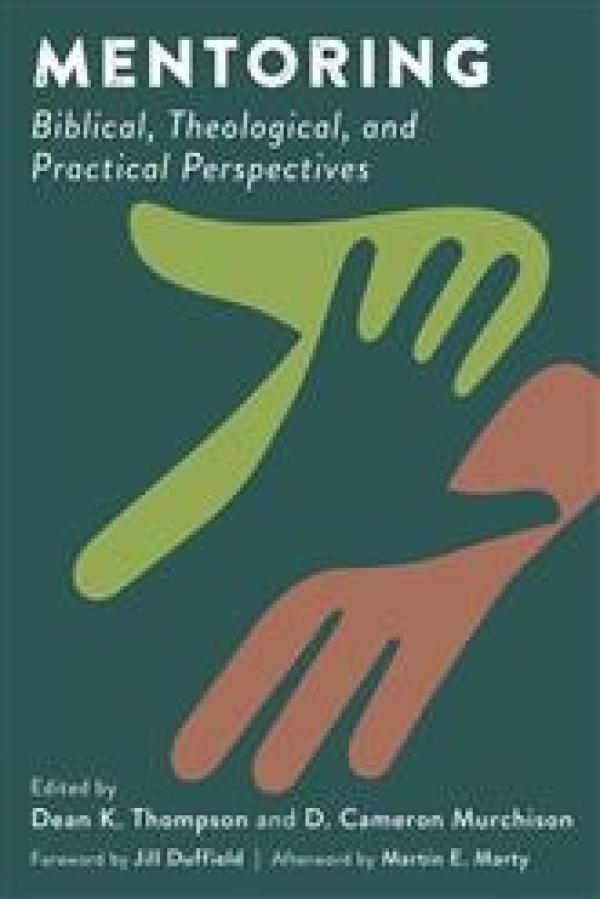
In Mentoring: Biblical, Theological, and Practical Perspectives, Thompson and Murchison provide a thoughtful collection of essays on Christian mentorship. As a whole, this collection contributes to the growing body of scholarly work on mentoring by offering “windows on mentoring that are biblically grounded, theologically informed, communally diverse, and generationally attentive” (3). The book is divided into four parts, with each of the fourteen chapters highlighting the twenty-one contributors’ unique analyses and insights on mentoring and being mentored. Part 1 surveys biblical perspectives on mentoring. As such, it begins with Brueggemann’s consideration of mentoring practices present throughout the Old Testament and concludes with a posthumous essay by Bartlett on passages in the New Testament that help to shed light on contemporary understandings of the term “mentor.” Part 2 examines the nature and task of mentoring from a variety of theological perspectives and methods. Drawing on the fields of pastoral ministry (Currie), homiletics (Long), ethics (Miles), and feminism (Rigby), the authors provide a range of mentoring models and resources that underscore the importance of positive mentoring relationships and practices in the formation of strong Christian leaders. On this Rebekah Miles writes, “Christian mentoring should include discussion of the ways that our professional goals contribute to the larger goals of Christian life” (83). Part 3, “Diverse National and International Communities of Mentoring,” explores Christian mentoring practices as shaped by particular contexts, including race, gender, and ethnicity. Those who wish to think critically about dominant systems of oppression, such as racism, xenophobia, and sexism, and to foster concrete practices for inclusive mentoring within biblical-theological frameworks will find a wealth of resources in the essays by Pollard, Cannon, De La Rosa, and Kwok. Of particular note is Canon’s proposal that womanist mentoring is a vocational call, “to do the work your soul must have” (123). This section also includes an historical essay by Johnson on mentoring in the Roman Catholic tradition. Finally, Part 4 contains three coauthored chapters that discuss mentoring as a mutually supportive practice that occurs across generations. Ottati and Hinson-Hasty’s essay, “Mentoring toward a Humane Disposition, Attitude, and Imagination,” describes mentoring relationships between the teachers and student, while Nishioka and Lowry and Wardlaw and Murray’s essays consider youth and cross-generational mentoring, respectively The book closes with an afterword by Marty that skillfully and poetically weaves together the insights and value of this collection of essays. He writes, “It is impossible to speak properly about mentoring in entirely impersonal and theoretical terms. Mentoring is and is about a profound personal dimension of scholarly and pastoral work” (223). Those working in theological schools or departments and in Christian ministry will find this collection of essays to be a valuable resource on the virtue and art of mentoring. The strength of this volume lies not only in its biblical and theological reflections on mentoring, but also in the range of everyday lived experiences and perspectives from which the authors write.
In 1998, the movie, You’ve Got Mail, cast an unlikely couple, played by Tom Hanks and Meg Ryan, who fell in love over email exchanges. The film brought to the big screen the unforgettable computer-voiced announcement “You’ve got mail.” The scenes were classic and represented many email users who eagerly anticipated hearing their computers say “You’ve got mail” each time a new electronic mail message arrived. The Hanks and Ryan characters would painstakingly compose an email message, hesitate, and then hit “enter” or “return.” On the other end of the dial-up Internet connection was the recipient who sat on the edge of his or her seat, just waiting for something interesting, encouraging, or perhaps inspiring, to arrive from the anonymous love interest. Much has changed in digital communication since the days of dial-up, AOL, and “You’ve got mail.” One thing that hasn’t changed, however, is our eagerness for quick, if not, instantaneous messaging. Whether or not one likes this stage of humanity’s relationship with technology, the weight of this cultural phenomenon falls on each of us. For better or worse, communication at the speed of light has become part of the culture of higher education as well, especially in an online learning space. Picture a married, mother working fulltime for a congregation taking seminary courses online. Her life circumstances offer her limited work hours for furthering her education. While reading through her course module for the week, she stumbles across a reading that is listed as “required,” but the link is broken. She has just a few hours to finish her assignment, and now she feels lost. The student messages the professor and sits and waits for a reply. How long should she have to wait? What expectations does she have of the professor? How well has the professor been communicating with her so far in the course? These questions are the kinds of concerns that speak to teacher-student engagement in online courses. In this blog, I offer a few tips for teachers to consider when it comes to online teacher-student engagement. While much has been written about teacher presence, the importance of communication, best practices of when to respond to students and the like, the primary focus of this entry is the importance of communication, meaningful facilitation, and commitment to making an impact on student formation. Communication Set clear expectations for yourself and tell the students. If you follow the old 48-hour rule—that is, you plan to respond to students within 48 hours of their questions— then let your students know this is your practice. If you are more of a 24/7 kind of online teacher, let them know that too. I personally don’t respond to anything over weekends and holidays, and I tell students my boundaries at the beginning of the course or before major school breaks. Otherwise, I respond to their questions daily and interact within the course on the days I pre-establish with my classes, normally on or the day after deadlines. Tell your students how you prefer to be reached. It’s up to you to decide how you plan to be available, but make sure your students know how you prefer to be contacted. I respond to emails faster than any message service in learning management systems; so I frequently remind them to email me if they have a question. Facilitation Establish a pattern of engagement with online discussions and forums. If you were in a classroom face-to-face, would you let class discussion fill an hour of valuable class time without your guiding the conversation? Probably not. The same is true for online discussions. Interject comments alongside your students’ posts to provide scaffolding, encouragement, and teachable moments. Remember, if you do not post, you are not present. Give feedback on assignments that prompt learning. Whether you use a rubric, points system, letter grades, or a combination of these, make sure your students know why they got the grade they were assigned. Frankly, this tip is just good education and not limited to online education, but without non-verbal glances, after class questions, and hallway conversations, online students feel lost if they don’t hear any feedback from you. Impact Commit to your online students the same way you would commit to a student who is sitting in your classroom or standing in your office. The demands of higher education sometimes cause us to run from one urgency to another. Too often the students at a distance get ignored, “out of sight, out of mind,” or something like that. Resist the temptation to think of them as faceless names. They are individuals who, from their perspectives, want to be connected with your school, the course, and with you as their professor. They are also paying tuition and have a reasonable expectation to receive a comparable experience to those who are face-to-face. Try to get to know them. Pray for them. Memorize their names as you would any of your classes. Offer to assist them with course matters outside of class as you might your residential students. The students want to hear from you, and they appreciate all of your interactions with them. Your level of engagement with students can make or break your course. Communicate frequently and clearly. Scaffold learning through facilitation. Demonstrate how you care about your online students. These three simple tasks will create the learning space your students need for achieving the education they seek.
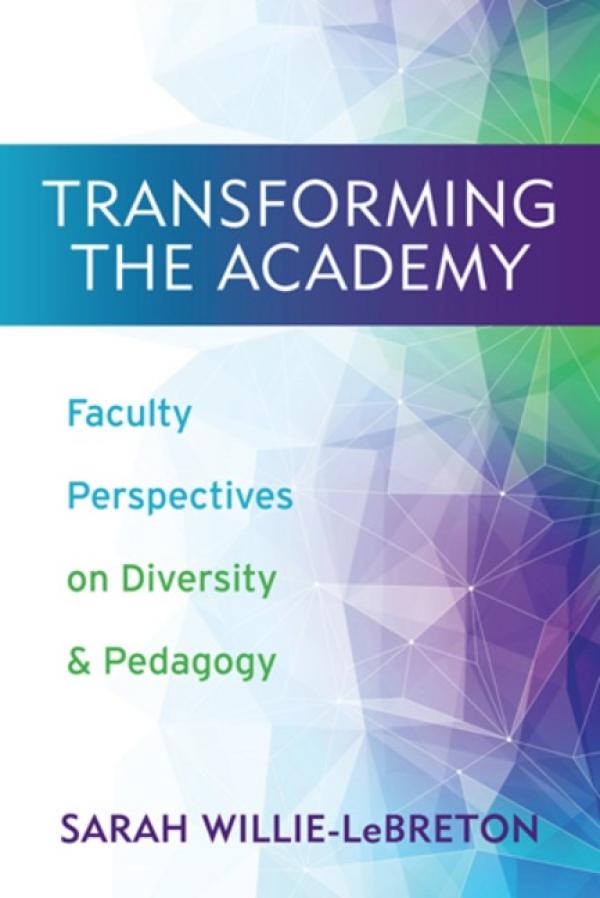
As diversity initiatives become more prominent in higher education, this volume features the perspectives of faculty on the progress and challenges of a diverse academy. The first-hand accounts shared through these autoethnographies manage to be simultaneously thought-provoking, memory-inducing, and pedagogy inspiring. Rather than a superficial treatment on numerical diversity when whiteness and its privileges are normative, this collection focuses on difference, but difference in this sense is not presented one-dimensionally. The editor offers, “When we focus on difference, rather than race, class, gender, disability, or sexuality only, we come to understand how each of these characteristics fits into the oppression/privilege paradigm much more clearly” (4). The book is organized by two overarching themes. In Part One, “Challenging Classrooms,” the authors describe the multiple ways and meanings of having their credibility or classroom authority challenged or accepted. For example, as the first and only professor, your very presence may be triggering for students, resulting in recognition, awkward expression, and then resistance. Student evaluations may indicate “pleasant surprise” that a Black professor “so smart and articulate” (51), and that the student didn’t really listen at first because expectations of a Black person went unmet. The chapters in Part Two, “Witnessing Protest,” acknowledge that college professors often teach life lessons in addition to the subject matter and that we may undergo transformations ourselves as we guide and mentor students through life situations, and as we bear witness to the experiences of students and colleagues. The contributors not only share their experiences as teachers, they also recall memories of being students themselves, including the impacts of shifting individual and collective identities. They describe resilience in the face of presumed incompetence, unwelcoming classroom environments, and unfavorable course evaluations. Challenged by their own recognitions, authors allowed their heightened awareness and sensitivity to inform self-reflection. For example, a student’s persistent inquiry about a contributor’s background and the kinds of schools that she attended resulted in the importance of recognizing her own “class privilege.” However, with that recognition came the worry that she “unconsciously wielded” that “privilege in order to combat racial stereotypes.” Another contributor raised the issue of the reluctance of embracing disability as diversity in the academy, offering that as “abject other,” disability is “viewed through frameworks of pathology and abnormalcy rather than those of identity and human diversity” (115). An accommodation as seemingly simple as making sure that the classroom community angled their bodies so that a student could read their lips created a richer learning environment for everyone. Throughout the narratives, there are pedagogical recognitions that lead to suggestions and models of small adjustments making meaningful impact. Students come with their own perspectives and should be encouraged to see themselves as “co-creators” of their educational experience (58). In a demonstration of the power and subtleties of language, one contributor instituted the “ouch” rule, whereby an offended person can say “ouch” and then pause for analysis of the offense (61). Some pedagogical insights arose from the students’ interpretation of and engagement with assignments. For example, in a photography self-portrait assignment, one student proactively cast herself in three stereotypes of Black women that she had often confronted, prompting visible discussions in effort to “redirect misperceptions” (78). The audience that may be reached by this book is wide-ranging, from graduate students to administrators and board members. All may benefit from the profoundly vulnerable, yet honest viewpoints offered.
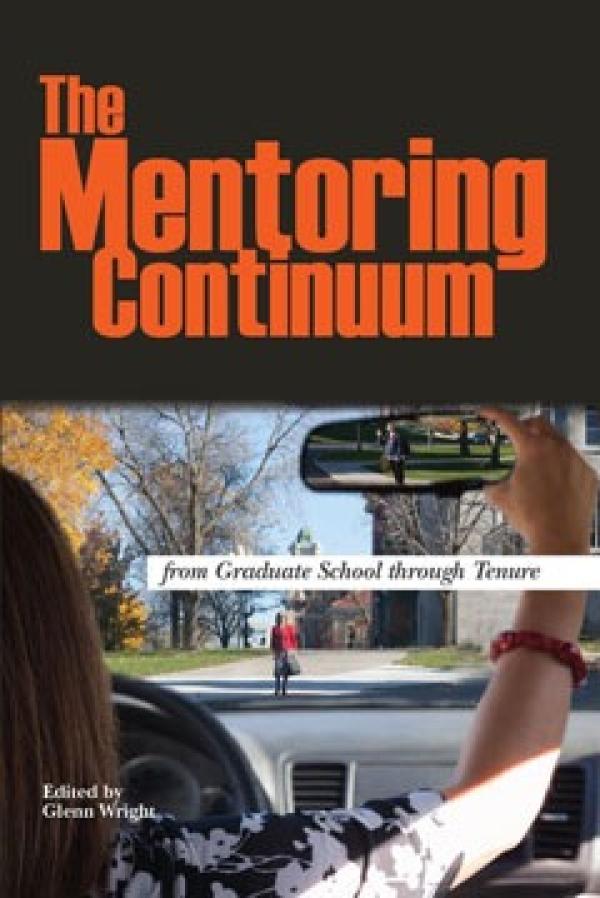
An unfortunate font choice limits the value of this otherwise helpful anthology. The font gives the text a strobe-like effect that resulted in my inability to read it in more than short intervals. On one hand, this is fine. The Mentoring Continuum consists of fifteen essays each of which stands independent of the others. This allows the reader to dip in and out of the collection at will. On the other hand, however, doing so reduces the benefit of reading the essays within the three sections (Origins, Transitions, Dialogues and Reflections) into which they have been arranged. It is especially instructive to read the first two sections as a set of essays on a common theme: “Origins” treats mentoring relationships in graduate school and “Transitions” addresses the period from associate professor to tenure. As “Dialogues and Reflections” is not associated with a particular career phase, this section suffers less from the impact of the font choice. Glenn Wright, editor and contributor, rightly points to “Graduate Student ISO a Mentor: A Dialogue about Mentoring” by Jan Allen and Kevin Johnson, as a quasi-summation of “many of the book’s main preoccupations, including mentee agency and responsibility, the virtue of peer mentoring, non-academic career preparation, teaching as a critical area of focus, and the key role of administration in providing the impetus, initial frameworks, and ongoing supports for mentoring efforts.” For those new to the conversation about mentoring, this chapter provides a nice introduction to the topic and associated interests. I expected The Mentoring Continuum to be of interest to faculty, and it is, but I was pleasantly surprised by how appealing this book will be to graduate students. A number of the authors offer detailed counsel to students on how to get the most out of a relationship with a mentor and how to set up different types of peer mentoring programs within their institutions. In the new market reality, many faculty members will find Paula Chambers’ essay, “Subject Matter Plus: Mentoring for Nonacademic Careers,” particularly valuable. Chambers reassures faculty that they need not be experts in multiple career paths outside academia. She challenges them, however, to follow any one, or better all three, of her recommendations for serving their students well in the current environment. First, “Manage Your Messaging”: Chambers explains why particular academic clichés need to be abandoned or rethought so students will be encouraged to consider nonacademic careers. Second, “Assess the Career Climate in Your Department”; Towards this end, she supplies a multiple-choice questionnaire that can be used to gather actionable information. Third, “Make Referrals to Available Resources”; Chambers provides an ample list to keep at hand. This chapter, “Subject Matter Plus,” exemplifies one of the distinctive strengths of this collection – the blend of the personal, the practical, and the theoretical dimensions of mentoring. A notoriously difficult concept to define, “mentoring” is given substance as it comes to life through conversations between mentors and mentees, charts and tables, and ample bibliographies.
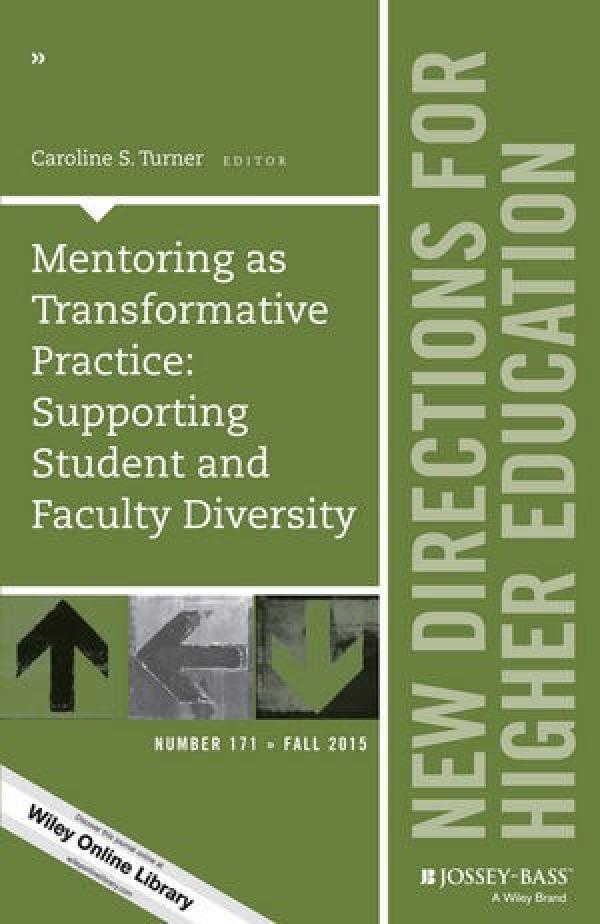
Research literature reveals that effective mentoring has significant and positive impact on student success and persistence for women and people of color. Mentoring as Transformative Practice consists of ten essays concerning effective traditional and nontraditional mentoring strategies for women and underrepresented minorities (URM). The essays presuppose the value of mentoring and also explore its impact on student outcomes and agency. The majority of essays in this volume are written by women and persons of color who have successfully mentored others or have been the beneficiaries of effective mentoring relationships. Many of the essays employ a nontraditional methodology for analyzing mentoring relationships and effective mentoring methods. For example, a critical reflective and subjective instrument called scholarly personal narrative is used both to analyze mentoring relationships and as a tool to mentor students. Scholarly personal narratives highlight the author’s voice and communicate their perceptions and interpretations of their lived experiences. Such narratives reveal insights and depth of experience in compelling ways. These are not normally found in research works. They also offer a unique method for constructing new knowledge. Chapter One uses personal narratives to examine significant aspects of mentoring that impact women and URMs in higher education arguing that they often need psychosocial versus academic mentoring. The authors – one with a national mentoring award – reflect on mentoring practices in their personal narratives. They conclude that students need mentors who offer authentic relationships, understand their experiences as minorities, listen without reprisal, and encourage and model vulnerability at all levels. In Chapter Two, an African American female and associate professor at a research university and six of her students analyze data from their scholarly personal narratives, revealing three consistent behaviors that contribute to the development of student agency: (1) perceived and actual approachability allowing for mutual trust and comfort leading to cultivation of student agency; (2) the balance of challenge and support; and (3) assistance and encouragement to develop a scholarly voice, passions, and vocation. In Chapter Four personal narratives are used as a critical pedagogical tool through which students trace and critically analyze their educational development, comparing their experiences with patterns highlighted by social science theories, quantitative data, and relevant social policies. The book offers several mentoring takeaways in the remaining chapters. One takeaway is that mentoring can become a racialized experience when it takes the form of protecting a traditional canon from nontraditional perspectives brought to the learning experience by women and minority students. Viewed within the context of social justice, mentoring involves conscientization, the valuing of lived experience, and advocating for students. Nontraditional alternatives to proximate mentoring relationships include “mentoring-at-a-distance” through emails, conferences calls, and so forth, and various unexpected “cheerleaders” who become sources of psychosocial encouragement. Online mentoring solutions provide psychosocial support for students in specific disciplines, like STEM. “Pedagogy for Equity” peer mentoring can focus on three levels – personal biography, collaborative sociocultural group context, and broader institution. Intergenerational and near-peer approaches positively impact retention and achievement from junior high through doctoral programs. I highly recommend this book as a resource for individual or institutional self-reflection about participation (or lack thereof) in mentoring relationships as mentor/mentee and for thinking about and developing effective mentoring strategies for women and URMs.
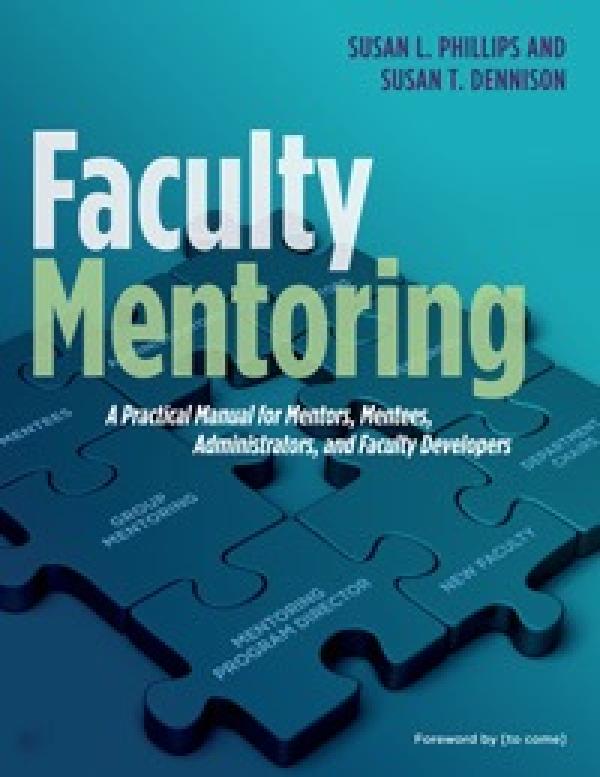
Faculty Mentoring offers a wealth of resources for justifying, planning, implementing, and evaluating faculty mentoring in one-on-one and group settings. Phillips and Dennison, faculty members at the University of North Carolina, Greensboro, ground their suggestions in decades of experience directing and consulting with the Faculty Mentoring Program at UNCG and in a comprehensive review of literature about the value of mentoring. The volume makes clear the benefits of mentoring to all involved: faculty mentees, faculty mentors, administrators, and institutions. Thoughtful mentoring programs aid in the recruitment and retention of pre-tenure faculty, connecting them more deeply to institutional life, orienting them to “the university’s mission and identity,” and helping them shape productive and sustainable attention to teaching, scholarship, and service (35). The authors demonstrate why formal mentoring relationships prove especially important to retain “diverse faculty, including minority and international faculty members” (35). When well executed, faculty mentoring helps “develop an academic atmosphere that mutually nurtures, supports, and further develops all faculty members’ teaching and research skills and assists them so that they feel part of a university/college community” (1). The book’s first chapter offers guidance to mentors, including logistics of meetings, topics for discussion, and insight about the experiences of new faculty members. Chapter two presents guidelines for establishing mentoring groups for new faculty and includes advice for group facilitators. Chapter three speaks directly to new faculty members and provides tips for having a successful mentoring experience, including selecting an appropriate mentor, setting meaningful and reasonable expectations for the relationship, and “self-assessment of the mentoring experience” (24). Chapters four, five, and six weigh in programmatically with suggestions for mentoring within departments, guidelines for institutional administrators, and wisdom for directors of faculty mentoring programs. Chapter seven combs higher educational literature and provides an overview of the benefits of, and rationale for, faculty mentoring. A list of references at the end of each chapter is supplemented by an inventory of books and Internet resources in the Appendix. In total, the book’s appendices span sixty-five pages (nearly half the volume) and provide resources easily modifiable to fit specific institutional contexts. The templates, worksheets, checklists, and evaluation tools provided will not only help new programs launch more quickly but also offer existing programs resources for assessing and improving current practices. This text speaks to a wide audience. The full volume will be useful for planners and directors of mentoring programs; individual chapters form stand-alone resources for their target readers (mentors, mentees, and administrators.) Faculty and administrators at institutions of all sizes will find usable insight in the text for mentoring programs funded at a variety of levels. Though geared toward the mentoring of early career faculty, the tools provided in Phillips and Dennison’s text may benefit even mid-career mentees. Finally, though written with mentoring efforts that are supported by institutions in mind, the volume also offers insight for those seeking or offering mentoring outside of formally run programs.
Dr. Smith’s book addresses various issues plaguing the world of higher education in the United States. According to Smith, there is continued disparity between low-income and high-income families’ access to the tools for academic achievement and unconscious cultural favoritism in academic institutions whose institutional culture is primarily informed by a White middle to upper class majority. Both patterns culminate into an amalgam of what Smith refers to as a hidden curriculum which students must master along with the formal curriculum in order to succeed academically. Because obtaining a college degree has the potential to increase a student’s chances at financial security for themselves and their families, being unaware of the hidden curriculum within an academic institution could cost students a great deal. If higher education is still viewed by many Americans to function as “a ladder for upper mobility for the masses of people who were not lucky enough to be born into wealthy families,” then the limitation of access to higher education based on financial or cultural grounds is anathema to the American dream (1). If national morality does not sway the reader, Smith also presents a more utilitarian argument for those who see the civic benefits of a highly educated population (better health care centers, schools, social services, lower crime rates, and a stronger democracy). If those two arguments fall flat, Smith reminds the reader of President Obama’s Administration’s goal to increase the U.S. college graduation rate from 40 percent to 60 percent by 2025 (2). What does this have to do with at-risk students? The population of students often categorized in this way represent a group whose struggles within the university might have more to do with being unaware of the rules of higher education and the hidden curriculum present in their home institutions than a lack of ability, effort, or desire. Smith’s research suggests that one way to help students (at-risk and others) would be to “implement a mentoring model that explicitly teaches students how to decode the hidden curriculum” (55). Smith acknowledges that most educators do not want to admit that cultural and economic favoritism are pervasive in higher education, but research has proven otherwise. According to one 2011 survey referenced by the author, “senior college admission directors admitted to giving preferential treatment to wealthy students even if they had lower grades and test scores” (55). Full-pay and out-of-state students might find entrance into higher education easier than those needing financial assistance. Once low-income and underrepresented students make it onto campus, staying there requires facing challenges of a less overt nature… adjusting to the institution’s culture. Utilizing Pierre Bourdieu’s concept of institutional cultural capital, Smith describes universities as institutions embedded with the norms and values of the dominant group (in this case, often White, upper-class culture). Students are being ‘graded’ not only on their academic ability and progress but also their adherence to these norms and values (the hidden curriculum). According to Smith, the hidden curriculum is important because “teachers use it as an informal indicator of their students’ ability and performance in the formal curriculum” (22). If students are being graded on expectations of which they are unaware, then, per Smith, it is up to these institutions to unveil the hidden curriculum. Smith champions the academic mentor as best suited to teach students about the institutional cultural capital (cultural knowledge, behaviors, and skills that foster academic success). Academic mentors have insider knowledge of how their university works and often have access to privileged information and to social networks on campus. Outlining three cycles of mentoring (advising, advocacy, and apprenticeship), informed by four theoretical perspectives (involvement theory, academic and social integration theory, social support theory, and theory on cognitive levels and developmental stages), Smith lays out a clear but also nuanced mentoring method. While studying the systematic marginalization of students uninitiated into the culture of higher education may lead researchers to despair, Smith’s method offers many examples of how mentorship can empower and enrich the lives of both mentees and mentors. Smith’s steps recommend that mentors advise (tell students what they should do), then advocate (motivate and connect students with key resources on campus), and then, in the apprenticeship phase, “empower mentees to transform into powerful social agents who determine their academic destiny” (62-64). Her model does suggest the view that academic mentoring is a great deal like teaching… just at an intensive level. As an academic advisor, I was especially impressed with the conclusion’s section on the benefits of colleges creating mentoring institutions. Having seen students stumble unaware of the institutional culture and academic etiquette required to succeed in higher education, I hope to bring some of these theories and practices to the attention of the advising community at my university. Notably best suited for administrators and faculty within institutions of higher education, this text would also be insightful to any reader interested in education reform, academic advising and mentoring, and social equity in education. It would not hurt readers to have some familiarity with academic theory from the disciplines of sociology and education but the author does not assume that her readers are well versed in either and provides well-summarized definitions of crucial theoretical terms and concepts throughout the book. Perhaps what I found most helpful in the book were the multitude of fictionalized examples (based on actual experiences of students and mentors) of the hidden curriculum in action which illuminated for me the variety of struggles many at-risk students face.