Second Line: A Pedagogy of Procession
Nancy Lynne Westfield, Ph.D., The Wabash Center for Teaching and Learning in Theology and Religion
In New Orleans, the second line is a moving testimony. It is a communal practice of sorrow, celebration and transcendence. The second line is the procession after the procession. It happens at weddings, funerals, and sometimes—the second line happens just to happen.
As parade, as stroll, as dance line it is brass and breath, drumbeat and devotion, jubilation in the strut, grief dressed in beads and feathers, the community gyrating celebration. It is the sound of a people who know that life deserves a procession. It is the action of a people who refuse to let subjugation eclipse their joyousness. The streets pulse, the ancestors are summoned, the troubles are lifted, if for a moment.
At funerals, the first line—the family, the musicians, the mourners—moves with the weight of loss and the dignity of remembrance. They move with the sound of a dirge. Then the music shifts. The horns rise. The drums speak beckoning all saints and all sinners to join in. The second line emerges behind them, handkerchiefs waving, feet pounding the pavement, bodies remembering what loss sometimes makes us forget: we are still here, still alive. We are still capable of joy. We can carry our dead and dance among the living.
At weddings, the second line becomes a declaration of possibility. The couple leads, but they do not walk alone. Friends, family, strangers, and neighbors fall into rhythm, accompanying the newly joined lives into a future none can fully predict. The procession is appreciation, celebration and promise. There is no guarantee that the road will be easy. There is only the music, the community, and the decision to keep moving together.
Perhaps this is also a way to understand teaching and the teaching life.
Teaching is a procession. We enter classrooms carrying histories, convictions, unfinished questions, private griefs, and extravagant hopes. Some days, we lead. Other days, we follow. Sometimes we are the ones holding the beat, offering structure and direction. Sometimes our students surprise us with a rhythm we do not understand or do not know we need. The lesson we carefully planned gives way to a question that opens the space. A student's insight changes the direction of our thinking, enhances meaning. A conversation asks us to loosen our grip on certainty and learn to move differently. Dynamism enriches the teaching and the learning.
Good teaching requires us to know when to lead and when to make room for the second line.
The teaching life, like the second line, holds both funeral and wedding. Teaching holds the “just because.” We mourn the students we could not reach, the colleagues we have lost, the institutions that have forgotten their purpose, and the possibilities that never came to fruition. We celebrate the student who discovers their own voice, who dares to imagine something new, the classroom where disagreement becomes a form of recognition, and the moment when learning makes a different future imaginable. We experience healing in its myriads of forms. We carry loss without surrendering joy. We honor what has been while making room for what might yet be – for what we are becoming.
We open our hearts to the fact that we do not do this work alone.
The second line reminds us that education is not a solo performance. It is a communal practice of accompaniment. Our students bring the beat of their own lives. Our colleagues help us recover our rhythm when the work becomes too heavy. Our teachers, living and departed, leave melodies we continue to interpret. We inherit more than knowledge; we inherit ways of moving through the world, ways of asking questions, ways of making meaning, and ways of staying present when the music changes – and the music always changes.
Perhaps the deepest wisdom of the second line is this: the people who follow are not merely spectators. They are participants in making the procession what it is. So it is with teaching. Students are not an audience assembled to witness our expertise. They are makers of meaning, carriers of memory, challengers of convention, and co-creators of the learning community. They change the music even as they learn to hear it.
To teach, then, is to practice the art of keeping time with other people. It is to recognize when the moment calls for solemnity and when it calls for celebration. It is to make room for improvisation. It is to trust that a community can hold sorrow and possibility in the same breath.
And when the semester ends, when the classroom empties, when the carefully prepared lesson has passed into memory, the music does not stop. Something we said may become a student's unfolding question. Something a student taught us may alter how we teach the next course. The conversation continues long after everyone has gone home, down the line.
About Nancy Lynne Westfield, Ph.D.
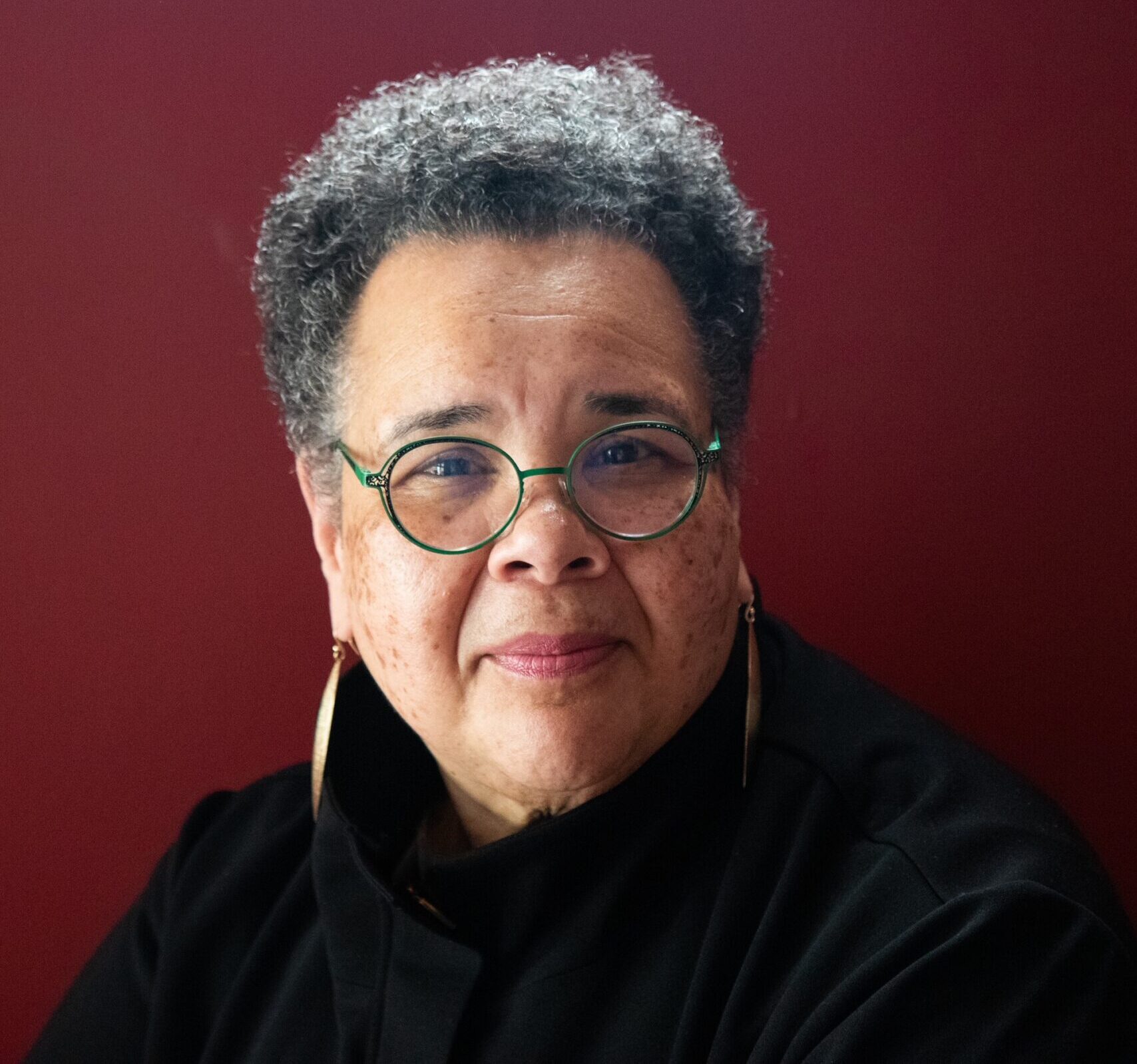
Nancy Lynne Westfield, Ph.D. is a womanist. She grew up in Philadelphia, Pennsylvania. Her father, Lloyd Raymond Westfield, born in Cleveland, Tennessee, was a school psychologist and reading specialist for the Philadelphia Public School District. Her mother, Nancy Bullock Westfield, also born in Cleveland, Tennessee, was a volunteer activist who fought for equal education for minoritized children. Father and Mother were also gifted musicians, known throughout the city of Philadelphia in the 50s, 60s and 70s. Dr. Westfield earned her Bachelor of Science degree in Agriculture from Murray State University, Masters of Arts in Christian Education from Scarritt Graduate School, second Masters in Theological Studies from Drew University Theological School, and Doctorate in Philosophy from Union Institute. Currently, she is Director of the Wabash Center for Teaching and Learning in Religion and Theology. Before becoming the Director in 2020, she was Professor of Religious Education at Drew University Theological School since 1999. She is also an ordained Deacon in the United Methodist Church. Nancy’s first book was a children’s book entitled All Quite Beautiful: Living in a Multicultural Society. Her second book was a publishing of her doctoral dissertation entitled Dear Sisters: A Womanist Practice of Hospitality. Her books written in collaboration include: Being Black/Teaching Black: Politics and Pedagogy in Religious Studies and Black Church Studies: An Introduction. Known for her insightful, creative and experiential teaching methods, she is a sought-after teacher, facilitator of workshops and retreats, keynote speaker at conferences, and consultant for seminaries, non-profits and local churches.