Resources
In New Orleans, the second line is a moving testimony. It is a communal practice of sorrow, celebration and transcendence. The second line is the procession after the procession. It happens at weddings, funerals, and sometimes—the second line happens just to happen.As parade, as stroll, as dance line it is brass and breath, drumbeat and devotion, jubilation in the strut, grief dressed in beads and feathers, the community gyrating celebration. It is the sound of a people who know that life deserves a procession. It is the action of a people who refuse to let subjugation eclipse their joyousness. The streets pulse, the ancestors are summoned, the troubles are lifted, if for a moment. At funerals, the first line—the family, the musicians, the mourners—moves with the weight of loss and the dignity of remembrance. They move with the sound of a dirge. Then the music shifts. The horns rise. The drums speak beckoning all saints and all sinners to join in. The second line emerges behind them, handkerchiefs waving, feet pounding the pavement, bodies remembering what loss sometimes makes us forget: we are still here, still alive. We are still capable of joy. We can carry our dead and dance among the living.At weddings, the second line becomes a declaration of possibility. The couple leads, but they do not walk alone. Friends, family, strangers, and neighbors fall into rhythm, accompanying the newly joined lives into a future none can fully predict. The procession is appreciation, celebration and promise. There is no guarantee that the road will be easy. There is only the music, the community, and the decision to keep moving together.Perhaps this is also a way to understand teaching and the teaching life.Teaching is a procession. We enter classrooms carrying histories, convictions, unfinished questions, private griefs, and extravagant hopes. Some days, we lead. Other days, we follow. Sometimes we are the ones holding the beat, offering structure and direction. Sometimes our students surprise us with a rhythm we do not understand or do not know we need. The lesson we carefully planned gives way to a question that opens the space. A student's insight changes the direction of our thinking, enhances meaning. A conversation asks us to loosen our grip on certainty and learn to move differently. Dynamism enriches the teaching and the learning. Good teaching requires us to know when to lead and when to make room for the second line.The teaching life, like the second line, holds both funeral and wedding. Teaching holds the “just because.” We mourn the students we could not reach, the colleagues we have lost, the institutions that have forgotten their purpose, and the possibilities that never came to fruition. We celebrate the student who discovers their own voice, who dares to imagine something new, the classroom where disagreement becomes a form of recognition, and the moment when learning makes a different future imaginable. We experience healing in its myriads of forms. We carry loss without surrendering joy. We honor what has been while making room for what might yet be – for what we are becoming.We open our hearts to the fact that we do not do this work alone.The second line reminds us that education is not a solo performance. It is a communal practice of accompaniment. Our students bring the beat of their own lives. Our colleagues help us recover our rhythm when the work becomes too heavy. Our teachers, living and departed, leave melodies we continue to interpret. We inherit more than knowledge; we inherit ways of moving through the world, ways of asking questions, ways of making meaning, and ways of staying present when the music changes – and the music always changes.Perhaps the deepest wisdom of the second line is this: the people who follow are not merely spectators. They are participants in making the procession what it is. So it is with teaching. Students are not an audience assembled to witness our expertise. They are makers of meaning, carriers of memory, challengers of convention, and co-creators of the learning community. They change the music even as they learn to hear it.To teach, then, is to practice the art of keeping time with other people. It is to recognize when the moment calls for solemnity and when it calls for celebration. It is to make room for improvisation. It is to trust that a community can hold sorrow and possibility in the same breath.And when the semester ends, when the classroom empties, when the carefully prepared lesson has passed into memory, the music does not stop. Something we said may become a student's unfolding question. Something a student taught us may alter how we teach the next course. The conversation continues long after everyone has gone home, down the line.
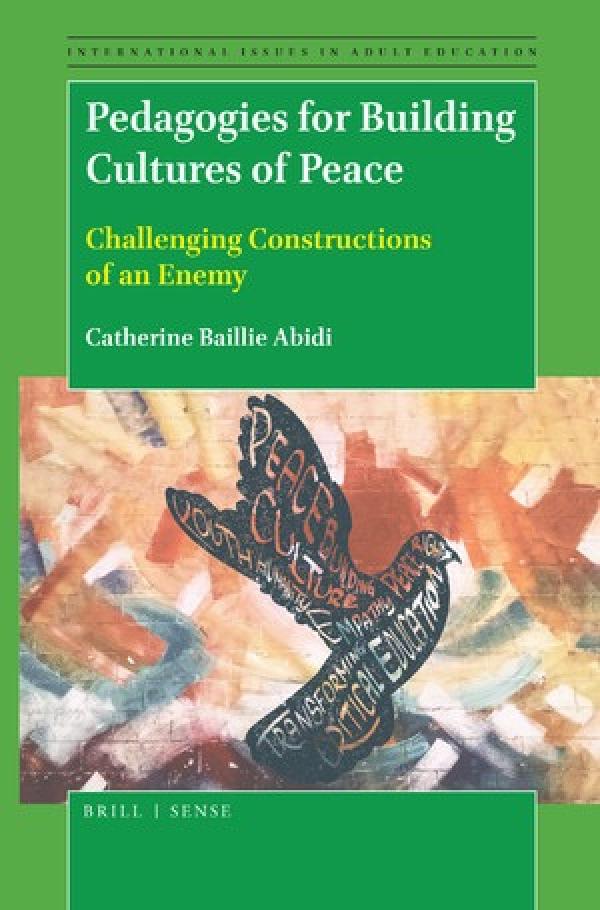
Social media and the daily news both mark the continued normalization of violence. Given that one of the chief aims of liberal education is toward personal development and the attainment of civic responsibilities, the normalization of violence is a central issue with which twenty-first-century educators must grapple. To this end, Pedagogies for Building Cultures of Peace is a useful resource both for centralizing current research on structural and cultural violence and the concomitant dehumanization of the “other” (Chapters 1-4). Further, the book details the many benefits of engaging youth in structured critical dialogue about their experience and internalization of violence in many forms and leverages this dialogic strategy for the transformational aim of building peace and destabilization of structural violence (Chapters 5-9). This book is a theoretical treatment of a specific dialogic experience examining the normalization of violence. It is evident that the experience was significant for the participants, and the detailed reporting of the participant dialogue helps make clear some ways in which structures of violence are normalized for these youth. However, as with qualitative research – the difficulty lies in transferability, specifically in the question of how generalizable the experience of these ten youth is for a broader audience. In part, this challenge could have been alleviated with a more detailed description of both the methods used in the dialogic process itself and by providing more information about the participants themselves. That difficulty aside, the central argument – that safe, collaborative, and critical dialogue functions as a viable pedagogical strategy for building real peace – is compelling, even if the author does not provide practical details for creating this type of dialogue or these types of spaces (a brief outline of the dialogic structure utilized does appear in Table 10.3). Readers of The Wabash Center Journal on Teaching will find the final two chapters the most beneficial. These summarize the dialogue and extract pedagogical implications, which are supported by research in experiential learning, social constructivism, relational epistemology, and power analysis. Taken together, these chapters provide a robust theory that must inform teaching aimed towards peace. As Abidi observes, “education that neglects to challenge normalizations of violence, and the relations that maintain violence as an accepted norm in society, further reinforces unquestioned ideologies of the dehumanized other” (113). It is, therefore, no longer an option to say nothing about the normalization of violence in the classroom – rather collaborative critical conversation must be employed towards the end of peace.
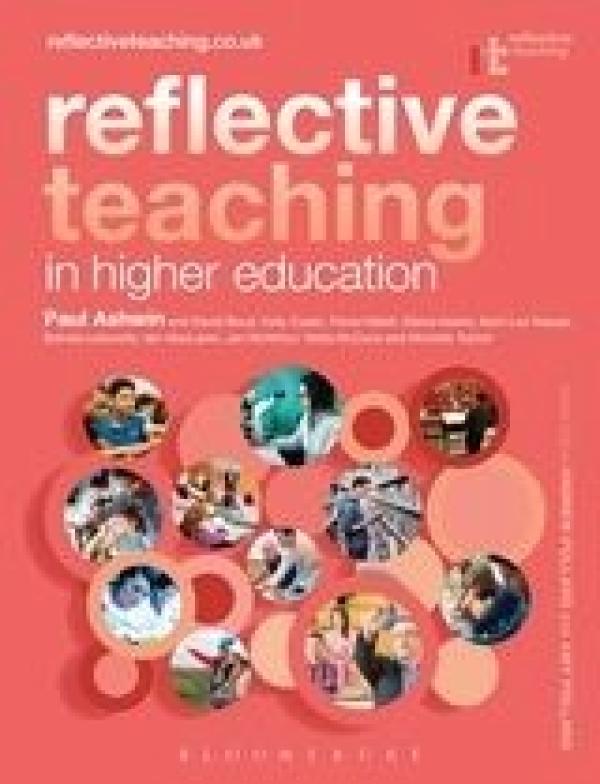
A group of English, Scottish, Irish, and Australian scholars has produced a thorough and insightful resource for effective teaching in higher education that seeks “to bring together the latest knowledge and understanding of teaching, learning, and assessment in higher education” (xi). The editorial team developed the approach to reflective teaching on the basis of the ten point Teaching and Learning Research Programme (TLRP) developed in the UK. The chapters in each section refer to the relevant principles in TLRP and put forward credible arguments grounded in recent empirical research. The editors intersperse useful reflective activities and case studies throughout each chapter in order to promote reflective inquiry by individuals and groups of teachers. The editors organized the book into five parts: Becoming Reflective; Creating Conditions for Learning; Teaching for Understanding; Reflecting on Consequences; and Deepening Understanding. Taken together, these five elements constitute a model for the development of effective teaching in higher education that is comprehensive, open-ended, and ongoing. The approach offered here functions like a dynamic spiral toward adaptive expertise. The emphases on evidence-based theory and practice, constructivism, teaching as jazz improvisation, assessment as a crucial component of learning, and robust inclusion all recommend this book to contemporary educators in higher education. I find only two deficiencies in this impressive body of work. At four hundred pages, only the most dedicated teachers or administrators in higher education will read the work as a whole. I tried to plow my way through to the end several times, but could only make limited progress in any one session of reading due to the density of the material. I think a book half the size of the existing volume would have sufficed. The second problem concerns the commitment of the authors to critical pedagogy. Toward the end of the book, the editors advocate ever more strongly for a largely Frierian-based approach to diversity and inclusion as the best – perhaps the only – way forward in higher education today. While I have more than a passing interest in critical pedagogy, I find the narrowing of the philosophy of education bandwidth advocated here to be overly confining and surprisingly uncritical. I would have liked to see a treatment of multiple approaches that would support the establishment of egalitarian and inclusive communities of learning in higher education. I see four likely uses for this book. Those charged with leading doctoral seminars on teaching in higher education may find this a particularly valuable resource. I know that I will. It could well serve as a viable alternative to Barbara Gross Davis’s Tools for Teaching (2nd ed., Jossey-Bass, 2009). This book could also help new professors develop the kind of reflective practice that will enable them to become expert practitioners of the craft of teaching. Many individual chapters of the book could find use by those leading in-service faculty development sessions. Finally, academic deans or committees responsible for promoting effective teaching in faculties could profitably work their way through this resource in its entirety as a way to gain a 360° sense of effective teaching and learning in higher education today.