Resources
Increasing numbers of college students enrolling in religion courses in recent years are looking to develop their religious faith or spirituality, while professors of religion want students to use and appreciate scholarly tools to study religion from an academic perspective. Some scholars argue that it is not possible to satisfy both goals in the classroom, while authors in this journal have given suggestions on how to bridge the gap between faith and scholarship. I argue that such authors are correct and that, in my experience, historical-critical methods can help devout students understand the original texts in their own religion better, comprehend why changes in interpretation have occurred over time, and appreciate the values in religions other than their own. Not all devout students are comfortable with an academic study of religion, but many can attain a more mature faith by such an approach.
What is the relationship between the academic knowledge of the guild and the formation of students in the classroom? This Forum gathers four essays originally presented at a Special Topics Session at the 2009 conference of the American Academy of Religion (Atlanta, Georgia), with a brief introductory essay by Fred Glennon explaining the genesis of the panel. Douglas Jacobsen and Rhonda Hustedt Jacobsen clarify some of the issues at stake in undergraduate liberal arts classrooms by distinguishing between four dimensions of what they refer to as “the (in)formation teaching matrix: institutional context, course content, faculty roles, and student outcomes. John Thatamanil argues that all learning necessarily presupposes formation. Amanda Porterfield argues against using the word “formation” because it complicates and undermines her teaching goals to historicize religion and narratives about it through open-ended inquiry. And, finally, Mary Elizabeth Moore explores the interactive processes linking formation, information, reformation, and transformation.
Recent research by Barbara Walvoord suggests a perceived disparity between faculty learning objectives and students' desire to engage “big questions” in the introductory religion classroom. Faculty opinions of such questions are varied, ranging from a refusal to employ any approach that diverts attention away from critical thinking, to a willingness to integrate personal questions of meaning and purpose into the introductory religion course. This essay argues that, in light of work currently being done by such developmental theorists as Sharon Daloz Parks and Marcia Baxter Magolda, the integrative approach has much to commend it. It concludes with suggestions for how religion faculty can expand this approach through learning covenants, service learning, and seeing the religion classroom as a gateway to various mentoring communities on campus.
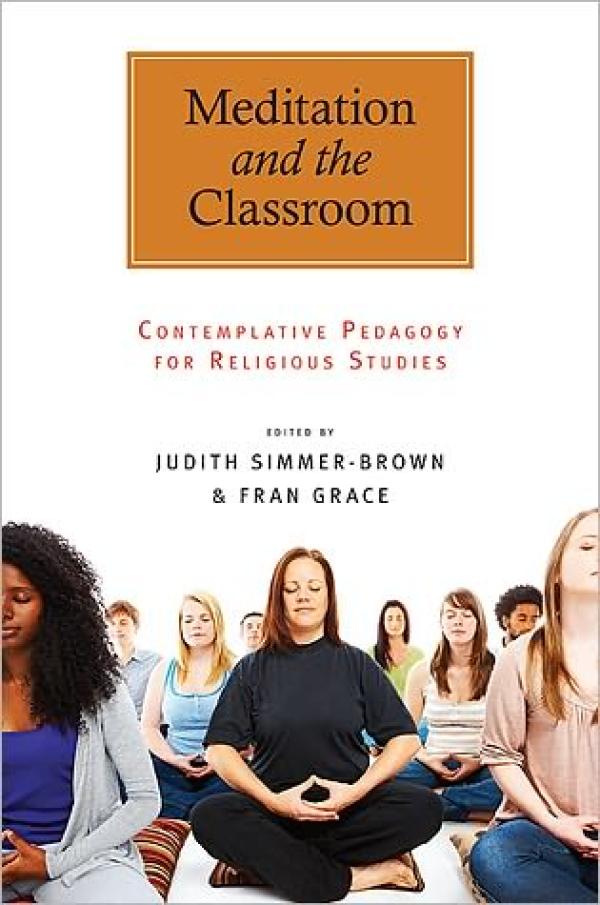
A groundbreaking book on using meditation in education and how it can enhance teaching and learning. Meditation and the Classroom inventively articulates how educators can use meditation to educate the whole student. Notably, a number of universities have initiated contemplative studies options and others have opened contemplative spaces. This represents an attempt to address the inner life. It is also a sign of a new era, one in which the United States is more spiritually diverse than ever before. Examples from university classrooms and statements by students indicate benefits include increased self-awareness, creativity, and compassion. The religious studies scholars who have contributed to this book often teach about meditation, but here they include reflections on how meditation has affected them and their teaching. Until recently, though, even many religious studies professors would find sharing meditation experiences, let alone teaching meditation techniques, a breach of disciplinary and academic protocols. The value of teaching meditation and teaching about meditation is discussed. Ethical issues such as pluralism, respect, qualifications, power and coercion, and avoiding actual or perceived proselytization are also examined. While methods for religious studies are emphasized, the book provides valuable guidance for all those interested in this endeavor. (From the Publisher)
Spiritual formation is both an opportunity and a challenge for educators in Christian colleges and seminaries. How can students be nurtured and guided in developing spiritually within the curriculum? Drawing on a number of educators, studies, and arguments, this article develops a rationale for engaging in spiritual formation and for the use of practical assignments or "soul projects." A selection of such projects is grouped into genres, followed by a brief exploration of best practices and an evaluation of such assignments.
Praise for The Heart of Higher Education Palmer and Zajonc have issued a compelling call for change and renewal in higher education. They show us how colleges and universities can be transformed by taking a more integrated approach to teaching and learning that focuses on the inner lives of their students and faculty. At a moment when many are dreaming of an integrative form of higher education that unites intellectual rigor with compassion and love, Palmer and Zajonc invite us to engage in conversations designed to infuse the academy with meaning, purpose, and soul. For those who yearn to transform colleges and universities from sterile, vacuous spaces to places of hope, possibility, and respect for everything human, this is the book you have been waiting for. Parker Palmer and Arthur Zajonc call for a renewal of our commitment to inspiring deeper thinking and educating the whole person. This book should and will inspire debate about our larger purpose, about how we can go beyond the traditional silos in which we work for the sake of individual and institutional transformation. What should be at the center of our teaching and our students' learning? Palmer and Zajonc take up this simple but daunting question and provide the most solid ground yet on which to hold a conversation about the heart of our enterprise. They reimagine higher education in a way commensurate with the magnitude of our problems and offer us practical paths toward implementation. Integrative education is the most important reformation of higher learning since the rise of the modern university. This book can help us achieve it. (From the Publisher)
Contemplative Pedagogy is a new and sometimes controversial pedagogical practice. Faculty often have basic questions about how to implement the pedagogy in their classrooms, in addition to questions that challenge the educational value and appropriateness of the practice. Assembled here are the most frequently asked questions about Contemplative Pedagogy, with responses from six contemplative professors, each from a different institutional and philosophical location. The respondents are founding members of the Contemplative Studies Consultation of the American Academy of Religion. The diversity of views expressed by the respondents invites the reader to see that there is no single theory or praxis of contemplative pedagogy.