Resources
An early review of Barbara Walvoords’ study showing a "great divide" in the introductory religious-studies classroom, especially at schools with a religious affiliation: While instructors want to prioritize the development of critical thinking, students want discussion that will develop their own religious beliefs and their moral & ethical values. (This is less true at secular colleges, where students are more on board with putting critical thinking first.)
The author recounts his experience, as a young observant Jew, of James Kugel's academic biblical studies course at Harvard. The piece focuses specifically on how Kugel reconciles his religious faith  with his academic understanding, and how Jewish biblical scholars disagree with one another on what is involved in such a reconciliation. May be of special value for Christian learners undergoing a similar disruption, located as it is "safely" in a non-Christian context.
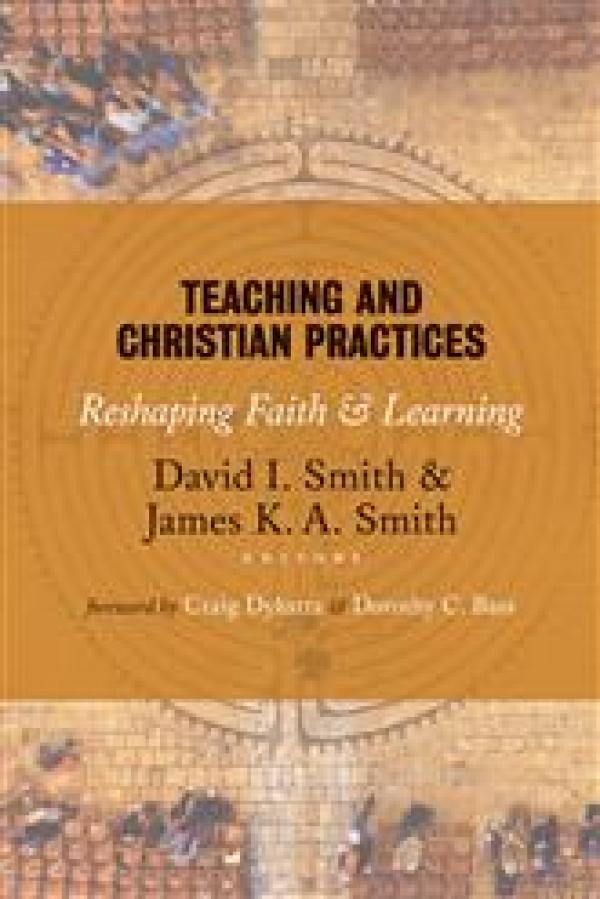
Over the past twenty years there has been a ferment of reflection on the integration of faith and learning -- yet relatively little notice has been paid to the integration of faith and teaching in the Christian university. In Teaching and Christian Practices twelve university professors describe and reflect on their efforts to allow historic Christian practices to reshape and redirect their pedagogical strategies. Whether using spiritually formative reading to enhance a literature course, table fellowship to reinforce concepts in a pre-nursing nutrition course, or Christian hermeneutics to interpret data in an economics course, the authors present a practice of teaching and learning rooted in the rich tradition of Christian practices -- one that reconceives classrooms and laboratories as vital arenas for faith and spiritual growth. (From the Publisher)
Alluding to several then-recent episodes of professors being forced from posts at evangelical institutions of learning, Enns asks whether schools dedicated to defending propositions grounded in private revelation and confessional dogma can be "truly academic" (and truly just to their instructors and students).
A useful 2016 teaching piece for students of faith adjusting to academic religious studies. In this blog post, Tabor addresses the objection, often raised by students or religious laypeople, that (biblical) historians "exclude the miraculous" in their investigations. Not "suppressing" claims of the supernatural (e.g., miracles), historians welcome all such claims as contributing to our understanding of times and events, but refrain from adjudicating such claims beyond what is accessible to historical means.
In this excerpt from Kugel's controversial "How to Read the Bible," the author argues—with rich citation and documentation—that academic biblical studies is rife with an "unmistakably apologetic tone" of which even its most self-avowedly "critical" practitioners are largely unaware. The implication is that academic biblical studies, practiced as it is overwhelmingly by people of faith, does not achieve the honesty about the texts' "strangeness" characteristic of other corpus-oriented disciplines. (2014)
The Religion in the Academy (RITA) project focuses on the many ways that religion, spirituality, and big questions of human meaning and purpose can enhance learning at colleges and universities.
The return of religious ways of knowing in the academy could be called a "post-secular revolution." "This paper is a guided tour of the movement to reconnect religion and knowledge, a group portrait of the individuals and organizations behind the growing prominence of religious scholarship." Extensive bibliography.
Much debate exists regarding the purpose of education. This article explores the idea that religious education can be used to inspire change and action in the lives of students beyond the classroom. We describe a study of students who took a required religion class at a private religious university. The intended outcomes of the class centered on encouraging students to make the following changes in their lives: to develop a habit of regular scripture study, to use new methods to study the scriptures, and to make positive choices in their lives. Specific assignments were designed to encourage these outcomes. At the end of the semester, students were surveyed as to whether they had made changes in their lives in these three areas. The vast majority of students reported that they had made changes in their lives because of assignments given in the class. Implications and limitations are discussed.
Inside Higher Ed narrates the dismissal of biblical scholar Christopher Rollston after his HuffPo opinion piece about the marginalization of women in biblical texts. The article discusses the relationship of tenure and donor support at a confessional seminary.