Resources
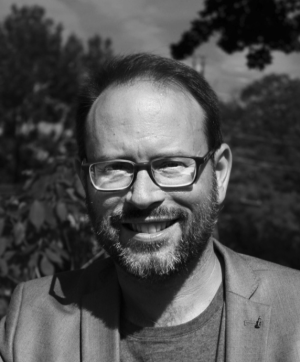
When I go to work in the morning, the first thing I do is read the Bible. I read a bunch of commentaries, take a bunch of notes, then prayerfully reflect on the text. Then I set to work coming up with a meaningful and compelling way of communicating my interpretation to my listeners. Then I lift the piano lid. You see, I’m a composer of sacred music. At its heart, my job is to present an interpretation of Scripture to my listeners in a way that is interesting, convincing, and spiritually valuable. Unfortunately, few Christians ever hear my sacred music. That’s because I don’t write choral anthems or praise songs. I write sacred concert music: classical works that responds to themes, ideas, and texts from the Christian tradition. I’ve written a piano trio inspired by the book of Job, a song cycle that sets Rilke poems, and a brass quintet that explores the concept of perichoresis. (Humblebrag: of this piece, Walter Brueggemann wrote to me: “I am not a great theologian but have pondered “perichoresis” for a long time. This is the finest exposition of that thick idea that I have encountered.” Be still my beating heart!) Now, if I wrote a lot of choral music, I wouldn’t be complaining nearly as much. But today, most of history’s great church music composers face the same problems as me. While we do hear choral works by Bach, Handel, and Mendelssohn occasionally on Sunday mornings, the place where we usually encounter their sacred music is in the concert hall. This is an example of a strange irony: though most of us have nearly unlimited access to the corpus of great sacred music–either live or on Spotify-we Christians rarely have the chance to intentionally explore its spiritual value in the context of Christian community. As a result, we are missing out on the many ways sacred music can contribute to our lives as Christians–beyond its role in worship. In this post I’d like to provide a case study of a way that a different approach to sacred music can contribute to our work as educators. First, take about 15 minutes to listen to three new musical settings of Psalm 148 (scroll down for texts and info about each setting). Each was written in 2019 by a contemporary composer representing a different Christian tradition: Roman Catholic, Evangelical Lutheran, and Armenian Apostolic. Now that you’ve listened, let me ask you a question: which of these pieces interpreted the psalm correctly? Obviously, this is not the right question to ask. Yet it’s a familiar one, as it’s the one that so many students initially bring to the task of Biblical interpretation. And as educators, we know that ridding a student of this hermeneutic habit is the very first thing we need to accomplish in our classes. Listening to these three musical settings makes this easy. Each piece is an authentic, honest, and personal response to a rich and mysterious text. Each provokes us to think about the psalm in a completely different way: not just encouraging us to provide different interpretations of the psalm, but to ask completely different kinds of questions about it–and of ourselves. Heard back-to-back, the three settings testify incontrovertibly to the possibility–and, I might add, the necessity–of complementary, mutually-enriching interpretations of the same text. If we are going to teach the next generation of pastors, theologian, and laypeople, we know that these are the attitudes toward Scripture that we need to promote. More than anything, we need to convince our students to devote themselves to a lifetime of continuous exploration and re-exploration of our tradition. Beyond that, we need to encourage them to develop an attitude of humility, an awareness of the contingent nature of our own interpretations, and the courage to ask complex questions and follow them where they may lead. Sacred music helps us accomplish these goals. It opens up the field of interpretation by inviting us to engage with the Bible in ways that are not ideological, simplistic, or narrow, but instead subjective, affective, and open-ended. But this can only happen if we think creatively about new ways to use it in our classrooms and our churches. My new organization Deus Ex Musica, which developed the project culminating in the videos you watched, is my own humble attempt. For more than a millennium, composers have given us unique, powerful, and provocative musical interpretations of Scripture. They continue to do so today. In a world that increasingly promotes simple, ideologically-driven solutions to problems, I think sacred music has the potential to remind us that our tradition is rich, mysterious, and resistant to easy answers. Whether you are an educator, pastor, or layperson, I encourage you to seek out opportunities to explore the ways it can contribute to your ministry and your life of faith. Thanks for listening!
The Soul of Higher Education: Contemplative Pedagogy, Research and Institutional Life for the Twenty-first Century contributes to an understanding of the importance and implications of a contemplative grounding for higher education. It is the sixth in a series entitled Advances in Workplace Spirituality: Theory, Research and Application, which is intended to be an authoritative and comprehensive series in the field. This volume consists of chapters written by noted scholars from both Eastern and Western traditions that shed light on the following questions: • What is an appropriate epistemological grounding for contemplative higher education? How dues the current dominant epistemology in higher education mitigate against contemplative teaching, learning, and research? What alternatives can be offered? • How can a contemplative culture be nurtured in the classroom? What difference does that culture make in teaching and learning? What is the role of individual and institutional leadership in creating and sustaining this culture? • What is contemplative research? How can the emerging field of contemplative studies fit into the twenty-first-century university? • What can faculty and students learn from contemplative practices about how to find peace of mind in a world of higher education characterized by increasing complexity, financial pressures, and conflicts? • What does a contemplative organizational structure look like in higher education? How can committees, faculty meetings, and administrative teams use contemplative practices to work more effectively together? • How can contemplative decision-making processes be used in higher education? Given hierarchies, turf wars, and academics’ propensity for using argument as a weapon, is it possible to introduce contemplative practices into decision-making situations in appropriate ways? (From the Publisher)

The increasing religious diversity in educational space has raised a legitimate question on how Catholic theology/catechesis must be taught in Philippine Catholic universities given the institutional mandate to educate students “into the faith of the Church through teaching of Christian doctrine in an organic and systematic way” (Wuerl, 2013, 1). On this note, the paper makes reference to “centered pluralism” (CP), a positional posture espoused by Georgetown University in dealing with this predicament. In an attempt to (re)appropriate CP into local context, there is a need to explore the Filipino conception of self/others as enveloped within the indigenous concept of kapwa. Hereon, the paper finds that CP is not just feasibly suitable in local context but with kapwa's more inclusive description of the relationship of self and others, a CP‐based teaching paradigm in theology/catechesis is a promising project in the educational scene of the Philippines.
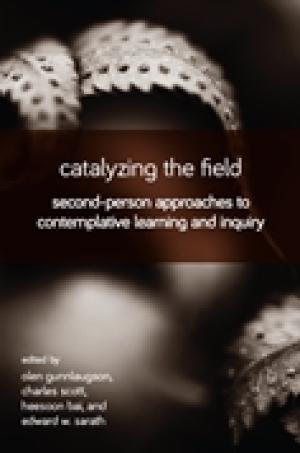
A rich collection of essays about the inner, shared experiences of participants engaged in second-person approaches to contemplative practice. Catalyzing the Field presents a diverse series of applied case studies about the second-person dimension of contemplative learning in higher education. As a companion volume to the editors’ previous book, The Intersubjective Turn, the contributors to this book explore various pedagogical scenarios in which intentional forms of practice create and guide consciousness. Their essays demonstrate that practice is not only intellectual, but somatic, phenomenological, emotional, and spiritual as well. Along with their first book, Contemplative Learning and Inquiry across Disciplines, the editors craft an essential body of work that affirms the fundamental importance of contemplative practice in institutions of higher learning. (From the Publisher)
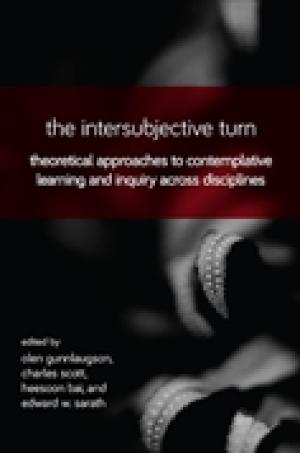
Click Here for Book Review This book examines various intersubjective approaches to contemplative learning and inquiry in higher education. It would interest contemplative studies scholars, and instructors with a previous background in contemplative pedagogy. - Beverley McGuire, University of North Carolina Wilmington A first of its kind, this book maps out current academic approaches in higher education to second-person contemplative education, which addresses contemplative experience from an intersubjective perspective. Until recently, contemplative studies has emphasized a predominantly first-person standpoint, but the expansion and embrace of second-person methods provides a distinctive learning context in which collective wisdom and shared learning can begin to emerge from dialogue among students and groups in the classroom. The contributors to this volume, leading researchers and practitioners from a variety of institutions and departments, examine the theoretical and philosophical foundations of second-person contemplative approaches to instruction, pedagogy, and curricula across various scholarly disciplines. (From the Publisher)
Role‚Äêplaying games have been a part of scholarly conversations about pedagogy for several decades. However, more work is needed in understanding how gaming pedagogy can best fit with and augment particular disciplines. After providing two examples of role‚Äêplaying games that have been used successfully in teaching the New Testament, this article argues that role‚Äêplaying games contribute to theological and religious studies classrooms by forming positive values (e.g. openness to multiple viewpoints, civility, and empathy) and assisting students in integrating their faith and learning. Because of the low‚Äêrisk settings that games provide, students can practice skills that increase their achievement of learning outcomes and contribute to their value formation and faith formation.

Click Here for Book Review The latest from an internationally recognized thinker at the intersection of faith and pedagogy Christian teachers have long been thinking about what content to teach, but little scholarship has been devoted to how faith forms the actual process of teaching. Is there a way to go beyond Christian perspectives on the subject matter and think about the teaching itself as Christian? In this book David Smith argues that faith has a critical role in shaping pedagogy and the learn-ing experience. Smith’s scholarly exploration of education combines both theory and practice. With clever and sometimes funny examples, he shows how teachers of every subject and age group can be atten-tive to how their students are experiencing and interpreting learning. From desk arrangement to discussion questions, there are myriad opportunities to design classes that are deeply rooted in Christian practices. On Christian Teaching provides fresh insight into Christian education that expresses faith and community. (From the Publisher)
One page Teaching Tactic: structure, prompts, and evaluation rubric for final summative exams conducted orally with individual students.
In the face of a mounting mental health crisis among college students, professors have an opportunity and responsibility to respond to their students’ psychological distress. Psychological and historical scholarship suggests that the proliferation of modern media and breakdown in traditional sources of existential meaning like religion are significant factors in young adults’ declining mental health. In response to this crisis, this article examines the crucial role of the imagination in constructing meaning and proposes an imagination‐centered pedagogical process by means of which teachers can assist students in recovering meaning and integration in their lives.