Resources
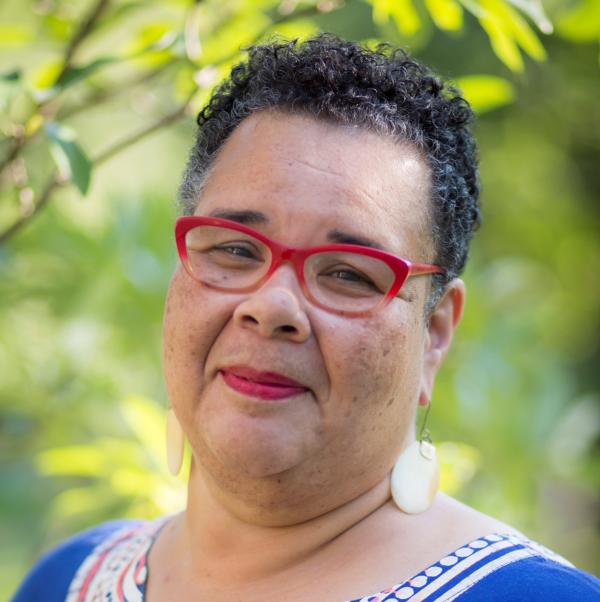
Justice is one of those ideas that has captured our imaginations for generation upon generation; yet it is still a contested notion. Collectively, systemic racism, sexism, classism, homophobia, white supremacy, and a judicial system that is lenient on “white collar/white male” crime, while vengeful upon the poor and minoritized people, provide ample evidence that justice for some is not justice for all. For these and other reasons, I need my students to be articulate about the notion of justice. It is not enough to “believe in” the idea. It is not enough to agree with it intuitively or “in your heart.” Education as a practice of freedom, as a practice of transgression, as a practice of re-humanization, is the theory I teach in my graduate level introductory course. This course insists that the ability to articulate the theories of justice, regardless of personal experience or personal belief, is a pedagogical necessity. It is the rare student who enters my introductory course able to speak the language of liberative pedagogy or to talk about the connection between education and social transformation. This is why they are learners–there are important things which they do not yet know and which they cannot articulate, but which we can teach them. My pedagogy of justice is not so interested in teaching skills of “critical thinking.” Most of my students have families, are gainfully employed, and have responsibilities in church as well as community. Many own their own businesses, provide support for several generations in and beyond their households, and are looking to religious leadership as a second or even third career. By the time they reach my “Introduction to Educational Ministries” course they have demonstrated considerable ability to think critically, to problem solve, to engage successfully in tactics of survival. Rather than “critical thinking,” I want to teach my adult learners methods of power analysis necessary for the summoning of moral courage in a society steeped in body politics, violence, and systemic hatreds. I want my students to be praxis thinkers, able to analyze injustice and articulate justice in an unjust society. They must be able, in their own communal context, to analyze white supremacy and patriarchy in its myriad expressions. The healing of their community and the restructuring for a more equitable society depends upon their ability to articulate justice. What I stress in my course is the ability to articulate what justice actually entails in the world. Simply feeling it, believing it, desiring it, hoping for it–just won’t do. The power is in speaking it. Have you ever known something but could not articulate it? You thought you understood it, but did not know the words, the vocabulary, the way to convey the basic concepts with depth? Sometimes, as a consequence of complex experiences, you may find your ability to describe the learnings of that experience to be limited or incomplete. In order to give full voice to your experience, as well as the insights gained from that experience, drawing on the collaborative power that emerges from sustained conversations is a key. Equally, having a firm grasp upon basic theories of justice making and moral courage are imperative. Being able to articulate theories of justice provides a hermeneutical mirror for analysis of, and meaning-making from personal experiences and perspectives. Finding ways to assist my students with articulating theory and helping them order the learnings of personal experience entails exposure to new vocabulary and interrogation of basic concepts. Personal experience can provide new insights, new understanding of the age-old problem of injustice when communal-reflexive habits are incorporated as a way to animate and elucidate theory. Because, of course, theory and practice are two-sides of the same coin. On the first day of the course, then reinforced in each subsequent session, I tell my students to pay attention to the argument of the authors we are reading. The focus of reading is not so much deciding if they “like it or not,” but noticing the authors’ use of vocabulary, basic concepts, and illustrative examples and narratives. I tell them to learn these funky words and use them in and out of class. Once new vocabulary is mastered, the ability to conceive the basic concepts and the ways these concepts create the theory is more evident. I tell them to be able to map the basic concepts of the theory because all basic concepts do not function in the same way to create the theory. When they look puzzled, I teach them concept mapping. Learning to play with theory for praxis is a mighty challenge. I have, over the many years, devised this mid-term learning exercise to assist my students in articulating the basic concepts of the theory we study: Step One - I email, before the class session, and instruct my students to be able to access in class all the readings, all their notes taken, and all the assignments graded thus far. In other words, bring all you stuff! Step Two - Once we are gathered in class, I tell them to get out all of these materials and base any group participation upon our conversation since day one of our class. In other words, do not talk off the top of your head, focus upon what we have been discussing all semester. Step Three - I divide the class into small groups. I inform the groups they have an hour to collaboratively write 10 basic concepts of the theory of liberative pedagogy. When the anxiety in the room spikes, I inform them that they are to use all the materials they brought to class. Sometimes the anxiety lowers and sometimes not. Step Four - I say, “On your mark–GO!” I do not tell them it is a mid-term exam, but it is. Step Five - While the groups are working to articulate their lists of basic concepts, my teaching assistant sets-up the computer so there is a blank page projected on the screen for all to see. The teaching assistant, during the report-in by the small groups, will record each of the concepts I approve to be written on our class list. Step Six - After the hour, I reconvene the groups for our “round-robin report-in.” Our aim is to take the lists from all the groups and create one list of basic concepts that we can ratify as a class. We refine the concepts during the group report-in through our conversation and through my editing. A member from one of the small groups reads aloud one basic concept from the list they created when it is their turn. Groups will have multiple turns but will report-in only one concept at a time. If, when the one concept is shared aloud, the concept sounds reasonable and resonates with our collective understanding (and my listening ear), then the teaching assistant records the draft of the concept as read for all to see. Once that concept is typed on the screen, I ask if any other group has a similar concept. If so, we use the other group’s work to wordsmith the concept on the screen until it is clear and strong. If not, we wordsmith as a class. Once a concept is refined to my satisfaction, we move to the next group to read aloud one basic concept from their list. We continue with the “round-robin report-in” until all the groups have exhausted all the concepts they recorded during their small group collaboration and until we have one common, sound list of basic concepts refined on the screen. This takes about an hour. Step Seven - I provide a list of basic concepts from a previous course as a final way to strengthen our collective work. I invite the class to look through the list in order to add, reword, or strengthen the new list we have just drafted. There are always additions, edits, and re-wording to strengthen the list we have just created. Students like seeing the work of other classes as it lets them know the complexity of the task of articulation. Step Eight - I ask, referring to our list on the screen, “Does this list of basic concepts articulate the theory we are studying?” If yes, we celebrate our hard work. If no, we continue to work until we are satisfied with our articulation of basic concepts of emancipatory pedagogy. Step Nine - I email our list of basic concepts to each student. Of course, my students’ ability to excel at this exercise varies from class to class. Most fascinating is that, from year to year, no two lists of basic concepts have ever been the same while still capturing the crux of the theory. Every class has found their own way of articulating, from their own unique perspectives and experiences, the basic concepts. I am not looking for an essentialist or universal list of basic concepts. I am looking for their rendition. We say a learner-centered education nurtures, kindles, and coaxes students into voice. With voice comes the responsibility of agency and service. Teaching toward voiced students is teaching the ability to speak articulately, eloquently, and intelligently about the issues of oppression, hegemony, violence and captivity–and not just passionately, without substance. Coming into voice is hindered by class sessions riddled with self-centered, pseudo-psychological moments of students filibustering through personal stories and anecdotes. Learner-centered teaching focuses upon the learner being able to articulate new ideas, new theories, new concepts, new vocabulary and hopefully, newly refined visions for a more just and equitable society.
Research on Student Civic Outcomes in Service Learning: Conceptual Frameworks and Methods is the third volume in a series dedicated to research on service learning. This volume, with its timely focus on civic outcomes, is divided into three sections. It begins with an introduction to how student learning outcomes are embedded in service learning, then moves on to various theoretical frameworks by which one can situate research. It concludes with some nuts and bolts aspects of conducting research on student civic outcomes in service learning, defined as “a course or competency-based, credit-bearing educational experience in which students (a) participate in mutually identified service activities that benefit the community, and (b) reflect on the service activity in such a way as to gain further understanding of course content, a broader appreciation of the discipline, and an enhanced sense of personal values and civic responsibility” (10). All three chapters in Part One are useful to the novice in this research area. “Introduction to Research on Service Learning and Student Civic Outcomes” provides a taxonomy of service learning courses, with essential attributes and levels of development for instructors to improve the quality of civic learning opportunities within service learning courses along with clear factors for individual as well as institutional research and assessment. “Student Civic Outcomes in Higher Education” offers a helpful literature review of civic outcomes, while ”Student Civic Learning through Service Learning” concludes Part One with two pertinent questions: (1) What do we know about cultivating civic learning through service learning courses? (2) What do we still need to learn about how the variables of course design influence civic learning? One key point repeated in each chapter is that civic outcomes in service learning should focus on learning with others and not doing for others. Part Two explores research on civic outcomes in service learning through multiple disciplines and theoretical perspectives including social psychology, political theory, educational theory, philanthropic studies, human development, community psychology, critical theories, and activity theory. The chapter “Critical Theories and Student Civic Outcomes” most directly questions the “individualistic” and “server-centered” approach to service learning (184), noting, for example, that serving at a soup kitchen often counts as service learning but protesting does not (187). A critique of the AAC&U Civic Engagement VALUE rubric is particularly thought-provoking on issues of access and power (187-190). Part Three turns more directly to the how-to of conducting research with chapters on quantitative, qualitative, and longitudinal research along with chapters on institutional characteristics and using local and national datasets. One of the most interesting chapters in this section, “Documenting and Gathering Authentic Evidence of Student Civic Outcomes,” asks “What counts as good evidence of learning and for whom?” (303). The chapter identifies two challenges familiar to those who work with assessment: making outcomes explicit and collecting authentic evidence (304-305). Unfortunately, much existing research depends on indirect evidence, and the chapter recommends use of the AAC&U VALUE rubric along with ePortfolios to enable formative and summative assessment. Each chapter of the volume concludes with an extensive reference section. The volume is worthwhile for teachers and researchers who want to improve students’ service learning as a site for civic engagement.

Using examples of community and civic engagement (CCE) at Auburn University, this collection of essays provides readers with a lens through which to view a number of debates in higher education. In the broadest sense, the essays address the question of the role of higher education. More narrowly, they ask questions such as, how do universities respond to increasing public pressure to demonstrate clear connections between education and job placement? Since the volume focuses on civic engagement, authors ask what the ideal relationship between a university and its surrounding community might be. How, for example, does a public university foster such relationships, of what sort, and to what end? With increasing pressure on students to graduate in four years, along with widespread perceptions of higher education as a form of job-specific training, it may seem rather bold for educators to promote a liberal arts education. However, Brunner argues that one can address these questions by looking to the ancient Greek and Roman liberal arts models, which “foster personal growth and civic participation” (1). Through diverse case studies, the authors illustrate the high impact learning experiences that occur in CCE situations. For example, students in political science who do internships have a higher degree of satisfaction with the course, learn nuances about relationships between theory and problem-solving in a community, and often reconsider their career choices. This reconsideration results, in part, from the reflective component of CCE, which helps students make connections between classroom learning and their internships via writing assignments. These connections further illustrate the critical thinking (among other skills) that liberal arts education fosters – skills which align with employers’ desires in hiring. While much of Creating Citizens focuses on teaching and student-learning outcomes, Brunner also addresses the contentious issue of how promotion and tenure committees are to evaluate the work of engaged scholarship. How, for instance, does engaged scholarship measure up to traditional peer-reviewed scholarship? Again, this is not a new question, but one that nevertheless impacts pre-tenured faculty decisions for research plans. Brunner notes that engaged scholarship combines teaching and service, is as rigorous as other peer-reviewed scholarship, and upholds university missions and values by engaging faculty in mutually-beneficial, community-based problem-solving. In short, students, faculty, the university, and the community all benefit from CCE. Readers may wonder how the final essay fits within this volume; though interesting as a reflection on the role of non-native activist anthropologists working in India, the connection to the thematic foci of the other essays is tenuous. Overall, however, this volume would be of interest to educators looking for practical models of CCE that can be adapted to fit one’s own institutional location, mission, values, and vision for community relations. Land-grant institutions such as Auburn explicitly aim to promote application of research, in this case through CCE, a model that any institution of higher education would do well to consider adopting.
This book gives both more and less than what its title promises. For the editors of this collection, teaching “the whole student” requires engaged learning (“active, participatory, experiential learning that links doing with thinking”) and integrative pedagogy (“crossing and stretching traditional intellectual disciplinary boundaries”) (1). In turn, these commitments are part and parcel of a larger commitment to educating for social justice, and the essays take on a wide array of topics, including effective and balanced service-learning, learning communities “done well,” and the importance of meaningful, sustained diversity engagement. Some of the essays are rather auto-biographical while others focus on a particular course or program. As is the case with many books of this type, the collection is an uneven assortment, and it is not always clear how an essay pertains to the promised subject of “teaching the whole student.” For those reasons, it can be somewhat disappointing. Read in one way, however, hope emerges as a kind of connecting line and important theme. This is addressed most directly in the essay by Gillies Malnarich, who describes a moment of personal crisis as a teacher. She lay awake at night wondering, “What does it mean to educate for hope?” How can we make space for “raw, angry, heartbreaking, life-affirming hope… especially in our classrooms,” she asks, drawing upon both Paulo Freire and Rebecca Solnit’s writings (58). It also becomes clear that the kind of relational pedagogy being prescribed by many of the writers requires a willingness on the part of the teacher to bring his or her whole self into the classroom. In her essay on “Incorporating Social Justice into Teaching,” Kathleen Manning encourages readers to think of teaching as a spiritual act: “Teaching is not something learned once and perfected. The ever-changing nature of students, theory, and your personal and professional cycles as a person and professor make teaching an art. Because you are affecting people’s lives, approaching teaching and learning as spiritual practice places it in the realm of transcendence. Particularly when using principles of social justice to work toward a more just world, faith, trust, and authenticity must be part of the teaching and learning processes” (52). There are many helpful ideas and strategies here, including the “Where I’m From” poetry assignment, a powerful way for students to disclose important aspects of their identity and express “links between their faith tradition and ethnicity,” among other things (164 - the activity comes from Beverly Daniel Tatum’s Can We Talk About Race? [Beacon, 2007]). Some of the essays include useful appendices - see, for example, the collaborative learning self-assessment (77) or the chart describing experiential classroom activities to promote dialogue (143). Ultimately the strength of this book can be found in the questions that it poses more than in the answers it suggests. Each essay concludes with a set of reflection questions prompted by the content of the essay, and a patient, thoughtful reader could work her way through this book and be richly rewarded.

Exposing and disrupting the values which perpetuate white normativity puts a strain on the adult classroom. Individualism is a cornerstone value of whiteness and patriarchy. As persons committed to the flimsy lie of pulling oneself up by the bootstraps, too many students believe that education is best attempted alone. Conforming to the principles and practices of individualism, adult students believe that by leaving the people who formed and shaped them they can better demonstrate excellence. By denouncing accountability to and responsibility for their people, their kin, and their community, they are becoming good U.S. citizens. “To thine own self be true” is exaggerated to narcissism, isolation, and dangerous detachment. The racist values of this U.S. society teach that in order to be real you must be alone. Equally, the U.S. educational system functions to uphold the societal tenants of individualism. Higher education rewards individualism. My teaching colleagues were told that the only way to make a legitimate contribution to their scholarly field of study was to do it alone. Collaboration is cheating! We are discouraged from playing well with one another. Consequently, teachers typically insist upon and praise individualism in adult classrooms. Even for students who understand themselves to be part of a community and enabled by the sacrifices of others, adult classrooms are places of disorientation. The new perspectives, new expectations, new experiences, and new ideas challenge even the most prepared, supported and grounded student. For the student who presumes that individualism is the best way to approach study, the disorientation can become severe and can make learning terrifying. The hardcore pledge to individualism which is a hallmark of U.S. society and the academy only serves to exacerbate the student’s anxieties. Further confusing to the adult student steeped in the delusion of individualism is the classroom that values partnership, cooperation, and collaboration. Group assignments and shared projects that are designed as counterpoints or correctives to society’s hegemonic imagination dumbfound the student who believes the better way is the autonomous way. I have actually heard loud and painful groans when students, upon reading my syllabus, understand that group work is part of the course experience. Students who believe their work is best showcased in isolation resist and refuse to work on group projects. On more than one occasion, I have had to disband fighting groups. On a few occasions, groups were crippled by the logistics of when and how to meet. Repeatedly, groups will do tandem reports with each person giving individual speeches rather than working for a synergized, harmonized product. In several instances, I am certain that groups relinquished power to one student who then did most, if not all, of the work. In all of these situations, my hunch is that those students who saw no pedagogical value in collaboration sabotaged the groups. When self-reliance eclipses a sense of community, belonging, and mutuality or when self-reliance is at the expense of communal care and responsibility, then classroom spaces that affirm values of mutuality and teamwork become experiences of deep pain and confounding for the students – and the teacher. I want my students to become aware that knowing is communal and that learning is relational. Individual knowledge is a fallacy. How we make meaning depends upon the context(s) in which we find ourselves. Who we are and whose we are has direct bearing upon how we learn as well as the measure and merit of learning. Knowing and knowing better requires awareness of relationships. Individualism limits, constrains, and distorts efforts to know beyond yourself. I have over the years developed strategies to signal to students that their connection to their people while learning is paramount and that my classroom is a place to develop skills for collaboration, partnership and cooperation. The exercises are not meant to instantly dissuade students of individualism as a core value. They are meant as moments to consider that there are other, maybe more generative, values to hold dear while learning and living. One of my learning activities is a ritual of invocation. Early in the semester I ask students to consider persons, living or dead, who would be glad they are enrolled in my class. I tell them to think about persons who would support them in school when things get difficult or persons who have their best interest at heart as they move through coursework. When students are ready, I ask that each student in-turn speak aloud the full name of one of the persons. I instruct students, saying one name per turn, to exhaust their list of persons. Once all the names have been spoken, I acknowledge the ancestral and communal love in the room. This conjuring often sustains us. Another exercise is a reflection activity. I give students time to think through their answers, then instruct them to write their answers as succinct lists on the blackboard: Who are your people (describe in race, class, gender and other social location indicators)? To whom are you accountable while in this degree program? Who is praying for you while you are here? Who do you struggle not to disappoint as you study? What highest job of leadership will be afforded you once you have demonstrated reasonable mastery? What is the suffering of your people? What are their vulnerabilities? What is their trouble? Which aspects of their suffering and anguish will you bring to bear upon the conversations in this course? How will you work so that with the taking of this degree you are more informed about the needs of your people? During your studies for which systemic oppression will you become expert for the healing of your people? These kinds of learning exercises help reconnect and remind us we are not alone. At least they help me. Each time I do an exercise of this kind, I name my own ancestors and our troubles. I, too, am reminded that I do not teach alone and that I do not teach in vain.
This volume of collected articles provides snapshots of collaborative teaching and learning in action at US universities. While the authors describe a range of techniques and structures, there is an emphasis throughout on intentionally building and sustaining communities composed of teachers, learners, and even community partners. Richard A. Gale (“Learning in the Company of Others”) and Jeffrey L. Bernstein, et al. (“How Students, Collaborating as Peer Mentors…”) illustrate the positive effects of collaboration in college courses. Gale succinctly articulates numerous benefits of collaborative teaching, from increasing fruitful ambiguity that can inspire critical thinking, to providing teachers with opportunities for “the systematic investigation of student learning” (21). Bernstein’s experience working with students as peer mentors shows that a collaborative approach to class leadership can embolden students to take risks with low stakes, improving their participation in brainstorming and creative activities. The majority of authors convincingly demonstrate that collaborative learning offers students benefits far beyond the immediate course or program experience. Ellen G. Galantucci and Erin Marie-Sergison Krcatovich (“Exploring Academia”) emphasize that their experience as undergraduate collaborative learners helped them prepare for their later work in graduate school and as educators. These authors note that the mentoring they received contributed to their professionalization and enabled them to discuss pedagogy confidently on the academic job market. Multiple articles address the potential for fruitful collaboration with community partners beyond the university. “Collaborative Structures in a Graduate Program,” by Robyn Otty and Lauren Milton, describes a multi-year Centralized Service Learning Model (CSLM) that combined the work of two graduate courses and several community programs. In their article “The Development of a High-Impact Structure: Collaboration in a Service-Learning Program,” Brooke A. Flinders, et al. illustrate students’ internalization of high-impact learning outcomes, including “participation in meaningful work” (44). One important contribution of this text is the collection of students’ testimonies. A number of the authors asked course participants to complete some form of self-assessment. Overwhemingly, students who worked as peer mentors or group leaders reported gaining confidence, independence, critical thinking skills, and practical experience that could be used in the professional world. In Flinders, et al., “The Development of a High-Impact Structure,” young professionals in the nursing field provided feedback about ways their participation in the service-learning program helped them prepare for clinical work. This volume offers a wealth of suggestions for designing learning communities; Milton D. Cox’s contribution (“Four Positions of Leadership…”) identifies traits that administrators and facilitators have found to be essential when organizing faculty learning communities. Each article clearly explains its authors’ methodology, making this a helpful resource for teachers who are looking for direction in implementing collaborative learning strategies. While it might have been helpful in some cases to learn more about how community partners assessed the contributions of university teams to their work, overwhelmingly the articles demonstrate that collaborative learning is beneficial for students and teachers. For those looking to build more collaboration into their courses, this set of articles provides inspiration and concrete guidelines
Preparing citizens through education is not a novel idea. Its origins lie in Greco-Roman approaches to the task, and in American history the goal of educating the citizenry can be traced back to Charles Sanders Peirce (1839-1914), William James (1842-1910), and John Dewey (1859-1952). Dewey, who was perhaps the most articulate about the implications of pragmatism for education, saw academic preparation for life in a democracy and the moral education of children as part of the same endeavor. The contributors to this volume acknowledge Dewey’s role in this enterprise, but do not explicitly explain why these essays represent the “next generation” of educators inspired by his vision. The best explanation, perhaps, is that they emphasize academic advocacy, as opposed to broader social wellbeing; engagement with society over preparation for engagement with society; and social location over citizenship as a point of departure for academic work. With that set of assumptions in mind, it is easier to discern the larger purpose of the sixteen essays in this volume which include an introduction and afterward, along with chapters devoted to three subject areas: (1) “The Collaborative Engagement Paradigm”; (2) the work of “New Public Scholars”; and (3) thoughts on “The Future of Engagement.” The vast majority of the contributors to this volume are specialists in education and programs in community engagement, and there are individual writers from the disciplines of art and political science. For that reason, some seminarians and seminary faculty will find more immediate points of contact with their work than others. Both groups will also find themselves asking – if education driven by engagement is appealing or necessary – whether the more natural point of contact for seminaries is the community, the church, or both. A critical evaluation of the essays will also raise other questions to which there are no simple answers: What is the place of “social relevancy and public legitimacy” in shaping the curriculum of higher education (1)? Can engagement as a model for learning set aside more abstract, disciplinary concerns (17)? What role has commodification played in shaping higher education and is learning through engagement immune to commodification (24)? To what degree do faculty members remain accountable to the disciplines that they represent when using engagement as a model for teaching and, if so, how is that accountability achieved? The answers to those questions will all look potentially different in theological schools and seminaries where faculty regularly grapple with the relationship between the work that they do and the needs of the church. Indeed, that realization may point to the most important question that the subject matter, but not the book itself, raises for theological educators: What does it mean for seminaries to engage the church “as reciprocal partners and coeducators” (5)? Answering that question is one that everyone who cares about theological education would do well to answer.
M. Gail Hickey has gathered together a valuable resource in Reflecting on Service-Learning in Higher Education. The chapters provide a vast collection of best practices and important principles to consider when engaging students in academic service-learning. The book is divided into three sections focusing on different perspectives for reflection: Community Partnerships, Classroom Practice, and Diversity. Although the first section is titled “Reflection on Community Partnerships,” it is really more a reflection on institutional commitment to building community partnerships. The section has two provocative chapters that take the reader through a reflection on just what impact an educational institution should have within its surrounding community and how service-learning can help the institution attend to the voices of the community in which it is placed. Sherrie Steiner’s principles for implementing reciprocity provide a great framework for institutions and faculty to consider while developing service-learning curriculums. Joe D. Nichols asks important questions about the focus on research and specialization at the expense of community and civic engagement and draws from multiple sources to foster reflection around alternatives to faculty recognition of such public work. “Reflecting on Classroom Practice” is the second and largest section of the book. Each chapter offers a perspective on how service-learning has worked in a particular context. This collection of cases from fields as varied as education, sociology, fine arts, and dental hygiene offers a myriad of suggestions for how to structure a curriculum that incorporates service-learning. There are suggested rubrics, logistical considerations, a solid bibliography with each chapter, and suggestions for what worked well and how one might improve the process over time. Readers will find this section full of ideas, suggestions, and methods focused on building a curriculum, partnering with community members, and methods for reflection with students. The final section, “Reflecting on Diversity,” pushes even further into the questions that come up when students engage in service-learning with diverse communities. Here the case studies offer insights into how students perceive and articulate the impact of their service-learning on their growing sense of their own contextual lenses and the lenses of those with whom they work. Faculty and administrators are invited to anticipate the types of responses their own students will have in an effort to foster positive reflection and growth in the students that is fruitful for the partner communities as well. One concern with the book is that community partners are not represented as writers of the chapters. The effort to shed light on the importance of effective community partnerships and the responsibility of higher education institutions to develop service-learning curriculum in partnership with the surrounding community is important. The inclusion of the voices of partner communities as authors could have added to the depth of the book. Reflecting on Service-Learning in Higher Education is a resource that will be appreciated by high school and university faculty and administrators. The questions raised and the suggestions shared will be useful for any institution looking to begin or strengthen their commitment to service-learning in higher education. Institutions, faculty, students, and the communities with which they partner will all benefit from M. Gail Hickey’s invitation to reflect.
This book brings together faculty reflections on pedagogy and inter-professional collaboration from a broad range of disciplines within a single institution in Toronto: Ryerson University. While a single institution may appear to provide only a limited contextual perspective, the nature of the varied disciplines represented here provides a diverse set of resources, drawing from early childhood studies, nursing, disability studies, social work, sociology, city planning, and midwifery. Though the fields of theology and religion are not represented among the contributors, educators in theological and religious education will resonate with the need to better equip students for inter-professional engagement. Though all contributors are from the same institution, the commonality or coherence among chapters ends with the institutional affiliation of the authors. The editors note the book’s lack of coherence, and justify this by saying that the “frontiers” of community-services-related learning “are not neat, formulaic, or easy to navigate” (5). For this reason, reading this text cover-to-cover can be a disappointment, since the chapters are not of equal quality, nor do they create any obvious structure or overall argument. That said, there are gems in particular contributions for those interested in learning about teaching techniques and reflections that draw from critical pedagogies and integrative approaches, bringing the best of new theories in education. For instance, in “Drawing Close: Critical Nurturing as Pedagogical Practice,” authors May Friedman and Jennifer Poole bring together insights from Indigenous studies, Black feminist thought, maternal pedagogies, and mad studies to argue for a way of being in the classroom that promotes a nurturing relationship between student and teacher, challenging the Enlightenment and Western ideals of independence as a goal of education. These authors call for a suspension on neoliberal concerns for risk and lack of efficiency, instead arguing that an interdependence approach requires the risk of blurring the distinction between teachers and students (96). If a reader of this book were to choose one chapter to read from among the many contributions, this would be the chapter to focus on, and the bibliography provides additional resources to pursue. Other chapters included interesting suggestions and interventions in education, such as “Educating for Social Action among Future Health Care Professionals” which focused on a learner-centered model for course creation. This chapter includes appendices for how the authors Jacqui Gingras and Erin Rudolph were able to craft a course with considerable input from students regarding course themes, which assignments they would have to complete, and what grading rubrics would entail. Other chapters (3, 8) draw from narrative theory and describe the way students are taught to listen to the narratives of clients as well as to their own personal narratives. While this book’s chapters are not equally helpful, the insights available in a few choice chapters are worth the read.
This collection of fourteen essays, most of which originated from a faculty workshop on Pedagogies for Civic Engagement sponsored by the Wabash Center for Teaching and Learning in Theology and Religion, is divided into three sections. The collection represents a variety of perspectives and the authors engage that diversity through a distinct set of questions. “What is the civic relevance of the academic study of religion, considered on its own terms and in its increased diversity? What unique contributions does religious studies offer the public sphere, especially when seen as separate from the work of religious communities who concentrate on religious belonging? How might the disciplines dedicated to such study offer a distinctive shape and response to the civic mission of the contemporary university?” (xiv-xv). Further uniting the individual contributors’ perspectives are their insights offered towards the development of a model of civic engagement that answers these questions. Section I describes the CLEA model of civic engagement. The employed acronym is drawn from the terms complexity, location, empathy, and action. The terms refer to dimensions, better still, capacities essential for civic participation emerging from the “virtues of civility, reasoned deliberation, and commitment to the common good” (xiii). The intellectual capacity needed for democratic society is evident when persons achieve awareness of the complexity of the world, especially a view of the world beyond the way the powerful control the interpretation of social reality (8-10, 14, 25). As democracy blossoms into pluralism, the person who would be a responsible citizen must exhibit awareness of his or her social location and point of view relative to that of other persons (15, 27-28). Beyond awareness of difference, he or she must have empathy, namely a sense of connection to others as all are (or should be) in pursuit of the common good (15-16, 31). The responsible citizen must act on what he or she has come to know as true (16, 34). In Section II, various strategies for teaching civic engagement are described. Among the various methods used for teaching civic engagement is reflective writing which is summary and evaluation of different points of view relative to one’s own view (49, 50-53). In critical assessment of texts and media, students learn to interrogate symbols, internet (websites), newspaper and news programs, visual and performing arts, and various forms of entertainment (49, 53-54, 88-89, 95) but also learn how they may be used responsibly (100-102). Field trips are immensely helpful aids in teaching (49, 54-55, 77-80, 119-121). Another method of teaching civic engagement is community-based learning which involves teachers and students going into the community as well as representatives from the community visiting their classroom (49, 55-56, 66-71, 110, 112, 136-137). Engagement may also be taught through students’ involvement in community service projects designed to address a need or problem in a community (49, 57, 110, 112). Ascetic withdrawal, for example, in the form of abstinence from or limiting use of cell phones, smart phones, email and texting, impulse buying, consumption of fast-food, use of products made through exploited labor, may enable students to empathize with other persons adversely affected by American consumerism and to discern and cease the unhealthy habits they have formed through compulsive behaviors (93-94, 151, 155). Successful teaching requires creativity in the selection of instructional methods as well as discernment of the combination of methods, two or more, that will lead to achievement of specified learning objectives (58-59). Section III goes further into defining civic engagement and locating it within the curriculum. Civic engagement is defined as participation in political processes such as voting, development of relationships, and collaborations or partnerships that lead to policy that contributes to the common good (165, 167, 170, 175). Civic engagement is not only local and national but also global (184). It is connected to, inseparable from, the idea of social justice (185). Also, it is connected to advocacy, not taking a political position but rather “taking a side in a debate and arguing for it” (209-210). Disagreement about the relation of and distinction between religious studies and theology is resolved in the consensus that both function best as means for analysis and critique of societal and cultural traditions that result in privilege and inequality (236). Whether in religious studies or theology, the course offered in civic engagement is an opportunity for students and teachers to practice democracy (17, 188-190, 246-247). In spite of the charge that the described teaching methods are difficult to grade and are not academically rigorous (37-39, 218-220), this volume of essays merits consideration. It is a rich resource on instructional methods. The combined essays offer a substantive definition of civic engagement. Most importantly, the collection correlates teaching method to the cultivation of capacities needed for life in democratic society.