Resources
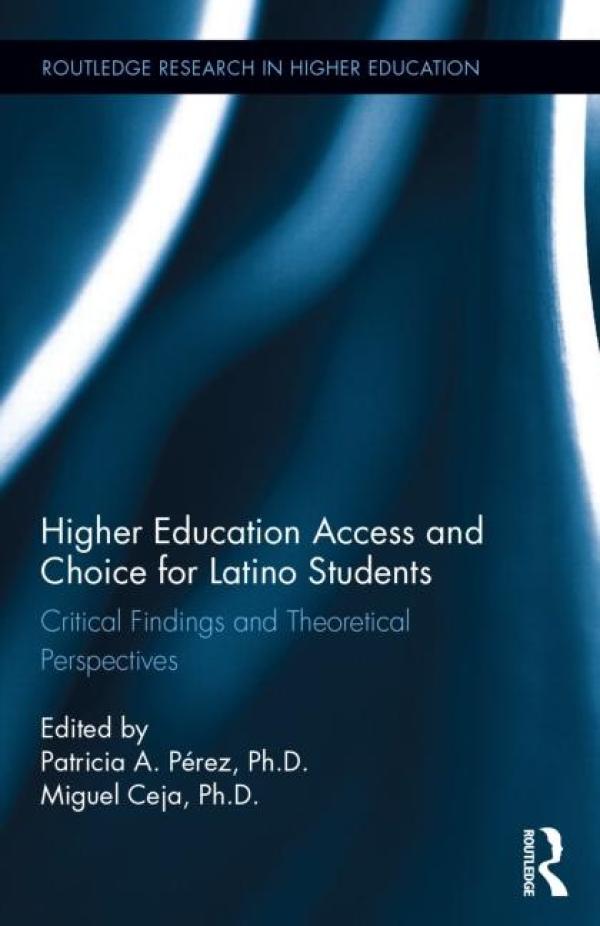
Patricia Pérez and Miguel Ceja published Higher Education Access and Choice for Latino Students as part of the Routledge Research in Higher Education series. Grounded in sociological studies of Latino students and their educational choices, the book’s essays highlight the multitude of challenges that confront Latino students in trying to successfully complete higher education. The essays are split into three sections. The first is “Home, Elementary, and Secondary Context”, part two is “Political Context and Postsecondary Choice,” and part three is “Model College Access and Transition Programs.” This structure allows the reader to see how a variety of issues contribute to how and why Latinos make specific choices in higher education. The first section focuses on essays that examine cultural and familial context. In “Sixth-Grade Teacher’s Perceptions of the College-Bound Student” the essay’s authors point to how teachers’ perceptions of what constitutes a “college-bound” student and an emphasis on “good behavior” heavily shapes whether a Latino student is deemed to be worthy of being on the college prep track or not. In the essay “Constructing College Choice” the authors examine how Latino Catholic high school students are coached to understand their “worth” in terms of potential scholarship money, and the pitfalls as well as benefits of this approach. In the second section, the essays focus on political issues affecting Latino college choice such as gender norms and expectations in “Latino/a Students’ College Destinations” and the issues that block access for undocumented students in “Rising Voices.” In the third and final section, the focus is on college access and programs that promote it, such as summer bridge programs for Latino students as described in “Supporting the College Transition Process and Early Academic Success” and in “Community Cultural Wealth and The Latino/a College Choice.” There are fourteen essays in the book; only a few are mentioned here to highlight some of the main themes. The essays cover a wide range of issues regarding Latino student college access, and each section builds upon the previous section, starting with home life and ending with bridge programs at college itself. Overall, the essays are fairly technical, based in sociological research, and this may make it hard for some readers outside the discipline to get though them all. Yet they provide a wide-angle lens on a huge variety of issues that face Latino students in trying to even consider going to college, let alone applying to one. This book is clearly geared towards those who work in the academic field of sociology and who are exploring issues around Latino college choice, and as it is expensive, is recommended for library collections. It is an informative book for educators as it gives them a varied and broad view on all the obstacles that Latino students in higher education face and offers ideas as how to overcome those obstacles in order help more Latino students achieve success.
The ability to teach across cultures is more important than ever and many professors are searching for practical resources to help navigate the complexities of twenty-first century classrooms that are both face-to-face and online. Ikpeze’s Teaching across Cultures offers practical tools and it provides the theory behind the approaches he outlines although at times, he leaves the reader wanting more detail on how to incorporate his strategies in the classroom. Ikpeze trains teachers in pedagogy for a cross-cultural context, and emphasizes that all classrooms are multicultural. Through his own experiences as a teacher, he identifies the gaps and missteps that occur in a multicultural classroom and how to address these problems primarily with two approaches: Cultural Responsive Pedagogy (CRP) and the cultivation of “Third Space” in classrooms and online environments. Ikpeze shares freely the classroom problems he encounters as a self-disclosed foreign born (of African descent) and accented English speaker. His openness is refreshing and invites the reader to connect their own teaching challenges with his. CRP demands a responsive teaching style that invites students to bring their wisdom and cultural selves to learning. The creation of third spaces brings together opposing viewpoints into a space where they are questioned and blended. It is an ambiguous space that moves out of binary modes of thinking and learning to a mode of hybridity. The first step Ikpeze covers is the concept of a self-study. Self-study involves intensive data gathering that moves beyond the troublesome student course surveys that often perpetuates race, gender, and class biases to a mode of gathering data from a variety of sources to construct a picture of a teacher’s self-presentation, reception of this presentation, and pedagogy. It is not a one-time process. Ikpeze emphasizes the need for maintaining academic rigor and teaching objectives while addressing the problems discovered in the self-study. The second step in his work emphasizes building relationships between student and teacher, between students and their selves, and between students to allow greater understanding. This work allows the creation of a “third space” where students’ knowledge from day to day living is invited into conversation with academic knowledge. This technique requires intentional exercises and regular engagement with students both in and outside the classroom. Teaching across Cultures is theory heavy and at times frustrates the practitioner who wants to move directly to the practical strategies. While Ikpeze emphasizes relationship building as the foundation for cross-cultural pedagogy, the realities of class size and teaching load shapes the ability of professors to effectively employ many of these tools.
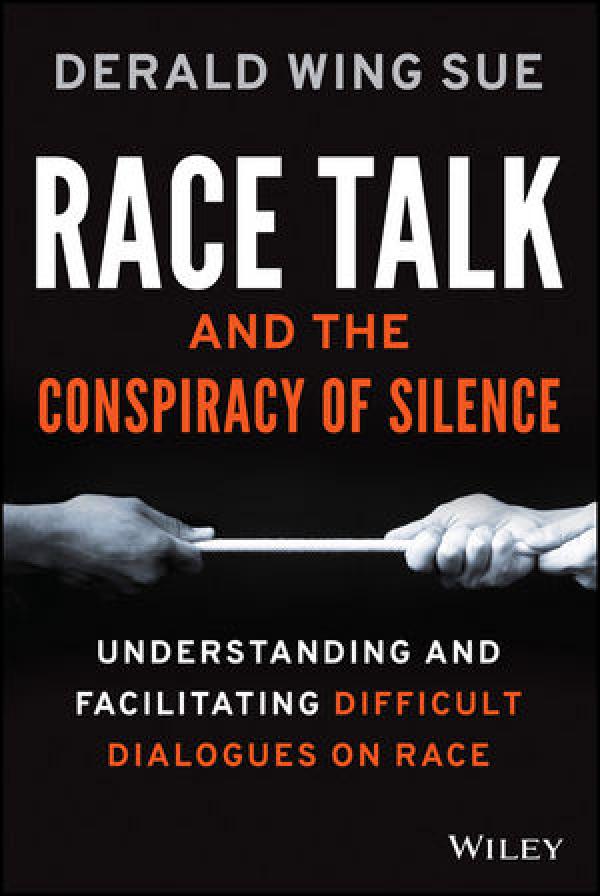
This is a book finding its time, perhaps just in time. A sequel to Microaggressions in Everyday Life: Race, Gender, and Sexual Orientation (2010), Race Talk and the Conspiracy of Silence offers the fruits of a ten-year period of research and observation of participants engaged in difficult conversations on race, racism, Whiteness, and White privilege. The purpose is fivefold: (1) to uncover the reasons that race talk is difficult, (2) to expose the explicit and hidden rules that govern how race is discussed in U.S. society, (3) to illuminate the detrimental consequences of a failure to honestly dialogue about race, (4) to outline the benefits of successful conversations on race, and (5) to propose solutions in overcoming obstacles to honest racial dialogues (xii). Sue accomplishes this purpose with clarity of style and balanced tone. The first section defines race talk, its characteristics and dynamics, and then explores in chapter three the conflicting race realities in White Talk and Back Talk. “Race talk is truly a clash of different racial realities in which people of color and Whites perceive race issues in opposition to one another” (xiii). Through vignettes, questions, and psychologically adept analysis, Sue offers a compelling view of the ideological, psychological, and historical factors that do create radically opposed racial realities. He gently uncovers the realities whites are disinclined to see, and demonstrates the lived realities of people of color – all while shaming none. I particularly valued his argument for and demonstration of the importance of emotions in the classroom, with any redress of race talk requiring truly receiving and sitting with the wisdom that arises within emotional connection and disconnection. The second section highlights the hidden ground rules embedded in society, academic settings, and one’s self that serve as barriers to honest race talk. Here you can find guidance and modeling for academic habits that consistently cloak racial realities. The third and fourth sections address, separately, why it is difficult to honestly talk about race. For people of color, “What are the consequences for saying what I mean?” and “To speak or not to speak, that is the question.” For whites, “I’m not racist!” and “I’m not White, I’m Italian.” Group considerations are also examined, difficult dialogues between groups of color. The final section invites reflection by parents and teachers talking about race with children; namely, “taking responsibility for change means overcoming the inertia and feeling of powerlessness on a personal level” (214). Racial awakening happens in encounters that challenge preconceived notions, so Sue encourages such encounters with guidelines: (1) learn about people of color from sources within the group; (2) learn from healthy and strong people of the culture; (3) learn from experiential reality; (4) learn from constant vigilance of your biases and fears; and (5) learn from being committed to personal action against racism. To encourage you to get the book, I particularly appreciated Sue’s list of ineffective strategies, “Five Things Not to Do,” followed by eleven potentially positive actions. A lengthy volume, Race Talk and the Conspiracy of Silence should be required reading for educators of all levels.
This global study of teaching, learning, and assessment goes beyond the typical single country context to extend to good pedagogical practice on six continents.The argument of each chapter is supported by examples of good practice accounts from around the world, a collection that forms a refreshing change from a generic case study model. Although the examples lean most heavily toward English-speaking institutions and classrooms, there is significant attention paid to various elements of pedagogy from many cultural perspectives. The author takes great care throughout the book to consider all elements of the changing higher education landscape, including the changing student body, changes in technology, and changes in expectations about the goals of higher education and graduate employability. The twelve chapters of this book take a comprehensive view of diversity in higher education teaching, learning, and assessment. The book opens with a consideration of cultural mores and assumptions that directly affect interactions in higher education. Brown looks both to the past and the future in subsequent chapters, noting pedagogical traditions and innovations in the context of today’s higher education landscape. She argues that we must adjust to a technology-rich world that necessitates more focus on “learning how and learning why than on learning what” (21). Her view of technology in the balance as both a distraction and a valuable addition to certain aspects of both teaching and learning is refreshing, as so many books either glorify or decry technology in classrooms and society. This ability to see things in the balance is one of the greatest strengths of this book: rather than arguing for a “best” way to teaching or learning or assessment, this book offers multiple possibilities from multiple contexts and thus leaves much to the reader to judge based on his or her context and constraints. Brown identifies a few global trends. The most widespread seems to be a move from transmissive to transformative education. She notes that there is a “movement from perceiving the university teacher as an all-knowing, unchallengeable authority figure” (27) and parallel a movement by institutions and disciplines toward encouraging learning outside of the lecture hall. Another trend is teaching toward the multiple literacies expected of a twenty-first century graduate, looking well beyond academic literacy to digital, assessment, and interpersonal literacies (88). Finally, Brown notes that all education needs to think of itself as taking place in a global environment. This book is itself a fine way to encourage broader thinking about pedagogical contexts in higher education: our students are shortchanged when we privilege our own pedagogical traditions and ignore the broader, global context of higher education. The strengths of this book are many. For instance, the author provides substantive and exhaustive bulleted lists in each chapter, a diverse set of highlighted good practice accounts, and a full chapter devoted to higher education teacher development. The book is easy to navigate, written in clear prose, and at once expansive but grounded in particulars. I would recommend this book highly to teachers and administrators in higher education across the disciplines.
Michael Michie’s 2014 publication of his dissertation argues that previous research into cross-cultural teaching has focused on skills, methods, and curriculum, but ignores teachers. To address this lacuna, Michie interviews six professional, western, K-12 science teachers of indigenous students and investigates what qualities characterize successful cross-cultural teachers and how teacher training can prepare instructors for cross-cultural contexts. Michie’s work makes three contributions to pedagogical discussions of cross-cultural teaching. First, Michie provides a sustained examination of the ways cross-cultural experiences shape teachers into “culture brokers” or “border crossers.” Michie claims the most successful teacher of indigenous students learns to be a border crosser in his or her identity formation even before entering the classroom. Second, Michie analyzes successful border crossers and constructs a profile of a border-crossing teacher. Finally, Michie suggests what kind of training shapes teachers to be successful culture-brokers. Michie claims an “international” framework for his study (1), but limits his subjects to those teaching in western, English-speaking sites (Australia, New Zealand, and Canada, 141). Michie argues that his focused data allows him to speak more precisely, and leaves expansion of this deep, thorough analysis to successive studies. Michie’s project unfolds in six chapters. In chapter one he defines the project and identifies himself as a “participant-researcher” with his subjects (2). In chapter two, Michie reviews the literature on western teaching of indigenous children. He sifts the anthropological, biological, and ethno-historical studies on “border crossing” and “cultural brokerage” (5) to refine the terms. He defines culture “as the social environment in which an individual is raised and lives and includes a range of concepts and beliefs that is accepted by individuals as defining their group identity” (14). The role of education is to “help those growing up in a culture find an identity within that culture” (Michie cites Bruner 1996, 15). This move brings identity studies and questions of power into the forefront of pedagogy – the (western, powerful) identity of the teacher and the (indigenous, marginalized) identity of the students. Thus teaching requires dexterity and self-awareness in crossing cultural borders. Michie’s first contribution is to distinguish between terms in the literature. In his subjects, Michie finds that “border crossing” (“the ability of people to move metaphorically between cultures,” [50]) is a specific identity formed in “marginal people” (51). In contrast, “culture broker” (“a strategy which an individual can be used to promote cross-cultural understanding,” [51]) is the “role” that an “intermediary” chooses when mediating between cultures (52). Next, Michie proposes that teachers in cross-cultural situations can choose a mediating role while actively cultivating respect and appreciation for the cultures they move between (as border crossers do; 52, 79). In chapter three, Michie analyzes the participant interviews looking for evidence of border-crossing experiences and cross-cultural encounters earlier in life. Teachers of indigenous students report positive affective and cognitive experiences when they engaged (pre-professionally) indigenous and first nation people (73). Michie identifies three successive degrees of engagement in the teachers. “Border crossers” choose a transitory role and show “interest in the culture and aspirations of indigenous people”; “border workers” “continue to work at the border as allies of the indigenous people”; “border mergers” exhibit a fully bi-cultural identity and do not distinguish between the cultures they navigate (80-81). Chapter four examines how participants understand the role of culture broker or border-crosser and for what purpose they use that role. Chapter five evaluates participant ideas of how to enable teachers to cross cultural borders in their classrooms. Michie then defines what kind of training can best shape K-12 instructors to teach from a culture broker role. Finally, chapter six summarizes Michie’s conclusions and applies the best teacher training practice to specifically preparing western instructors to teach science as foreign cultural knowledge to indigenous students. This study can be applied to the pedagogy of religion in at least two situations. First is for college or seminary instructors to consider teaching the academic study of religion as a “foreign” way of knowing. How might students of deep religious conviction respond differently to a perceived exercise of dissecting their sacred text if instructors cross that cultural divide between confessional faith and academic study first? The same cultural crossing might bring “nones” into a new world of thinking about and reflecting analytically on religion. Second, Michie shows that, as professional teachers, our cultural identities and our ability to meet students have already been shaped – positively or negatively. Reflecting on the degree(s) to which we are able to meet our students, cross metaphorical and cultural borders, and broker academic culture with newcomers is critical to our growth as teachers.
What person of sound mind would make a conscious decision to swim upstream against the current of turbulent waters? The correct answer is “probably no one.” Swimming upstream requires not only excellent navigational skill but perhaps, more importantly, demands that one possess the tenacity and spirit of a survivor. That is precisely why the metaphor “swimming upstream” is so appropriate in describing the plight of scores of African-American men who elect to enter and succeed in higher education (1). Swimming Upstream: Black Males in Adult Education is one volume in the series entitled: New Directions for Adult and Continuing Education. This anthology is intended “to make space for the experience and voices of Black men in the canon of adult education literature, to promote a critical assessment of institutional policies and practices, and to foster awareness and involvement among adult educators” (89). The format of this book is well-suited for academic settings. Each essay is preceded by a short introductory paragraph. At the close of each chapter the authors provide a robust list of reference sources that should prove helpful for students and educators alike. The first chapter discusses the impact of race and racism in the American adult educational system. Chapter two addresses myths and stereotypes employed to depict Black men and their influence on educational attainment. Chapter three explores the reasons for entering adult basic education programs and the role of gender identity. The topic of high school equivalency is discussed in chapter four. Chapter five addresses young Men of Color and engagement in adult learning. Chapter six is concerned with college reentry for African-American males. Chapter seven addresses the sobering topic of Black male college study following a term of incarceration. Chapter eight discusses military veterans and access to the GI Bill to pay educational expenses. The final essay, chapter nine, culminates with a call to action for educational practitioners. Understanding context is critical. In recent years a growing constituency has emerged that believes society has entered a post-racial or “colorblind” era. They advance the proposition that one’s race or ethnicity has no bearing on one's ability to survive and prosper in modern America. I strongly disagree with the post-racial theorists but recognize that it would be helpful for books like Swimming Upstream to squarely confront the legitimate concerns of post-racial proponents. In so doing one hopes that individuals on both sides of the argument will ultimately reach a consensus that the mission of ensuring equal educational opportunities for every individual remains a struggle that must still be waged today. Swimming Upstream moves that discussion forward with compelling statistical and anecdotal evidence. In 1903, the late W.E. B. DuBois prophesied in The Souls of Black Folks that the problem of the twentieth century would be the “color line” – the invisible yet palpable line of demarcation between Caucasians and African-Americans that was often characterized by overt discrimination and bigotry. More than one century later the question of whether “Black lives matter” is, in my view, a logical extension of DuBois’ central thesis. It can be argued that Swimming Upstream may unintentionally serve to remind us that certain remnants of the issues raised by DuBois remain unresolved today. For some readers this will speak to the relevance and timeliness of Swimming Upstream. An average book informs and a good book intrigues the reader. But an excellent book sparks self-reflection and may even compel one to act in new and bold ways. As a college instructor I routinely survey students to ascertain why they decided to embark on a college education. The primary responses from students generally, and African-American males specifically, are: “I want to make my parents proud of me” and “I want to set a positive example for my children/siblings/family.” Those learners confirm what I have long known to be true: that given equality of economic and institutional opportunities, African-American males have no less potential to achieve academic and vocational success than any other segment of the American population. College study may not be right for everyone but it must become accessible for anyone. Arguably that is the controversial and exciting rationale for Swimming Upstream. It is an excellent anthology that serves to affirm our collective belief in the basic humanity and intellectual capacity of every individual.
The Culturally Inclusive Educator: Preparing for a Multicultural World has the potential to complement and advance efforts of educational institutions and educators who grapple with becoming more inclusive. Dena Samuels’s work will convince those who have not begun this work to begin. Even more, it will equip them to do so. Agreeing with U.S. Secretary of Education Arne Duncan’s claims that “education is the civil rights of our generation” and that “great teaching is about so much more than education; it is a daily fight for social justice” (116), Samuels’ work demands both self awareness and institutional struggle. Because a “social justice journey is a marathon, not a sprint,” a training plan is required. This book is one such training plan. For the individual educator, Samuels offers numerous tips, including an extensive not-to-be missed list of inclusive educators characteristics (108-9). Yet, for all the difference individual educators can make, in order to make the deepest impact, this “bottom up” approach (e.g., addressing microagressions in the classroom) must be combined with a “top down” commitment (e.g. recruit and retain diverse faculty and administrative leadership, develop inclusive curricula, demand rigorous assessment of diversity trainings). Samuels stresses institutional diversity practices instead of relying solely on “individual champions who come and go” (76). Samuels is hopeful even as she admits that becoming culturally inclusive educators and educational institutions is a long-term and, at times, difficult venture. She speaks from the experience of investing in the process. I have learned that my skin color . . . represents something, whether I want it to or not . . . when I become aware of my easily manifested entitlement, I tangibly feel the sting of inequality, even as the recipient of unearned privilege. It is important that I have deeply felt this pain, not as White guilt, but as a reminder that these systems of inequality affect us all, obviously to different degrees, and that my objective is to dismantle them (90). Some readers will be introduced to new vocabulary such as microaggression, noun-based identifiers, nondominant (instead of minority), meritocracy, and code switching. Others will be surprised by research results. For example, studies have found that voluntary inclusiveness trainings may produce more inclusive behavior than mandatory trainings (43), and that training faculty when they are in graduate programs is more beneficial than when they are in their teaching positions (44). Yet others might be surprised to hear that faculties and institutions are not as prepared as they think they are (24). Minimally, readers will gain much from the extensive bibliography, helpful appendices, and references to various survey instruments. Other than a desire to read more about instances of institutional and classroom success, I am satisfied with this book’s ability both to convince me that my own “minor actions can make a major impact,” and to encourage and guide me toward amending my practices and the practices of our educational institutions.

Published seven years after its first edition, Revisiting the Great White North? reframes the persistence of white privilege in Canadian educational context. As with the first edition, this book interrogates Canadian identity, multicultural discourse, and color-blindness mythologies that serve to hide and maintain white normativity. “It fills a gap in the Canadian literature on the ways Whiteness masquerades in our institutions and within Canadian mythologies” (xxvii). Each of the original chapters from the 2007 edition is reproduced in this volume and is appended by new reflection questions and a brief reframing piece, written by the original author. One author revised her original piece, and one new chapter is added by a scholar from the province of Québec. With the exception of one scholar who taught Canadian students in Buffalo, N.Y., all of the authors are Canadian and represent nearly all of the provinces. The authors are all leaders in anti-racist education, including George Sefa Dei. Their perspectives are diverse not only in terms of region, but also in racial identity, ethnicity, discipline, and gender. Each author shares his or her implication in whiteness through both personal testimony and critical inquiry, contributing to the book’s engaging style and accessibility. This volume contains five sections comprising three to five chapters. The first section focuses on conceptualizing whiteness; its chapters examine how white identity is constructed and reinforced in Canada, and how it presents barriers to teaching and learning. Section two is entitled “Whiteness and Second Peoples,” a phrase referring to the “colonizers of the First Nations” (7). These chapters consider the place of both non-white and white people in antiracism work. The danger of white scholars doing work that is motivated primarily by guilt is noted, pointing to the inadvertent reproduction of white power or an “overly optimistic representation of disadvantaged groups” (91). Section three is concerned with the development and deconstruction of white identity, including the “ability to be colour-blind and not colour-blind simultaneously” as “the hallmark of the achievement of a mature, anti-racist White identity” (119). While the whole book is focused on whiteness and education, it is peppered with references to teaching experience and students’ comments. The last two sections are specifically concerned with teaching and learning. Section four spotlights the pervasive beliefs of white, middle-class university students that Canada is a raceless society and a pure meritocracy. The final section, “The Institutional Merit of Whiteness,” addresses race and identity related issues in education, exposing how whiteness is emphasized in school codes, administration, and policy development. Revisiting the Great White North? is not limited to its Canadian context. It will be of interest to anyone who works to expose white privilege and promote anti-racism in the educational arena. While its attention is given to whiteness and race, it is critically aware of and makes reference to the intersection of race with ethnicity, class, and gender. The book is a must-read for those who wish to participate in an educational discourse that moves beyond liberal platitudes of “sympathetic knowledge about racial and cultural Others,” which “once again re-inscribe Whiteness as goodness and rationality” (186).15
Written from an Australian higher education perspective, the information in this volume could be useful to anyone engaged in teaching, supporting, or recruiting prospective students in tertiary institutions (xi). It is a worthwhile (beneficial) resource for educators desiring to transform classroom pedagogical practices and approaches into ones that are user friendly, foster social inclusion and academic excellence, and are convergent with the pluralistic student population they serve. Drawing on the expertise of multiple authors and a carefully constructed critical educational methodology, the book is divided into three sections. The first section introduces readers to the key terms and conceptual reasoning that underpin the participatory research used throughout the text. The second section (chapters 2 through 6) consists of selected student stories or case studies that provide windows of understanding about issues students face as they engage higher education and the educational and social factors that contribute to academic success. The authors contend that student voices serve as “organic educational theorists,” and thereby reinforce the authors’ claims that inclusive pedagogies must reflect the active involvement of the learner in achieving their own learning goals. The case studies themselves were “developed over the course of a longitudinal research project that investigated how students from diverse backgrounds succeed in higher education” (20). The students represent Australia’s multicultural population and include both on-campus and distance education students. They also represent varied social-economic, ethnic, gender, and age groups. The authors state, “While participants’ backgrounds and experiences differed, they shared interrupted educational biographies with no clear pathways into higher education” (20). The authors state that “students from diverse backgrounds require more time to fully comprehend course material, to integrate new knowledge into their existing frameworks and make sense of it”(120). Other insights provide food for thought for anyone working with students facing both academic and cultural challenges. For example, higher education approaches in Australia often demand more classroom participation and discussion than what students may be accustomed to in their countries of origin. Hence, a degree of adjustment by students is required for success. Other case studies highlight the experience of nontraditional age students who began their studies in their forties. These case studies provide insights about the role of social obligation and self-reliance in their own learning goals. As one student stated, “I was never going to give up right from the start, because I wanted a good solid qualification that would get me a job” (213). Additional factors mentioned by students in support of their academic success included family support and encouragement, mentoring, stable finances, internships, and the usefulness of student services. The discussion questions found at the end of every chapter are a welcome resource for educators. These questions are insightful and could easily be used in a variety of university forums to conscientize faculty. In addressing mature students, the authors raise the following question: “How do you currently support adult learners while respecting their adultness? What changes could you make in your current practice to assist mature age students to cope with study and the demands of on their time and energy from other life responsibilities and situations?” (159). In the final chapter the authors discuss the implications of the cases for university staff and conclude with a summary of suggested strategies for managing and supporting student diversity and higher education. What make this book significant is that it not only sensitizes educators to the challenges faced by students coming from non-traditional backgrounds, but it also incorporates solid methodologies to highlight needed improvements in the classroom. Having read and experimented with the book’s ideas in my own teaching I can attest to its usefulness.
Eleazar S. Fernandez’s edited volume, Teaching for a Culturally Diverse and Racially Just World, brings together important voices in the study of religion and theology to explore issues surrounding racial-ethnic minority scholars. Fernandez writes that “‘marked’ identities” present challenges in all aspects of a scholarly career, from the classroom and research and publication to administration and institutional policy-making (2) and that even as racial-ethic minority scholars make great strides, the “racist system is cunning enough to do countermoves” (3). Willie James Jennings summarizes the crucial issue: “These teachers are measured against simulacrums, images of white male teachers, images of what women teachers ought to be, images of what minority teachers ought to be, and assumptions about which ideas and concepts should matter to women and minorities and which ideas and concepts are the proper domains of white men” (119), as David Maldonado, Jr. shows us the constraints and possibilities faced by racial-ethnic minorities across the institutional spectrum, including those in leadership positions. The purpose of this volume is not to complain, however, but to be constructive: it asks how institutions can re-form themselves, set “benchmarks” (4) to support racial-ethnic diversity, and, thereby, flourish.Two strategies characterize the volume. First, it deploys metaphors to help the reader to understand, even to experience, the positionality of the racial-ethnic scholar. For example, Jennings presents modern theological education as “the master’s house built exclusively for his sons” (109), while Loida I. Martell-Otero and Elizabeth Conde-Frazier use spatial metaphors to talk about “teacher space” and where our teaching takes place, respectively. With these metaphors, the volume asks what it means to work and to learn as “foreign bodies” in such places: what does it mean to be both at war and yet in love with our disciplines? The volume does not forget students; Peter Cha uses the metaphor of Martin Luther King, Jr.’s “Beloved Community” to think through the experience of racial-ethnic students in theological education. The volume asks us to think metaphorically in our assessment as well; it uses, for example, the vocational cycle as a way of thinking through justice work.A second strategy that characterizes the volume is the inclusion of the voices of allies. Paul O. Myhre and Nancy Ramsay offer valuable strategies and insights as two Euro-American colleagues who have accepted, as Ramsay puts it, “the pervasive influence of white supremacy and the recognition of the self-interested imperative for allies to leverage our privilege on behalf of institutional formation” (251). Using the metaphor of vision, Myhre asks us to expand our vision to see racism not as a singularity for racial-ethnic scholars but in its contexts, and to use the power of discernment to decide how to address the problem justly.This very important volume includes contributions from many stellar teachers. Though it focuses on theological education primarily, it is valuable for religious studies. Its range − from the location of the scholar, to students, to administration, to issues of assessment − is wide, but deftly handled. It is both theoretical and practical, making it a work one can mine for different kinds of insights. The volume asks for alliances that generate small but significant steps. As Fernandez puts it: “Small beginnings should not intimidate us. We must remember that we are not called to everything, but we are called to do something” (20).