Resources
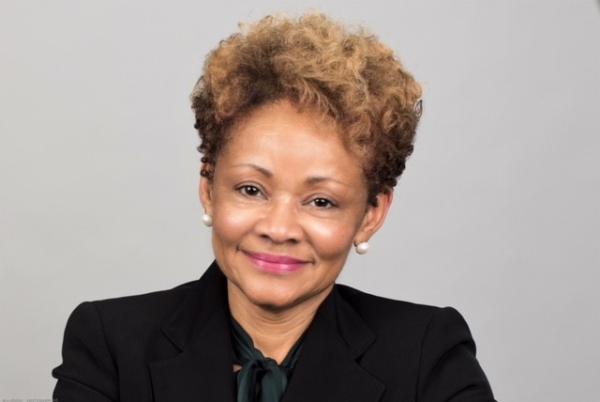
[su_youtube_advanced url="https://www.youtube.com/watch?v=8JR_5IQlhxk&feature=youtu.be"] Last year I participated in a Colloquy at Wabash entitled “Teaching the Black Presence.” Not long after, for the first time in my career, a white male New Testament scholar, Dan Ulrich, approached me about teaching an African American biblical interpretation course for students, primarily white, attending Bethany Theological Seminary in Indiana; for some reason I imagined them to be primarily male. Dan had read and assigned students to read the essays I wrote in True Our Native Land (2007). By Dan’s own admission, he might have been “scared away by the strong hermeneutics of suspicion developed” in my recent work, much of which he has now read for this course. That reflects change. In my experience it is not unusual for scholars in biblical studies to be more familiar with the work of black males than with the scholarship of black females, but that is changing. This collaboration between Dan and me is novel for both of us, and taking it online in the pandemic brings its own challenges. We each carry our own ‘baggage,’ and we are committed to working through it to create a pedagogical experience that will enhance learning for the students enrolled and for ourselves. I am the teaching faculty for the course, the expert in African American and womanist biblical interpretation, although my dissertation and the book I published from it are readings of the Acts of the Apostles. I am a biblical scholar--this is often lost on some colleagues across the academy, as well as students, in my experience. So, as we navigate our way through this course—become acquainted with each other as scholars and human beings—our ‘baggage’ will trip us up at times. But hopefully we will also shed some ‘baggage.’ This is not an easy journey for either of us because of experiences, the ways that we have been socialized in the academy and society, both of which are racialized and gendered in favor of white males and the scholarship they do. We both have been shaped in ways we can and cannot immediately identify. In a meeting during the Colloquy with our consultants (Dr. Marcia Riggs and Dr. Mary Hess), Mary provided feedback to Dan on his first draft blog. It was feedback that I withheld because I did not believe Dan could receive it from me. This is my baggage. After Mary spoke, I confessed that I had a similar impression, but did not want to ‘hurt Dan’s feelings.’ But as I reflect now that was not the reason I withheld my critique. I believed that Dan would not receive my critique, and so why offer it. I was guilty of what I and other black scholars and scholars of color believe (and have experienced) too many white scholars to be guilty of, which is of not providing needed critical feedback to black students and other students of color, of being patronizing and assuming they can’t handle it or are not up to doing the work. I never fail to provide critical feedback to students, regardless of race-ethnicity, gender, sexuality, and so on. But I neglected in Dan’s case to offer useful critique, and my failure was not beneficial to him. I didn’t give Dan the chance to receive my feedback with grace and collegiality until after the white woman scholar offered hers. Going forward I must be honest with Dan, tactful, but honest in offering critique, because he has said he is participating in this collaboration as a learner and peer. This change would reflect neighbor-love informed by a self-love that values critical feedback as necessary for success. As a learner-collaborator, I am grateful for the idea from our consultants to ask students to write more than a two-paragraph statement describing the contexts that impact their selection and reading of a pericope. Our consultants have encouraged me to ask students to write an extended hermeneutical autobiography that will assist them in thinking more critically about their contexts and how culture and social identities, for example, shape them. This collaboration is not easy, but it is giving me life and pedagogical strategies and ideas. Read About Dan Ulrich's Experience with Mitzi Smith
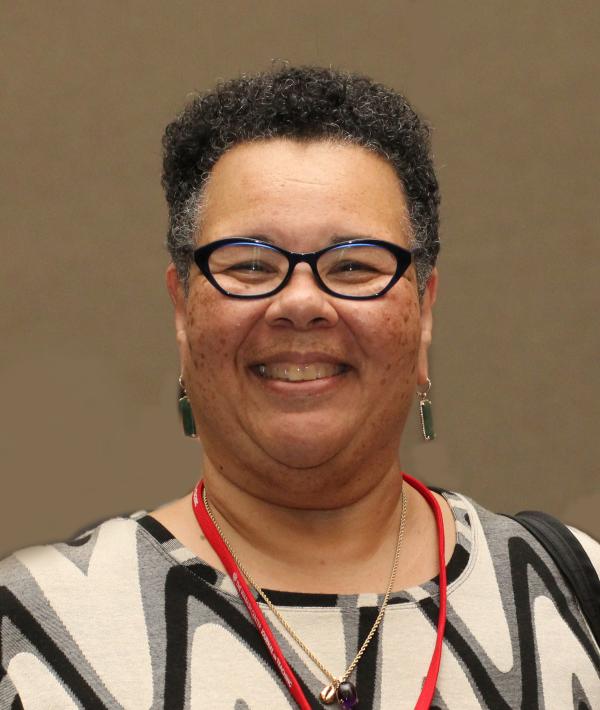
Killer Mike said, “I hope we find a way out of it, because I don’t have the answers. But I do know: we must plot, we must plan, we must strategize, we must organize, and mobilize.” In this moment of triple-pandemic, the story of the Wabash Center aligns with Killer Mike’s message for agency, imagination, and cunning, as we support faculty and administrators in religion and theology. I read the many, many statements, treaties, and proclamations written by school administrators, corporate chiefs, government officials, and preachers. Each statement, in its own way, condemned the deplorable activities of racial injustice. I suppose making a statement declaring one’s values in a moment of social strife is better than leaving us to guess about institutional commitments concerning racism. But, most statements, from my vantage, while noble, did not provide a clarion commitment to the work and sacrifice needed for sustainable change. Killer Mike’s statement, simple and elegant, was a call to gather together and design the America which is dreamed about, but which goes unrealized. Michael Santiago Render, better known by his stage name Killer Mike, is an American rap artist, songwriter, actor and activist. He is also the son of an Atlanta police officer. Killer Mike was called to speak on camera the day after the social uprisings began in response to the public torture and execution of George Floyd by the Minneapolis police. The tape of the police torturing and murdering George Floyd has gone viral and has ignited, again, the outrage of those of us who are against police brutality. Police terrorism is one of the many forms of white supremacy which infest and infect the U.S. democracy and keep racism an integral part of capitalism. Now, months after the day George Floyd was killed while calling upon the ancestors, the marches, protests and rebellions continue. Additional police executions caught on camera since the murder of George Floyd has served to increase the anguish, fear, anger and terror which grips the USA people. White America is coming to terms with what Black Americans have known and survived for 400 years, i.e. African American citizens, and other racially marginalized communities, are systemically terrorized by police forces in towns and cities all over the country as an accepted means of white supremacy and structural oppression. Ending this scourge will take all of us plotting, planning, strategizing, organizing and mobilizing for meaningful change to the infrastructures of America. We, all of us, are in the throes of reckoning with the exposed fissures of racism made vivid by the flagrant police terrorism caught on cameras. We are depending upon good-hearted white people to shed the flimsy veneer of “I did not know,” and work to redesign the social systems broken by white supremacy. Complicating this work, is the national economic upheaval for which we have no map and no solution. Beyond white supremacy and impending economic disaster, we, all of us, are grappling with a global pandemic caused by the novel corona virus for which we have no vaccine, no medicine cocktail, and little federal leadership. The triple pandemic heightens the need for our best minds to collaborate, partner, and find new solutions for these mammoth problems. If we are to survive, we must plot, plan, strategize, organize, and mobilize. While there has been emancipation in the USA, there is not yet freedom for all. It’s almost difficult to remember my job as director before the pandemic, before the rebellions, before the skyrocketing U.S. unemployment rate. I started my new job as director on January 1. Then, along with the faculty, administration, and students of Wabash College, the Wabash Center staff began working remotely on March 17. Orientation to my new responsibilities and role, new house, new town, and new staff colleagues quickly shifted to a kind of triage where we asked ourselves, in every way we knew how - What can the Wabash Center do to support faculty of religion and theology in this moment of confusion, remote learning, and economic uncertainty? The Wabash Center’s nimbleness, willingness to be flexible and tireless work ethic, girded-up in March when our work went remote. My blue-ribbon staff and I immediately made the following pivots to the Wabash Center programming: • all late spring and early summer activities went online or were rescheduled • produced topical podcasts and webinars – to date we have more than 4000 downloads • created Digital Salons for fall 2020 (See: https://www.wabashcenter.wabash.edu/programs/digital-salons/) • spoke with more than four hundred workshop and colloquy participants for care and check-in • spoke with grant holders to extend deadlines of reports • created new resources for website on topics of remote teaching and racial justice • created the Teacher’s Art Corner for expressions in this moment We are currently in conversation with the colleagues of Lilly Endowment, Inc. to develop new programming for 2021 which will focus on issues directly related to the triple- pandemic. In this proposal, we would build partnerships with the Fund for Theological Exploration, In-Trust, Collegeville Institute and several Historically Black Colleges and Universities plus African American seminaries. A grace of this moment for the Wabash Center is that our story, since its inception, has been a story of justice, activism, and teaching toward equity. Twenty-five years ago, Raymond Williams proposed a center for teaching and learning to strengthen teaching by teachers of religion and theology in colleges, universities, and theological schools in the United States and Canada. Raymond, to this day, is on the frontlines fighting for issues of racial justice and equality. Under the leadership of Lucinda Huffaker, the Wabash Center offered its first workshop in 2002 exclusively for African American faculty. I was a participant of that workshop. It is not an overstatement to say that that experience saved my career. Colleagues in that workshop have served as Deans, Department Chairs, and Presidents for theological schools and universities. Our contribution has been significant and I would like to think that Wabash Center had a part of our strivings. Dena Pence deepened and expanded the offering of support for racial/ethnic particularity. Dena expanded the grants for racial justice, created the Peer Mentoring Program, expanded the Consultants Program which, among many issues, sends colleagues to schools to discuss issues of diversity and inclusion. The programmatic archive of the Wabash Center speaks for our commitments to resisting racial oppression and the challenge of redesigning the higher education enterprise as a place of racial equity: Racial/Ethnic Diversity - Teaching Workshops and Colloquies 2019-2020 Colloquy on Race Critical Consciousness for Transformative Theological Education 2018-19 Teaching Against Islamophobia 2017-18 Asian/Pacific Islander Faculty 2015-16 Faculty of African Descent 2012-13 Workshop for Latino/a Faculty 2011-12 Asian/Asian North American Faculty 2009-10 Faculty of African Descent 2008-09 Colloquy for Latino/a Faculty 2006-07 Asian/Asian North American Faculty 2006-07 Fostering Effective Teaching and Learning in Racial/Cultural Diverse Classrooms 2004-05 Teaching in Racial/Cultural Diverse Classrooms 2002-03 African American Faculty 2019 Asian Theological Summer Institute Workshop on Teaching 2018 Hispanic Theological Initiative Workshop on Teaching 2017 Asian Theological Summer Institute Workshop on Teaching 2016 Hispanic Theological Initiative Workshop on Teaching 2015 Fund for Theological Exploration Workshop on Teaching Fund for Theological Exploration Workshop on Teaching 2014 Asian Theological Summer Institute Workshop on Teaching 2013 Hispanic Theological Initiative Workshop on Teaching 2012 Fund for Theological Exploration Workshop on Teaching Fund for Theological Exploration Workshop on Teaching 2011 Hispanic Theological Initiative Workshop on Teaching Beyond our programming, the Wabash Center has funded several hundred grants and fellowships supporting the work of racial ethnic scholars, as well as supporting projects which boost the scholarship of teaching for diversity, inclusion, and equity. The Wabash Center is uniquely positioned to respond in this peculiar and unprecedented time. We, staying true to our own DNA, are working hard to assist with issues of remote teaching, stand with those who teach against white supremacy, and support schools who are in the throes of the economic downturn. This work is our mission, our legacy and will be our future. Our greatest asset is our constituency. We are uniquely positioned to nurture sustained social change because of those scholars who have participated in our workshops, colloquies, conferences, podcast and webinars; those scholars who have received grants and fellowships; those who have written for the Journal on Teaching and received support and mentoring through a consultant’s visit - have created a vital network.
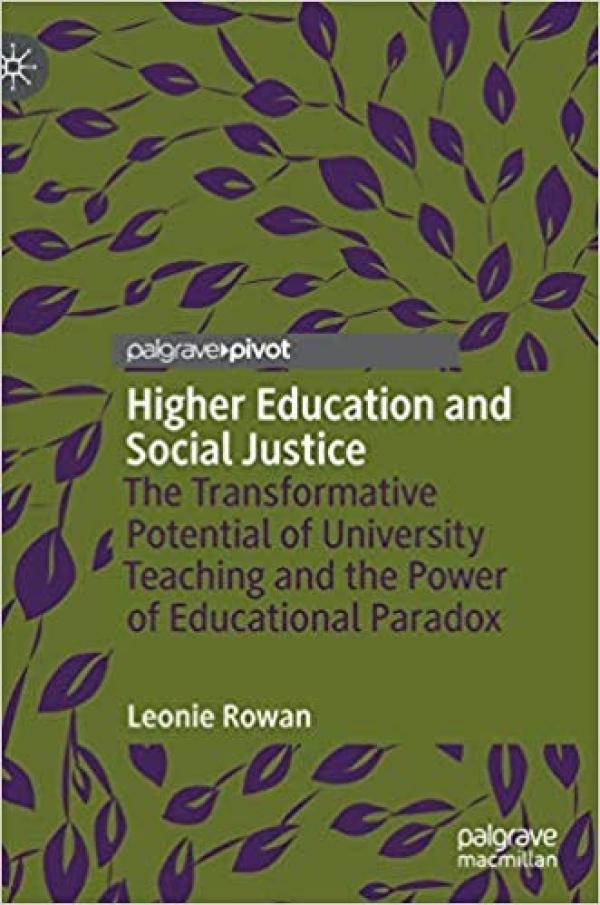
At a recent workshop on “Diversity, Civility, and the Liberal Arts,” I found myself in the company of faculty and staff teams from small colleges and universities around the United States who find themselves, like Leonie Rowan, “motivated by a desire to create university contexts in which diverse learners feel themselves to be included, valued, and safe” (1). This desire names the telos, or end, towards which critical, liberative pedagogy aims – freedom. Unlike the Aristotlean defense of the liberal arts as education suitable for free persons (read: male, property-owning citizens), Rowan’s notion of freedom extends to all learners, especially those whose participation in higher education has been constrained by the unjust dynamics of the sociohistorical contexts in which they happen to be born. Rowan argues that education can be transformational when the decision-making processes in higher education – from curriculum and syllabus design to admissions policies and the student support portfolio – begin with the question: “For whose freedom – in whose interests – do we, now, labor?” (4). It is an important question that suggests that not all student-centric approaches lead to models of student-as-customer and higher education as a private good. For readers who have followed debates about diversity and inclusion in higher education since at least the 1990s, the terrain Rowan is covering and the companions along the way will likely be familiar – notably, the relationship centered, liberative philosophies of Paulo Freire, bell hooks, and Parker Palmer. Like many social currents today, it is difficult to avoid a sense of déjà vu when reading about education and “its fundamentally constructed and negotiated nature” (16) and the need for academics to embrace “the idea that language is a site of struggle” (18). The key move Rowan makes is the attempt to get underneath these now familiar discursive moves in order to understand “what it actually, really, feels like to study within a university classroom” (15). In so doing, she sides with social justice theorists like Nancy Fraser whose notion of participative parity juxtaposes classical questions of social justice as distributive justice with questions related to recognition and representation: “do people have the opportunity to participate in an environment on an equal footing” (14)? The middle chapters demonstrate how pedagogical decisions that flow from notions like participative parity have the potential to transform student engagement. Empirical evidence for this potential is drawn largely from Rowan’s own classroom experience educating future teachers from diverse backgrounds in an Australian university. The data sets consist of student course and instructor evaluations as well as brief “doorstop” interviews with students, most of which confirm what she highlights in the scholarly literature about student engagement and diverse learners. These chapters would, in the end, make much better stand-alone scholarship of teaching and learning articles, offering insights from her own successes and failures to create the type of classroom space she desires. In a telling example of the challenges of actualizing this type of space from chapter four – for me, the strongest section of the book – Rowan describes what she refers to as “one of the most appalling lessons I have ever taught” (115). She acknowledges that in her attempt to empower diverse learners with a lens for critically interpreting past discrimination against First Nations people, she inadvertently opened the door to “inappropriate and offensive language.” The effect was immediate: the goal of a charged but hospitable environment (one of Palmer’s educational paradoxes) devolved into something “destructive and frightening.” Despite her extensive background and skills as a facilitator of difficult dialogues, she acknowledges that this episode created fissures in the class that could not be overcome – indeed, “several of the participants never returned to the class again” (115). What is most striking about this example in the context of her overall argument is the short shrift she gives it. Offered under the heading “A Summary and a Pause,” she relates this anecdote in the space of a page or two, as a kind of aside. Yet, for me, this anecdote is at the heart of her project, illustrative of the pitfalls of liberative pedagogies that fail to adequately acknowledge the priority of her other pedagogical concern: relationships. She concludes the anecdote with an apology to all the students involved, and in this gesture – as well as the telling of the anecdote itself – Rowan reveals herself to be the kind of caring, reflective, intentional pedagogue needed to hold educational paradoxes in creative tension and to resist conflating “giving students an opportunity to have their individual voices” and “anything goes” (116). Yet, the reader is left wondering what she would do differently next time? The evidence she has gathered from years of student evaluations and the practical wisdom she has accumulated teaching these topics semester after semester surely has something important to say about how this might be handled, whether in forms of restorative practice for that particular class or decisions she made the next time to create a more “sufficiently hospitable” (116) environment before introducing similar content. Given her primary data sets for the rest of her argument, it may also have been instructive to hear how students processed that experience in their evaluations. This particular example points to a challenge that has become more acute in recent years as attempts to create participative parity in college classrooms and curriculum have sparked various forms of resistance by those who perceive this type of parity as a threat. While Rowan acknowledges this challenge, the lack of engagement with recent scholarship on concepts like white fragility risks limiting the liberative early insights of luminaries like hooks, Freire, and Palmer. Emerging research on best practices for engaging straight white males as social justice allies on college campuses reveals something about the educational paradox faculty face when introducing issues of social justice in their classrooms – environments that help some diverse learners feel valued and safe may have the opposite effect on other diverse learners (e.g., Vianden 2018). Rowan alludes to this paradox when she coins the term “furiety,” which she refers to as an approach that recognizes, on the one hand, multiple dimensions of diversity including individual differences within traditional categories (e.g., race) and, on the other hand, “a commitment to intellectually charged activities approached through pedagogical variety” (87). Furiety opens a way into a deeper analysis of the example above. More importantly, for those of us who struggle daily to live into the question “For whose freedom – in whose interests – do we, now, labor,” Rowan’s further development of the term may encourage us to respond with greater integrity: “All of my students.”
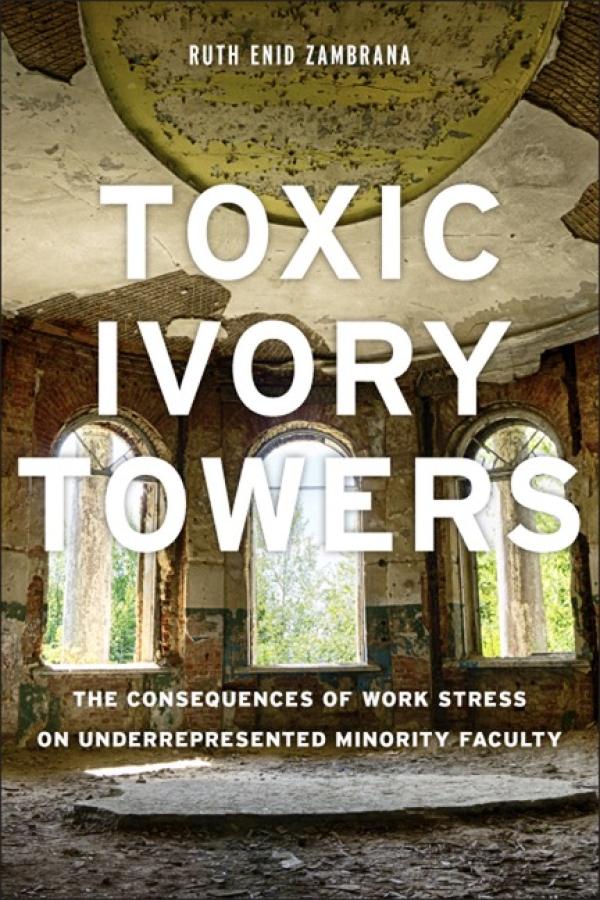
Ruth Enid Zambrana’s Toxic Ivory Towers presents readers with new research on the conditions and consequences of workplace stress among underrepresented minority (URM) faculty in higher education. It draws from the “largest web-based survey of URM faculty in the United States to date” (13) and focuses particular attention on the experiences of African American, Latinx, and American Indian early- to mid-career faculty at elite universities (12). The study examines “the associations between workplace stress, academic organizational factors, coping strategies, and physical and mental health among URM faculty” (10). Zambrana also brings more than thirty-five years of experience to the table as a URM teacher, researcher, and faculty member in order to demonstrate that “workplace stress on URM faculty colleagues is uniquely and adversely impacting their lives” (21). In chapter one, Zambrana illustrates the gap between the stated commitments and actual commitments of universities to diversity initiatives in general and to URM faculty in particular. Then chapter two explores the complicated history behind recruiting URM faculty into the academy. Chapters three through five focus on the climates in which URM faculty experience high levels of stress: climates that are often structurally racist (chapter three), that use mentoring programs to mask deeper problems (chapter four), and that foster micro- and macro-aggressive discrimination (chapter five). Chapters six through eight deal with the impact of work stress on URM homes and families (chapter six), on advancement opportunities such as promotion or tenure (chapter seven), and on emotional and professional well-being (chapter eight). Chapter nine considers the complexities around gender dynamics. Chapter ten exhorts academic leaders to listen to and learn from URM faculty experiences in order to renew their practices. On occasion, Toxic Ivory Towers plods along on account of too many first-hand verbatim reports. More selectivity in verbatims would help with flow. Also, it would be more beneficial to readers if Zambrana proposed a clearer roadmap for the future. Creative solutions are usually more complex than learning from past mistakes and correcting them. However, the many strengths of the book will lead many readers to overlook its weaknesses. Zambrana unmasks the misleading data that a lot of universities publish on the “success” of diversity initiatives; she offers constructive language for URM faculty to help name their experiences; and, her work provokes responses that challenge the status quo. Those who read this book may experience a diverse number of responses: some may be surprised by research findings, others unsettled by testimonies, others reassured they are not alone in their experiences, and still others an aggregate of reactions. Every academic leader (presidents, deans, department chairs, and so forth) who wants positive change in these areas will benefit from interacting with Zambrana’s research, and virtually every URM faculty member will benefit from her adeptness at naming the workplace stressors that they experience.
Teaching and learning become rich and exciting when any classroom makes room for and taps into the resources of diverse backgrounds, contexts, and identities. Also, it’s the right thing to do. When I began teaching online, I knew classroom diversities might increase due to broadening access, but I suspected student diversities could also be less visible due to the individuating and sometimes alienating aspects of technology. Yet in online contexts, foregrounding and integrating room for diversities into teaching and learning is surprisingly easier than you might imagine. Online students have more ways to participate in conversation, experience greater equity from the outset, and often exhibit deeper transparency. How can an online educator make more of diversities in a virtual classroom and tap into their teaching and learning potential? Increased access to classroom diversities was an important draw for me into online education because I teach at a theological school in the far eastern corner of Tennessee. During a 2014 sabbatical, I traveled throughout the United States, Europe, Africa, and Mexico. In many places, vital and thriving ministry was happening without good access to theological education. Many of the people I encountered would not be able to relocate to my school. I began imagining a classroom where a male, Kenyan micro-lender in the Mathare slum district of Nairobi and a Chicago-based, African American woman in urban church planting could have access to theological education and both be in the same room learning together and from one another. The kind of diversities I imagined while traveling now exist in my online contexts, and I aim to embrace them as an asset in theological education. How can online teaching and learning make room for greater diversities? Begin by welcoming student engagement that makes connections to students’ own contexts and backgrounds. Then, incentivize, encourage, and reward these connections across your course design: in opening introductions; discussion posting; student selection of readings, assignments, and projects; and integrative exercises like papers or exams. In all learning tasks and rubrics, objectives should include making resourceful connections to one’s own history, identity, or current contexts. Keep students engaged and invested while simultaneously making learning moments more tangible by emphasizing the contribution of student diversities to learning. Doing so makes diversities a more visible and constructive part of teaching and learning. Students are invited to witness connections happening in the work of their peers and are drawn to do the same. They begin to hear, learn, and feel challenged by their own and others’ diverse perspectives and orientations. Yet, I’ve learned along the way that the contours of online classroom diversities are unpredictable and can unfold in unexpected ways. For example, a white, male American student in an online course entered imagining he had no resources from his own context for theological learning. He named his rural and poor upbringing, and his ministry experience in both conservative and progressive West Virginia congregations as limitations. In response, other students helped him recognize the displacements and pressures that were indeed shaping his theological convictions. Identity in online contexts includes complex and shifting aspects of race, sexuality, trauma, geography, economics, citizenship, displacements, and more. Often, students’ own self-awareness around this multi-layered complexity is shifting in the midst of a course and in response to readings, peer-to-peer engagement, and/or assignments. Hosting spaces where students are invited to name what they are learning from their own contexts and backgrounds and from those of their peers becomes vital. Online learning tends to feel more “democratic” because it allows all learners to enter discussions under similar parameters. But online educators must be aware of persisting inequities. Safety can be heightened by using netiquette guidelines and checking in personally with students when they shift into overly aggressive or suddenly silent postures. Yet, if “democratic” means majority opinions rule, minoritized students will be susceptible to overt and subtle forms of silencing by their peers, while being more exposed and vulnerable in the process. In my experience, subtle forms of deflecting peer voices happens when students champion what they already (think they) know, rather than sharing what they are actively learning. I prioritize and reward only the latter. Surfacing diversities that already exist, and making room for more diversities, enhances learning in the online classroom. It’s risky and needs adaptive and adapting postures, a self-aware and engaged teacher, and rethinking of all elements of course design. I remind students regularly that part of our learning together is about how theological engagement and conversation becomes welcoming and constructive. In that engagement and conversation, every person is a vital and valued contributor in the process of teaching and learning. Making more of diversities enhances every potential for learning, empathy, and relevance.
The pursuit of higher education has become increasingly popular among students of many different backgrounds and cultures. As these students embark on higher learning, it is imperative for educators and universities to be culturally sensitive to their differing individualities. Student Culture and Identity in Higher Education is an essential reference publication including the latest scholarly research on the impact that gender, nationality, and language have on educational systems. Featuring extensive coverage on a broad range of topics and perspectives such as internationalization, intercultural competency, and gender equity, this book is ideally designed for students, researchers, and educators seeking current research on the cultural issues students encounter while seeking higher education. (From the Publisher)
Ariel Ennis, Assistant Director and Senior Multifaith Educator at the Of Many Institute for Multifaith Leadership in the Office of Global Spiritual Life at New York University, has authored an important contribution to a burgeoning literature on campus-based interfaith and interreligious outreach. Noting that diversity and inclusion initiatives on American campuses frequently address race, sexuality, and gender while ignoring religious identity, Ennis reports on efforts at NYU to create a center to support spiritual life. Special attention is given to the development of a “Faith Zone” curriculum that trains leaders for enhanced multifaith encounters. Ennis analyzes a variety of extant approaches to cross-cultural religious and spiritual experiences, looking at intended outcomes of different programs. Focusing on the concept of “religious literacy,” he describes a framework for the NYU workshops on spiritual diversity that supports religious literacy initiatives. Included in the book is the Faith Zone curriculum and rubrics drawn from the AACU (Association of American Colleges and Universities) VALUE rubrics that are used for post-workshop outcomes assessment. He shares data from these assessments in order to demonstrate the impact on campus of the religious literacy curriculum. The book closes with the author’s reflections on how Faith Zone workshops could be offered on different types of campuses (public/private, religious/secular) and with his recommendations for successfully meeting challenges emerging from the workshops. Campus religious literacy initiatives that Ennis advocates embrace the question: Can we teach people to have more productive conversations about religion and spirituality in diverse settings? Using the definition of religious literacy developed by Dianne Moore of the Religious Literacy Project at Harvard Divinity School, Ennis answers this question affirmatively, setting four outcomes for the interfaith curriculum. Workshops will (1) enhance participants’ knowledge of historic and contemporary interconnections of religion with cultural, political, and social life; (2) embrace an ecumenical orientation that offers participants firsthand experience in exploring religio-cultural boundaries; (3) promote self-awareness about the intersections of participants' religio-spiritual identities with larger social forces; and (4) encourage participants' commitment to apply their new found religious literacy through practical projects that bridge intercultural divides. In contrast to Eboo Patel’s portrait of a fraught relationship between interfaith outreach and religious studies programs (https://www.wabashcenter.wabash.edu/scholarship/interfaith-leadership-a-primer/), Ennis’ book points to positive implications for partnerships on campus between religious studies programs and interfaith outreach. Similarities between Faith Zone outcomes and learning outcomes/assessment of the religion major on many campuses suggest productive cross-fertilization. Students could sustain the long-term impact of the workshop outcomes, adding depth and breadth, through coursework in religious studies grounded in similar learning outcomes. In complementary fashion, religious studies majors could apply learning in the major outside the classroom, enhancing their resumes, through interfaith internships: as graduates of Faith Zone training, they could lead workshops on religious literacy and develop and lead associated campus programming.
This book is one among fifty others within the Multicultural Education Series. According to the series editor James A. Banks, these books “[summarize and analyze] important research, theory, and practice related to the education of ethnic, racial, cultural, and linguistic groups in the United States and education of mainstream students about diversity” (xiii). Özelm Sensoy and Robin DiAngelo’s book focuses on social justice. For distinction from the commonplace notion of social justice, Sensoy and DiAngelo use the alternative term “critical social justice.” By critical social justice, they mean: (1) recognition of unequal social power relations at the individual and group levels in society; (2) understanding of one’s place within these relations of unequal power; (3) critical thinking on what knowledge is and how it is produced and acquired; and (4) action informed by the best understanding of what social justice is and sound methods for its realization in society (xxi). Sensoy and DiAngelo provide guidelines for teaching and learning social justice. The book consists of twelve chapters. The chapters include: pictures; charts; figures; vocabulary lists; boxes for definitions of key terms and reminders of ideas and concepts if discussed in a previous chapter; questions for discussion; and instructions for learning activities. The authors intend for persons to read the chapters in their numerical order. The content of the book is cumulative, with each chapter building upon the one that precedes it. There is an underlying logic in the linear progression of the chapters. Chapters 1 and 2 deal with instructional matters, providing students with guidelines for learning social justice course content (6-18), instructors with guidelines for grading student performance (19-21), and both with an overview of critical theory in social justice courses (25-27). Chapters 3 to 5 define the concepts and operations of culture, socialization, prejudice and discrimination, and oppression and domination (36-40, 51-57, 61-73). Chapters 6 to10 define ableism, sexism, racism, and classism and describe how they pervade social institutions (82-86, 104-115, 123-129, 142-144, 156-162, 177-182). Chapter 11 refutes 13 common statements that are used to discredit social justice education (186-197). Based on Sensoy and DiAngelo’s definition of critical social justice, Chapter 12 specifies four learning outcomes for social justice education and crafts possible scenarios for illustration of the kinds of actions for each outcome (200, 203-204, 207, 211). Though written primarily for white readers, Sensoy and DiAngelo’s book merits consideration by all readers interested in social justice education in pluralistic society. The series editor notes that “most of the nation’s teachers are white, female, and monolingual” (xii). Using the terms “we” and “us” throughout the book, Sensoy and DiAngelo acknowledge their associations with this demographic group (120). Given the fact of intersectionality – that any one person has multiple associations – race or ethnicity cannot be a person’s only identification (138, 175). The complexity of human subjectivity warrants the concern of all persons with social justice in a world characterized by ever-increasing diversity.
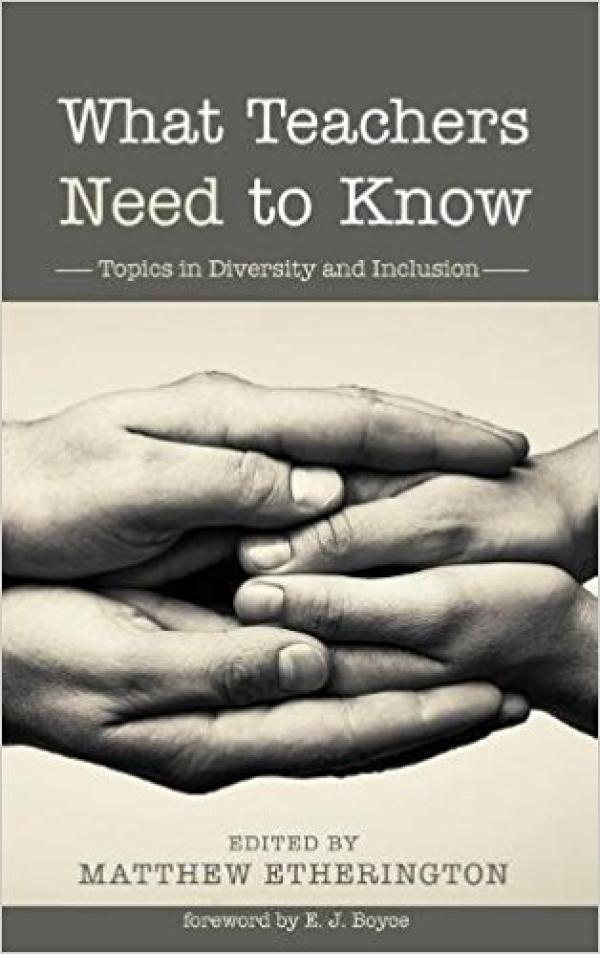
What Teachers Need to Know (Etherington, 2017) is a substantial text defining the diverse and inclusive experiences of contemporary education systems. The book is a compilation with three major parts: “Ethics,” “Inclusion and Teacher Management,” and “Worldview and Story.” Each chapter provides reading questions for use in a classroom setting or for deeper reflection. This is well-suited for an audience in higher education, especially for readers who could share personal experiences with diversity and inclusion topics after a practicum or time teaching. I would recommend this book for a post-graduate education library. The first part, “Ethics,” includes works by Sherick Hughes, Martyn Rouse, Jonathan Anuik, Chet Bowers, Eva Maria Waibel, the editor, Matthew Etherington, and James Dalziel. There is quite a range of topics in this section, but the Wabash Center reader might be particularly interested in Anuik's essay on faith-informed discourse. It is a study about the influence of missionary education on Indigenous beliefs, and how that reaches into Canadian public education today. It compels the reader to contemplate whether church and state can truly be separate in an educational context when there is such a significant inheritance of practice and values from a period dominated by religious influence. Part Two, “Inclusion and Teacher Management,” includes works by Peter J. Froese, Ken Pudlas, Lucinda Spaulding, Karen Copeland, Bruce Shelvey, and Ken Bradley. Spaulding's essay reflects the current shift of attention to patterns of bullying and puts forward the mechanisms school communities can provide for the resiliency of the students. Other essays in this section discuss topics such as mental health, special needs, and even bring in the parents' view on these issues as they exist in the educational system. This is an exceptional collection of essays on inclusivity. The third and final part, “Worldview and Story,” includes works by the editor, Matthew Etherington, Edward R. Howe, Adam Forsyth, Leo Van Arragon, Christina Belcher, and Cynthia à Beckett. This section has the most obvious correlation to religious studies within educational contexts. Topics include: tolerance, science and religion, and epistemology. This section could serve as an excellent initial reading for students in a practical theology or other contemporized religious studies capstone course. This book might not be a comfortable read in a public classroom, but maybe that is exactly why it should be read. Etherington's compilation offers academic theological reflection for secularized educational contexts. This book could be useful in a range of contexts. It may be particularly helpful to new teachers, parent associations, pastors of students, and community leaders.
As many of the contributors to Teaching Interreligious Encounters point out, interactions with people of diverse religious commitments are becoming more frequent in the workplace, in civic affairs, and in many neighborhoods. Consequently, there is a need to help individuals develop the attitudes and aptitudes that will enable them to conduct those encounters in an informed, respectful, and personally satisfying fashion. This volume argues that education, particularly in the undergraduate classroom, can make a substantial contribution to preparing individuals to understand and participate effectively in a religiously diverse society. To that end, the contributors offer an array of resources, comments on course and assignment design, and concrete strategies to show students how to conduct themselves in and learn from “interreligious encounters.” Precisely what is entailed in such encounters and how they are to be enacted and understood receive a variety of answers throughout the book. At times, whatever lines might separate interfaith engagement from interreligious encounters, and either from comparative theology, and all of them from comparative religion do not appear in sharp focus. Some authors appear to use at least several of those terms as rough equivalents, while others strive to define their terms very clearly. For example, Eboo Patel and Cassie Meyer propose that “interfaith or interreligious studies is concerned primarily with the interactions between lived religious and nonreligious actors and communities” (300). Thus, they differentiate it from “comparative religions, comparative theology, and world religions” which they see as being less concerned with actual relationships and interactions. But several contributors cite with approval Francis Clooney’s statement that comparative theology “entails the interpretation of the meaning and truth of one’s own faith by means of a critical investigation of other faiths” (see 45), which would bring it closer to Patel and Meyer’s understanding of interfaith and interreligious studies. How to construct courses, course modules, and individual assignments to promote what Patel and Meyer call “interfaith literacy” receives a lot of attention. Joshua Brown, for example, describes and analyzes a course on political theology that uses examples from Christianity and Chinese religions. Jonathan Edelman provides a detailed consideration of the Bhagavad Gita as a theological text. Other authors focus more on pedagogical strategies. In one of the more interesting contributions, Devorah Schoenfeld and Jeanine Diller describe how they use the Jewish process of hevruta to encourage students to disagree with each other in their interpretations of texts while still remaining in conversation, recognize disagreements within and among religions, and value interreligious disagreement. Emily Sigalow and Wendy Cadge make a clear and strong case for the value of using case studies in teaching about interreligious encounters, something that several other contributors also mention. Most of the contributions emphasize that students can learn something personally valuable and meaningful from studying and especially participating in interactions with people who have religious commitments different than their own. This volume offers a rich set of suggestions about how to design and structure such learning opportunities.