Resources

Princeton Theological Seminary recently doubled-down on its commitment to residential theological education. As you can imagine, the transition online for an institution that has no online degree programming has been a shock to the system. However, last year, the seminary opened an Office of Digital Learning. With attentiveness to the needs of learners during this unprecedented time, we have been able to transition smoothly and have received overwhelmingly positive feedback from both students and faculty. As the Digital Learning Designer for the seminary, I have three suggestions for effective theological education during this crisis that I would like to share with you. I hope these ideas will inspire meaningful teaching and learning now that you’ve done the challenging work of transitioning online. #1 PRIORITIZE CONNECTION Right now, students may be feeling particularly unmotivated if what you are teaching seems abstract or disconnected from their lived experiences during this pandemic. By connecting your teaching to what they are experiencing, you will deepen the learning that takes place. Here’s what one PTS faculty member said about how they’re doing this: In today's class it was clear that many--especially those with children--are highly anxious. We tried to channel that anxiety--and the class's broad level of concern for what's happening in the world--directly into our discussion. . . if they were going to take time away from their families under these circumstances of global crisis, the class by golly had better be worth it. It had better be relevant to the crisis they/we are all experiencing. I found this to be very profound and instructive for seminary education in general. I will try to carry that sense of urgency and relevance into the other class as well to try to generate more investment on the students' part. Draw upon what’s going on in the world and in students’ lives right now and integrate that into your teaching. The best learning takes place when students are motivated and when content is relevant to their lives. For more, click here to read an article by Craig E. Abrahamson, a Professor of Psychology at James Madison University, about motivating student learning through personal connection. #2 CHOOSE LEARNING OVER CONTENT TYRANNY Content tyranny is what happens when you prioritize your content over student learning, when you become more focused on covering material than on cultivating growth. Your content is valuable, and you are most likely passionate about it. However, by letting go of some of your content, you may free up your students to learn better. If the current situation has forced you to drop some course content, let this reassure you. More content does not necessarily lead to more learning. Rather, students will learn better when you select your content carefully, deliver your content thoughtfully, and connect your content intentionally to their lived experiences. For more, click here to read an article by John G. Radzilowicz and Michelle B. Colvin from the University of Pittsburgh about reducing course content without compromising quality. #3 EMBRACE A CREATIVE SPIRIT You are all probably already doing this! The best teaching is a mix between science and art, and, in times like these, pedagogy feels more like artistic expression. If you are still engaging in synchronous learning, each online class session will be a practice in improvisation while teaching. Any number of difficulties might arise, but you can handle these with confidence and grace if you embrace a flexible and creative spirit. As a theological institution with a Reformed heritage, the faculty and staff also trust that the Holy Spirit is at work in the teaching and learning endeavor and in your creative improvisation. Even if technology fails and your words seem jumbled, we trust that the Holy Spirit is at work. For more, click here to read an address by Emilie Townes, the Dean of Vanderbilt University Divinity School, about teaching and the imagination. Taking classes online within a few weeks’ notice is no small task for faculty, students, or staff. At Princeton Theological Seminary, we are learning just how important each individual person is in the process of creating a robust learning environment. We are also learning how essential it is to be attentive to learners’ needs, to be willing to prioritize learning over content, and to be open to the imagination. May you all engage in meaningful connections with your colleagues and students and may you be open to the creative work of reimagining pedagogy during this pandemic. Has your institution embraced or struggled with these elements over the past few weeks? Has there been monumental growth, or is this culture of teaching already well established? Would you add a fourth insight to the list?
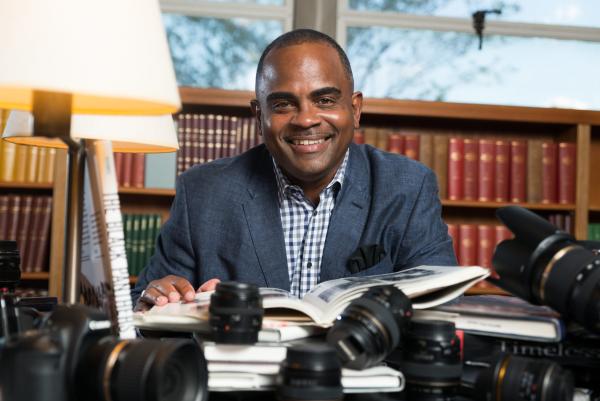
[su_youtube_advanced url="https://www.youtube.com/watch?v=B1v1Z7Yj0OU&feature=youtu.be"] Teaching is an inherently creative act. We have been taught to teach as we were taught. I was taught by classic lecturers. If it wasn't the lecture it was the socratic method, seminar method or students present and lets see who can do the best. When I started teaching I taught like I was taught. I have come to discard the old ways of teaching and allow myself and my students the freedom to explore and create an experience that is saturated with the creative spirit of the times in which we live. In this Vlog I ask what creative rhythms do you have in your life that inspire creativity in your teaching? I share my creative rhythms and I invite you to celebrate yours and realize how they inform the creativity in your teaching.
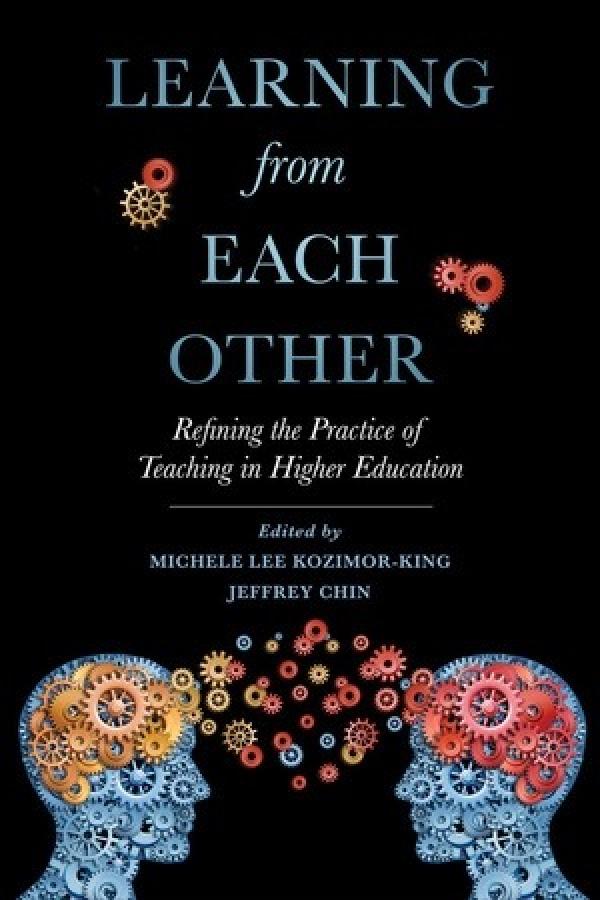
As faculty seek more effective learning and teaching practices, several disciplines have taken a “turn to reflective pedagogy” in recent years. Learning from Each Other: Refining the Practice of Teaching in Higher Education makes a substantive contribution to pedagogical practice in the discipline of sociology; this book is the result of workshops sponsored by the international honor society for the discipline. Contributors reflect a wide range of institutional types, teaching contexts, and research areas. Following a brief introduction by the editors, the book is divided neatly into four parts: curricular innovations, classroom techniques, out-of-class situations, and assessment. Each chapter treats theory and strategy; this combination assures that topics are discussed with sufficient depth and adequate breadth of coverage across the discipline. References are included at the end of each chapter and the book closes with a useful index. Four of the twenty-one chapters in this book will be given attention here. “Courting Controversy and Allowing for Awkward: Strategies for Teaching Difficult Topics,” by Mari Plikuhn, offers sound guidance applicable to any number of classroom discussions and contexts. The chapter addresses controversial content as well as classroom space; it includes helpful strategies for class structure and management. In “Becoming a Culturally Inclusive Educator,” Dena R. Samuels provides a guided sequence of practical steps for faculty engagement in this “transformative process” (203). The reader is encouraged to consider carefully the question of preparedness before working through the eight steps in this process. “The Value of Games and Simulations in the Social Sciences,” by Amanda M. Rosen, assesses the use of this active-learning strategy in a clear way. Rosen weighs barriers and incentives before addressing best practices. Finally, “Putting the Student at the Center: Contemplative Practices as Classroom Pedagogy,” by Tracey Wenger Sadd, supplies a succinct discussion of goals, outcomes, practices, and assessment of contemplative pedagogy. The chapter concludes with considerations and questions for determining the application of this pedagogy. Instructors in Religious Studies and Theology are fortunate that these disciplines are strong in SOTL (scholarship of teaching and learning). These disciplines have a robust infrastructure for engaging in workshops, colloquies, and grant work to strengthen critical reflection on pedagogy. It is telling that instructors in these disciplines continue to produce and contribute highly impactful work on pedagogical research and practice that informs the national discourse. For this reason, there is much to be gained from this book. Discrete chapters may arouse interest in current trends, common questions, and shared efforts. Furthermore, attention to alternative perspectives on recurrent challenges and concerns distinct to a discipline can raise awareness. Finally, the recognition that higher education is growing ever more interdisciplinary makes this an opportune time to reflect on learning and teaching as a collaborative enterprise.
Online learning has come a long way in twenty years. Although distance education has been around in one form or another for a really long time, online education had fairly humble beginnings in California in the late 1990s. As noted in the foreword of Creativity and Critique in Online Learning, “At the end of the 1990s the internet was seen as an interesting application, but not necessarily relevant to all subjects or modes of teaching” (vii). The initial benefit of distance and online education was that it would connect learners together in a networked classroom that spanned further than four cinderblock walls. What initially started as a distance enterprise, where students would log in to a remote learning server and be funneled into a class with potentially dozens to hundreds of other faceless paying customers (and may or may not have received an actual education), the Learning Management System (LMS) has evolved into a “commonplace and essential piece of technology infrastructure in almost every university” (viii). Yet creativity does not come without critique, as is often the case when boundaries are stretched and broken. This volume provides a summary of the creative side of online learning as well as a critique of the overall process, at least within the purview of Open University’s experience as a leader in online learning, answering significant challenges and squashing anecdotal myths throughout. The editors and contributors, all of whom are either faculty at Open University or products of one of Open University’s online programs, seek to rewrite the narrative regarding online education. Rather than asking “Can online study really replicate the challenges and occasional joy of learning in a face to face environment?” (2), these contributors shift the focus to answering questions such as “How can [online learning] help teach the ‘hard to reach’ and how can it provide learning for those who have failed in (or rejected) learning in a face to face context?” (2). Putting aside such arguments as online education being more cost-effective in a bloated yet dwindling brick-and-mortar learning environment and what tools and techniques work the best in an online context, the contributors pull directly from their experience and ground their findings in action research that seeks to add a cogent and coherent voice to the ever-widening field of online learning studies. Creativity and Critique in Online Learning presents real-world problems with and in online learning with real-world solutions from real-world practitioners, some of which worked and some which did not. Of particular note in this volume are the chapters on developing effective forums (chapter 3), engaging students in informal learning communities (chapter 5), addressing concerns with academic dishonesty (chapter 7), and developing appropriate yet effective teacher-learner relationships (chapter 11). Overall, I found this volume helpful. As the director of a completely online graduate program in biblical studies and Christian leadership, I recognize the growing challenge of developing online learning experiences that are academically rigorous while also developing spaces for relational connection and personal growth. I was afraid this book would be another “do it our way” argument. However, the essays are more akin to the casual conversations we catch over coffee at a professional conference than the peer-reviewed “expert” keynote that we actually paid to hear.
As our students encounter work in what is more and more a gig economy, the authors of this book have been thinking about the implications of such employment for those entering the workforce and also for those who wish to pursue creative endeavors either as full-time or part-time work. The authors focus on creativity as a locus for student and worker resilience and adaptation to changes in global economics. The first several chapters outline various theories of creativity. It is particularly useful that the authors elaborate on many varied theories of creativity within different academic disciplines and contexts. Chapter 1 includes thinking about creativity within a global context, and how different social, cultural, and political situations affect the development of ideas of what constitutes creativity, who is creative, and how they come to be creative. The authors consider the nature of creative development within both collectivist and individualist views of society. They also consider several religious contexts for the development of creativity, including thinking about humans as divine conduits, both as described in sacred texts (such as the story of Moses) and as the Muses working through artists. One strength of the early chapters is seeing the deep theory of creativity in a number of fields. In chapters 3 and 4, the authors turn not just to describing theories, but to challenging them, saying that some might misidentify creativity. The authors probe the sociology and social systems that allow certain types of creativity to become dominant in various societies, and which types of creativity are recognized by their societies. The confluence approaches and systems model, which comprise the central chapters of the book, looks at a number of ways in which creativity can fit or allow a person to thrive within a system. The authors highlight various features such as intrinsic motivation, domain relevant skills (such as knowledge of field and necessary technical skills), and creativity relevant skills. An overwhelming strength of this book is how the reader can look through the authors’ lenses of multiple disciplines and access their background research, ideas, and the main voices in their fields for others to know, which helps readers understand how these ideas apply in various contexts. In chapters 5 and 6, the authors turn from a descriptive project to a constructive one, considering how systems approaches can provide guidance for thinking about effective ways to develop creativity in higher education that will provide students and workers with the necessary tools to adapt to new work situations as our economies evolve. The authors then tease out implications and impacts of such a model and its adaptability to other contexts. All these confluence systems are deeply interactive, and recognize the context in which the person has lived and operates. It is here that the book best provides help to scholars and practitioners in theological and religious studies. While the book is written within the context of media studies, it is clear in the second half of the book where these systems approaches could apply to someone who wishes to either research or serve a religious community, and the authors have begun that work of thinking how this model can work in other contexts. In its last chapters, the book provides multiple ideas about how one’s context can positively shape the ability to develop and foster community.
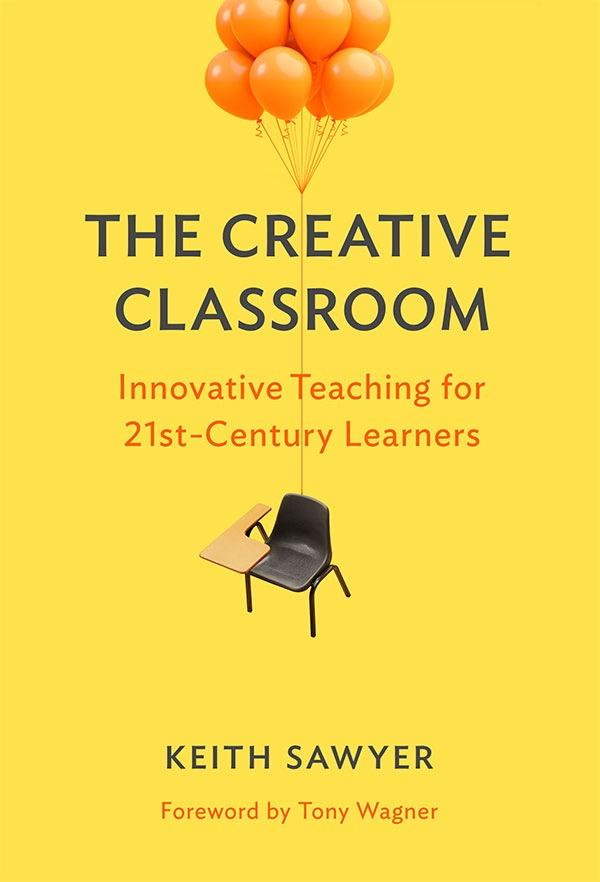
The Creative Classroom presents an original, compelling vision of schools where teaching and learning are centered on creativity. Drawing on the latest research as well as his studies of jazz and improvised theater, Sawyer describes curricula and classroom practices that will help educators get started with a new style of teaching, guided improvisation, where students are given freedom to explore within structures provided by the teacher. Readers will learn how to improve learning outcomes in all subjects—from science and math to history and language arts—by helping students master content-area standards at the same time as they increase their creative potential. This book shows how teachers and school leaders can work together to overcome all-too-common barriers to creative teaching—leadership, structure, and culture—and collaborate to transform schools into creative organizations. (From the Publisher)
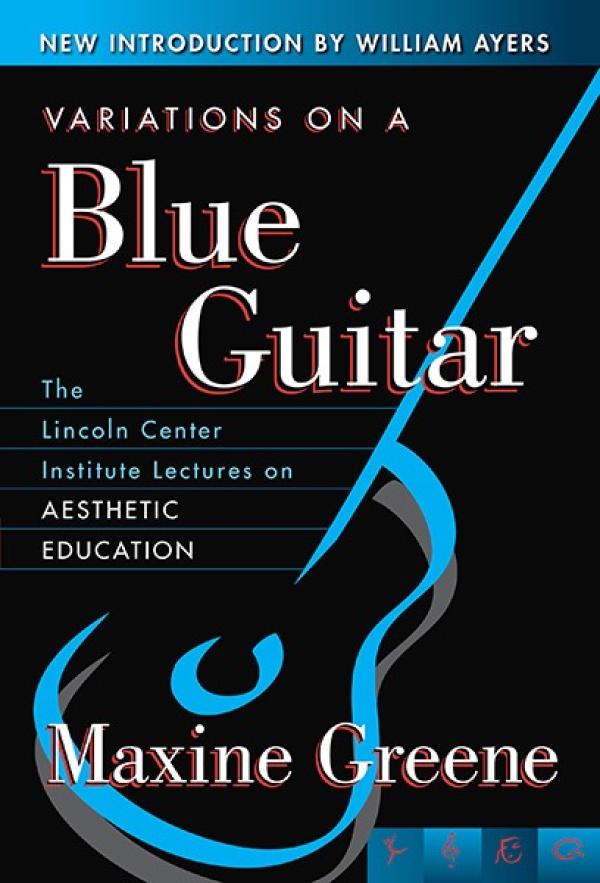
This book is a collection of lectures given by Maxine Greene over a period of twenty-five years. Greene, who passed away in 2014, was an outstanding example of the integration of scholarship and the arts, aesthetic education and social thought. As such, this book is for all those who are interested in education and who seek to make their classrooms energetic, immediate, and alive with imagination and critique (vii-viii). It is a book for any educator in any discipline who seeks to embody transformative classroom experiences for their students. Variations on a Blue Guitar’s introduction and preliminary material familiarizes readers with Greene’s work and her role in the Lincoln Center Institute for the Arts in Education at Columbia University. The book is divided into five sections. The first introduces the reader to aesthetic education. Greene believes that aesthetic education creates different modalities of expression that result in new ways of doing education in the classroom. For Greene, engaging art in education elicits “fresh connections, unsuspected meanings, and. . . continuing discovery” (42). The second section works through the experience of the imagination and its implications in the classroom. One of the goals of education using art is to suggest alternative realities for the material being discussed. Greene describes concrete, purposeful, and evocative experiences with art. However, she also gives concrete examples of how one can live these experiences in moments of awareness in the natural world (72). Furthermore, she uses examples from literature, visual art, and even the natural world of these moments of awareness where an awakening occurs and one has a new field of perception of reality. The third section of the book moves from these experiences to the concrete classroom. Greene advocates for including art in active learning, critical questioning, narrative, meaning-making, authentic assessment, collaboration, and community (146). She champions the arts in a world that is increasingly technological and dependent on the internet and computers; some experiences can only be rendered through the arts (172). This emphasis on the arts does not ignore excellence and standards. In fact, art improves classroom standards that appeal to traditional banking models of education. In the fourth section of this book, Greene describes how minorities are a rich source of creativity and thinking outside the box. Education should strive not to rule others and furthermore it should not classify minorities or put them in hierarchies to silence them (198). Greene’s endeavor to give dignity to often silenced voices is a strength of this book. She states, “[T]he cruelest thing we can do. . . is to categorize young people. . . whether we call it ‘Asian,’ ‘Hispanic,’ ‘African American’” (152). Overall, this book is beneficial as Greene pushes the reader beyond conventional means of education. It is a helpful resource for teachers in all fields of the discipline as they discover new dimensions of themselves and their pedagogy.