Resources
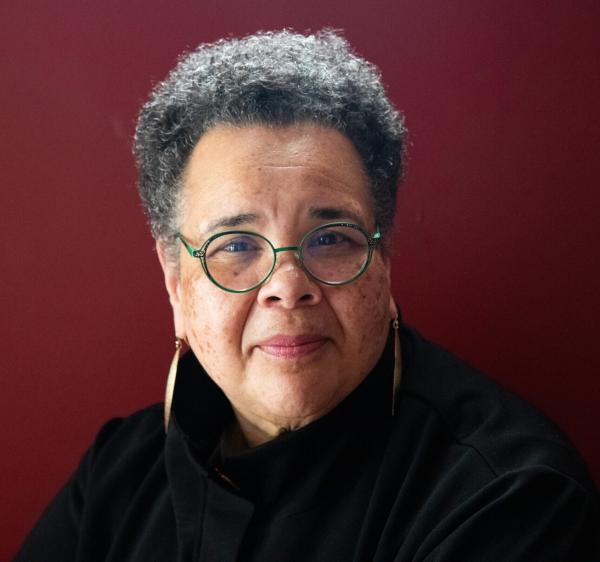
Museums were a significant aspect of my childhood education. Living in Philadelphia, we were a family who regularly visited museums and historic sites. Saturday family activities, summertime daytrips, and adventures when out-of-town relatives visited, would typically involve museum excursions. The spring field trips by George Washington Carver Elementary School, funded in-part by monies raised by the parents’ organization, were, joyfully, to the museums. In the 5th and 6th grades, respectively, my parents enrolled me and my brother in Saturday enrichment classes at the Franklin Institute. By high school, we had regularly visited the: Philadelphia Art Museum, Franklin Institute, Please Touch Museum, Pennsylvania Academy of the Fine Arts, Betsy Ross House, Academy of Natural Sciences, Carpenter’s Hall, the African American Museum, and several neighborhood museums. All this is to say, museums were an integral part of how I learned as a child. Then, in college, graduate school, while serving local churches and while on the faculty of a theological school, I only sparingly incorporated museums into my teaching or research. Yes, I planned the occasional field trip, but museums were not vital to my teaching. Museums were not part of my pedagogical repertoire. With delight! - museums have returned to my awareness. I have had the good fortune to visit the National Museum of African American History and Culture, Washington, DC, twice within the past six weeks. These two visits have given me a renewed appreciation for museums and the ways they can and do nurture our curiosity. While visiting the museum, I experienced the power of exhibits to interpret the stories of people. On both visits, we were hosted by Eric Lewis Williams, Ph.D., Curator of Religion at Smithsonian National Museum of African American History & Culture. Dr. Williams curated the exhibit, “Spirit in the Dark: Religion in Black Music, Activism, and Popular Culture.” The exhibit brilliantly and provocatively suggests the myriad of ways in which religion is a part of the cultural fabric of African American experience. As Dr. Williams designed, the viewer’s imagination is captured through photographs, objects, and depictions which makes the exhibit a marvel. With Dr. Williams’ help, I experienced a kind of magic and majesty in the stories told by the artifacts. I viewed, and sometimes handled, objects, relics, remnants, and fragments. Being able to discuss the exhibit, and its design, with the curator - was riveting. The exhibit prompted new perspectives for even the most familiar cultural story. It was fun. It was intriguing. I was wowed and was led to epiphanies! How, rather than planning courses, might we design learning experiences for our adult learners? Since returning to my desk, I have continued to dialogue with Dr. Williams. I am curious about the ways religion and theological classrooms might be strengthened through partnering with museum educators, curators, and administrators. I want to know more about curating, archiving, conservation, and material culture so I can improve my own teaching. I want to better understand collecting, and the ways storytelling through artifacts might be added to adult classrooms. Dr. Williams and I are thinking together about ways the Wabash Center might engage these kinds of questions: What would it mean for the Wabash Center to support faculties to explore ways of incorporating museums into their undergraduate and graduate level curriculum? What could be the role of museums in theological education for the preparation of congregational leadership; for teaching religion in the public; for more interactive educational experiences? In what ways could religion scholars assist museums in their interpretation and presentation of exhibits? What does it mean that, increasingly, critical interpretation of religion and theology is encountered by the public in museums? What if the work of critical interpretation employed in our classrooms is enhanced and enriched through the storytelling approaches of museums? In what ways can we learn to incorporate archiving, curating, conservating and exhibiting into our course design? What can be learned from museum pedagogies to strengthen religious and theological education? Given the prospects of enhancing teaching through museum education practices and visits, and since many professors spend their summers involved in course planning, I encourage you to consider spending part of your summer in museums and historic sites to: get to know museum educators get acquainted with museum curators and administrators enquire about exhibits scheduled for display in the fall and spring semesters plan for certain artifacts to be brought to your classroom during the semester enroll in a workshop offered by the museum learn the ways museums educate the public on your scholarly interests take notice of the many ways that museums make use of digital interaction in order to tell stories rethink and redesign an upcoming course imagine learning activities, student assignments, and excursions that invite students to become curators, archivers, and create exhibits Find the museums on your campus, in your town or city – and have fun!
For the last fifteen years or so, I’ve done freelance editing work as a side gig. This winter break, while moping around with a mysterious months-long lung infection (not COVID... probably?), I edited a colleague’s book manuscript, which focused, in part, on neoliberalism (a slippery and contested term) and the deployment of certain reductive conceptions of religion in various development contexts around the world. It was a super interesting read, but that’s not what I want to focus on here. Instead, I want to take inspiration from her critique of various neoliberal terms/concepts and consider one particularly prevalent in higher education—that of “best practices.” This is a phrase we use all the time, especially related to online teaching and learning. I think we have good reason to be suspicious of this idea. Examples of “best practices” abound, even at Wabash. Take the list below, from a Stanford’s Tomorrow’s Professor post, which summarizes a chapter from the older version of The Online Teaching Survival Guide: Simple and Practical Pedagogical Tips (2010): Best practice 1: Be present at the course site. Best practice 2: Create a supportive online course community. Best practice 3: Develop a set of explicit expectations for your learners and yourself as to how you will communicate and how much time students should be working on the course each week. Best practice 4: Use a variety of large group, small group, and individual work experiences. Best practice 5: Use synchronous and asynchronous activities. Best practice 6: Ask for informal feedback early in the term. Best practice 7: Prepare discussion posts that invite responses, questions, discussions, and reflections. Best practice 8: Search out and use content resources that are available in digital format if possible. Best practice 9: Combine core concept learning with customized and personalized learning. Best practice 10: Plan a good closing and wrap activity for the course. Upon first read, who could argue with these? Create a supportive course community? That’s my jam! Develop a set of explicit expectations? I love transparency! It’s not that the practices on these “best” lists are bad ideas, per se. It’s not that I’m opposed to asking for informal feedback or planning a good wrap activity or [fill in the blank]. It’s that such “best practices” are often presented as generic, broadly applicable, value neutral, consensus based, and informed by research, when they aren’t always or necessarily. (See Wendy Brown's Undoing the Demons [2017] for an in-depth critical consideration of this concept.) It may not be clear how to operationalize them in any given context; it may not be possible to do so. Some could even be detrimental if operationalized in certain ways by certain instructors for certain students. Best practices are ostensibly good for everyone, when, in fact, they may be good for no one. (This reminds me of the point of The End of Average (2016), when Todd Rose shows that an “average” person doesn’t exist, so when we design for an average person, we are actually designing for nobody.) Worse, in my mind, is that there can feel like no good way to dispute or critique “best practices.” Especially when written in the imperative, like those above, they don’t exactly invite reflection, conversation, inquiry, experimentation, or collaboration. When we start throwing around the phrase “best practices,” particularly those of us in positions to influence other instructors and what goes on in the college classroom, I worry we start to become “part of a machinery suppressing” faculty. After all, these are the “best” teaching practices. Everyone agrees. Who agrees? Well, the teaching “experts”: instructional designers, staff at centers for teaching excellence, faculty who have won teaching awards, those who publish on this topic. And who has time to question them, especially when everyone is just trying to stay on top of teaching and research and service (amid an ongoing pandemic, nonetheless!)? Trying to also stay on top of literature related to teaching may simply feel like too much. Our teaching contexts are incredibly distinct and diverse. There are so many “situational factors” for us to consider as we design and implement our courses, especially right now. I can’t be sure that what works (some days, ha!) for my Religions of the World course will work for a colleague in my department teaching another section of this very same class during the very same semester. Okay, so creating community seems like a good idea, particularly online, but how I go about doing that this semester over Zoom in my upper-level Religion and Film class will (and should, I think) be very different than how a friend does it in his upper-level U.S. Judiciary Zoom class, even though we are in the same college and have rather similar teaching philosophies. Best practices are somehow specifically evidence-based, but also somehow broad enough to make room for every possible instructional context. That just can’t be. I am fully in support of learning from one another. I am fully in support of sharing and spreading what is known (and some things are known) about teaching and learning. I am fully in support of experimentation and growth, especially in one’s own classroom. I am fully in support of professional development initiatives that encourage faculty to consider what they’re doing in their instruction and—this is the most important—why. I am not convinced that notions of “best practice” necessarily promote any of this. It makes me nervous when anyone starts implying or advising that there is a set, static list (like a top ten) of teaching strategies that will work for everyone, regardless of context, and that if we would all just follow these practices, we would be set. I’m sorry to be the bearer of bad news, but teaching just doesn’t work that way.

Im/Possibilities of Learning in Crisis Teaching and learning in times of crisis require ongoing recalibrations. In 2020, both teachers and students have quickly implemented new skills, accessing each other and learning activities in new and different ways, trying to plan one step ahead even as fresh challenges emerge. It is difficult to focus. Griefs, losses, and longings multiply. Intentional listening to students and colleagues about learning in 2020 and reflecting on my own experiences, I keep encountering an impossible seeming calculation of teaching and learning + writing + editing + administrative work + service commitments + helping children with online school + yearning to see relatives across quarantines or in nursing care facilities + daily chores, eating well, and exercise + attending to other aspects of life beyond work. All this is unfolding within unprecedented restrictions and constrictions of time, space, and breathing, alongside the blurring lines of work, school, and home. Students and I need more than a workload calculator to recalibrate course design. As we think ahead to another semester of teaching and learning in conditions of raging pandemic, social-political, climate, and economic crises, what would it look like to account more for courage on the front end of course planning? Course Design with More Than a Workload Calculator Course design involves a careful calibration of learning objectives, readings and other learning resources, assignments, learning activities, rubrics, and more. Workload calculations inform course designs that support collective thriving, individual learning, access to and expectation of good work, advancement in a course of study, vocational development, career preparation, exam or credentialing readiness, and academic topics and tools that translate beyond the course itself. A workload calculator estimates the amount of time it will take students to complete assigned course work and, by extension, reasonable workload for instructors. Workload calculators not only account for the volume of reading, writing, and exams assigned in a course, but also difficulty, density, and complexity of each. Newer versions account for more widespread online and hybrid teaching, including discussion board assignments and variable synchronous course contact hours. Workload calculations help teachers design courses that justify credit hour tuition without surpassing the maximum amount of work that it is reasonable to expect for students to complete the course. Reflecting on student and teacher time and energy this year, what is a responsible amount of work to expect for academic credit during the triple pandemic of COVID-19, the unmasking and reorganizing racialized terror, and climate crisis, all in the context of mounting political tensions? Workload calculators support good course design, yet only calculating for number of pages and hours of writing and meeting can neglect context. Teaching online in a pandemic, even using a workload calculator, I am realizing that something else is missing. No one teaches or learns outside of context(s). In addition to accounting for time for appropriate amounts of reading, writing, testing, discussing, and studying that inform good work, course design must also leave room and account for courage. Four Course Design Recalibrations Emergency pedagogical shifts in response to pandemic contexts have uncovered workload factors unaccounted for even when workload calculations are adjusted for rhythms of online teaching and learning. In addition to reading, writing, and assessments, what would it look like to also account for the extra courage it takes to engage the learning process in times of crisis? #1 Acknowledge Griefs: Making Room for Ambiguous Meaning in Course Design Grief is present in and around learning for all teachers and students. In addition to the hundreds of thousands of deaths from and exacerbated by pandemic conditions, grief work is needed to notice, acknowledge, and learn to live with deaths, losses of connections, rituals, traditions, plans, and severely altered mundane rhythms of life connected to both special events and everyday practices, from eating and laughing to moving about the world. Grief takes multiple, often compounding, forms from mourning deaths to deep disappointments to an uneasy, ambiguous depth of longing. Can we add time to the workload calculator to acknowledge griefs and to celebrate the possibility of learning in the midst of loss? Courses are not and should not be therapeutic spaces. Neither are they made up of unfeeling, unaffected partners in the work of school. While stage-theories of grief are both beloved and disputed, many grief researchers consider meaning-making to be a long-term goal of grief work. We are teaching in a time of loss and longing borne of disillusionment, unrest, uncertainty, disease, and division. Neither teachers nor students know yet what it all means, what meaning we will make as we reflect back to this historic and challenging time. Yet, we yearn for something to make sense, words that fit the moment even when there are often no words that feel adequate in the face of temporary and permanently tangible absences. For every assignment submitted late, I have started first with “wow, look what you created in this midst of so much uncertainty and loss!” before other logistical implications. Where in your course design could you make room to name losses and acknowledge longings? Where can you acknowledge and celebrate the miracle, possibility, and power of learning in a context of compounded griefs? #2 Expect Anxieties: Making Room for Purpose in Course Design A recent news headline reads, “Sleepless Nights, Hair Loss, and Cracked Teeth: Pandemic Stress Takes its Toll.”[1] In addition to griefs over specific losses and longings, anticipatory griefs also abound in every class(zoom)room today. Anticipatory grief is an experience of grief triggered by realizing a potential loss or imagined future that is suddenly unstable, cherished dreams and long-held plans that are not going to happen as expected, if at all.[2] Anticipatory griefs compound already heightened anxieties, fears, and rising mental health challenges related to the unending and shifting nature of current pandemic conditions. I asked a colleague how students were doing in their class and they responded that the good students were doing well. Upon further reflection, it seemed that students who were relatively well were doing better, while many otherwise good students were struggling mightily. Many factors compound the already well-founded anxieties students and teachers carry to and from class every week. We know that it can take much more energy to focus when new and old trauma wells up in the body.[3] In the past few months, I’ve received stories from students anxious about GPA- and credit-enrollment-dependent financial aid and other scholarships, ordination or other credentialing processes that remain unpaused, first generation and international students whose sending communities are proudly counting on student success, graduation requirements, internship trajectories, and other concerns about future employment opportunities. Can we add time to the workload calculator for breathing, time for students to muster up the courage to ask for help, and time to model and respond with non-anxious collegiality along the way? I have started each synchronous zoom with breakout rooms asking students to share how they are doing. I have added moments of silence and asked students to share what practices are keeping them going. I designed a credit/no credit midterm meeting in small groups to assess material, review assignments, and take the temperature of the class. Where in your course design could you make room to reinvest in the purpose of learning? Can you plan flexible-yet-framed learning environments with habits of brief checking in and referrals for more in-depth care needs prominently posted on learning management systems? Where can you acknowledge the harm and fear of harm in mental and public health by connecting to resources of sustaining purpose already present in the course subject matter? #3 Support Ritualized Focus: Making Room for Energy Investment in Course Design Crisis conditions challenge structures of time, space, energy, reflection, attention, and collaboration that affect learning environments. It takes longer to focus. Private and public spaces are shared in ever-shifting ways. It takes extra energy to negotiate daily decisions. Thinking out loud now has the added pressure of being recorded in video or posted text. Going to the class or store or dinner is a risk-benefit analysis. How have work-spaces and rhythms changed for you and your students? What is better and what is missed? For courses meeting on campus or outside, new rituals of attention unfold in shifting configurations of social distancing and communication patterns without familiar patterns of facial expression and tone. For courses meeting online, it is both necessary and can be overwhelming to prepare and process one more zoom meeting after another after another, one more discussion board post or response, one more attempt to get ahead of email. Let us add time for the transition into the workload calculator and support the extra configurations of time and space needed to learn. How do your courses support thinking in a distracting context of divided attention? Might you share some of your own practices that support your focused attention with your class and/or invite students to share with each other what is working to help them stay engaged in learning? #4 Invite Translations: Making Room for Connections in Course Design “If we can’t find ourselves in the readings this semester, we just can’t and won’t do it anymore,” students have shared in recent advising sessions, detailing the extra time and labor it can take to translate learning activities into something that matters for their lives in a time where life is unmasked as more precarious than we sometimes feel. In addition to the extra effort needed in times of uncertainty to make space in one’s home for teaching and learning, it can also take a great deal of effort to learn alongside deeply held dreams and visions. It takes effort to weave someone else’s dream into your dream when there is no opening to shared dreams or the coexistence of multiple dreams. Many graduate students have to research words and phrases as new vocabularies accompany advanced study. Some also translate every assignment into second or fifth languages. Beyond literal linguistic translation, reading also requires careful interpretation accompanied by a felt sense of distance from or relevance to the reader’s experiences. Different students often work a lot more or less to translate the reading on these interacting forms of engagement. Twenty pages of assigned reading could take equally bright and motivated students twenty minutes or five hours. Let us add time for translation to the workload calculator and invite every student into this work rather than foisting it as unaccounted-for extra work shouldered by only some learners. Extra effort is worth it to connect the learning activity to the student’s worth as a learner. However, in times of crisis, there is little room for extra and the alternative is often mimicry, an out of body, out of spirit practice of learning oneself into someone else’s dream. bell hooks indicts course design that renders some traditions not good enough to be included, arguing for expansive course design in educational systems mis-oriented toward selective visibility.[4] It is too much pressure to feel the world is on any one person’s back, therefore let us foster opportunities for connection. It is too much pressure to fight for one’s existence or the existence of a particular people, history, or dream, therefore let us foster opportunities for translation within our course design. Who is helping you check your course for opportunities and burdens of translation? How are you responsive to learning and shifting course design in response? Accounting for Courage in Crisis Teaching and Learning When filling out workload calculators for course design in crisis, instructors can’t presume healthy, whole, living their best life, so-called typical students. Rather we are in a time of needing courage and grace with each other. Students and teachers are rightly on the edge needed to be vigilant regarding public health and safety concerns while also not normalizing crisis conditions. In each three-credit hour class, I typically parcel out twelve total hours a week to course-related activities. In addition to time for reading, drafting, editing, attending synchronous or asynchronous class activities, and completing assignments, I’ve started allocating more time for thinking, more time for celebrating creativity in the midst of loss, reminding students and myself to breathe and be as well as we can be while checking on each other, carving out space and time to devote to learning in the midst of chaos, translating content that connects to dreams, and asking and listening to students and mentors on all of the above. The total time devoted to writing and total pages read will be less, but I have already seen that learning that accounts for courage can far exceed expectations. Workload recalibrations that make room for grief, anxiety, ritualized focus, and translation add rigor and support courageous academic work with added opportunities for meaning, purpose, investment, and translation. Courses that merely check off required boxes may have a place in the ecology of credentialled teaching and learning among limited human beings. Some days this is enough, more than enough. However, it’s not enough to fund a vocation. Some days, coursework serves as an escape from the world. However, a course of study also equips students to be change-makers in the world, even and especially in times of crisis. Will we be able to look back at 2020-2021 syllabi and notice that learning is unfolding in extraordinary times? Teaching and learning in crisis are challenging; both teachers and students need courage and support. I believe that making some room for grief, anxiety, ritualized focus, and translation in course design is one concrete way to recalibrate course design for the courage we will need to keep learning through a chaotic time of stress and possibility. Accounting for Courage → Practices of Recalibration in Workload Planning Acknowledge Grief name losses, honor longings → Make Room for Meaning create into felt absence; supply words where needed; acknowledge miracle and power of learning Expect Anxieties acknowledge harm and fear of harm in mental and public health; refer → Remind on Purpose fund flexible yet framed learning environment with ready referrals; share practices of sustaining Support Ritualized Focus negotiate space, time, and rhythms of attention → Design for Investment model in class rhythms; invite conversation/check in about what is working (and not) for you and for students Invite Translation account for representation, language, and relevance → Multiply Connections audit syllabi and check in with students; ask for help; invite all learners to stretch [1] Aneri Pattani, NPR, October 14, 2020, https://www.npr.org/sections/health-shots/2020/10/14/923672884/sleepless-nights-hair-loss-and-cracked-teeth-pandemic-stress-takes-its-toll. [2] Andrew Lester, Hope in Pastoral Care and Counseling, (Louisville, KY: Westminster John Knox, 1995), 51. [3] Resmaa Menekam, My Grandmother’s Hands: Racialized Trauma and the Pathway to Mending Our Hearts and Bodies (Las Vegas, NV: Central Recovery Press, 2017), 13. [4] bell hooks, Teaching Critical Thinking, (New York, NY: Routledge, 2010), 104. Amy Lonetree talks of it as the work of fighting for survivance in a well-supported myth of extinction (Decolonizing Museums [Chapel Hill, NC: UNC Press, 2012]). If we’re accepting tuition, but not teaching meaning-making toward more humane human beings, challenges Toni Morrison, then it’s better to stop this business of education (“Sarah Lawrence Commencement Address,” The Source of Self-Regard (New York, NY: Vintage, 2019), 71). Poet Mary Oliver suggests we’d be better off just copying the old books when there’s no room for new comments (Long Life (Cambridge, MA: Da Capo Press, 2004), xiv). These wise teachers continue to help me reflect on the purpose and possibilities of learning.
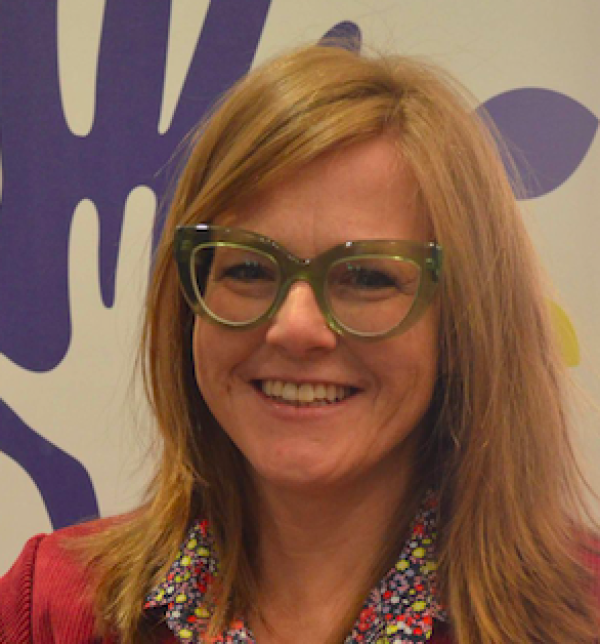
Since last fall, the theology department at my institution, St. Ambrose University, has been offering a new course called “Just Theology.” On the first day of class each semester, I like to poll the students to ask them what they think the title “Just Theology” means. Most of the students’ answers reveal that they assumed they had signed up for a basic theology class, one that covered religious principles only—without any math, science, or art mixed in. In actuality, the class is designed to introduce students to the study of Christian scripture and theology through the lens of justice. I’ve learned more from this first day activity than that my students are bad at puns. Many are surprised to learn that theology has anything to do with just action in the world. In an effort to analyze this trend more deeply and to see if the course is successful in teaching about the relationship between justice and theology, my department chair, Lisa Powell, developed a survey to distribute to our students on both the first and last day of class. The survey asks students to respond to five statements: (1) “Acting for justice is central to the Christian life”; (2) “Racial justice is an important part of the Christian message”; (3) “Christian teaching can have a liberating message for women”; (4) “Care for the earth is an important part of Christian teaching”; and (5) “The Bible shows God’s particular concern for the poor.” Students indicate their belief about each statement from the following options: “strongly disagree”; “disagree”; “agree”; “strongly agree”; and “I don’t know.” It surprises me each semester to learn that only about half of the students at the beginning of the semester select “agree” or “strongly agree” to each statement. In fact, around 25-30% select “strongly disagree.” I am always happy to see that nearly all the students select “agree” or “strongly agree” by the end of the semester. The surveys are helpful in gauging what my students’ preconceptions about religion and theology are, especially at the beginning of the semester, so I can identify the starting point for our conversations. This semester’s data was particularly noteworthy. To take just one example: only about 10% of my class indicated that they agreed or strongly agreed with the statement “Racial justice is an important part of the Christian message.” I asked the class, “Who has ever heard a sermon or homily that endorsed racial justice?” About 10% raised their hands. This was disturbing, particularly on the heels of a summer in which racial injustice and police brutality received heightened attention in the aftermath of George Floyd’s murder. I asked the students how many had attended a Black Lives Matter protest this summer: about 25% of them raised their hands. But when I asked how many did this from a religious or faith conviction, none raised their hands. About the same 25% of students raised their hands when I asked if they had watched Representative John Lewis’s funeral on television. Again, when I asked if anyone could give me an example of how his religious/faith convictions related to his social justice work, no one raised their hands. Of course, John Lewis’s life and funeral provides a heroic and exceptionally clear example of the relationship between God and just action in the world. But the students seemed to miss the connection. Instead, they told me that they understood his civic engagement (and civic disobedience) as stemming from his affiliation with the Democratic party. As a counterpoint and illustration of black liberation theology, I read the students this quote from President Obama’s eulogy: “Like John the Baptist preparing the way, like those Old Testament prophets speaking truth to kings, John Lewis did not hesitate—he kept on getting on board buses and sitting at lunch counters, got his mug shot taken again and again, marched again and again on a mission to change America.” [i] One student responded to the quote by mentioning that it was President Obama who delivered the eulogy. They seemed to be arguing that political party affiliations and values were more probable indicators of one’s work for social justice in the world than one’s theological commitments. This summer as I prepared for my classes, I knew this semester would be a complicated one for students in nearly every aspect. I revised syllabi and lesson plans to account for and to integrate the COVID - 19 pandemic and increased exposure to ongoing racial injustice, but I neglected to consider how deeply the pre-election, polarized political landscape would impact students’ assumptions about theology and justice. One student honestly explained to me that they responded “strongly disagree” on the survey because when they scroll through social media, they only see Christianity associated with injustice, and usually with the political “right.” Donald Trump’s photo op with the Bible in front of St. John’s Church offers a poignant example of such. After just one week of this fall semester, I’ve learned that I need to be more cognizant than ever before, about so many things—including students’ presuppositions about religion and politics, and theology and justice. Notes [i] “President Barack Obama’s Eulogy for John Lewis: Full Transcript.” New York Times, July 30 2020. https://www.nytimes.com/2020/07/30/us/obama-eulogy-john-lewis-full-transcript.html.

Effective online teaching requires applying sound pedagogy, the same as those practiced in the classroom experience. One such practice is induction–and, you can never overdo it. When I was in parish ministry, our staff met weekly to do worship planning. In addition to reviewing text, sermon topic, music, hymns, and other components of the worship service we would always decide on the questions, “how will we enter the room?” and "how will we close the service?" That is, how and when would the worship leaders (choir, pastoral staff, etc.) enter the worship space so as to lead the congregation into the worship experience? How would we signal the "start" of the worship experience? We wanted to “set” the tone, affect, and focus of the worship experience by creating expectancy at the start, helping the congregants know how and what to pay attention to during the service, and moving them toward response and closure at the end of the service. The same principles apply to learning. In a learning environment, induction (or, “set induction”) refers to those actions by the teacher designed to introduce the students to the learning experience, be it a course of study or a lesson. Induction helps the learners relate their experiences to the objectives of the lesson or course (building on what they know to acquire what they do not). Using set induction will orient your students to the course (or lesson) and put them in a receptive frame of mind that will facilitate learning. Two purposes of set induction are: (1) to focus student attention on the lesson or course–-its purpose and relevance to the student; and (2) to create an organizing framework for the ideas, concepts, principles, or information which is to follow. Effective application of set induction will provide important instructional functions for your students. It will serve as an advanced organizer, create expectancy, and identify why the content is meaningful, which is an important motivator for learning. In a classroom setting many instructors use the course syllabus as a tool for course induction. Walking your students through a well-designed course syllabus will provide a framework for helping your students answer the Ws that are anxiously rattling around in their minds: who, what, when, where, and, how? Admittedly, most instructors do not take enough time using this technique. Which is why you may get asked several times during the course, “When is the final exam due, again?” Or, "what should I write my paper on?" When setting up your online course environment practice I.R.A. and use the Ws. I.R.A. stands for “Information Reduces Anxiety.” When your students begin a course, they have a level of anxiety and are looking to understand what the course is about and what will be expected of them as a learner. Front load your course site with as much information as your students need to answer their questions; but no more than that. When you design your introduction/orientation page, embed the Ws (who, what, when, where, why, and how). These are the questions for which they are seeking answers. As your course progresses, cut back on the course orientation content, reduce content coverage, and increase learner engagement activities and opportunities. Does your course introduction or orientation answer the following for the students? Who is this course for? What is this course about? What is its focus? What is the big idea? What are the expected student learning outcomes? What background knowledge, skills, or competencies does the student need to succeed in the course? What does the student need to do first to begin the course? When will this course start? When will it conclude? When are the assignments due? Where can the student find information and resources (course syllabus, schedule, handouts, readings, rubrics, links, etc.). Why is this course meaningful? Why is the focus of study important? How will the student successfully complete the course? How will the student demonstrate attainment of learning or mastery of skill? How will the student's work be assessed?
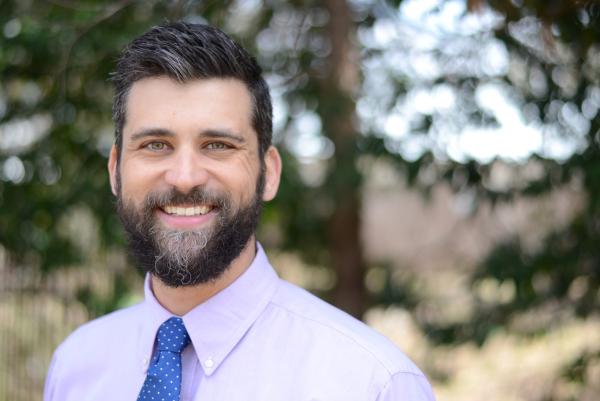
By this time in a semester, the ebbs and flows of a well-designed and well-facilitated class would, in normal circumstances, have allowed a community of scholars to flourish. These learning communities help promote critical dialogue with academic peers and help to foster a pluralism of varied perspectives that ultimately serves to elevate the collective outcomes. But what if this process is arrested before this can be achieved? The on-going pandemic has created a reality unlike anything we’ve seen, but, as educators, it is incumbent upon us to ensure that these features can continue to persist. Synchronous virtual instruction (Zoom, Google Meet, Webex, etc.) aims to take the place of the in-person component of our traditional means of teaching. While there is a distinct pleasure in being able to ‘meet’ as a class, the interpersonal conversations are limited and real connections are more challenging to create. In my experience, one reason for this is that virtual sessions are planned to be delivered in an online reality and not as a virtual representation of a normal reality. The best virtual session I ever planned with my students happened by accident because I did not plan it to be virtual. A sick baby necessitated an in-person session becoming virtual, so I adjusted my completed (in-person) plans to fit a virtual lesson setting instead. Findings from this fortuitous accident--shared below--have helped frame how my fellow faculty and I view online instructional delivery. In the scope of my normal lesson planning structure, I generally aim to promote engagement and discussion via a variety of activities that tend to be relatively short in length (~20-30 minutes). To accomplish this within a Zoom, I plan for small bits of synchronous time balanced against asynchronous tasks and breakout rooms to encourage engagement and to ensure that sessions are not rote or boring. By sharing the time amongst different components, lessons become more natural, and the time goes by quickly. Another hallmark of my instructional planning approach is that I strive to offer students opportunities to engage with one another around critical issues and to leverage their budding expertise to share their thinking with their peers. To translate this to a virtual environment, I rely heavily on Google Slides to build a mechanism whereby students can collaborate and engage with one another. For instance, to replicate a gallery walk or anchor chart presentation, I design a template slide for each group that gives students instructions and frames their work. From there, I share this document with each student and change the sharing privileges to “anyone with the link can edit.” This document then functions as a collaborative space for groups of students to work together on a task that they can then share with their peers. To broaden the social/connection aspects of this activity, I utilize the Breakout room feature in Zoom to assign students to random groups. A final area of focus when thinking about delivering instruction in a virtual way is to fashion opportunities for students to engage with one another on a more personal level. To help with this, I open and close with do now exercises and exit tickets that have less to do with the explicit content of the session, and more to do with promoting the well-being and engagement of students instead. While we always want to maximize the amount of time that students are exposed to instruction, in the unique environment of a Zoom, taking some time for these kinds of activities pay off. When all is said and done, our duty as educators requires us to do what we can to help lead our learners towards achieving their potential. As we continue to learn more about how best to work with our students in these uncertain times, a great first step is to think through planning and delivery using this lens: Plan as though you are delivering your lesson to a full class of students, Incorporate virtual techniques to approximate in-person experiences, and Allow yourself (and your students!) grace to spend time with each other and to value the benefit of social interaction. While learning will continue for many, for some, this transition to a virtual classroom will be crippling. Recreating a learning community in a virtual setting will help those students reestablish connection with their peers and their professors, and hopefully offer an avenue for all to reach higher levels of achievement.