Resources

What do artificial intelligence, machine learning, robotics, and other new media arts have to teach us about the teaching and learning of religious worldviews, imagination, and symbols? To find this out, a small group of scholars in religion and theology, funded by a Wabash Center Grant, visited the Massachusetts Institute of Technology’s Media Lab in the spring of 2022. They met with Professor Rosalind W. Picard, the founder and director of the Affective Computing research group at MIT’s Media Lab to learn about her latest work. The design and organization of the Media Lab offers insights into the habitus of learning and innovation. The glass building is futuristic looking, spacious, airy, and full of light. It contrasts with the nineteenth-century and more traditional architectural designs of some theological schools. On the first floor is a display of the history of landmark scientific discoveries and advances relevant to the work of the Media Lab. Throughout the building, there are posters providing information and celebrating the research done in the various labs. Researchers are welcome to join a tradition of discovery, innovation, and exploring the future. The Media Lab facilitates the cross-fertilization of ideas by housing in one building labs that conduct research of different kinds: bioengineering, machine learning, sensors, cognition, environment, space, and computer science, etc. With glass partitions, researchers can see what is going on in other labs. They can visit other labs to consult their colleagues and learn about the latest developments in other fields. To recruit the brightest and most talented students, MIT raises funds to provide scholarships for its graduate students. We saw students and researchers of different nationalities and ethnic backgrounds working at the Media Lab. The physical environment and habitus are important for teaching and learning. In Educational Imagination, Elliot W. Eisner differentiates between the explicit and implicit curriculum. The explicit curriculum is the actual contents taught in the classrooms and labs. The implicit curriculum is the environment and ethos that includes the ways the teachers teach and interact with the students. It is obvious that the building and design of the MIT Media Lab, i.e. its implicit curriculum, tangibly embodies its educational commitment to collaboration and transparency. It generates curiosity and new imaginations that lead to collaborative possibilities. It also encourages members to embrace a culture of transparency and communal thriving rather than competency and secrecy. When the explicit and implicit curricula of an institution and its teachers are in sync, it is easier to generate a positive learning atmosphere that benefits the students. Dr. Picard’s work on affective computing trains computers to recognize various human emotions. Picard’s team worked extensively with diverse people, including people with disabilities, to categorize human emotions in detailed and nuanced ways. Through this process, they have discovered how critical emotion is in the learning process. Positive affect such as awe, satisfaction, and curiosity contribute to constructive learning, while negative affect such as frustration, disappointment, and misconception lead to un-learning. Theological educators have much to consider about the affect we create in students. In After Whiteness, Willie James Jennings criticizes the plantation style of educational institutions. The plantation style is hierarchical and is run by the racial paterfamilias. It requires teachers and students to enter into the affective reality of white, Western institutional life. The educational space is a space of thinking, but not feeling. Students learn different disciplines but are not given the opportunities to build with the institutions. Racial minorities and people with marginalized identities often find it hard to inhabit such learning spaces. In a traditional classroom, the tables and chairs are arranged for students to listen to the professor’s lectures. Today, many professors incorporate the use of PowerPoint in their teaching. But students are still treated as passive spectators. Some professors rearrange the furniture of the room to facilitate small group discussions and interactions. What more can we do to encourage creative collaboration and co-learning? Education is about the whole person. Thomas Groome, a prominent Christian religious education scholar, calls this an ontological activity as it involves people’s ontos, their very being. Christian education includes knowing Jesus in a personal relationship through faith, but it accentuates this relationship with the pursuit of justice; that is, how one practices justice, mercy, and love. Through informative, formative, and transformative activities, education seeks to complement people’s whole way of being in the world, including questions about who they are and how they live. If we take this aspect of education seriously, our understanding of the curriculum, including its scope and context, will need to be broadened. MIT’s Media Lab stimulates us to think about an embodied model of learning in theology and religion.
This edited volume profiles higher education communities of practice, with contributing authors reflecting on their experiences of dreaming, scheming, and implementing communities of practice (CoP) within a variety of higher education contexts. As an elementary teacher turned practical theologian, I am encouraged to see this attentiveness to social learning within higher education. The CoP concept has significant potential for critiquing, enhancing, and transforming teaching and learning practices within religious and theological educational contexts. It is noteworthy that, despite the current climate in higher education being identified as chilly and non-supportive of collaborative activities (xii), the enthusiastic response to Jacquie McDonald’s call for papers exploring the use of CoP for learning and teaching in higher education resulted in two volumes. A more practical focus is evident within this second volume. The Foreword, written by Etienne and Beverley Wenger-Trayner, provides a helpful overview of the history of the CoP concept. CoP theory is identified as having moved through three phases, from the community defining learning, to learning defining the community, to the consideration of a broader landscape of practice, acknowledging learning taking place at the boundaries between communities of practice as well as within them (viii). Theological educators will benefit from considering the relevance of each of these phases. The volume is divided into four parts. Part I consists of case studies. Amongst these first seven chapters, the more generalizable are certainly relevant to teachers of religion and theology. These include the first chapter, with its focus on the use of CoP to support the capacity development of supervisors of HDR students, and the fourth chapter, with its focus on the practice of generous scholarship and collegiality through academic writing retreats. Here Sally Stewart Knowles advocates for attentiveness to the actual practices and processes that lead to publication. Noting the proven value of writing retreats, Knowles implies that the communities fostered by such retreats must move from fringe status to becoming an integral part of a research environment (78). The sixth chapter, with its focus on collaborative autoethnography and decoloniality, may also prove invaluable in terms of researcher preparation in various contexts. Part II focuses on curriculum development. Here theological educators may particularly resonate with an emphasis on “transformational approaches to professional learning” (161) within chapter eight and the interdisciplinary focus on transformative education and sustainability within chapter thirteen. Theological educators and students will benefit from considering the various student-focused CoP within Part III. Doctoral students may particularly engage with the development of informal organic networks outlined in chapter fourteen. Variations on the Equity Buddies concept outlined in chapter seventeen may be valuable for supporting first-year students within theological colleges. Finally, the focus within Part IV on virtual CoP will be of relevance to those engaging students in quality learning experiences through online teaching, learning, and research. Themes that emerge through these chapters include the organic nature of communities and the fostering of a culture of collaboration. Given that some contributors make extensive use of acronyms, readers unfamiliar with these acronyms may need to engage in the discipline of slow reading. While a final summary chapter reviewing and discussing key themes and findings that emerged throughout these papers would enrich this work, educators will nevertheless benefit from focusing on those chapters most relevant to their contexts. Overall, religious and theological education readers are likely to glean inspiration, ideas, and implementation strategies that contribute to learning with and from one another in today’s isolating yet interconnected world.
One-page Teaching Tactic that works with embodied metaphors and drawing to help students draw relationships between complicated concepts.
The Creative Classroom presents an original, compelling vision of schools where teaching and learning are centered on creativity. Drawing on the latest research as well as his studies of jazz and improvised theater, Sawyer describes curricula and classroom practices that will help educators get started with a new style of teaching, guided improvisation, where students are given freedom to explore within structures provided by the teacher. Readers will learn how to improve learning outcomes in all subjects—from science and math to history and language arts—by helping students master content-area standards at the same time as they increase their creative potential. This book shows how teachers and school leaders can work together to overcome all-too-common barriers to creative teaching—leadership, structure, and culture—and collaborate to transform schools into creative organizations. (From the Publisher)
Students who know how to collaborate successfully in the classroom will be better prepared for professional success in a world where we are expected to work well with others. Students learn collaboratively, and acquire the skills needed to organize and complete collaborative work, when they participate in thoughtfully-designed learning activities. Learning to Collaborate, Collaborating to Learn uses the author’s Taxonomy of Online Collaboration to illustrate levels of progressively more complex and integrated collaborative activities. -Part I introduces the Taxonomy of Online Collaboration and offers theoretical and research foundations. -Part II focuses on ways to use Taxonomy of Online Collaboration, including, clarifying roles and developing trust, communicating effectively, organizing project tasks and systems. -Part III offers ways to design collaborative learning activities, assignments or projects, and ways to fairly assess participants’ performance. Learning to Collaborate, Collaborating to Learn is a professional guide intended for faculty, curriculum planners, or instructional designers who want to design, teach, facilitate, and assess collaborative learning. The book covers the use of information and communication technology tools by collaborative partners who may or may not be co-located. As such, the book will be appropriate for all-online, blended learning, or conventional classrooms that infuse technology instructional techniques. (From the Publisher)
A rich collection of essays about the inner, shared experiences of participants engaged in second-person approaches to contemplative practice. Catalyzing the Field presents a diverse series of applied case studies about the second-person dimension of contemplative learning in higher education. As a companion volume to the editors’ previous book, The Intersubjective Turn, the contributors to this book explore various pedagogical scenarios in which intentional forms of practice create and guide consciousness. Their essays demonstrate that practice is not only intellectual, but somatic, phenomenological, emotional, and spiritual as well. Along with their first book, Contemplative Learning and Inquiry across Disciplines, the editors craft an essential body of work that affirms the fundamental importance of contemplative practice in institutions of higher learning. (From the Publisher)
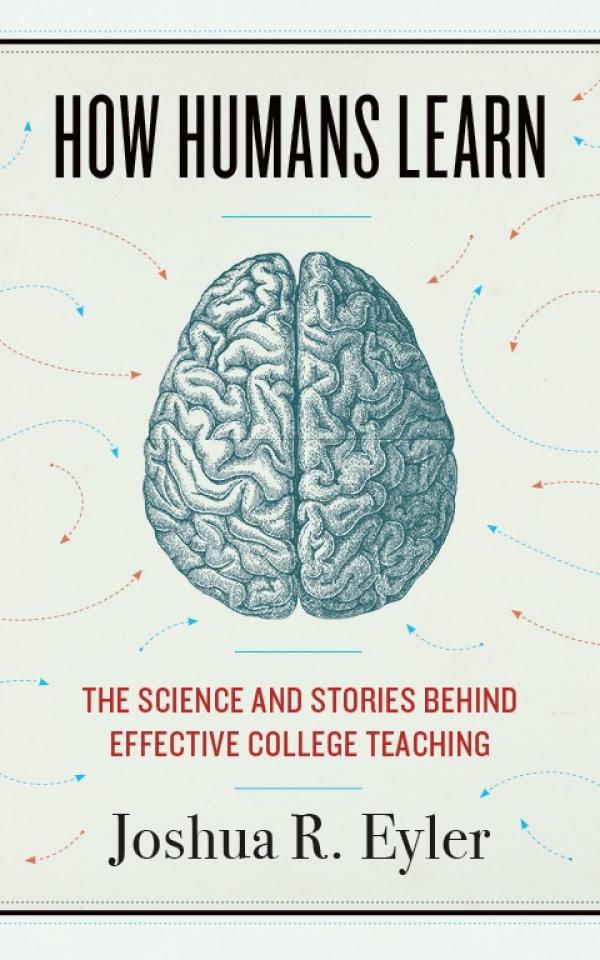
How Humans Learn argues that our natural systems for learning are connected to human evolution and psychological development, and a better understanding of the way humans learn can help determine what will and will not work in the classroom. Instead of presenting evidence of why a teaching or learning strategy works, Eyler identifies five patterns of learning drawn from psychology, evolutionary biology, and neuroscience to explain why students learn more when certain techniques are chosen over others: curiosity, sociality, emotion, authenticity, and failure. He draws on seminal works in the scholarship of teaching and learning such as that of Bain (What the Best College Teachers Do, 2004) and Fink (Creating Significant Learning Experiences, 2013), and his patterns overlap with principles of learning identified by other scholars (Ambrose et al., How Learning Works, 2010; Davis & Arend, Facilitating Seven Ways of Learning, 2013). In each chapter Eyler offers examples of classroom practice from various disciplines in Western higher education and provides helpful “key takeaways” that summarize major points and highlight practical suggestions. For example, to stimulate curiosity we can incorporate inquiry, discussion-based pedagogies, and backward design that structures courses from the outset so that every element is tied to an essential question that our course helps students answer (Wiggins & McTighe, Understanding by Design, 2005). To promote sociality, we can use collaborative learning strategies, peer instruction, storytelling, and role-immersion games such as Reacting to the Past. To ensure that emotions guide thinking rather than undermine it, we can demonstrate the relevance of the material and embody “pedagogical caring” by giving frequent feedback, having high expectations for students, and coming to class prepared. To encourage an authentic learning experience, we can allow students to engage in applied problem solving, incorporate experiential and service learning, and bring our own research into the classroom. Finally, we can allow students opportunities to fail when the stakes are low, then give them support and guidance to understand from failure and cultivate growth mindsets, grit, agency, and other resiliency strategies. Those fascinated by evolutionary developmental biology will likely enjoy the entire book, while others may gravitate towards particular chapters that address topics of interest. Eyler mentions religion only once in the book, during discussion of the “emotional trauma” that can result when students alter knowledge structures or “mental models” tied to their personal beliefs and deeply held convictions (192), but his discussion of “cognitive realism” – when the brain registers a situation as being realistic – also poses interesting challenges for instructors of religion (154). Theological education affords various types of immersive experiences for students, but what sorts of “authentic activities” and “immersions” might instructors of religious studies offer students, especially those who teach in public colleges and universities? Although there are clearly opportunities to apply tools and methodologies from the study of religion to conduct field research or wrestle with problems of the world (155), what characteristics would make other assignments or activities “compellingly” real (157) without being religious?

Over the past several years, there have been any number of events that have prompted professors to abandon their syllabi and lesson plans and create space for addressing events unfolding outside the walls of the classroom. This in-breaking of the contemporary, this pressure of the immediate, is often traumatic in nature. It frequently relates to histories of racism, nationalism, imperialism, xenophobia, misogyny, or homophobia. It may stem from global, national, community, or even campus contexts. Not all professors and students will feel the force of the blow in the same way. Addressing the affective, psychic, cognitive, and physical after-effects of our “shared” reality transpiring alongside course content poses any number of significant pedagogical challenges. As much as current events may require a certain agility, presence, nimbleness, and attentiveness, I want to think instead about the pedagogical challenges of teaching course material that demand similar skills. What happens when one is teaching a topic that is still unfolding? In some ways, virtually anything taught in the religious studies classroom is still “live” in important ways: this, in fact, might be something that we are trying to get our students to understand. If I am teaching Hebrew Bible, I will have to grapple with the ways that Christian students read those texts because of what they’ve heard in church or Sunday school. If I am teaching about material religion, I will have to grapple with disputes around Confederate memorials, insofar as they are sites of sacred meaning—left or right—for many people. And, of course, if I am teaching about Islam or new religious movements, I will have to negotiate the complex and disparate motivations and (mis)understandings that prompt students to enroll in my classes. But some topics, of course, are more alive than others. As I’ve mentioned in previous posts in this series, I recently taught a course on the Catholic sex abuse crisis and am scheduled to teach it again in the coming academic year. Although Church officials and apologists are invested in characterizing the crisis as something that is finished, resolved, and in the past, this is a polemical position, not one grounded in the evidence. New allegations of abuse surface on a weekly—if not daily—basis. New information about what bishops, cardinals, Vatican officials, including the Pope, knew, did, and failed to do surface with as much frequency. We continue to gain greater insight into the global scope of the scandal—both historically and contemporaneously. With every positive step forward—in terms of policy changes or the rhetoric of pronouncements—there are just as frequently significant strides backward. There are stories about study commissions, and institutional apologies, and advocacy groups, and the vagaries of each that continue to shape the crisis and its meanings. And, then, of course, there are the parallel stories of sexual abuse and misconduct as it has been practiced and ignored by a range of other institutions. When I was last teaching the course, I would always make sure and spend an hour prior to going to class to see whether some big story had broken since we last met that I needed to address in class. Sadly, the Internet in all its glory never failed to provide. Although this ever-moving target of what I need to include in my course is anxiety provoking, there’s also a calming freedom in these circumstances. I don’t need to try and master the material because I can’t. This inability, on my and my students’ part, creates a very different classroom dynamic. I never had to come up with strategies and practices to encourage collaborative learning; I only had to pay attention to what we were trying to understand. We necessarily had to cooperate, to pool information, to treat each other as equal partners in our common endeavor. I was able to drop the weight of the fantasy of “coverage,” which let both me and my students slow down, breath a little, and reflect on the material in front of us more thoughtfully. And, of course, the attempt to understand—rather than the accomplished feat—is always at the forefront of everyone’s minds, underscoring the invaluable lesson that learning is a process and not an achievement. While the Catholic sex abuse crisis—and some other topics—are obviously and keenly living animals that demand this kind of pedagogical attention, we can learn something from such material about how we might want to teach generally. What do you teach your students about that continues to grow and change, to influence and shape the contemporary moment? How can you attend to those features and dimensions to create a different experience of learning, conversation, and inquiry?
This book answers the question “Why not?” to Robert Smith’s (professor of adult education in the doctoral program at Northern Illinois University) statement, “Higher education is not adult education” (1). There are nine chapters by contributors who place importance on adult education as a collaborative methodology within a doctoral program. Each contributor reflects on their own principles and practices for reimagining doctoral study for adult educators, faculty, and administrators within higher education. Many of the contributors give real life experiences either as faculty or students of a doctoral program at National Louis University. Tom Heaney (Chapter 1) shares how the cohort-based program provides a space for doctoral students to critically reflect as a group, take control of their own learning, and assume ownership of the curriculum for which they can negotiate with faculty. He views democracy within a doctoral program as “unleashing the power of we” which allows the students see themselves as agents of change through the collective voice of intellectual discourse. Building a democratic forum is not an easy task, but it requires trust, discipline, and confidence among doctoral students and faculty (11). Stephen Brookfield (Chapter 2) notes that there are four lenses through which practitioners within education view their thinking and actions: student’s eyes, colleagues’ perceptions, theory, and autobiographical experiences. He emphasizes that professors and instructors need to get into the habit of stating out loud the reasons why they are doing what they do: readings, participation in class, order of curriculum, and the evaluative process (17-18). Nadira K. Charaniya and Jane West Walsh (Chapter 5) reflect on their experience as doctoral students and how collaborative learning partnerships were central to their peer relationships. They recall five outcomes: (1) deep trust and respect, (2) the conscious selection of one another as learning partners, (3) mutual striving toward common goals, (4) different but complementary personality traits, and (5) the development of synergy (49). They include a detailed case of their own journey as collaborative research partners where they created the Collaborative Inquiry Metaphor Creation and Analysis Method (CIMCAM) which involves the use of metaphor analysis as a research analysis. They share through a graphic representation the five steps to their research methodology (53) as well as focused group dialogue of the visual metaphor process. The outcome is the shift of power between research facilitators and participants as a means of collaborative co-construction of knowledge (56). The volume is an easy read. Each chapter could provide insight for doctoral programs in any discipline. It could also be a useful resource within a school of theology even though the focus of the book is a doctoral program at a private non-profit higher education institution. The authors explore the question of why it is important to reimagine doctoral education as adult education. In the introduction the editor claims, “An obvious goal of adult learners is to find their own voice, to be heard in rational discourse with their peers, and to gain control over the day-to-day decisions that affect their lives” (5). The book underscores the point that collaborative learning within a doctoral program is central to adult education.
This volume of collected articles provides snapshots of collaborative teaching and learning in action at US universities. While the authors describe a range of techniques and structures, there is an emphasis throughout on intentionally building and sustaining communities composed of teachers, learners, and even community partners. Richard A. Gale (“Learning in the Company of Others”) and Jeffrey L. Bernstein, et al. (“How Students, Collaborating as Peer Mentors…”) illustrate the positive effects of collaboration in college courses. Gale succinctly articulates numerous benefits of collaborative teaching, from increasing fruitful ambiguity that can inspire critical thinking, to providing teachers with opportunities for “the systematic investigation of student learning” (21). Bernstein’s experience working with students as peer mentors shows that a collaborative approach to class leadership can embolden students to take risks with low stakes, improving their participation in brainstorming and creative activities. The majority of authors convincingly demonstrate that collaborative learning offers students benefits far beyond the immediate course or program experience. Ellen G. Galantucci and Erin Marie-Sergison Krcatovich (“Exploring Academia”) emphasize that their experience as undergraduate collaborative learners helped them prepare for their later work in graduate school and as educators. These authors note that the mentoring they received contributed to their professionalization and enabled them to discuss pedagogy confidently on the academic job market. Multiple articles address the potential for fruitful collaboration with community partners beyond the university. “Collaborative Structures in a Graduate Program,” by Robyn Otty and Lauren Milton, describes a multi-year Centralized Service Learning Model (CSLM) that combined the work of two graduate courses and several community programs. In their article “The Development of a High-Impact Structure: Collaboration in a Service-Learning Program,” Brooke A. Flinders, et al. illustrate students’ internalization of high-impact learning outcomes, including “participation in meaningful work” (44). One important contribution of this text is the collection of students’ testimonies. A number of the authors asked course participants to complete some form of self-assessment. Overwhemingly, students who worked as peer mentors or group leaders reported gaining confidence, independence, critical thinking skills, and practical experience that could be used in the professional world. In Flinders, et al., “The Development of a High-Impact Structure,” young professionals in the nursing field provided feedback about ways their participation in the service-learning program helped them prepare for clinical work. This volume offers a wealth of suggestions for designing learning communities; Milton D. Cox’s contribution (“Four Positions of Leadership…”) identifies traits that administrators and facilitators have found to be essential when organizing faculty learning communities. Each article clearly explains its authors’ methodology, making this a helpful resource for teachers who are looking for direction in implementing collaborative learning strategies. While it might have been helpful in some cases to learn more about how community partners assessed the contributions of university teams to their work, overwhelmingly the articles demonstrate that collaborative learning is beneficial for students and teachers. For those looking to build more collaboration into their courses, this set of articles provides inspiration and concrete guidelines