Resources
Research, teaching, service, and public outreach — all are aspects of being a tenured professor. But this list of responsibilities is missing a central component: actual scholarly learning — disciplinary knowledge that faculty teach, explore in research, and share with the academic community. How do professors pursue such learning when they must give their attention as well to administrative and other obligations? Professing to Learn explores university professors' scholarly growth and learning in the years immediately following the award of tenure, a crucial period that has a lasting impact on the academic career. Some launch from this point to multiple accomplishments and accolades, while others falter, their academic pursuits stalled. What contributes to these different outcomes? Drawing on interviews with seventy-eight professors in diverse disciplines and fields at five major American research universities, Anna Neumann describes how tenured faculty shape and disseminate their own disciplinary knowledge while attending committee meetings, grading exams, holding office hours, administering programs and departments, and negotiating with colleagues. By exploring the intellectual activities pursued by these faculty and their ongoing efforts to develop and define their academic interests, Professing to Learn directs the attention of higher education professionals and policy makers to the core aim of higher education: the creation of academic knowledge through research, teaching, and service. (From the Publisher)
Excellence. Originality. Intelligence. Everyone in academia stresses quality. But what exactly is it, and how do professors identify it? In the academic evaluation system known as “peer review,” highly respected professors pass judgment, usually confidentially, on the work of others. But only those present in the deliberative chambers know exactly what is said. Michèle Lamont observed deliberations for fellowships and research grants, and interviewed panel members at length. In How Professors Think, she reveals what she discovered about this secretive, powerful, peculiar world. Anthropologists, political scientists, literary scholars, economists, historians, and philosophers don’t share the same standards. Economists prefer mathematical models, historians favor different kinds of evidence, and philosophers don’t care much if only other philosophers understand them. But when they come together for peer assessment, academics are expected to explain their criteria, respect each other’s expertise, and guard against admiring only work that resembles their own. They must decide: Is the research original and important? Brave, or glib? Timely, or merely trendy? Pro-diversity or interdisciplinary enough? Judging quality isn’t robotically rational; it’s emotional, cognitive, and social, too. Yet most academics’ self-respect is rooted in their ability to analyze complexity and recognize quality, in order to come to the fairest decisions about that elusive god, “excellence.” In How Professors Think, Lamont aims to illuminate the confidential process of evaluation and to push thegatekeepers to both better understand and perform their role. (From the Publisher)
M. Jacqui Alexander is one of the most important theorists of transnational feminism working today. Pedagogies of Crossing brings together essays she has written over the past decade, uniting her incisive critiques, which have had such a profound impact on feminist, queer, and critical race theories, with some of her more recent work. In this landmark interdisciplinary volume, Alexander points to a number of critical imperatives made all the more urgent by contemporary manifestations of neoimperialism and neocolonialism. Among these are the need for North American feminism and queer studies to take up transnational frameworks that foreground questions of colonialism, political economy, and racial formation; for a thorough re-conceptualization of modernity to account for the heteronormative regulatory practices of modern state formations; and for feminists to wrestle with the spiritual dimensions of experience and the meaning of sacred subjectivity. In these meditations, Alexander deftly unites large, often contradictory, historical processes across time and space. She focuses on the criminalization of queer communities in both the United States and the Caribbean in ways that prompt us to rethink how modernity invents its own traditions; she juxtaposes the political organizing and consciousness of women workers in global factories in Mexico, the Caribbean, and Canada with the pressing need for those in the academic factory to teach for social justice; she reflects on the limits and failures of liberal pluralism; and she presents original and compelling arguments that show how and why transgenerational memory is an indispensable spiritual practice within differently constituted women-of-color communities as it operates as a powerful antidote to oppression. In this multifaceted, visionary book, Alexander maps the terrain of alternative histories and offers new forms of knowledge with which to mold alternative futures. (From the Publisher)

What it is like to be a collegian involved in a Christian organization on a public college campus? What roles do Christian organizations play in the lives of college students enrolled in a public college? What are evangelical student organizations’ political agendas, and how do they mobilize members to advance these agendas? What is the optimal equilibrium between the secular and the sacred within public higher education? What constitutes safe space for evangelical students, and who should provide this space? This book presents a two-year ethnographic study of a collegiate evangelical student organization on a public university, authored by two “non-evangelicals.” The authors provide a glimpse into the lives of college students who join evangelical student organizations and who subscribe to an evangelical way of life during their college years. They offer empirically derived insights as to how students’ participation in a homogeneous evangelical student organization enhances their satisfaction of their collegiate experience and helps them develop important life lessons and skills. Ironically, while Christian students represent the religious majority on the campus under study, Christian organizations on this campus mobilize members by capitalizing on members’ shared sense of marginalization, and position themselves as cultural outsiders. This evangelical student organization serves as a safe space for students to express their faith within the larger secular university setting. The narratives and interpretations aim not only to enrich understanding of a particular student organization but more importantly to spark intellectual discourse about the valueof faith-based organizations within public higher education. The role of religion in public higher education, student involvement in the co-curriculum, and peer education are three examples of critical issues in higher education for which this idiosyncratic case study offers broad understanding. It’s All About Jesus! targets multiple audiences – both sacred and secular. For readers unfamiliar with evangelical collegiate organizations and the students they serve, the authors hope the narratives make the unfamiliar familiar and the dubious obvious. For evangelicals, the authors hope that the thickly described narratives not only make the familiar, familiar and the obvious, obvious, but also uncover the tacit meaning embedded in these familiar, but seldom examined subculture rituals. The authors hope this book spurs discussion on topics such as campus power and politics, how organizations interact with the secular world around them, and how members can improve their organizations. Additionally, this text urges secular readers in student affairs to consider the many benefits, as well as liabilities, of “parachurches” as co-curricular learning sites on campus. Lastly, given that the authors lay bare their methodology, their use of theory, and the tensions between their perspectives and those of the participants, this book will serve as a compelling case study for courses on qualitative research within religion studies, anthropology, sociology, and cultural studies fields. (From the Publisher)
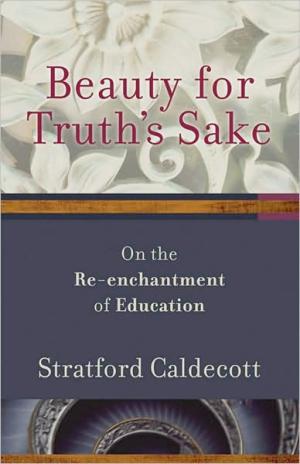
Much of the confusion and meaninglessness of the twenty-first century stems from the fragmentation of knowledge. Our postmodern times cry out for a return to wholeness. Enter Stratford Caldecott, who calls for renewal in education in Beauty for Truth's Sake. By reclaiming the classic liberal arts and viewing disciplines such as science and mathematics through a poetic lens, the author explains that unity is present within diversity. Ultimately, God is behind all truth. This book will benefit parents, homeschoolers, lifelong learners, and readers interested in the history of ideas. It is appropriate for Christian college and university students and will play an especially important role in curriculum development. EXCERPT I've heard many exasperated parents say to me, "If I can just get my kid through their teenage years then they'll be okay." There have been many tiring and frustrating days where I could agree with that sentiment. But I think you would agree with me that "just making it through" wouldn't exactly qualify as a lofty goal. As if somehow the goal of parenting is just to protect or tolerate and then hope for the best. That goal doesn't take into account the sponge effect. Last year, our daughter got a package of animal bathtub sponges as a gift. Each sponge was the size of a large multi-colored vitamin. She dropped one in the sink and we all watched as it started to grow. Within a few minutes it was the size of her hand. The sponge seemed to just keep soaking and soaking. Once it grew to its full size it never shrunk back again. After we drained the basin, we set the sponge animal on a towel and the water slowly seeped out of it. It took a longtime for it to dry out because it had taken in so much. Teens are like those sponges. They're not just trying to "make it through" these few years. They're soaking up everything in their environment. And they learn first and foremost through their experiences with you. If you have always responded to people in our culture out of fear, your teen will generally tend to do the same. If you respond with anger, so will your teen. If you model a disdain for the people that make up your culture, your teen may also. (From the Publisher)
The SAGE Handbook of African American Education is a unique, comprehensive collection of theoretical and empirical scholarship in six important areas: historical perspectives, teaching and learning, PK-12 school leadership, higher education, current issues, and education policy. The purpose of the Handbook is to articulate perspectives on issues affecting the participation and leadership of African Americans in PK-12 and postsecondary education. This volume also addresses historical and current issues affecting the education of African Americans and discusses current and future school reform efforts that directly affect this group. Key Features * Promotes inquiry and development of questions, ideas, and dialogue about critical practice, theory, and research on African Americans in the United States educational system * Makes significant contributions to the scholarship on African Americans in the broad context of U.S. education and society * Addresses the central question-in what ways do African Americans in corporate, private, and public positions influence and shape educational policy that affects African Americans? (From the Publisher)
In "Higher Education Reconceived: A Geography of Change", authors Sherrie Reynolds and Toni Craven examine the process of change in higher education as they engage the reader in conversation about how we relate to ourselves and to one another. They draw on modern and post-modern elements of higher education as well as personal narratives to address personal change, emergent change, and changing ideas about learning, curriculum, and communities of learning. The traditional view in higher education is that teaching causes learning. However, these authors assess how, as our ideas of student learning, research, and disciplines have developed, our understanding of teaching has evolved as well. Throughout, the authors intimate a sense of the spiritual in the processes of teaching and learning. This holistic volume encourages meditation on the multidimensional journey of teaching and learning, sheds new light on current paradigms of education, and presents ways of living together in a pluralistic and globally connected world. Opening each chapter with a labyrinth illustration to depict the winding and porous nature of the topic, this book should find a place on every educator's bookshelf. As teacher-scholars together discover a new understanding of higher education fit for our times, they should never forget that - as Reynolds put it - 'Being a university professor is a sacred trust'.(From the Publisher)
If we are all becoming global citizens, what then are our civic responsibilities? Colleges and universities across the United States have responded to this question by making the development of global citizens part of their core mission. A key strategy for realizing this goal is study abroad. After all, there may be no better way for students to acquire the knowledge, skills, and attitudes required to become effective change-agents in international contexts. The Handbook of Practice and Research in Study Abroad is a comprehensive survey of the field. Each chapter eloquently conveys an enthusiasm for study abroad alongside a critical assessment of the most up-to-date research, theory and practice. This contributed volume brings together expert academics, senior administrators, practitioners of study abroad, and policy makers from across the United States, Canada and other part of the world, who meticulously address the following questions: What do we mean by global citizenship and global competence? What are the philosophical, pedagogical and practical challenges facing institutions as they endeavor to create global citizens? How is study abroad and global citizenship compatible with the role of the academy? What are the institutional challenges to study abroad, including those related to ethics, infrastructure, finances, accessibility, and quality control? Which study abroad programs can be called successful? The Handbook of Practice and Research in Study Abroad is an indispensable reference volume for scholars, higher education faculty, study abroad professionals, policy makers, and the academic libraries that serve these audiences. It is also appropriate for a wide range of courses in Higher Education Master’s and Ph.D. Programs. (From the Publisher)
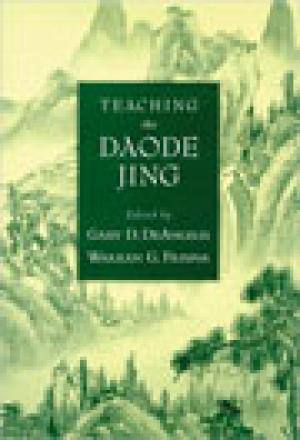
AAR Teaching Religious Studies Series (Oxford University Press) The Daode Jing, a highly enigmatic work rooted in ancient Chinese cosmology, ontology, metaphysics, and moral thinking, is regularly offered to college and high-school students in religion, philosophy, history, literature, Asian studies, and humanities courses. As a result, an ever-expanding group of faculty with very different backgrounds and training routinely confront the question: "How should I teach the Daode Jing?" Written for non-specialists who may not have a background in ancient Chinese culture, the essays collected in this volume provide up-to-date information on contemporary scholarship and classroom strategies that have been successful in a variety of teaching environments. A classic text like the Daode Jing generates debate among scholars and teachers who ask questions like: Should we capitalize on popular interest in the Daode Jing in our classrooms? Which of the many translations and scholarly approaches ought we to use? Is it appropriate to think of the Daode Jing as a religious text at all? These and other controversies are addressed in this volume. Contributors are well-known scholars of Daoism, including Livia Kohn, Norman Girardot, Robert Henricks, Russell Kirkland, Hans-Georg Moeller, Hall Roth, and Michael LaFargue. In addition, there are essays by Eva Wong (Daoist practitioner), David Hall (philosophy), Gary DeAngelis (mysticism), and a jointly written essay on pedagogical strategies by Judith Berling, Geoffrey Foy, and John Thompson (Chinese religion). (From the Publisher)
Wabash Center Staff Contact
Sarah Farmer, Ph.D.
Associate Director
Wabash Center
farmers@wabash.edu