Resources
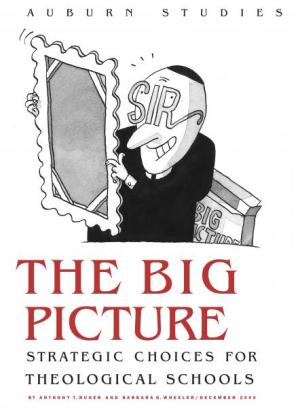
This report helps theological schools situate their strategic choices in the context of theological education as a whole. What are the kinds of choices that theological schools should be making, both in terms of material assets as well as enrollment? (From the Publisher)

Revenue sources for theological education have changed significantly in the last twenty years with more reliance on endowments, gifts and grants and student fees.
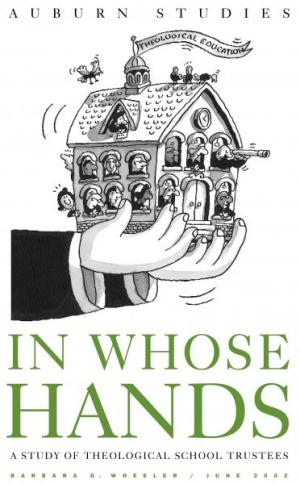
Trustees and boards of theological schools provide long-range guidance and governance for their institution and it is crucial that they have the skills, knowledge and information to make sound and effective decisions. In this issue: • Who are the trustees of the approximately 250 theological schools in the United States? • Do theological schools have the trustees they need? Do they have the perspective, motivation and capacity that their institutions most urgently require? (From the Publisher)
This textbook seeks to explore the purpose and values of the philosophy of education, and specific issues of contemporary relevance. (From the Publisher)
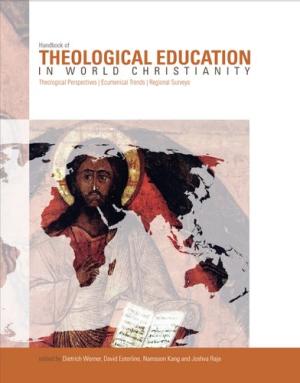
Theological education is vital for the future of World Christianity—this conviction lies at the heart of this publication. Theological education has the potential to be the seedbed for the renewal of churches, their ministries, mission, and commitment to Christian unity. If theological education is neglected by church leaders or in funding, the consequences are far reaching; they might not be visible immediately, but they will certainly become manifest over time in the theological competence of church leadership, the holistic nature of mission, and the capacities for ecumenical and interfaith dialogue and the interaction between church and society. Investment in theological education is investment of hope in the future and mission of World Christianity. The transmission of Christian memory, the education for God’s peace and justice, and the formation for church and community leadership therefore should be priorities in all churches; however, in many places theological education is far from secure or even in crisis at the present time. (From the Publisher)

From the Pubisher The essays in this volume are a collection of reflective narratives, rather than traditional scholarly treatises. The book is divided into two parts. The first part describes our individual journeys as each of us found our way to civically engaged scholarship and came to see it as critical to our academic endeavors and identity. This section also highlights the interdisciplinary nature of our work as we discuss our journeys through our own disciplinary lenses. The second part presents detailed examples of our civic engagement, including service-learning classes, community based research projects, and creation of community service-learning spaces. These chapters provide a varied picture of the available avenues for civic engagement for students and faculty in a higher education setting. We provide sufficient details of our projects and classes to enable replication. The book concludes with a discussion of civic engagement as it is defined in the literature. The conclusion also discusses institutional factors that support and promote civic engagement as well as the importance of community involvement in service learning. Five common themes that emerged across the chapters are described. These themes include the use of service learning and civic engagement as an effective pedagogy, the relationship between civic engagement and political activism, the importance of partnership and collaboration, the meaning found in civic engagement, and the challenges of civically engaged work.

Journal Issue.
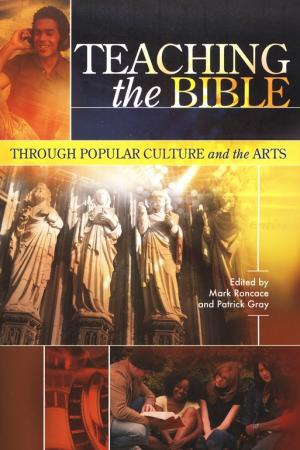
This resource enables biblical studies instructors to facilitate engaging classroom experiences by drawing on the arts and popular culture. It offers brief overviews of hundreds of easily accessible examples of art, film, literature, music, and other media and outlines strategies for incorporating them effectively and concisely in the classroom. Although designed primarily for college and seminary courses on the Bible, the ideas can easily be adapted for classes such as Theology and Literature or Religion and Art as well as for nonacademic settings. (From the Publisher)

What should be the role of our institutions of higher education? To promote good moral character? To bring an end to racism, sexism, economic oppression, and other social ills? To foster diversity and democracy and produce responsible citizens? In Save the World On Your Own Time, Stanley Fish argues that, however laudable these goals might be, there is but one proper role for the academe in society: to advance bodies of knowledge and to equip students for doing the same. When teachers offer themselves as moralists, political activists, or agents of social change rather than as credentialed experts in a particular subject and the methods used to analyze it, they abdicate their true purpose. And yet professors now routinely bring their political views into the classroom and seek to influence the political views of their students. Those who do this will often invoke academic freedom, but Fish argues that academic freedom, correctly understood, is the freedom to do the academic job, not the freedom to do any job that comes into the professor's mind. He insists that a professor's only obligation is "to present the material in the syllabus and introduce students to state-of-the-art methods of analysis. Not to practice politics, but to study it; not to proselytize for or against religious doctrines, but to describe them; not to affirm or condemn Intelligent Design, but to explain what it is and analyze its appeal." Given that hot-button issues such as Holocaust denial, free speech, and the Israeli-Palestinian conflict are regularly debated in classrooms across the nation, Save the World On Your Own Time is certain to spark fresh debate-and to incense both liberals andconservatives-about the true purpose of higher education in America. (From the Publisher)
This book offers a comprehensive rethinking of the theory and practice of service-learning in higher education. Democratic and community engagement are vital aspects of linking colleges and communities, and this book critically engages the best practices and powerful alternative models in the academy. Drawing on key theoretical insights and empirical studies, Butin details the limits and possibilities of the future of community engagement in developing and sustaining the engaged campus. (From the Publisher)
Wabash Center Staff Contact
Sarah Farmer, Ph.D.
Associate Director
Wabash Center
farmers@wabash.edu