Resources
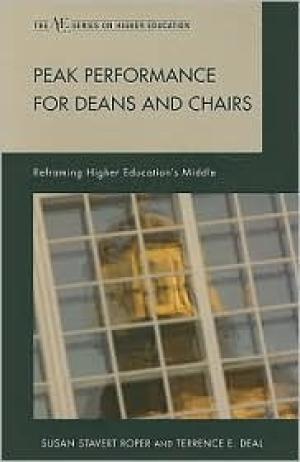
This book analyzes the behavior of chairs and deans through the political, structural, human resources, and symbolic frames. Lessons learned from the negative as well as the positive scenarios are highlighted, enabling deans and chairs to easily adapt them to their own situations. (From the Publisher)
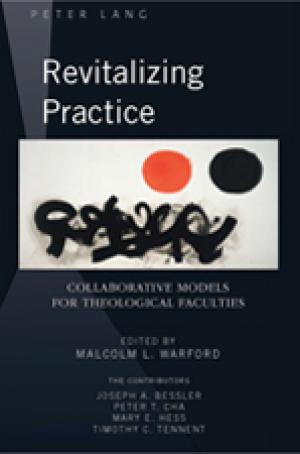
Revitalizing Practice is designed to help theological faculties engage a common set of challenges, particularly in the areas of diversity, formation, and institutional identity. These are not technical problems but are instead the very stuff out of which teaching and learning are practiced. Yet addressing such issues requires intentional strategies and collaborative work. Revitalizing Practice offers four such intentional strategies: «A New Ecology Model», «An Improvisational Model», «An Appreciative Inquiry Model», and «A World Café Model». Each of these models provides a thorough and practical framework (based on sound theoretical concepts) designed to help faculties revitalize their practices of theological teaching and learning. (From the Publisher)
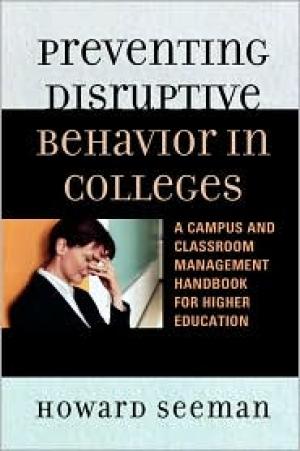
This book helps college instructors not just handle, but prevent these real-life disruptions in higher education so as to not lower learning standards. The book includes guidelines for preventive skills that respect the teaching style of the instructor/professor. Included are: concrete examples of problems and their prevention/solution; help with creating a Course Syllabus that curtails these problems; and training exercises to practice these skills. (From the Publisher)
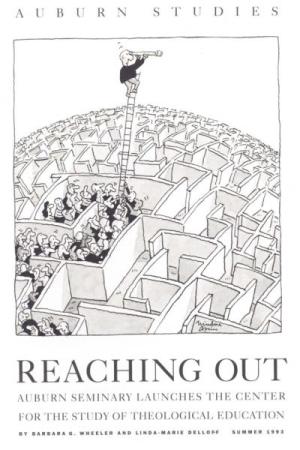
The Center for the Study of Theological Education (CSTE) provides reliable information and perspectives on theological education in North America. It conducts a "cycle of surveys" that revisits segments of theological education--students, graduates, faculty, administrators, trustees, and seminary finances--regularly, in order to track trends over time. CSTE also studies special topics, such as student debt, doctoral education in theology and religion, and the culture of theological schools. Research results are available as issues of the occasional bulletin Auburn Studies or as special background reports. All reports are available on this site in PDF format.  Paper copies of recent reports are available by e-mailing: CSTE@AuburnSeminary.org. Some project results are also available in video format and more will appear in this form in the future. (From the Publisher)
Explores the correlation between religion and liberal education in the U.S. Influence of spiritual or religious practices on student learning; Effect of spirituality on liberal learning; Ways in which religious practices affect learning. INSET: MEASURES OF STUDENT ENGAGEMENT.
Results of the second phase in an ongoing major study of the spiritual lives of college students was released in a report called "The Spiritual Life of College Students." The study was conducted by the Higher Education Research Institute (HERI), a research center of higher education based in the Graduate School of Education & Information Studies (GSE&IS) at the University of California, Los Angeles (UCLA). It is a groundbreaking attempt to gain insight into the spiritual lives and concerns of students and improve how faculties and administrators at US colleges and universities address this part of their students' lives.
One of the most remarkable things about the human consciousness is that each of us has the capacity to observe our thoughts and feelings as they arise in our consciousness. Why shouldn?t cultivating this ability to observe one?s own mind in action,becoming more self aware or simply more "conscious" be one of the central purposes of education? Even a cursory look at our educational system makes it clear that the relative amount of attention that higher education devotes to the exterior and interior aspects of our lives has gotten way out of balance. Thus, while we are justifiably proud of our "outer" development in fields such as science, medicine, technology, and commerce, we have increasingly come to neglect our "inner" development the sphere of values and beliefs, emotional maturity, moral development, spirituality, and self understanding. This growing awareness of the importance of spirituality in higher education was recently underscored by the Templeton Foundation through its award of a $1.9 million grant to UCLA?s Higher Education Research Institute to support a large scale longitudinal study of spiritual development in college undergraduates. A pilot study of 3,700 students enrolled at forty-six colleges and universities was initiated in spring 2003, and a full-scale assessment of 90,000 students enrolling at 150 institutions will be initiated in fall 2004. Perhaps the most important thing to keep in mind about spirituality is that is touches directly on our sense of community. More than anything else, giving spirituality a central place in our institutions will serve to strengthen our sense of connectedness with each other, our students, and our institutions. This enrichment of our sense of community will not only go a long way toward overcoming the sense of fragmentation and alienation that so many of us now feel, but will also help our students to lead more meaningful lives as engaged citizens, loving partners and parents, and caring neighbors.
The Evolving Self focuses upon the most basic and universal of psychological problems--the individual's effort to make sense of experience, to make meaning of life. According to Robert Kegan, meaning-making is a lifelong activity that begins in earliest infancy and continues to evolve through a series of stages encompassing childhood, adolescence, and adulthood. The Evolving Self describes this process of evolution in rich and human detail, concentrating especially on the internal experience of growth and transition, its costs and disruptions as well as its triumphs. At the heart of our meaning-making activity, the book suggests, is the drawing and redrawing of the distinction between self and other. Using Piagetian theory in a creative new way to make sense of how we make sense of ourselves, Kegan shows that each meaning-making stage is a new solution to the lifelong tension between the universal human yearning to be connected, attached, and included, on the one hand, and to be distinct, independent, and autonomous on the other. The Evolving Self is the story of our continuing negotiation of this tension. It is a book that is theoretically daring enough to propose a reinterpretation of the Oedipus complex and clinically concerned enough to suggest a variety of fresh new ways to treat those psychological complaints that commonly arise in the course of development. Kegan is an irrepressible storyteller, an impassioned opponent of the health-and-illness approach to psychological distress, and a sturdy builder of psychological theory. His is an original and distinctive new voice in the growing discussion of human development across the life span. (From the Publisher)
Thoroughly revised and updated, the second edition of the landmark book Discussion as a Way of Teaching shows how to plan, conduct, and assess classroom discussions. Stephen D. Brookfield and Stephen Preskill suggest exercises for starting discussions, strategies for maintaining their momentum, and ways to elicit diverse views and voices. The book also includes new exercises and material on the intersections between discussion and the encouragement of democracy in the classroom. This revised edition expands on the original and contains information on adapting discussion methods in online teaching, on using discussion to enhance democratic participation, and on the theoretical foundations for the discussion exercises described in the book. Throughout the book, Brookfield and Preskill clearly show how discussion can enliven classrooms, and they outline practical methods for ensuring that students will come to class prepared to discuss a topic. They also explain how to balance the voices of students and teachers, while still preserving the moral, political, and pedagogic integrity of discussion. (From the Publisher)
Wabash Center Staff Contact
Sarah Farmer, Ph.D.
Associate Director
Wabash Center
farmers@wabash.edu